
In questo post
Non riesci a capire come tradurre un sito in arabo? Beh, non sei il solo.
Tradurre un sito web in arabo e viceversa è una sfida anche per i migliori traduttori.
E questo perché le traduzioni dall'inglese all'arabo presentano sfide uniche rispetto ad altre coppie linguistiche, come Inglese-francese.
Si sappia che l'arabo è una delle le cinque lingue più difficili da tradurre, e impareremo il perché più avanti nell'articolo.
Tuttavia, tradurre il tuo sito web in arabo è un modo fantastico per raggiungere un pubblico più ampio e far crescere il tuo marchio, tra le altre cose.
Ora, tradurre una singola pagina in arabo è super facilissimo. Ma non possiamo dire lo stesso della traduzione dell'intero sito web WordPress.
Tradurre un intero sito web potrebbe sembrare impossibile per un principiante che non sa fare di meglio.
Ma nulla potrebbe essere più lontano dalla verità, soprattutto se disponi di un plugin di traduzione per WordPress come TranslatePress.
Come vedremo più avanti nel post, il plugin consente di tradurre ogni parte del vostro sito web WordPress in arabo, che si tratti di testo, immagini, elementi SEO, URL e contenuti dei vostri temi o plugin.
È davvero un plugin notevole per il vostro kit di strumenti come traduttori o sviluppatori WordPress.
La cosa migliore è che la versione base è gratuita (100%), il che significa che puoi iniziare subito a tradurre il tuo sito in arabo senza spendere un centesimo. E con le caratteristiche e le funzionalità aggiuntive, capirai subito perché il versione pro vale ogni centesimo.
Detto questo, immergiamoci subito e impariamo a tradurre un sito in arabo in modo rapido e accurato.
Vantaggi della traduzione di un sito web in arabo e viceversa
Prima di discutere i consigli pratici sulla traduzione dall'inglese all'arabo, esaminiamo alcuni vantaggi per determinare se vale il vostro tempo e il vostro impegno.
Quindi, quali sono i vantaggi di tradurre il tuo sito dall'inglese all'arabo o viceversa? Ebbene, sarai felice di scoprire che i benefici sono molteplici.
Pubblico ampliato e portata globale
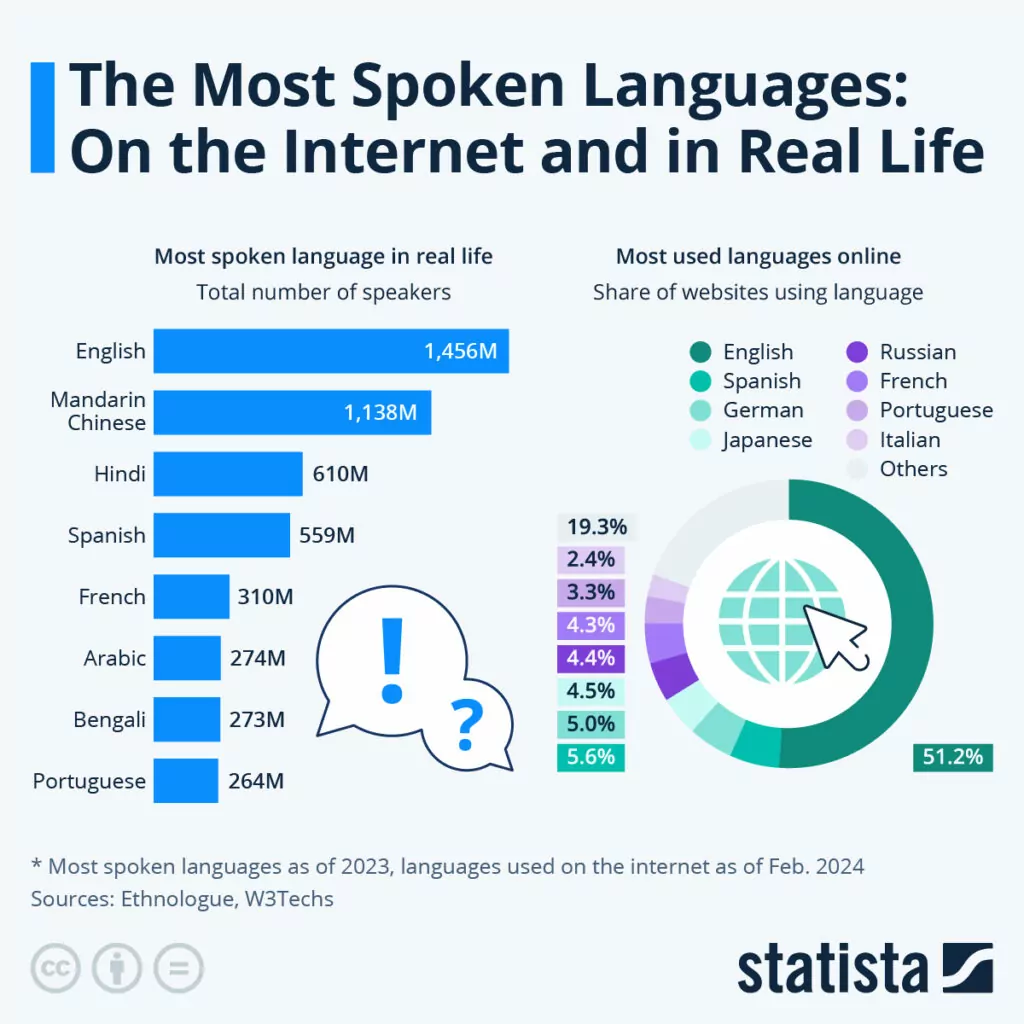
Origine: Statista – Le lingue più parlate: su Internet e nella vita reale.
Con quasi 1,5 miliardi di parlanti, l'inglese rimane la lingua più parlata al mondo. Con il 51,2% dei siti web in inglese, è anche la lingua più utilizzata online.
Secondo il grafico sopra, l'arabo è al sesto posto con circa 274 milioni di parlanti. Sono circa 400 milioni nel 2024 secondo Wikipedia, il che la rende la quinta lingua più parlata al mondo.
Da un altro rapporto, solo lo 0,61% dei siti web utilizza l'arabo, il che è ancora significativo se siconsidera che ci sono quasi due miliardi di siti web online.
Dove voglio arrivare con questo? È semplice.
Che tu voglia tradurre un sito dall'inglese all'arabo o viceversa, ti ritroverai a raggiungere un pubblico globale più ampio. È uno dei principali i vantaggi della traduzione del tuo sito web.
E sai cos'altro?
Gli acquirenti sono esigenti per quanto riguarda la lingua di un sito web, e ci sono dati a sostegno di questa affermazione.
Esatto. Secondo un sondaggio condotto su oltre 8.700 consumatori in 29 paesi da CSA Ricerca, Il 65% degli acquirenti preferisce i siti web nella propria lingua, anche se di scarsa qualità.
Inoltre, lo stesso studio ha evidenziato che il 76% dei consumatori preferisce prodotti con informazioni nella propria lingua.
Ma non è tutto. Il 40% degli intervistati ha dichiarato che non acquisterebbe mai prodotti da un sito web in un’altra lingua.
Come puoi vedere, vale la pena tradurre il tuo sito web per raggiungere gli acquirenti di lingua araba. Se vuoi espanderti nel Medio Oriente e nel Nord Africa o i tuoi report di analisi mostrano che stai ricevendo molto traffico da regioni di lingua araba, è il momento giusto per tradurre il tuo sito web.
Le regioni di lingua araba vi offrono opportunità significative per espansione del mercato e la crescita del business. Tradurre il tuo sito dall'inglese all'arabo ti consente di raggiungere e coinvolgere potenziali clienti in queste regioni.
Andiamo avanti.
Esperienza utente migliorata

Forse sono l'unico, ma avete mai visitato un sito web in una lingua che non capivate? Scommetto che la vostra esperienza non è stata piacevole. E probabilmente avete premuto il pulsante Indietro per non tornarci mai più.
Grazie a Dio Chrome viene fornito con un Google Traduttore prompt al giorno d'oggi. Gli altri browser devono ancora mettersi al passo.
Siamo tutti d'accordo sul fatto che sia esasperante finire su un sito web con contenuti in una lingua che non si comprende, soprattutto se si è determinati a trovare le informazioni di cui si ha bisogno.
In linea con ciò, offrire contenuti in arabo migliorerà l'esperienza utente per i visitatori di lingua araba del vostro sito web.
Innanzitutto, la traduzione del vostro sito in arabo eliminerà le barriere linguistiche, garantendo che il pubblico di lingua araba possa comprendere e utilizzare il vostro sito web senza intoppi.
È un ottimo modo per la tua azienda di dimostrare un impegno verso l'accessibilità e la usabilità, il che rende il tuo sito accogliente per più persone.
Inoltre, hai la straordinaria opportunità di personalizzare le esperienze per gli utenti arabi. Considerando L'arabo è disponibile in tre versioni principali e ha oltre 25 dialetti, puoi personalizzare i tuoi contenuti per gruppi distinti e sottoculture. Questo include la traduzione dall'inglese all'arabo gergale.
In secondo luogo, la traduzione dall'inglese all'arabo consente di localizzare il vostro sito web. È possibile adattare facilmente elementi come immagini, valute e formati di data alle convenzioni locali. Facendo ciò, si aumenta il coinvolgimento degli utenti e si crea un senso di appartenenza tra gli utenti di lingua araba.
Allo stesso tempo, puoi veicolare i tuoi messaggi di marketing in arabo, il che aumenta il coinvolgimento degli utenti e le conversioni.
In terzo luogo, la traduzione del vostro sito web in arabo ridurrà la frequenza di rimbalzo tra gli utenti di lingua araba. Gli utenti arabi trascorreranno più tempo a interagire con i vostri contenuti poiché sono in una lingua che comprendono.
Non importa come la si veda, una migliore esperienza utente porta a un maggiore coinvolgimento, a sessioni più lunghe e a tassi di conversione più elevati.
SEO avanzato e visibilità online

Portare traffico su un sito web è uno dei compiti più difficili che ogni imprenditore online deve affrontare.
Tuttavia, il traffico è la linfa vitale di qualsiasi sito web. Senza visitatori online, il vostro sito è un fallimento. È pura e semplice verità.
È vero, ci sono molti modi efficaci per indirizzare traffico a un sito web. Uno dei modi migliori è ottimizzazione per i motori di ricerca o SEO in breve.
La SEO consiste nell'ottimizzare il tuo sito web e i tuoi contenuti per posizionarti più in alto nei motori di ricerca come Google e Bing.
Quindi, in che modo la traduzione del tuo sito dall'inglese all'arabo migliora la tua SEO?
Permettetemi di spiegare.
Ogni volta che qualcuno cerca i vostri contenuti o prodotti, di solito inserisce parole chiave o frasi in un motore di ricerca. Basti dire che molte persone preferiscono usare la propria lingua madre.
Se il tuo contenuto è pertinente alla parola chiave o alla frase, il motore di ricerca mostrerà il tuo sito web nelle pagine dei risultati di ricerca (SERP).
Se hai fatto i compiti a casa, il tuo contenuto apparirà per primo, inviando più visitatori al tuo sito web.
Senza una versione araba del vostro sito web, gli utenti di lingua araba non troveranno mai il vostro sito nelle SERP, anche se stanno cercando i contenuti o i prodotti che offrite.
Questo perché inseriscono parole chiave o frasi in arabo nel motore di ricerca.
La traduzione del vostro sito web in arabo vi consente di intercettare queste ricerche, il che può incrementare significativamente il vostro traffico nelle regioni arabofone.
Per esempio...
Neil Patel ha aumentato il traffico proveniente dai motori di ricerca di oltre 47% dopo aver tradotto il suo contenuto in 82 lingue. Serve un altro esempio? L'azienda di hosting web Kinsta ho notato un aumento di 18% nel traffico organico dopo aver tradotto il loro sito web in 10 lingue.
Questo è ciò SEO multilingue tratta di.
Inoltre, puoi utilizzare l'ottimizzazione dei contenuti geo-targetizzati per adattare i tuoi contenuti a specifici contesti culturali e a diverse regioni di lingua araba.
Questo aiuta i motori di ricerca a comprendere la rilevanza dei tuoi contenuti per gli utenti locali, il che si traduce in posizionamenti più elevati per le ricerche in arabo.
Un'altra cosa. Creare una versione in arabo del tuo sito web può aiutarti ad aumentare l'autorità di dominio e la fiducia. Aggiungi a ciò i backlink da siti web arabi locali e avrai una formula vincente.
E poiché gli utenti di lingua araba che arrivano sul vostro sito web comprenderanno il contenuto, rimarranno più a lungo, con conseguente riduzione della frequenza di rimbalzo, maggiore coinvolgimento e, di conseguenza, posizionamenti più elevati.
Dopotutto, non hai nulla da perdere e il tuo lavoro è minimo. Hai già il contenuto in inglese. Devi solo tradurlo in arabo per godere di più traffico organico.
Reputazione del marchio migliorata

Un altro grande vantaggio della traduzione del vostro sito web in arabo è il miglioramento della reputazione del marchio. I vostri visitatori penseranno che la vostra azienda sia prestigiosa e orientata al futuro.
Se un utente di lingua araba arriva sul tuo sito ma non capisce nulla perché è in inglese, uscirà e probabilmente non tornerà mai più. Questo si riflette negativamente sull'immagine del tuo marchio.
D'altra parte, tradurre il tuo sito mostra ai visitatori di lingua araba che ti prendi cura delle loro esigenze, il che ti fa guadagnare punti in credibilità e migliora la reputazione del tuo marchio.
In generale, gli utenti di lingua araba apprezzano contenuti culturalmente rilevanti nella loro madrelingua.
Tradurre il tuo sito web in arabo dimostra il tuo impegno per l'inclusività e un profondo rispetto per la loro cultura e lingua.
Ciò, a sua volta, si traduce in legami più forti con il vostro marchio, favorendo una maggiore fedeltà al marchio, fiducia e un maggiore coinvolgimento con i vostri contenuti.
In aggiunta a ciò, la traduzione in arabo consente di adattare i vostri contenuti agli interessi e alle preferenze locali.
Dimostrare di comprendere e apprezzare le consuetudini locali, i modi di dire e le sfumature culturali porta all'accettazione da parte dei locali e a una migliore reputazione del marchio.
Tutto sta nel costruire la fiducia...
Tutto sommato, parlare al proprio pubblico di riferimento nella sua lingua madre, ovvero l'arabo, favorisce un senso di familiarità e fiducia.
Un'altra cosa. È importante tradurre il vostro sito web in arabo con attenzione e professionalità. Questo vi permette di evitare incomprensioni culturali e contenuti offensivi che potrebbero rovinare la reputazione del vostro marchio.
Inoltre, tradurre il tuo sito web in arabo è un modo fantastico per differenziarti dalla concorrenza.
Questo ti offre un vantaggio competitivo in quanto ti distingue dalle aziende che non offrono supporto per la lingua araba.
Di conseguenza, potete acquisire una quota di mercato maggiore, coinvolgere gli utenti che preferiscono i contenuti in arabo e affermare la vostra azienda come leader nella diversità e nell'inclusività.
I visitatori arabi arriveranno a considerarvi come un'organizzazione progressista e orientata al cliente, il che vi farà guadagnare punti bonus in termini di reputazione del marchio.
Conformità alle normative

Un altro vantaggio, o meglio un motivo per cui è necessario tradurre un sito in arabo, è la conformità alle normative. Non vorrai mica metterti contro le autorità giudiziarie, vero?
Sconosciute a molti principianti, esistono diverse leggi che regolano le traduzioni. Tutte queste leggi hanno lo scopo di rendere i contenuti accessibili a tutte le persone, indipendentemente dal loro background linguistico e dalla loro competenza.
In alcune regioni e settori, la legge impone ai proprietari di siti web di fornire contenuti in lingua araba. Ciò è particolarmente vero per settori come l'e-commerce, l'istruzione, la sanità e il governo.
Traduci il tuo sito web in arabo per evitare ripercussioni come pesanti multe e sanzioni.
Letture correlate: Benefici della traduzione: i 7 principali motivi per tradurre il tuo sito web
Ora che sai che la traduzione di un sito in arabo presenta diversi vantaggi, esaminiamo alcune sfide della traduzione di questa lingua piuttosto interessante.
Come tradurre un sito web in arabo: le sfide

In precedenza, abbiamo detto che la traduzione dall'inglese all'arabo presenta alcune sfide uniche rispetto ad altre coppie linguistiche.
E questo principalmente perché l'inglese e l'arabo provengono da due famiglie linguistiche completamente diverse.
L'arabo è una lingua semitica, che è un ramo della famiglia linguistica afroasiatica. D'altra parte, l'inglese è una lingua germanica occidentale della famiglia indoeuropea.
Pertanto, l'inglese e l'arabo sono profondamente diversi, il che presenta diverse sfide durante la traduzione.
Nella sezione seguente, affrontiamo le sfide da prevedere se si desidera tradurre un sito in arabo.
L'arabo è una lingua molto diffusa
Tipo, Abbastanza ampio.
L'arabo è la lingua ufficiale o co-ufficiale in oltre 25 paesi. Si distingue in tre varianti principali: Arabo coranico, Arabo standard moderno (MSA), e Arabo colloquiale.
- Arabo coranico – Questa è la forma di arabo in cui è scritto il Corano (il libro sacro islamico). Questa è una lingua in pericolo di estinzione che viene utilizzata principalmente nella letteratura sotto forma di poesie, romanzi e libri storici. È nota anche come arabo classico;
- Arabo standard moderno – La forma standardizzata dell’arabo utilizzata nella comunicazione formale, in ambito accademico, nelle pubblicazioni ufficiali, ecc. È generalmente riconosciuta come il principale dialetto di comunicazione e viene appresa principalmente a scuola come seconda lingua;
- Arabo colloquiale – Si tratta della versione colloquiale e quotidiana dell’arabo. Viene utilizzata nei film, nei documentari e nei programmi televisivi di grande successo. È un termine generico che comprende l’arabo egiziano, l’arabo del Golfo, l’arabo hassaniya, l’arabo iracheno, l’arabo hejazi, l’arabo levantino e altri ancora.
Con queste tre varianti, si contano oltre 25 dialetti diversi, il che la rende una delle lingue più variegate al mondo.
La presenza di così tanti dialetti fa sì che, ad esempio, un arabofono egiziano possa avere difficoltà a capire un arabofono yemenita.
Ecco quanto è vasta e complessa la lingua araba.
Questo, ovviamente, rappresenta una sfida quando si vuole tradurre un sito in inglese in arabo. Ad esempio, a quale dialetto e a quale stile ci si dovrebbe adeguare per raggiungere il maggior numero di persone?
Il segreto sta nel attenersi all'arabo standard moderno, tenendo però sempre presenti le sensibilità culturali e religiose nelle vostre traduzioni.
L'arabo è complesso
Un’altra sfida che i traduttori alle prime armi devono affrontare è la complessità della lingua araba. Si tratta di una lingua ricca, con una struttura complessa che non si riscontra in molte altre lingue, compreso l’inglese.
Innanzitutto, alcuni termini e espressioni utilizzati in ambiti quali la scienza e la tecnologia non esistono in arabo. Ciò rappresenta una sfida quando si vuole tradurre dall’inglese all’arabo.
La ricerca di termini o espressioni equivalenti potrebbe comportare la perdita del significato e dello stile originali del testo di partenza.
In secondo luogo, i traduttori hanno spesso difficoltà con l’uso delle maiuscole, che in inglese è una pratica standard. Perché? L’arabo non prevede le maiuscole! Ciò può rendere difficile la comprensione del contesto nel testo tradotto, soprattutto per i principianti.
In terzo luogo, l’alfabeto arabo conta 28 lettere, mentre quello inglese ne ha 26. Ciò significa che l’arabo presenta lettere e suoni che non esistono in inglese.
Questo può rendere la traduzione di elementi come i nomi un vero incubo. Cercare di creare versioni inglesi dei termini e viceversa spesso fa perdere il fascino e le sfumature culturali della lingua araba.
Diglossia e formato di scrittura
Secondo il dizionario Merriam-Webster, diglossia è “…l’uso di due varianti della stessa lingua in contesti sociali diversi all’interno di una comunità linguistica”.”
Questa è una caratteristica comune della lingua araba grazie alla vasta gamma di dialetti. Oltre a ciò, l'arabo ha oltre 12 milioni di parole con lettere e suoni che non esistono in altre lingue.
Se a ciò si aggiunge la diglossia, lo stile corsivo dell’alfabeto, un vocabolario impegnativo e strutture grammaticali complesse, si capisce quanto sia facile strapparsi i capelli quando si traduce dall’inglese all’arabo e viceversa.
Per andare sul sicuro, è meglio attenersi all'arabo standard moderno, ma non dimenticare le sensibilità religiose, le sfumature culturali e il gergo arabo.
Un'altra cosa. Il formato di scrittura da destra a sinistra (RTL) rappresenta una sfida quando si vuole tradurre un sito in arabo e viceversa.
Considerando che l'inglese è una lingua da sinistra a destra (LTR), tradurre in arabo significa prestare grande attenzione al design del proprio sito web.
Questa differenza fondamentale nei formati di scrittura influisce sull'impaginazione del testo, delle immagini e dei menu di navigazione, oltre che su altri elementi di design.
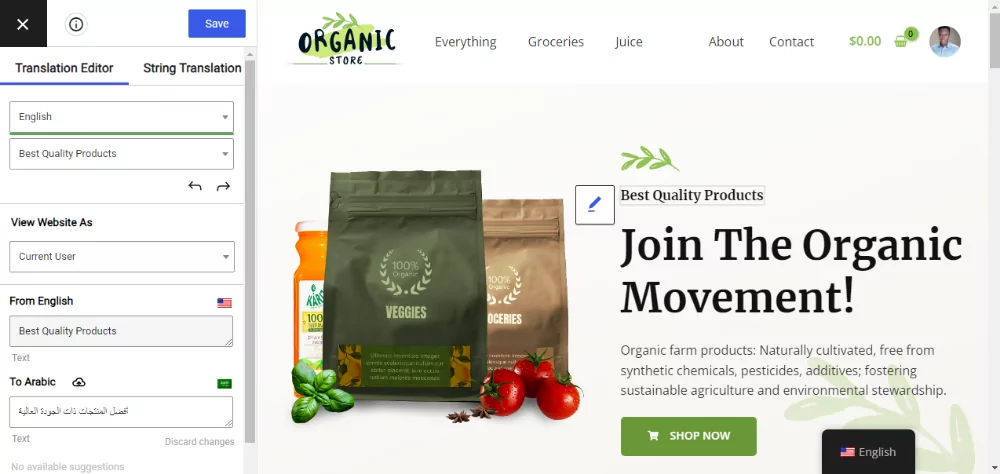
Tuttavia, non c'è motivo di allarmarsi. Il TranslatePress Il plugin supporta le lingue con scrittura da destra a sinistra (RTL) e dispone di un editor di traduzione visivo e intuitivo che mostra come cambia il layout ad ogni traduzione.
È più o meno così:
Sensibilità culturale e religiosa
I traduttori principianti spesso dimenticano che la cultura influenza la lingua, plasmando stili di comunicazione, idiomi e vocabolario. L'arabo non fa eccezione.
I paesi di lingua araba hanno credenze, culture, costumi, tradizioni e valori inconfondibili che influenzano l'interpretazione e l'uso della lingua.
Il traduttore appassionato dovrebbe conoscere bene questi contesti culturali per evitare fraintendimenti e traduzioni letterali che potrebbero essere considerate offensive.
Inoltre, le regioni arabofono sono in gran parte islamiche, una religione con tradizioni e valori distinti che influenzano la lingua e le norme sociali.
Per tradurre efficacemente un sito in arabo, dovresti prestare molta attenzione alla terminologia religiosa, ai riferimenti e al bon ton nelle tue traduzioni.
Se non si è abbastanza vigili, si rischia di darsi la zappa sui piedi, poiché alcune espressioni, argomenti e immagini sono considerati offensivi o tabù nei paesi di lingua araba.
Per traduzioni efficaci dall'inglese all'arabo, è necessario esercitare discrezione e rispettare le sensibilità culturali e religiose.
In aggiunta a ciò, sforzati di localizzare le tue traduzioni per vari dialetti regionali ed etnie, tenendo presente che le culture di lingua araba attribuiscono grande importanza all'ospitalità, al rispetto e all'educazione.
Inoltre, assicuratevi che le vostre traduzioni siano inclusive e non mostrino pregiudizi di genere o alcuna forma involontaria di discriminazione.
Questo ti consente di creare traduzioni rispettose e pertinenti per il tuo pubblico di riferimento di lingua araba. Dimostrerà inoltre che apprezzi e rispetti la loro cultura, che è esattamente ciò che desideri.
Accantonate le sfide, passiamo ora ad analizzare come tradurre un sito in arabo, sia automaticamente che manualmente.
Come tradurre un sito in arabo utilizzando il plugin TranslatePress
Nella sezione seguente, installeremo e configureremo il Plugin di traduzione per WordPress TranslatePress tradurre un sito in arabo in modo automatico o manuale.
Il processo è così semplice che dovresti essere operativo in pochi minuti. Inoltre, ti terrò per mano in ogni fase del percorso per assicurarti di non inciampare 🙂 Inoltre, sentiti libero di fare qualsiasi domanda pertinente nella sezione commenti e ti risponderemo tempestivamente.
Cominciamo installando il plugin TranslatePress.
Come installare TranslatePress
Il versione base di TranslatePress 100% è gratuito, il che significa che puoi installarlo direttamente dalla dashboard di amministrazione di WordPress.
Navigare a Plugin → Aggiungi plugin.
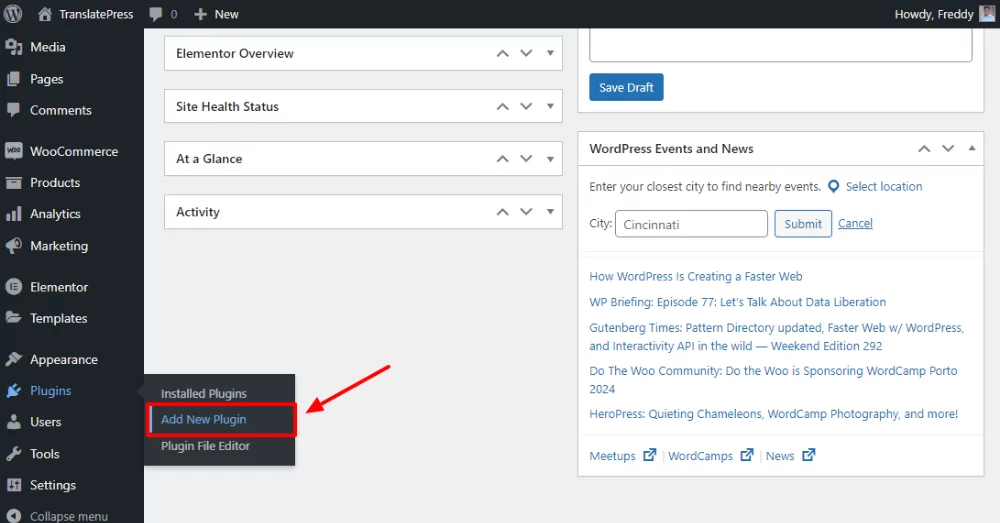
A questo punto, inserisci “TranslatePress” nella casella di ricerca per parole chiave e premi il tasto Installa ora pulsante, come mostrato nell'immagine sottostante.
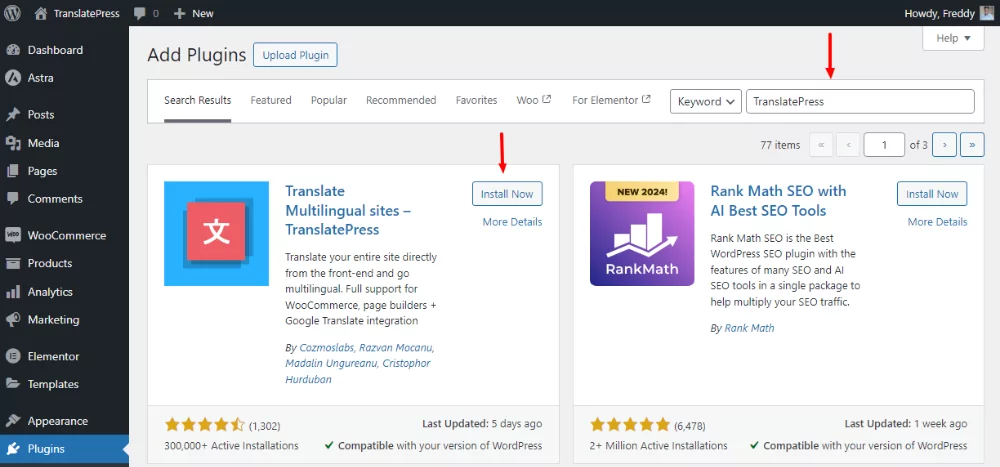
Dopo ciò, Attiva il plugin.
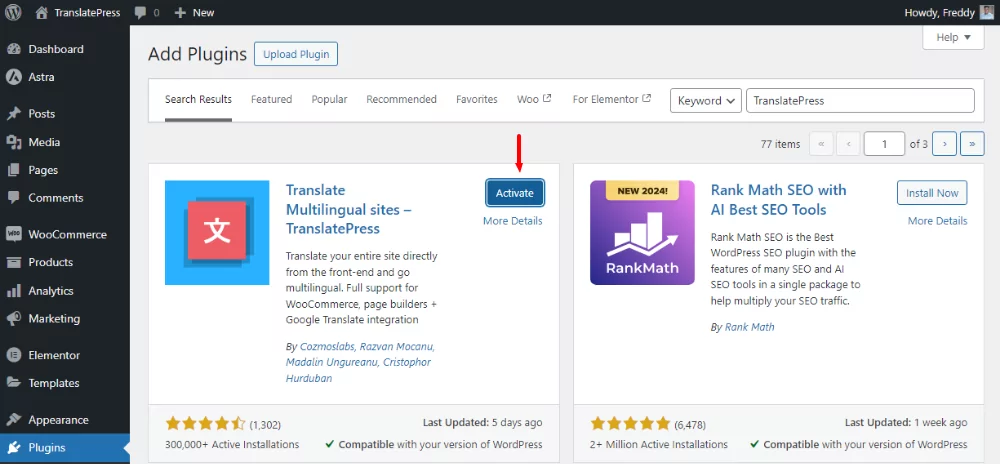
Una volta attivato il plugin, è il momento di configurare alcune impostazioni predefinite. Inizieremo impostando la lingua predefinita, ovvero l'inglese, e la lingua di traduzione, ovvero l'arabo.
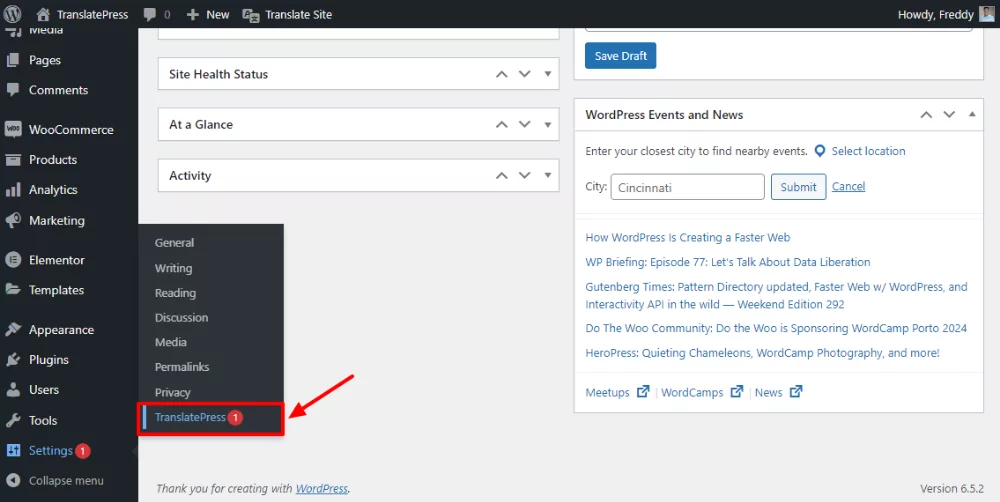
Per farlo, vai su Impostazioni → TranslatePress, come mostrato di seguito.
Sotto il Generale scheda, imposta la lingua predefinita (la mia è inglese (Stati Uniti)), e poi scegli Arabo nel Tutte le lingue sezione. Clicca successivo Aggiungere e Salva modifiche, come dimostrato di seguito.
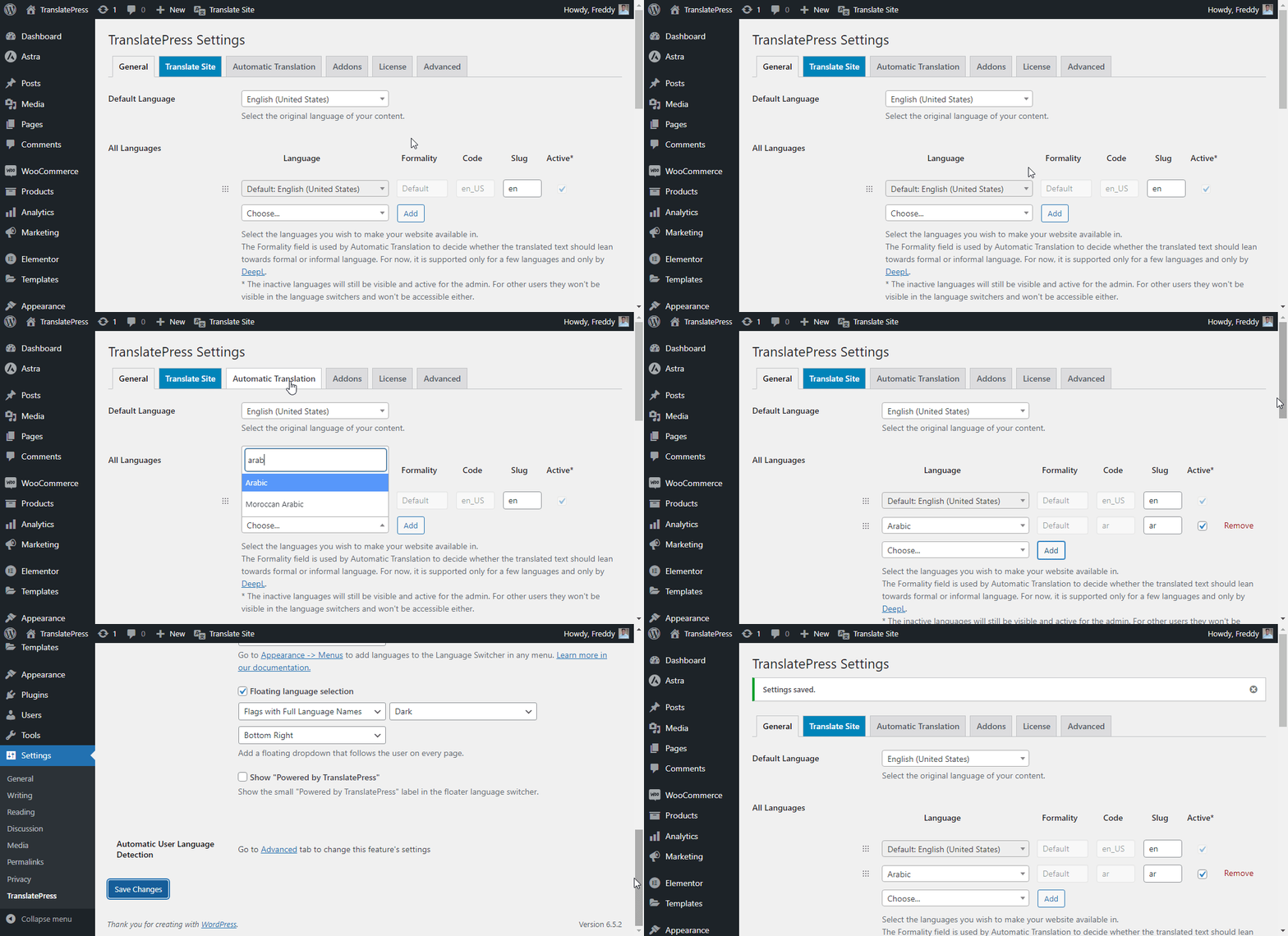
Come al solito, ricordati sempre di salvare le modifiche.
Consiglio Pro: TranslatePress Personal e altri piani a pagamento ti consentono di aggiungere più lingue di traduzione e dialetti come l'arabo marocchino. Hai anche molte altre funzionalità, come scoprirai più avanti.
Non affrettarti ancora a controllare il sito. Al momento abbiamo appena installato TranslatePress e aggiunto le lingue che preferiamo. Ora puoi farci tradurre il sito in arabo, sia automaticamente che manualmente.
Come tradurre un sito in arabo automaticamente
In questa sezione vi mostrerò come tradurre un sito in arabo utilizzando TranslatePress. Il plugin supporta le traduzioni automatiche tramite Google Traduttore e DeepL.
Sto usando DeepL perché offre un supporto migliore per le traduzioni automatiche in arabo rispetto a Google Translate. Si noti che, per utilizzare DeepL, è necessario effettuare l'aggiornamento alla versione Piano aziendale TranslatePress.
Mentre puoi tradurre un sito in arabo manualmente, o assumere un servizio di traduzione professionale, la traduzione automatica fa risparmiare tempo e riduce i costi.
La parte migliore è che puoi tradurre un sito in arabo gratuitamente, a patto di non superare i limiti del piano gratuito di DeepL.
DeepL ti permette di tradurre gratuitamente 500.000 caratteri al mese. Si tratta di circa 100.000 parole al mese. Una volta superati i limiti del piano gratuito, pagherai un canone fisso di $5,49 al mese più $25 per ogni milione di caratteri tradotti.
Il vantaggio di TranslatePress è che devi pagare i costi di utilizzo di DeepL una sola volta, poiché TranslatePress memorizza le traduzioni nel tuo database. Non è necessario tradurre i contenuti a ogni visita alla pagina.
Entriamo nel vivo.
Per prima cosa, devi genera una chiave API DeepL. Per farlo, segui la guida collegata o guarda il video qui sotto.
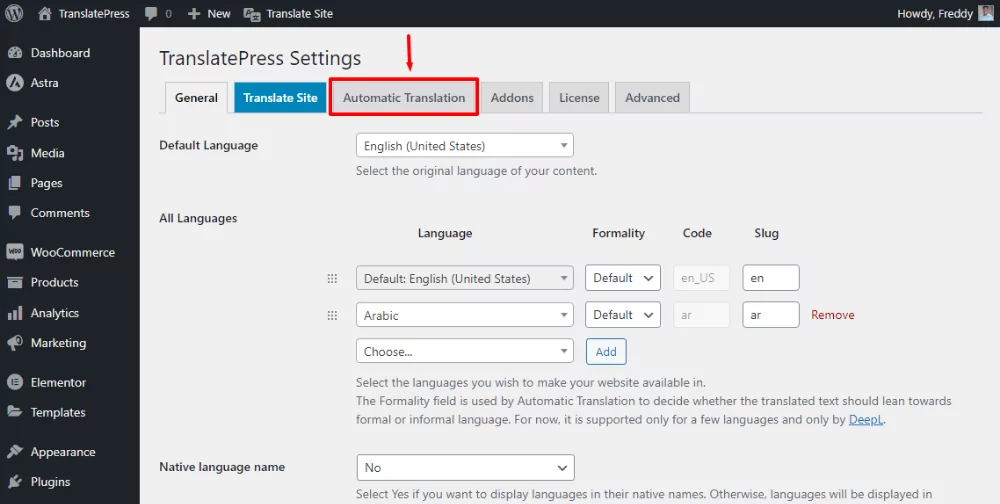
Una volta generata la chiave API di DeepL, torna alle impostazioni di TranslatePress e clicca sul Traduzione automatica scheda, come mostrato di seguito.
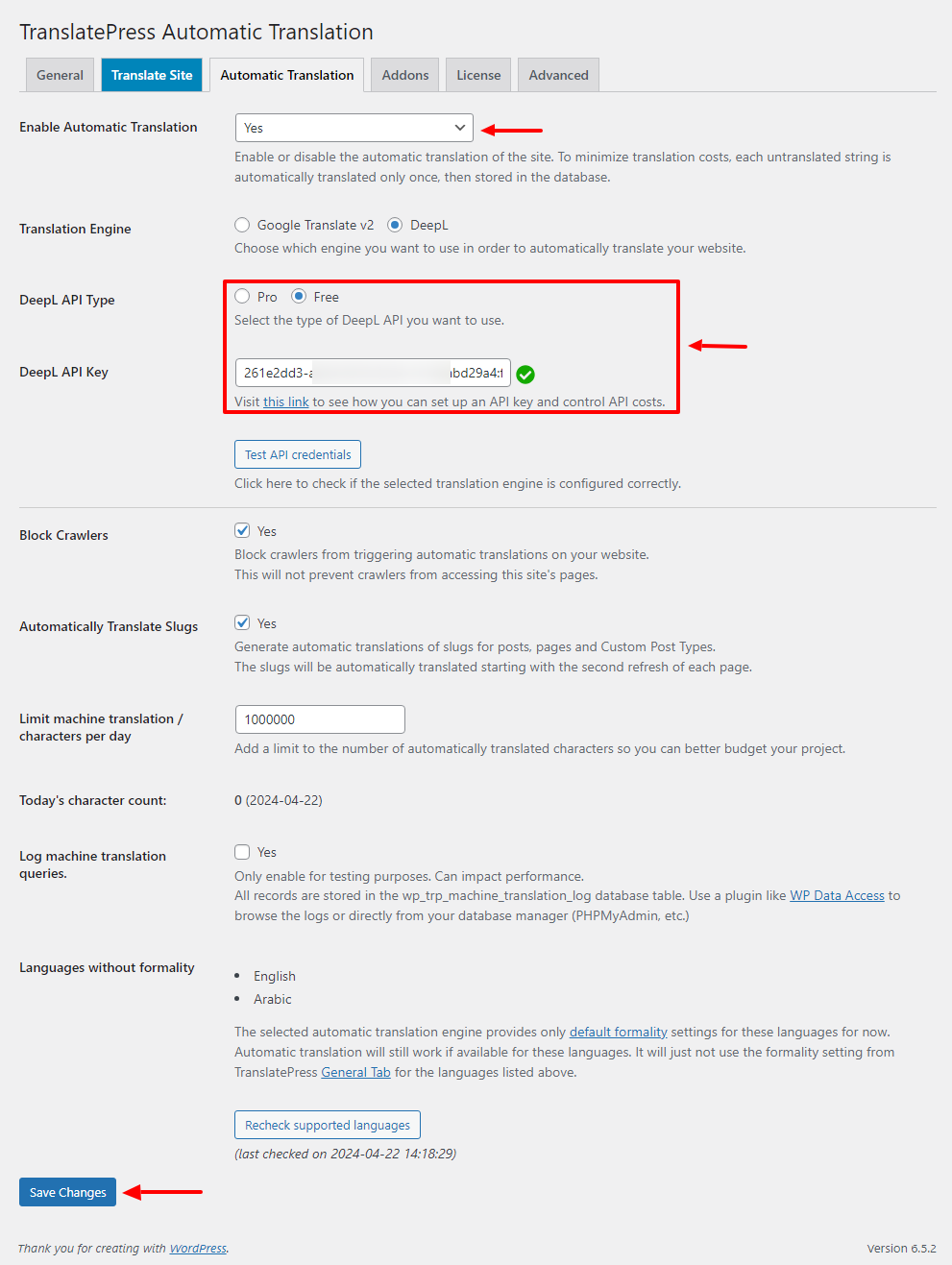
Dopodiché, abilita la traduzione automatica, copia e incolla la tua chiave API di DeepL e salva le modifiche, come evidenziato di seguito.
E questo è tutto quello che c'è da fare. Da quel momento in poi ci penserà TranslatePress a tradurre il tuo sito in arabo in background.
Ora, se usi cambio lingua Nel front-end, vedrai la versione araba del tuo sito.

È stato semplice come bere un bicchier d'acqua. Non è vero?
A questo punto, hai tradotto con successo il tuo sito in arabo automaticamente. Ma come c'è da aspettarsi, una macchina non può cogliere tutte le sfumature del linguaggio umano, specialmente dell'arabo.
Ad esempio, DeepL potrebbe perdere lo slang e altre frasi comuni in inglese ma prive di equivalenti in arabo. Inoltre, potresti non gradire il modo in cui DeepL traduce alcune parole.
Ecco che la traduzione manuale arriva a salvare la situazione.
Come tradurre manualmente un sito in arabo utilizzando TranslatePress
È proprio qui che il plugin di traduzione per WordPress TranslatePress fa la differenza. Dopo aver attivato le traduzioni automatiche, è possibile modificare manualmente il testo tradotto per rifinirlo al meglio.
TranslatePress include un editor di traduzione visivo che ti permette di modificare le traduzioni sul front-end come un vero professionista.
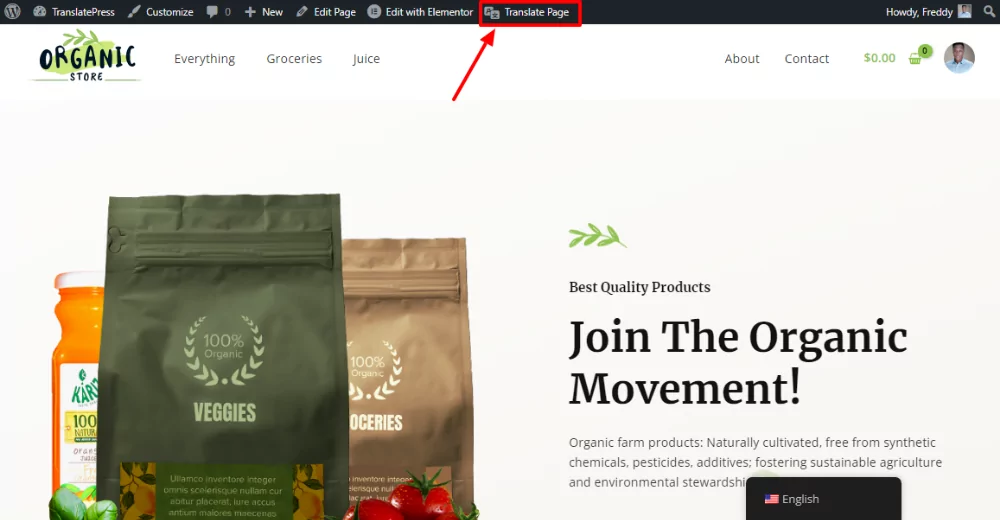
Apri la pagina che desideri tradurre e clicca Traduci pagina nella barra di amministrazione di WordPress, come mostrato di seguito.
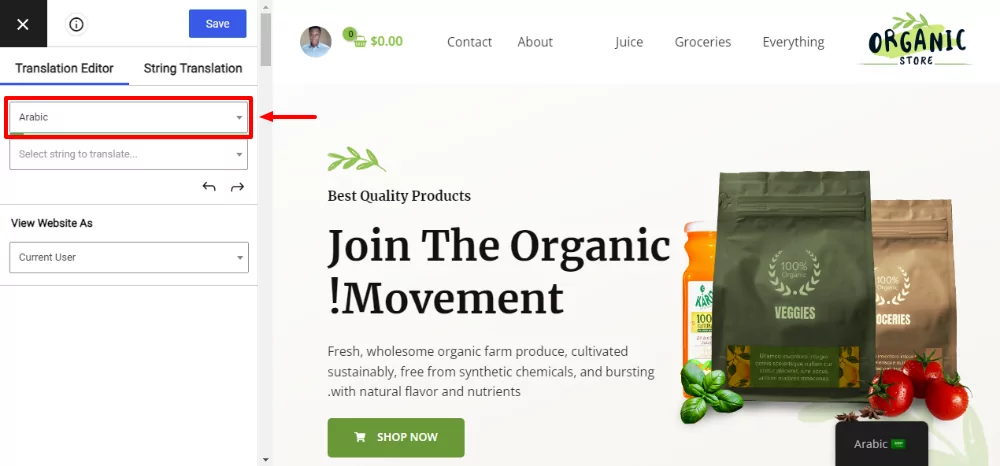
Dopodiché, imposta la lingua sull'arabo in modo da poter vedere le modifiche della traduzione direttamente sulla pagina.
Dopodiché, seleziona il testo che desideri tradurre facendo clic sull'icona della matita. Inserisci la traduzione in arabo e fai clic su Salvare pulsante, come mostrato di seguito.
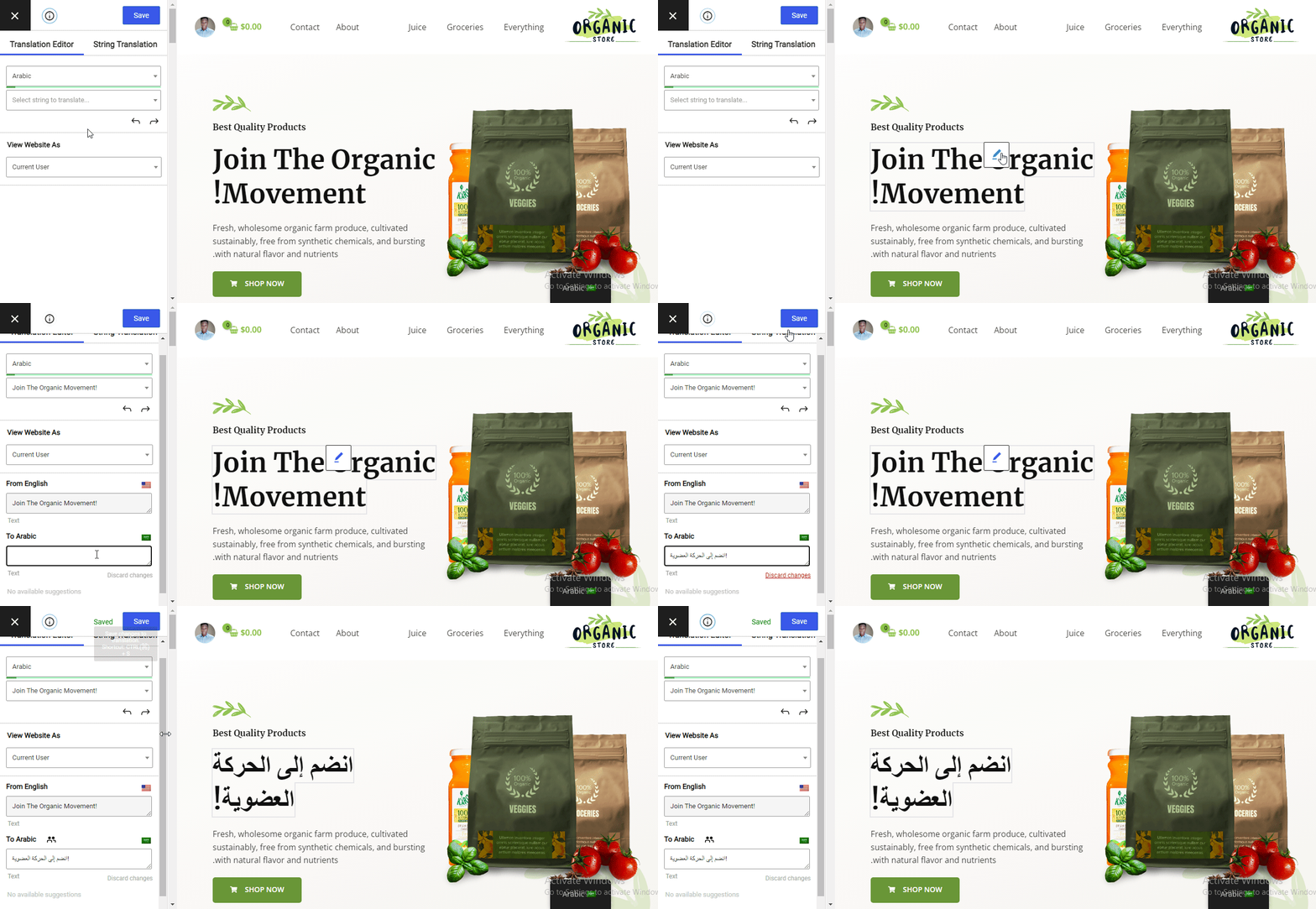
Come puoi vedere, tradurre manualmente un sito in arabo utilizzando TranslatePress è un gioco da ragazzi. Puoi tradurre tutti i contenuti del tuo sito allo stesso modo. Tra questi figurano:
- Menu di navigazione;
- Immagini, cursori e video;
- Email di WooCommerce;
- Stringhe dinamiche da temi e plugin;
- Elementi SEO e URL.
Inoltre, dai un'occhiata a:
- Come tradurre un plugin di WordPress in qualsiasi lingua;
- Come tradurre un tema WordPress – Guida completa alla traduzione dei temi.
Nota che alcune di queste funzionalità, come la traduzione degli elementi SEO, sono disponibili solo nel versioni a pagamento di TranslatePress.
Altre caratteristiche degne di nota di TranslatePress Pro
Sebbene la versione gratuita di TranslatePress offra tutto il necessario per tradurre un sito in arabo, la versione Pro dispone di funzionalità avanzate che consentono di gestire le traduzioni in modo completo.
Altre caratteristiche di TranslatePress Pro includono:
- Pieno supporto a Yoast SEO;
- Supporto per 221 lingue aggiuntive;
- Traduci titolo SEO, descrizioni e slug;
- Pubblica solo a traduzione completata;
- Navigazione come ruolo utente;
- Voci di menu diverse per ciascuna lingua;
- Rilevamento automatico della lingua dell'utente;
- Eccetera.
Puoi usare lo stesso processo per tradurre un sito web da qualsiasi lingua (non solo dall'inglese) all'arabo e viceversa.
TranslatePress Multilingue
Ora sai come tradurre un sito in arabo in modo rapido e accurato. Come hai visto, è facile, soprattutto con uno strumento come TranslatePress.
Qual è la vostra opinione? Fatecelo sapere nella sezione dei commenti. Se avete trovato utile il post, vi invitiamo a condividerlo per aiutare gli altri!