

In questo post
Hai difficoltà a capire la traduzione dello slang? Se la risposta è un sonoro sì, non sei il solo.
Penso che sarai d'accordo quando dico che la traduzione dello slang pone diverse sfide a molti traduttori.
Possiamo anche concordare sul fatto che aggiungere gergo ai tuoi contenuti possa ravvivare la conversazione e rendere il tuo testo più accessibile.
Inavvertitamente, usiamo tutti lo slang nelle conversazioni di tutti i giorni con i nostri coetanei. È diventato così radicato nella nostra vita quotidiana che a volte è difficile capire cosa sia slang e cosa no.
Ma.
Tuttavia, molti traduttori principianti e professionisti lottano con lo slang a causa della sua natura informale e imprevedibile.
Ciò che potrebbe essere un gergo geniale e ben intenzionato in una lingua, potrebbe risultare confuso o offensivo in un altro contesto linguistico.
Ad esempio, le espressioni gergali “let's rock and roll” e “hit the road” risulteranno subito comprensibili alla maggior parte dei madrelingua inglesi.
Se traduci le frasi parola per parola, non avrebbero molto senso per, diciamo, Cinese o Tedesco diffusori.
Un'altra cosa.
Alcuni termini e modi di dire gergali nella lingua di partenza non hanno equivalenti nella lingua di arrivo, il che peggiora le cose.
Poi bisogna tenere a mente le sensibilità culturali e sociali quando si traduce lo slang.
Come imparerai più avanti, questi sono alcuni dei fattori che rendono la traduzione dello slang uno dei compiti più difficili anche per i migliori traduttori.
Quindi, come si traduce lo slang in un'altra lingua preservando il contesto e il significato del testo originale?
Nel post di oggi imparerai:
- Cos'è lo slang + esempi popolari;
- Le sfide della traduzione dello slang;
- Perché tradurre lo slang;
- Strategie efficaci per tradurre lo slang come un professionista.
Senza ulteriori indugi, diamoci da fare (visto cosa ho fatto?).
Cos'è lo slang?

Allora, buone signore e signori, cos'è lo slang?
A causa della sua natura ambigua e polisemica, l'argot può assumere molte forme diverse. Questo può rendere la definizione dello slang un po' confusa, amici.
Nella sua forma più elementare, lo slang è un linguaggio informale, spesso colloquiale, ricco di espressioni insolite, frasi, parole, giochi di parole e umorismo.
Viene utilizzato principalmente all'interno di specifici gruppi sociali o sottoculture per trasmettere messaggi velati o validare un senso di appartenenza.
Ma non fraintendermi.
Lo slang include anche parole prestate, parolacce, parole inventate e gergo professionale.
Tuttavia,
A causa della mancanza delle caratteristiche standard dei linguaggi formali, lo slang presenta problemi quasi insormontabili per i traduttori in generale.
Ecco alcuni esempi popolari per illustrare cosa intendo.
Esempi popolari di gergo
Questa è la parte divertente di questo articolo, lo prometto 🙂 Come avvertenza, è pieno di slang che potrebbe non durare nel tempo. Tanto per dire.
Tuffiamoci subito.
“You’re the GOAT” è un'espressione gergale molto popolare, soprattutto tra le generazioni più giovani. Significa che sei il migliore di tutti i tempi.
Per esempio, “Lionel Messi è il migliore di tutti i tempi nel calcio.” O forse Cristiano Ronaldo è più nelle tue corde. A seconda di ciò che preferisci (vedi cosa ho fatto di nuovo?).
Se qualcuno ti dice che sei il GOAT, significa che sei bravissimo in quello che fai. Ma se dovessi tradurre la frase in swahili, per esempio, otterresti “wewe ni mbuzi,” che non trasmette lo stesso significato.
“Wewe ni mbuzi” significa che sei una capra, l'animale. Non ha lo stesso significato che volevi trasmettere dalla lingua di partenza a quella di arrivo. Offenderebbe sicuramente i lettori a cui è destinato.
Un altro esempio popolare è il termine gergale “shit”. Non ha un significato letterale nell'inglese formale. Quando viene usato come gergo, tuttavia, potrebbe significare un bel po' di cose a seconda del contesto.
Per esempio, “you’re the shit” significa che sei il migliore in assoluto; il vero affare. “You’re shitting me” significa mi stai prendendo in giro, e “That movie was shit” significa che il film era pessimo.
Di nuovo, se traducessi “you’re the shit” in swahili, otterresti “wewe ni shit,” che è uno slang dispregiativo che significa “tu sei merda.” Non esattamente quello che intendevi per il tuo pubblico di riferimento, vero?
Nota che persino i paesi o le regioni di lingua inglese hanno slang diversi. Ad esempio, “bum” negli Stati Uniti significa un vagabondo.
Nel Regno Unito, la stessa parola gergale indica le parti basse di qualcuno. Un “fag” nel Regno Unito significa una sigaretta, ma la stessa parola è un insulto d'odio contro gli omosessuali negli Stati Uniti.
Nel dizionario Oxford Learner, “booty” significa beni preziosi rubati, specialmente da soldati durante un periodo di guerra.
Ma non è decisamente quello che Samuel L. Jackson voleva dire nel film Albero. Tradurre letteralmente lo slang in un'altra lingua farà perdere il significato inteso.
Molti altri esempi
In molti film e contenuti leggeri, difficilmente incontrerai riferimenti diretti alla “marijuana”.”
Spesso vedrai parole gergali come “canna”, “erba”, “chronic” e altri termini che non avrebbero senso in un'altra lingua.
Soprattutto senza una traduzione adeguata e contestuale.
Eccone un altro.
I soldati americani hanno familiarità con molte parole gergali che hanno senso solo per loro.
Termini come “grease monkey,” “squid,” “blue falcon” e “green bean” non avrebbero il minimo senso se tradotti in un'altra lingua parola per parola.
E lo slang non finisce qui.
Si estende ad altre professioni come la medicina e la legge. Chi l'avrebbe mai detto?
Nella pratica clinica, per esempio, si sentono spesso parole gergali come “buchi neri”, “farfalle”, “coniglio” e “tacchini”.”
Basti dire che nessuna di queste parole gergali significa quello che pensi.
Tradurre un simile gergo dalla lingua di partenza a quella di arrivo è un incubo, soprattutto perché, immagino, non hai mai visto prima il gergo medico.
Quanto sopra sono solo alcuni esempi di gergo, ma scommetto che capisci dove voglio andare a parare.
Lo slang è un ottimo strumento di comunicazione se usato all'interno di un gruppo o di una cultura specifici. Tuttavia, presenta delle sfide quando viene tradotto in un'altra lingua.
Ora che sapete con cosa abbiamo a che fare, ecco alcune sfide della traduzione dello slang.
Sfide della traduzione dello slang

La traduzione dello slang è importante per localizzazione dei contenuti.
Trasmettere il contesto e il significato del testo originale nella lingua di arrivo renderà le tue traduzioni di slang accessibili e autentiche.
Detto questo, la traduzione di testi gergali presenta diverse sfide inevitabili, tra cui:
Evoluzione rapida
A differenza delle lingue formali come l'inglese, lo slang si evolve rapidamente. Poiché è prevalentemente emotivo, c'è sempre bisogno di coniare nuovi termini.
Questo rappresenta una sfida per i traduttori, poiché bisogna rimanere aggiornati sulle ultime parole e sui loro significati.
Inoltre, la cultura pop, i social media e le app di messaggistica danno vita a nuovi termini, il che significa che lo slang è in continua evoluzione.
Sfumature culturali
Una delle maggiori sfide della traduzione dello slang sono le sfumature culturali. Ciò che è accettato come slang in una cultura potrebbe essere offensivo (come una scimmia in negligè) per un altro gruppo.
Ciò significa che il traduttore richiede una comprensione culturale per trasmettere queste sfumature, il che potrebbe essere difficile se provieni da un background diverso.
Inoltre, alcune parole gergali potrebbero essere socialmente inappropriate tra culture diverse. Ciò significa che il traduttore deve imparare a gestire con attenzione le sensibilità culturali.
Senza una buona comprensione di queste sfumature culturali, è probabile che confonderai o offenderai il pubblico di arrivo.
Ambiguità e variazioni regionali
Il più delle volte, le espressioni gergali hanno significati multiplipolisemia) a seconda del contesto. Ciò porta ad ambiguità nella traduzione e a potenziali incomprensioni.
Inoltre, come abbiamo visto in precedenza, l'slang varia da regione a regione. Di conseguenza, la traduzione precisa dello slang regionale richiede la conoscenza delle sottigliezze linguistiche locali.
Inoltre, lo slang usa spesso espressioni che non hanno equivalenti diretti nella lingua di arrivo. Questo rende difficile generare traduzioni accurate.
Un'altra cosa è che lo slang è altamente contestuale. Per traduzioni corrette, è necessaria una corretta comprensione del contesto situazionale o sociale.
Divario generazionale e influenza della cultura pop
Diverse fasce d'età usano e comprendono i termini gergali in modo diverso. Questo rende difficile colmare il divario generazionale e trasferire con successo il significato inteso.
Inoltre, lo slang è fortemente influenzato dalla cultura pop, inclusi musica, film e social media. Ciò significa che devi rimanere aggiornato su queste influenze e tendenze per una traduzione accurata.
Per esempio. Qualche anno fa, i termini gergali OMG e LMAO non erano diffusi. Neanche “I'm dead” esisteva.
Mancanza di documentazione formale
A differenza dei termini e delle espressioni formali, lo slang non è ampiamente documentato nei dizionari ufficiali.
Per questo motivo, i traduttori hanno spesso difficoltà a trovare fonti affidabili come riferimento.
Per tradurre efficacemente l'slang, è necessaria agilità linguistica e una profonda comprensione delle differenze culturali tra varie coppie di lingue.
Ora che conosci le sfide che molti traduttori affrontano, perché dovresti preoccuparti di tradurre lo slang?
Perché la traduzione dello slang?

La traduzione dello slang è una parte fondamentale per una comunicazione efficace e per la comprensione della lingua.
Ecco alcune valide ragioni per cui dovresti sforzarti di tradurre efficacemente i gerghi.
Comunicazione migliorata
Il più delle volte, lo slang riflette le sfumature culturali di uno specifico gruppo. Tradurlo colma le distanze culturali, favorendo una migliore comunicazione interculturale.
Se il tuo pubblico di riferimento è in grado di comprendere e immedesimarsi nello slang tradotto, puoi trasmettere accuratamente il significato inteso.
D'altra parte, lo slang tradotto male porta a confusione e perdita di significato.
E la perdita dei vostri dollari di marketing.
Evitare fraintendimenti
Innanzitutto, lo slang è ampiamente dipendente dal contesto. Tradurre tenendo conto di ciò porta a traduzioni appropriate per le situazioni previste.
In altre parole, bisogna usare linguaggi adeguati ai diversi contesti per evitare fraintendimenti.
In secondo luogo, devi comprendere che i diversi gruppi sociali hanno il proprio gergo. Una traduzione accurata consente alle persone di interagire efficacemente all'interno di questi gruppi.
In terzo luogo, tieni presente che le espressioni gergali sono spesso polisemiche (portatrici di significati multipli). Quando traduci lo slang con precisione, eviti ambiguità e fraintendimenti.
Tradurre con significato e precisione permette di scegliere espressioni adatte per evitare offese. Questo è utile, soprattutto se il testo di partenza contiene gerghi culturalmente sensibili o inappropriati.
Allo stesso tempo, tradurre correttamente lo slang è un modo fantastico per mostrare rispetto per la diversità culturale del pubblico di riferimento.
Questo è fondamentale per costruire fiducia e buona volontà in un nuovo gruppo demografico.
Mantenere la Rilevanza
Come traduttore, devi fare del tuo meglio per rimanere pertinente e competere favorevolmente sul mercato. Tuttavia, lo slang è altamente dinamico e si evolve rapidamente.
Tradurre lo slang ti permette di rimanere aggiornato e di mantenere la pertinenza delle tue traduzioni. Pensaci come a un allenamento.
Per rimanere al passo, tieni d'occhio la cultura pop, la tecnologia e i social media, poiché hanno una grande influenza sull'evoluzione della lingua.
Tutto sommato, tradurre lo slang permette di comprendere e rimanere al passo con le tendenze della comunicazione moderna.
Branding e Marketing Efficaci
Un targeting estremamente mirato è una parte importante di qualsiasi campagna di branding o marketing. Se sbagli il bersaglio, butterai via i tuoi soldi.
Comprendere e tradurre correttamente lo slang permette di raggiungere dati demografici specifici con campagne vicine al loro vissuto.
Probabilmente hai visto grandi aziende come Coca-Cola farlo con successo.
Inoltre, la traduzione dello slang garantisce che le vostre campagne pubblicitarie siano culturalmente appropriate, prevenendo involontari errori grossolani.
Scopi educativi
Quando si impara una nuova lingua, molto probabilmente si vorrà imparare anche lo slang.
La traduzione dello slang aiuta gli studenti a comprendere le espressioni colloquiali, il che facilita una comprensione più approfondita della lingua.
Inoltre, imparare lo slang di una regione specifica è una parte fondamentale dell'educazione culturale, che favorisce una comprensione più profonda della diversità.
Impostazioni professionali
Lo sapevi che “mouthpiece” è il termine gergale per indicare un avvocato penalista? Ora lo sai.
Lo slang che compare nei documenti legali e nei procedimenti richiede i servizi di un traduttore professionista. Questo aiuta a un'interpretazione accurata.
E questa è solo la professione legale.
In altre parole, una traduzione accurata dello slang è fondamentale per una comunicazione chiara e professionale.
In sintesi, tradurre lo slang è fondamentale per una comunicazione efficace, il che contribuisce a interazioni proficue in contesti personali e professionali.
Consigli e strategie efficaci per la traduzione dello slang
Non vedi l'ora di imparare a tradurre i modi di dire? Se è così, adorerai la sezione seguente.
Innanzitutto, ci addentriamo in vari consigli per una traduzione efficace dello slang. Dopodiché, condivideremo tre metodi di traduzione e concluderemo con uno dei i migliori plugin di traduzione per WordPress.
Entriamo nel vivo.
I primi 5 consigli per la traduzione dello slang
Per tradurre efficacemente i gerghi, considera i seguenti consigli collaudati.
Immergiti nella cultura
Domanda veloce. Come pensi di tradurre Da inglese a francese slang senza capire nessuna delle due culture?
Possiamo convenire che sia un'impresa ardua. Giusto?
Per tradurre efficacemente lo slang, prenditi il tempo di immergerti nella cultura della lingua di origine e del pubblico di destinazione.
In questo modo, capirai l'origine, l'uso e l'appropriatezza situazionale dello slang.
Non esitare a collaborare con madrelingua ed esperti linguistici.
Lavorare a stretto contatto con queste persone può aiutarti a comprendere meglio le sfumature culturali e contestuali dello slang.
In aggiunta a ciò, esperti di lingua e madrelingua possono offrirvi preziosi feedback sull'accuratezza e sull'appropriatezza delle vostre traduzioni di slang.
Rimani aggiornato e dedicati all'apprendimento continuo
Come abbiamo accennato più volte nel corso dell'articolo, lo slang è un ambiente in rapida evoluzione. Nuovi termini, stili ed espressioni emergono un giorno sì e uno no.
Se vuoi rimanere rilevante e creare traduzioni efficaci, devi aggiornare regolarmente la tua conoscenza dello slang.
Rimanere informati consente di tenere il passo con le tendenze linguistiche in evoluzione e con le nuove espressioni gergali che vi sareste persi.
In aggiunta a ciò, tieni presente che la traduzione dello slang non è un processo rigido. A differenza delle lingue normali, il panorama dello slang cambia quasi da un giorno all'altro.
In quanto tale, dovreste considerare la traduzione dello slang come un'esperienza di apprendimento continuo. Nulla è scolpito nella pietra, quindi rimanete curiosi e ricettivi verso nuove espressioni e stili linguistici.
Allo stesso tempo, mantieni un approccio flessibile poiché lo slang è dinamico e potrebbe richiedere un adattamento creativo per trasmettere efficacemente il significato inteso.
Crea traduzioni di slang contestualmente rilevanti
Le traduzioni letterali parola per parola di solito non funzionano con lo slang poiché spesso dipende dal contesto.
Invece di tradurre solo le parole, concentrati sul significato culturale, contestuale e situazionale dietro lo slang.
Questo ti permette di creare traduzioni in gergo che siano rilevanti per il pubblico di destinazione.
Non tirarti indietro dall'analizzare il contesto in cui viene usato lo slang per determinarne il significato inteso e l'appropriatezza in diversi scenari.
Comprendi la cultura pop
Per rimanere sempre al passo con i tempi, ricordati di familiarizzare con i riferimenti alla cultura popolare che influenzano il gergo. Tra questi figurano la musica, i film, le serie TV e le tendenze dei social media.
Monitora attivamente il passaparola dei social media, dove lo slang spesso ha origine ed evoluzione. Questo ti armerà di preziosi spunti sull'uso non convenzionale della lingua.
Già che ci sei, ricorda che diverse fasce d'età e dati demografici usano lo slang in modo diverso. Questo può aiutarti a perfezionare le tue traduzioni di conseguenza.
Usa risorse online
Sebbene la documentazione formale sullo slang possa essere difficile da trovare, ci sono comunque tantissime altre risorse che puoi usare per perfezionare le tue traduzioni.
Prendi in considerazione l'uso di dizionari di slang specializzati come Urban Dictionary e Green’s Dictionary of Slang. Puoi trovare altri dizionari di slang specifici per lingua con una semplice ricerca su Google.
Ad esempio, inserendo “dizionario dello slang” nel motore di ricerca si otterranno diversi risultati utili.
Oltre ai dizionari, visita i forum online e le comunità linguistiche per tenerti aggiornato sulle ultime espressioni gergali. Reddit e Quora sono ottimi punti di partenza.
Per esempio, ho imparato molto su Quali lingue hanno più slang. Ho anche scoperto un geniale poeta irlandese che usa molto slang nelle sue opere. Non potete biasimarmi, ho passato un sacco di tempo su quel thread 🙂
Grazie ai suggerimenti sopra riportati, potrai districarti tra le sfumature della traduzione del gergo, garantendo traduzioni chiare e adeguate al contesto.
Fatto questo, quali metodi usano normalmente i traduttori per la traduzione dello slang nei testi? Continua a leggere per saperne di più.
Tre metodi collaudati per la traduzione dello slang

Abbiamo già stabilito che tradurre i modi di dire è importante per un'efficace comunicazione interculturale. In aggiunta a ciò, abbiamo condiviso un paio di consigli utili per aiutarvi.
Dato che non volete omettere lo slang nei vostri contenuti per il suo stile, i traduttori usano uno dei seguenti tre metodi per tradurre lo slang.
Il metodo che scegli dipende dalle tue lingue di partenza e di arrivo, dal tipo di contenuto che stai traducendo e dalle specifiche espressioni gergali che stai traducendo.
Per risultati ottimali, consigliamo di utilizzare un mix dei tre.
Traduzione letterale dello slang
Come probabilmente puoi capire, la traduzione letterale comporta la traduzione di termini gergali ed espressioni parola per parola dal testo di origine alla lingua di arrivo.
Questo è il metodo più semplice di traduzione dello slang e potrebbe funzionare con traduzione automatica in una certa misura, ma per determinate coppie di lingue.
Tuttavia, il metodo della traduzione letterale non è applicabile alle lingue che non dispongono di equivalenti gergali. In tali casi, le traduzioni assumeranno un significato diverso rispetto al testo di partenza.
Prendi il popolare gergo “I'm dead” (sono morto), per esempio. In inglese significa che trovi qualcosa di estremamente divertente.
Fare una traduzione letterale di questa espressione in altre lingue significa che sei deceduto, il che non ha senso.
Ad esempio, “I’m dead” si traduce con “Estoy muerta” in spagnolo, che non era il significato voluto.
Compensazione stilistica
In secondo luogo, abbiamo la compensazione stilistica. Questo metodo di traduzione dello slang consiste nel parafrasare i termini gergali originali con espressioni contestualmente appropriate della lingua di arrivo.
Questo è il metodo più comune ed efficace di traduzione dello slang poiché tiene conto del contesto dello slang originale.
Sebbene possa portare a traduzioni più lunghe, trasmette accuratamente il significato e il contesto dello slang nella lingua di arrivo.
Come rapido esempio, la compensazione stilistica potrebbe funzionare per un'espressione gergale, come “I have plenty of dough.”
Nello slang americano, la parola “dough” significa denaro.
Se traducessi l'espressione gergale in spagnolo, otterresti “me sobra masa”, che significa “mi è avanzato dell'impasto”.”
Non i soldi, ma l'impasto che usi per cuocere al forno.
Come potete vedere, il significato originale è andato perso nella traduzione. È qui che entra in gioco la compensazione stilistica.
Usando la compensazione stilistica, puoi parafrasare l'espressione con un gergo equivalente nella lingua di arrivo.
La traduzione diventa quindi “tendo mucho plata”. Qui la parola “plata” è un gergo spagnolo per soldi.
Ammorbidimento
E per ultimi, ma non meno importanti, abbiamo l'attenuazione. Questo metodo di traduzione dello slang consiste nell'attenuare espressioni gergali e termini culturalmente offensivi o inappropriati nella lingua di arrivo.
Diciamo, per esempio, che tu voglia tradurre l'espressione gergale “I won’t live in this crappy house anymore” in spagnolo. “Crappy” qui è un gergo volgare che non si traduce Bene in spagnolo.
Una traduzione letterale diventa “Ya no vivire mas en esta casa de mierda.” Come si può vedere, il termine gergale “crappy” viene sostituito con “mierda,” che significa “shit.”
Come abbiamo visto prima, “shit” significa merda.
Per attenuare questa traduzione, puoi addolcire la traduzione in “Ya no vivire mas en esta casa destartalada.”
Se traduci questa espressione di nuovo in inglese, ottieni “I won’t live in this dilapidated house.”
Spero che questo abbia senso.
Tradurre lo slang è già difficile di per sé. Ecco perché hai bisogno di un formidabile plugin di traduzione per WordPress come TranslatePress.
Argomenti a favore del plugin TranslatePress per la traduzione gergale
Il plugin TranslatePress è una soluzione versatile per la traduzione di siti web, compresa la traduzione del gergo. È dotato di una serie di potenti funzionalità che ti aiutano a tradurre tutti i contenuti del tuo sito web.
Per quanto riguarda la traduzione dello slang, il plugin fornisce un contesto visivo alle traduzioni grazie al suo editor di traduzione intuitivo, che si presenta così:
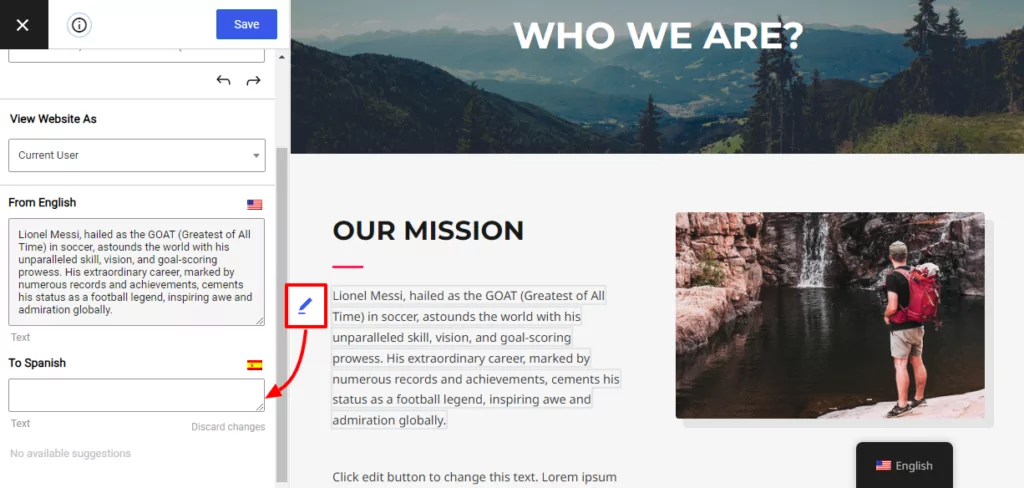
Con il suddetto editor di traduzione visiva, puoi perfezionare manualmente le tue traduzioni di slang. Dico questo perché le traduzioni automatiche non colgono le sfumature dello slang.
Per facilitare questa operazione, TranslatePress offre un’altra funzione molto utile nota come Account per traduttori. Questo componente aggiuntivo consente di creare o di consentire a un utente esistente (o a un professionista) di tradurre i termini gergali con facilità direttamente sul sito senza alcuna competenza di programmazione.
Il plugin TranslatePress offre molto di più caratteristiche che rendono la traduzione dello slang un gioco da ragazzi. Tra le caratteristiche degne di nota figurano:
- Traduzione di immagini, il che significa che puoi tradurre il testo slang nelle tue immagini;
- Supporto completo per Google Translate e Deepl;
- selettore di lingua personalizzabile, in modo che gli utenti possano scegliere facilmente la lingua che preferiscono;
- Supporto WooCommerce;
- Pacchetto SEO, così puoi generare più traffico dai tuoi contenuti in gergo tradotti;
- E altro ancora.
Se vuoi tradurre lo slang sul tuo sito WordPress senza alcuno sforzo, non riesco a pensare a un plugin di traduzione migliore.
Inoltre, non hai nulla da perdere. C'è un versione gratuita di TranslatePress su WordPress.org che ti permette di tastare il terreno.
TranslatePress Multilingue
Conclusione
Tradurre lo slang presenta molte sfide a molti traduttori. Per superare le sfide legate alla traduzione dello slang, seguite i consigli che abbiamo condiviso sopra e usate la vostra creatività per adattare le traduzioni al pubblico di destinazione.
Hai mai tradotto dello slang prima d'ora? Hai affrontato qualche difficoltà? Come traduci lo slang sul tuo sito web? Condividi i tuoi pensieri e suggerimenti nella sezione dei commenti qui sotto.