
En esta publicación
¿Te preguntas cuáles son los beneficios de la traducción? Si es así, no estás solo.
A menudo verás a muchos principiantes haciendo preguntas como:
- ¿Debería traducir mi sitio web?
- ¿Cuáles son los beneficios de la traducción?
- ¿Es la traducción de sitios web una inversión que vale la pena?
- ¿Cuáles son los beneficios de las traducciones automáticas?
- Y preguntas por el estilo.
Si te encuentras en una situación así, no te preocupes ni un ápice.
En el artículo de hoy, repasaremos varias ventajas de la traducción.
¿Por qué?
Nuestro objetivo es ayudarte a decidir si traducir tu sitio web vale tu tiempo y dinero.
O si deberías olvidarte de traducir tu sitio web y ceñirte a un solo idioma.
Pero antes, permitidnos ofrecer algo de contexto para tomar impulso 🙂
Beneficios de la traducción: Las estadísticas
El inglés es posiblemente uno de los idiomas más hablados del mundo, con más de 1.400 millones de hablantes, según Statista.
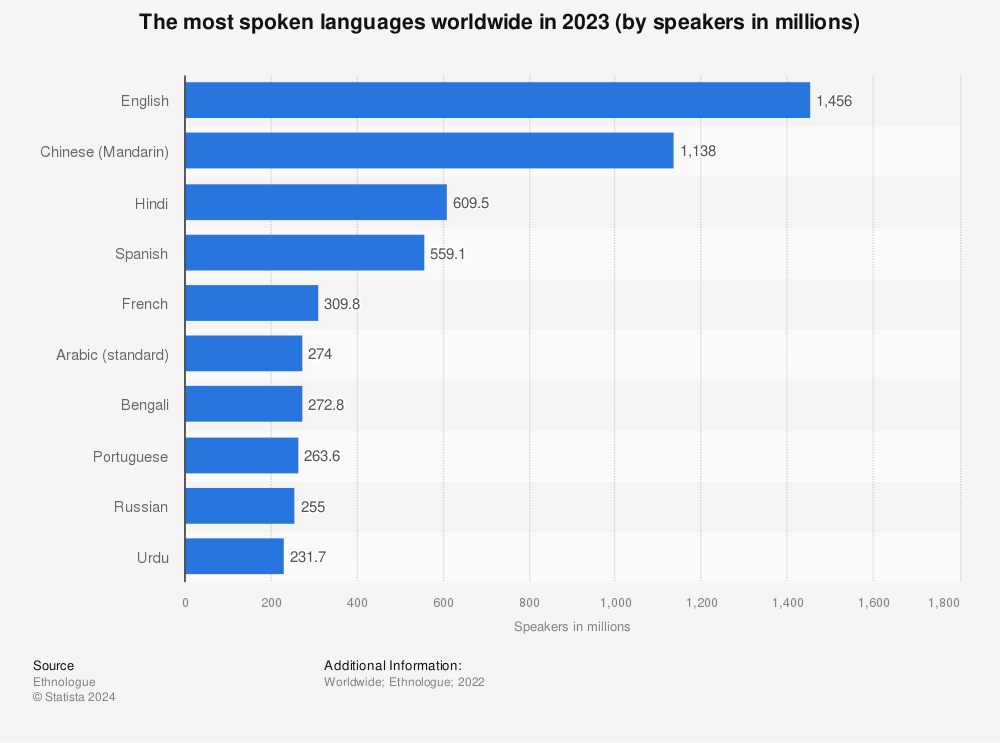
Este número comprende unos 380 millones de hablantes nativos y 1077 millones de personas que hablan inglés como segundo idioma.
Al mismo tiempo, el chino mandarín es el idioma más popular por número de hablantes nativos.
Así es, más de 939 millones de personas hablan mandarín como su lengua materna.
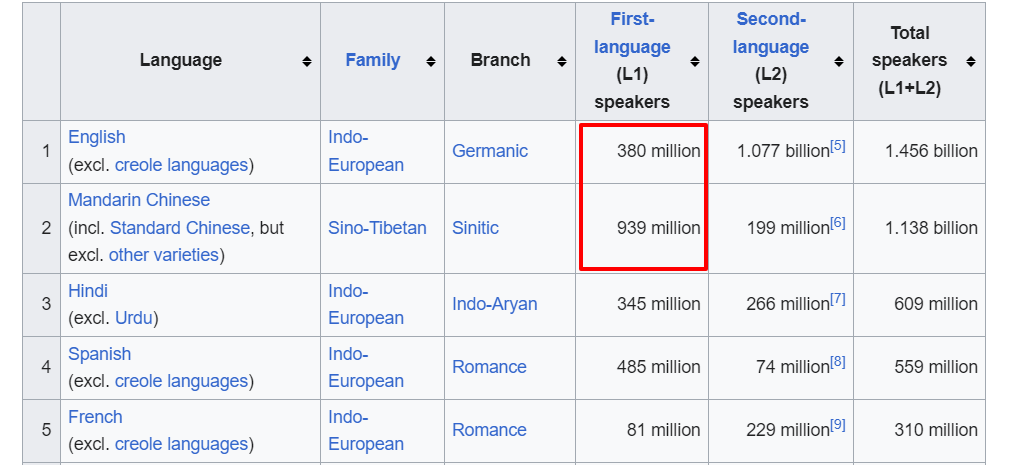
Hindi, español y Francés tome la tercera, cuarta y quinta posiciones, como se ve en la tabla anterior de Wikipedia.
Ahora bien, la cuestión es esta.
Si tienes un sitio web en inglés, tienes una audiencia probable de unos 1.456 millones de personas.
Si tú traducir el sitio web al chino, esa audiencia crece en unos 1138 millones de personas adicionales.
Traduce tu sitio web en inglés a los cinco idiomas más hablados, y tu audiencia potencial saltará a más de 4.072 mil millones de personas.
Aunque no llegarás a todas estas personas, puedes ver hacia dónde voy con esto.
Uno de los principales beneficios de la traducción es llegar a un público objetivo más amplio en su lenguas maternas.
Y como Nelson Mandela bromeó una vez:
Si le hablas a un hombre en un idioma que entiende, eso llega a su cabeza. Si le hablas en su propio idioma, eso llega a su corazón.
Nuevamente, creo que ves a dónde quiero llegar con esto.
O sea. Quieres capturar los matices culturales y las sutilezas del idioma de destino, más aún si tu objetivo es localiza tu contenido.
Estos son solo dos de los beneficios de la traducción. Cubriremos más más adelante en el artículo.
Después de eso, compartiremos algunos consejos útiles y uno de los mejores herramientas de traducción en el mercado.
Con ese preámbulo, metámonos de lleno en el asunto.
¿Qué es la traducción?
Para muchos principiantes, la traducción parece sencilla al principio. Coger un texto y traducirlo a otro idioma. Es tan fácil como A, B, C. ¿Verdad?
¿Qué tan difícil podría ser? ¿Y qué podría salir mal?
Resulta que la traducción es un poco más difícil de lo que imaginabas, y muchas cosas pueden salir mal si fallas el blanco.
A un nivel básico, la traducción consiste en convertir su texto a otros idiomas.
En las aplicaciones del mundo real, la traducción implica convertir todo lo de su sitio web a otros idiomas.
Cuando digo todo, me refiero a tu:
- Contenido textual: esto incluye texto en su sitio web, libros electrónicos, archivos PDF, informes, infografías, material de marketing, subtítulos, transcripciones, enlaces y más;
- Traducción de imágenes – Puedes traducir imágenes de marca como logotipos, fotos de productos, merchandising y otros materiales de marketing;
- Elementos de SEO – Para obtener los mejores resultados, es conveniente traducir tus metadescripciones, fragmentos de URL, texto alternativo y otros elementos;
- Traducción multimedia: Esfuérzate por traducir tu contenido de audio o video a otros idiomas. Esto implica traducir podcasts, cursos en video, cuestionarios interactivos, audiolibros y más;
- Menús de navegación – Debes traducir tus menús para una mejor experiencia de usuario en el idioma de destino;
- Comercio electrónico: Debería considerar traduciendo tu tienda de WooCommerce para llegar a un público más amplio, interactuar con los clientes y aumentar sus tasas de conversión;
- Jerga – Quieres traducir expresiones coloquiales e informales en tu contenido con precisión;
- Tu panel de administración: permite a los autores, moderadores y otros usuarios de diferentes entornos lingüísticos elegir los idiomas que desean en el panel de administración;
- Y más.
Elementos fundamentales de una traducción eficaz
Como puede ver, traducir su sitio web va mucho más allá del contenido de texto.
Dicho esto, la traducción de sitios web es un proceso factible que involucra los siguientes elementos.
- Experiencia en lingüística – Para obtener los mejores resultados, necesitas un profundo conocimiento de los idiomas involucrados en la traducción. Esto es especialmente cierto si estás traduciendo tu sitio web por tu cuenta en lugar de contratar a empresa de traducción;
- Precisión de la traducción – El contenido que traduzcas debe conservar el contexto y el significado del mensaje original;
- Sensibilidad cultural – Como traductor profesional, debe tener en cuenta los matices culturales y los hablantes nativos de las lenguas involucradas. De lo contrario, podría ofender al público objetivo;
- Comprensión y vocabulario – Para realizar traducciones precisas es necesario tener un buen dominio de los términos, las frases y las expresiones que se utilizan en el texto;
- Las herramientas de traducción adecuadas Traducir un sitio web es un proceso arduo que puede sacar de quicio al mejor de nosotros. Por esta razón, necesitas las mejores herramientas de traducción que puedas tener en tus manos. Esto incluye sistemas de gestión de traducción (TMS) y herramientas de automatización.
Estos cinco elementos te serán útiles ya sea que estés traduciendo contenido manualmente, usando software o recurriendo a un traductor externo.
Recurso relacionado: Cuentas de traductor permitir que traductores externos traduzcan la página web directamente desde la interfaz de usuario.
Una vez aclarado esto, repasemos rápidamente las ventajas de la traducción.
¿Cuáles son los beneficios de la traducción?

Si bien traducir eficazmente un sitio web puede ser un desafío, ofrece varios beneficios que hacen que valga la pena.
Aquí hay algunos de los beneficios de la traducción a tener en cuenta.
1. Mayor alcance y accesibilidad
Una de las principales ventajas de la traducción es la ampliación de tu público objetivo.
Traducir el contenido de su sitio web a varios idiomas es una forma increíble de superar las barreras del idioma. Esto le permite llegar a un público objetivo más amplio de personas que no hablan inglés como lengua materna o como segundo idioma.
Además, traducir tu página web a varios idiomas te permite llegar a usuarios que hablan lenguas minoritarias. Al hacerlo, amplías aún más tu público potencial, al tiempo que fomentas la inclusividad y la fidelidad de tu base de clientes.
Al mismo tiempo, la traducción de sitios web le permite dirigirse a mercados nuevos y emergentes con diversos antecedentes lingüísticos. Cuando ofrece idiomas relevantes para estos nuevos mercados, puede establecerse rápidamente en regiones donde su negocio es desconocido.
Con contenido multilingüe, su negocio puede atraer atención global a través de compartir en redes sociales, el boca a boca y la visibilidad en los motores de búsqueda. Esto conduce a un mayor conocimiento y reconocimiento de la marca en todo el mundo.
En otras palabras, la traducción de sitios web te permite hacer que tu contenido sea accesible a públicos diversos, procedentes de distintos entornos culturales y lingüísticos. Se trata de un enfoque estratégico que amplía el alcance de tu marca y demuestra tu compromiso con la inclusividad y la sensibilidad cultural en una economía global.
Por ejemplo, CodeLobster llegó a más personas a nivel internacional después de traducir su sitio web y su entorno de desarrollo integrado (IDE) de PHP a varios idiomas. También utilizan un selector de idioma menú en los idiomas originales, lo que facilita a los usuarios la elección de su idioma.
2. Mayor reputación de marca
Partiendo del punto anterior, mejorar la reputación de tu marca es otra de las principales ventajas de la traducción.
Cuando traduces tu sitio web a varios idiomas, puedes atender eficazmente a audiencias multilingües y multiculturales.
Esto es a lo que me refiero.
Traducir su contenido le ofrece la oportunidad perfecta para apreciar la diversidad cultural de los visitantes de su sitio web. Esta es una forma fabulosa de demostrar su dedicación a la inclusividad, lo que refleja una buena imagen de su marca.
En segundo lugar, la traducción de sitios web te permite adaptar tu contenido a los intereses y preferencias locales.
¿Cómo ayuda esto a mejorar la reputación de su marca?
Es simple. Cuando demuestras que entiendes las costumbres locales, la jerga y los matices culturales, tu contenido resonará con el público objetivo.
Esto conduce a una mejor participación del usuario, aceptación por parte de los nativos y una reputación de marca mejorada.
En tercer lugar, hablar a su audiencia en su idioma nativo fomenta una sensación de familiaridad y confianza.
Esto refuerza la credibilidad y facilita conexiones más fuertes y saludables entre los usuarios globales y su marca.
Hay más...
Traducir su sitio web de forma profesional le permite evitar malentendidos culturales y contenido ofensivo. Esto le ayuda a salvaguardar la reputación y la integridad de su marca en un mercado global.
Aun en lo que respecta a la reputación de marca, ofrecer experiencias de usuario fluidas en diferentes idiomas fortalece la fidelidad a la marca. Hacerlo fomenta las visitas repetidas a su sitio y las relaciones a largo plazo con su empresa.
Si sabes moverte bien, los clientes satisfechos se convertirán en embajadores de la marca que promocionarán tu negocio de forma espontánea.
Es decir. Los clientes multilingües satisfechos recomiendan sus productos o servicios a amigos y familiares. Esto amplifica el boca a boca y contribuye a la defensa de la marca, lo que conduce a una reputación mejorada para su negocio.
Por último, la traducción de sitios web le ayuda a destacar entre los competidores que no han adoptado la comunicación multilingüe.
Si te lo estás preguntando, esta es una forma eficaz de diferenciarte y atraer a personas que se alinean con tu mensaje general.
¿Cómo mejora esto la reputación de tu marca?
Primero, lo establece como una organización con visión de futuro y centrada en el cliente. Segundo, ofrecer contenido multilingüe es una práctica estándar en el mercado global actual.
Los clientes esperan que tu marca ofrezca una experiencia de usuario inclusiva que influya positivamente en la percepción que la gente tiene de tu empresa.
3. Mejora de la experiencia del usuario
Otro gran beneficio de la traducción es mejorar la experiencia del usuario en su sitio web.
¿Por qué es eso importante?
Mejorando la experiencia del usuario es crucial para cautivar y retener a su público objetivo.
En primer lugar, traducir tu contenido elimina las barreras lingüísticas. Esto permite que personas de distintos orígenes puedan entender y utilizar tu página web, independientemente de dónde sean.
Al adaptarte a usuarios de diferentes idiomas, demuestras tu compromiso con la accesibilidad y la facilidad de uso, lo que hace que tu página web resulte más acogedora para un mayor número de personas.
Además de eso, traducir su sitio web le permite ofrecer experiencias personalizadas a sus usuarios. Puede adaptar su contenido a grupos y subculturas, dirigiéndose a sus intereses distintivos y antecedentes culturales.
En segundo lugar, la traducción te permite localizar tu página web. De este modo, puedes adaptar elementos como las imágenes, las divisas y los formatos de fecha a las convenciones y costumbres locales. Esto mejora la participación de los usuarios y crea un sentimiento de pertenencia entre ellos.
Además, puedes enviar mensajes de marketing en el idioma nativo del usuario, lo que genera una mayor satisfacción del usuario y más conversiones.
En tercer lugar, traducir tu contenido es una forma eficaz de aumentar el tiempo de permanencia en la página. Esto se debe a que los usuarios de diferentes orígenes lingüísticos dedican más tiempo a interactuar con el contenido en un idioma que comprenden.
Esto, a su vez, se traduce en una mayor participación e implicación de los usuarios en tu página web.
Además, ofrecer una experiencia multilingüe fluida contribuye a reducir las tasas de rebote.
¿Por qué?
Los usuarios tienden a pasar más tiempo en tu página web y a visitar más páginas cuando pueden entender fácilmente tu contenido.
4. Mejora del SEO y la visibilidad
Si aún eres un novato en el mundo del marketing digital, optimización en motores de búsqueda (SEO) consiste en optimizar tu página web y tu contenido para que aparezcan en posiciones más altas en las páginas de resultados.
Pero, ¿cómo mejora el SEO y la visibilidad la traducción de su sitio web a varios idiomas?
Para empezar, contamos con la optimización multilingüe de palabras clave.
A la hora de traducir tu página web, empieza por realizar un análisis de palabras clave en diferentes idiomas. Esto te permitirá identificar las palabras clave y frases relevantes que utilizan los visitantes locales de la página web para encontrar tu contenido.
Luego, optimiza tu contenido multilingüe con estas palabras clave para posicionar mejor en las páginas de resultados de los motores de búsqueda (SERP).
En segundo lugar, traducir tu contenido a varios idiomas te ayuda a ampliar tu alcance geográfico.
Esto te ayuda a reforzar tu presencia en los mercados internacionales. De este modo, más personas podrán descubrir tu página web e interactuar con ella mediante consultas de búsqueda localizadas.
Además, puedes recurrir a la optimización de contenidos con segmentación geográfica para adaptar tus contenidos a contextos culturales y regiones geográficas específicos.
Esto ayuda a los motores de búsqueda a entender la relevancia de tu contenido para los usuarios locales, lo que se traduce en clasificaciones más altas para las búsquedas específicas de una ubicación.
En tercer lugar, crear contenido multilingüe útil muestra a los motores de búsqueda que su sitio web es autorizado y confiable. Esto conduce a una mayor autoridad de dominio y clasificaciones más altas en los resultados de búsqueda específicos de cada idioma.
Además, conseguir enlaces entrantes de sitios web locales aumentará tu autoridad y relevancia en las búsquedas locales, lo que se traduce en un mayor tráfico orgánico y un mejor rendimiento en materia de SEO.
Al mismo tiempo, optimizar las metadescripciones, los títulos y las etiquetas alt en cada idioma es una forma segura de garantizar que tu contenido se represente con precisión en los resultados de búsqueda locales.
Esto se traduce en mayores tasas de clics y mayor visibilidad en los resultados de búsqueda.
Pero eso no es todo…
Ofrecer tu contenido en varios idiomas reduce tus tasas de rebote.
La tasa de rebote es un factor importante para el posicionamiento en Google. Representa el porcentaje de personas que abandonan tu sitio web inmediatamente y sin interactuar con otras páginas.
Para los motores de búsqueda, una tasa de rebote muy elevada indica que los usuarios no encuentran útil tu contenido o que hay algún problema en tu página web.
Como resultado, los motores de búsqueda te otorgan clasificaciones más bajas, y lo contrario es cierto.
Ofrecer tu contenido en varios idiomas anima a los visitantes del sitio web a quedarse más tiempo y explorar más páginas, ya que entienden la información que presentas.
Esto reduce tu tasa de rebote, lo cual es definitivamente lo que quieres.
Otra cosa.
Traducir su sitio web teniendo en cuenta la relevancia contextual le permite capturar una amplia gama de intenciones de los usuarios.
Esto te permite optimizar tu contenido multilingüe para palabras clave de cola larga y consultas de búsqueda específicas de cada nicho.
También deberías estar al tanto de las tendencias culturales en las distintas regiones. Esto te permite adaptar tu contenido a las búsquedas locales, de modo que tu página web siga siendo relevante y competitiva en materia de SEO.
Por último, pero no por ello menos importante, el seguimiento del rendimiento de tus iniciativas de SEO multilingüe proporciona datos valiosos sobre el posicionamiento de las palabras clave, la interacción de los usuarios y las tasas de conversión.
Puedes utilizar estos datos para la planificación estratégica y para mejorar tus futuras campañas de SEO multilingüe.
A modo de ejemplo rápido, el reconocido experto en marketing digital Neil Patel aumentó su tráfico en un 47% y el número de nuevos usuarios en un 60% después de traduciendo su sitio web a 82 idiomas!
5. Mayores conversiones e ingresos
Otro beneficio emocionante de la traducción son las mayores tasas de conversión y los ingresos.
Digo emocionante porque, ¿a quién no le gusta ganar más dinero? Al fin y al cabo, los ingresos son el objetivo principal y la fuerza vital de cualquier negocio.
Entonces, ¿cómo aumenta las conversiones y los ingresos la traducción de su sitio web a más idiomas?
Empecemos por las conversiones.
Una conversión se produce cada vez que un usuario completa una acción deseada en su sitio web.
Esto podría ser:
- Tomando el teléfono para llamarte;
- Completar un formulario de contacto;
- Descargando un archivo;
- Unirme a su boletín por correo electrónico;
- Hacer clic en enlaces de afiliados;
- Y la compra de un producto, entre otras cosas.
Registrar altas tasas de conversión en su sitio web significa que está haciendo las cosas bien.
Una tasa de conversión baja es exactamente lo contrario.
¿Cómo aumenta las conversiones la traducción de sitios web?
Hablarle a su audiencia diversa en un idioma que entienden fomenta la confianza y la seguridad en su marca. Esto elimina las dudas que de otro modo impedirían que los visitantes del sitio web se conviertan.
Además, el contenido multilingüe elimina las barreras lingüísticas, lo que permite a los usuarios interactuar con su sitio web de maneras significativas.
Además de eso, ofrecer traducciones demuestra a los clientes internacionales que su negocio valora su idioma y cultura.
Esto lleva a los usuarios a percibir su marca como más confiable y profesional que la de los competidores. Como resultado, es más probable que los clientes se conviertan.
Además, los clientes internacionales satisfechos comparten reseñas positivas con otros, lo que influye en las decisiones de compra e impulsa las conversiones.
¿Y cómo impulsa la traducción de sitios web los ingresos?
Por lo general, un mayor número de conversiones se traduce, de una forma u otra, en mayores ingresos.
Aquí hay una explicación detallada.
Primero, traducir su contenido a varios idiomas simplifica el proceso de compra.
En otras palabras, una experiencia de compra multilingüe fluida reduce los obstáculos, lo que se traduce en un mayor número de conversiones y ventas.
En segundo lugar, la traducción de sitios web incluye la incorporación de monedas locales y opciones de pago.
Esto facilita que las transacciones se realicen sin problemas, ya que los compradores se sienten más seguros al utilizar pasarelas de pago que les resultan familiares.
En tercer lugar, la traducción de tu página web incluye contenidos fundamentales como la información sobre envíos, las condiciones de uso y las políticas de devolución.
Como tal, los clientes globales comprenden claramente los términos relacionados con sus pedidos.
Esto elimina las dudas y la incertidumbre y aumenta la transparencia. Al final, se obtienen más conversiones y ventas y menos devoluciones.
Algunos ejemplos adecuados serían: Apple.com y Búsqueda de Google (149 idiomas).
6. Relación calidad-precio y eficiencia
Otra ventaja destacable de la traducción es que se trata de un proceso rentable y eficaz.
Para empezar, no es necesario crear contenido nuevo, lo cual, como todos sabemos, resulta muy costoso. Lo único que hay que hacer es traducir el mismo contenido a diferentes idiomas y disfrutar del ahorro que ello supone.
¿Ahorro de costes, dice?
Así es. La traducción de sitios web suele ser una forma más económica y escalable de llegar a un público internacional que los métodos tradicionales, como los anuncios de pago por clic, el marketing por correo electrónico, la televisión y la publicidad impresa.
En la misma línea, atraer y retener a los usuarios existentes mediante traducciones suele ser más rentable que los métodos tradicionales.
Eso, sumado al contenido multilingüe, ofrece mayores rendimientos a largo plazo.
Además, invertir en la traducción de sitios web es una estrategia de crecimiento sostenible para crear presencia en nuevos mercados.
También es una forma fabulosa de diversificar sus fuentes de ingresos (en los nuevos mercados) y reducir la dependencia excesiva de costosas técnicas promocionales puntuales. El otro beneficio de la traducción es la eficiencia, gracias a los avances tecnológicos.
Esto lo digo porque, sin las herramientas adecuadas, traducir contenido puede ser un camino muy empinado.
Por ejemplo, los sistemas de gestión de traducción te ayudan a automatizar y centralizar tu flujo de trabajo de traducción. Esto minimiza el esfuerzo manual y los errores. Asimismo, agiliza la colaboración entre los editores, directores de proyectos, y traductores.
Además, no olvides los beneficios de la traducción automática y la inteligencia artificial (IA).
Si bien las traducciones automáticas y la inteligencia artificial pueden pasar por alto el contexto cultural y otros matices de diferentes idiomas, estas tecnologías son valiosas.
Por ejemplo…
TranslatePress es una herramienta excepcional que acelera el proceso de traducción, permitiéndole traducir grandes cantidades de contenido rápida y eficientemente sin comprometer la calidad y la precisión.
Su características avanzadas conviértela en una solución rentable para empresas y particulares que necesitan traducciones precisas. Esta herramienta te permite disfrutar de todos los beneficios de la traducción sin esforzarte por tu parte.
Además, herramientas como TranslatePress guardan todas tus traducciones en una base de datos terminológica, lo que evita tener que repetir traducciones que requieren mucho tiempo.
Guardar tus traducciones también garantiza la coherencia y la consistencia en todas tus traducciones. Todos estos factores contribuyen a la eficiencia de la traducción.
Aparte de una mayor eficiencia, otro beneficio de la traducción es la medición del retorno de la inversión (ROI).
El seguimiento de los indicadores clave de rendimiento (KPI), como el valor del tiempo de vida del cliente, las tasas de conversión, el tráfico y los ingresos, le ayuda a medir el ROI de la traducción de sitios web.
Esto puede ayudarte a decidir si traducir tu sitio web a varios idiomas vale tu tiempo y dinero.
En otras palabras, es sencillo medir el impacto de la traducción de sitios web en los ingresos.
Esto puede ayudarle a tomar decisiones bien informadas para asignar sus recursos en consecuencia.
7. Cumplimiento de los requisitos legales
A pesar de lo que muchos piensan, existen varias leyes que rigen la traducción.
Así es, la traducción va más allá de convertir contenido a otros idiomas. En algunos países, regiones e industrias, la ley exige a los propietarios de sitios web proporcionar traducciones precisas a los usuarios.
Traducir su sitio web a otros idiomas es otro beneficio de la traducción porque ayuda a su negocio a evitar repercusiones como sanciones y multas.
Por ejemplo, en los Estados Unidos, debe cumplir con las estipulaciones descritas en las siguientes leyes de acceso lingüístico:
- Título VI de la Ley de Derechos Civiles de 1964;
- Orden Ejecutiva 13166;
- Ley para Estadounidenses con Discapacidades (ADA);
- Ley de Derecho al Voto de 1965;
- Ley de Cuidado de Salud a Bajo Precio.
En la Unión Europea (UE), debes cumplir con las siguientes leyes:
- Directiva de Máquinas 2006/42/CE de la UE;
- RGPD.
En Canadá, tenemos el Proyecto de Ley 96.
Estos son solo algunos ejemplos. Consulta con tu abogado para asegurarte de que no estás infringiendo la ley al descuidar a los usuarios que no hablan inglés.
Aparte de los beneficios de la traducción, ¿cómo traduces tu sitio web como un profesional?
Ventajas de la traducción: argumentos a favor de TranslatePress
Si bien la traducción tiene muchos beneficios, es un hueso duro de roer, especialmente si es tu primera vez.
Esta es precisamente la razón por la que necesitas un complemento de traducción sólido como TranslatePress.
La herramienta incluye un impresionante conjunto de funciones que facilitan la traducción de su sitio web.
Si tienes prisa, te alegrará saber que TranslatePress admite traducciones automáticas a través de Google Traductor y DeepL.
Trabajas dentro de un editor de traducción visual que hace que la afinación de tus traducciones (por complejas que sean) sea increíblemente fácil.
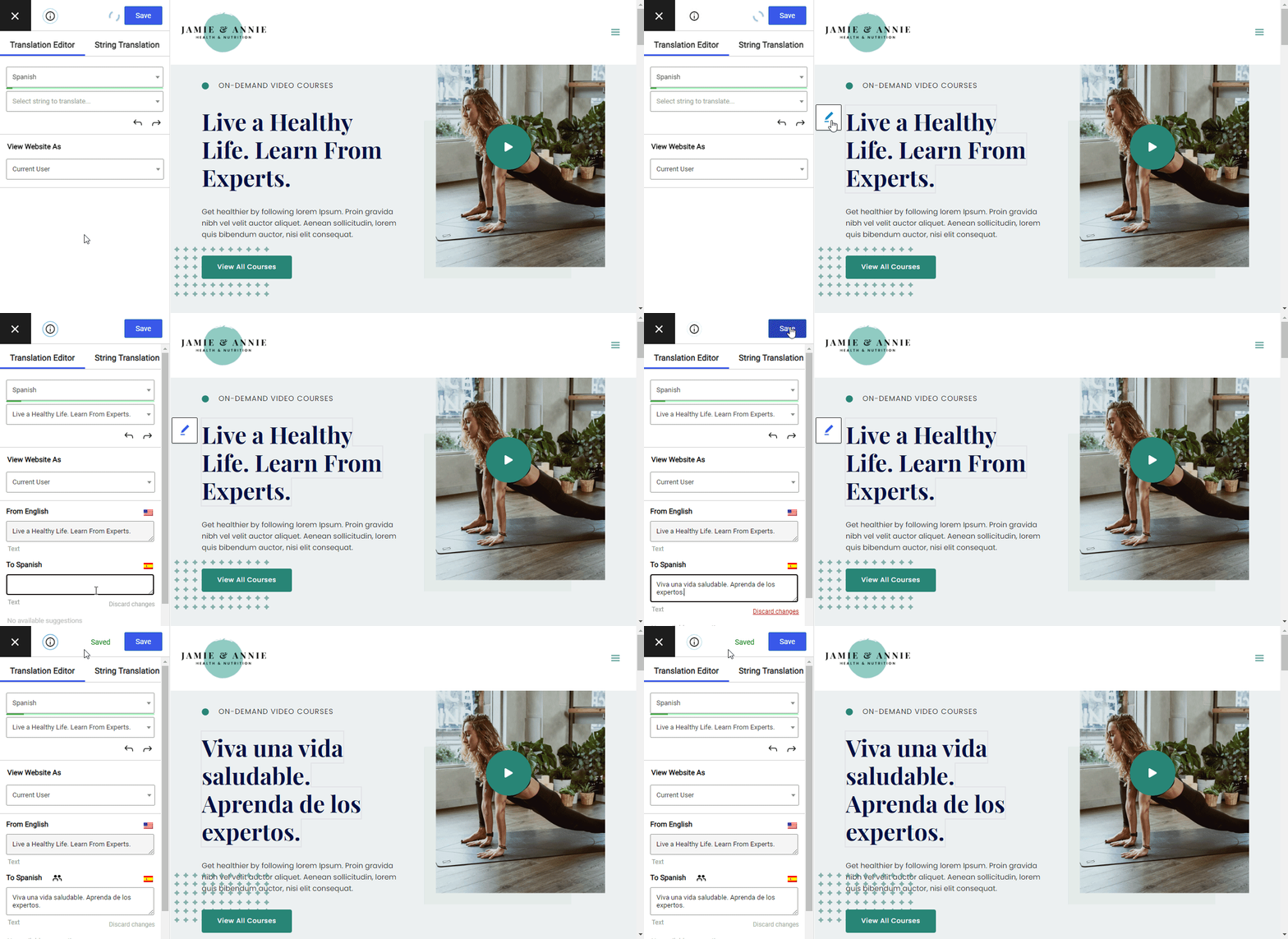
El complemento también cuenta con varias opciones útiles, como se destaca en este Página de características de TranslatePress.
¿Qué es aún mejor? Tienes un completamente versión gratuita que te permite traducir tu sitio web como todo un jefe.
Para mayor potencia, no dude en optar por la versión de pago.
TranslatePress Multilingüe
Beneficios de la traducción: Palabras finales
En este artículo, cubrimos siete beneficios de la traducción en gran detalle.
Espero que ahora puedas decidir si traducir tu sitio web vale tu tiempo o tu dinero.
En pocas palabras, los beneficios de la traducción incluyen un mayor alcance, una mejor imagen de marca, un SEO mejorado y un incremento en los ingresos, entre otros.
¿Estás al tanto de otras ventajas de la traducción? ¿Cuál fue tu conclusión principal hoy? ¿Se nos pasó algo?
Por favor, comparte tus pensamientos y sugerencias en la sección de comentarios a continuación.
¡Feliz traducción, amigo!