
En esta publicación
¿Estás teniendo dificultades para entender la traducción de jerga? Si la respuesta es un rotundo sí, no estás solo.
Creo que estarás de acuerdo conmigo cuando digo que traducir jerga plantea varios desafíos para muchos traductores.
También podemos estar de acuerdo en que añadir jerga a tu contenido puede animar la conversación y hacer que tu texto sea más cercano.
Sin darnos cuenta, todos usamos jerga en las conversaciones cotidianas con nuestros iguales. Se ha arraigado tanto en nuestra vida diaria que a veces es difícil distinguir qué es jerga y qué no.
Pero.
Aun así, muchos traductores principiantes y profesionales tienen dificultades con el argot debido a su naturaleza informal e impredecible.
Lo que podría ser una jerga brillante y bien intencionada en un idioma, podría resultar confusa u ofensiva en otro entorno lingüístico.
Por ejemplo, las expresiones informales “let’s rock and roll” y “hit the road” rápidamente tendrán sentido para la mayoría de los angloparlantes.
Si tradujeras las frases palabra por palabra, no tendrían mucho sentido para, digamos, Chino o Alemán altavoces.
Otra cosa.
Algunas palabras y frases coloquiales en el idioma de origen no tienen equivalentes en el idioma de destino, lo que empeora las cosas.
Luego hay sensibilidades culturales y sociales que tener en cuenta al traducir la jerga.
Como aprenderás más adelante, estos son algunos factores que hacen que la traducción de la jerga una de las tareas más difíciles incluso para los mejores traductores.
Entonces, ¿cómo se traduce la jerga a otro idioma preservando el contexto y el significado del texto original?
En la publicación de hoy, aprenderás:
- ¿Qué es la jerga y ejemplos populares;
- Los desafíos de traducir la jerga;
- ¿Por qué traducir la jerga?;
- Estrategias eficaces para traducir jerga como un profesional.
Sin más preámbulos, pongámonos manos a la obra (¿captas la indirecta?).
¿Qué es la jerga?
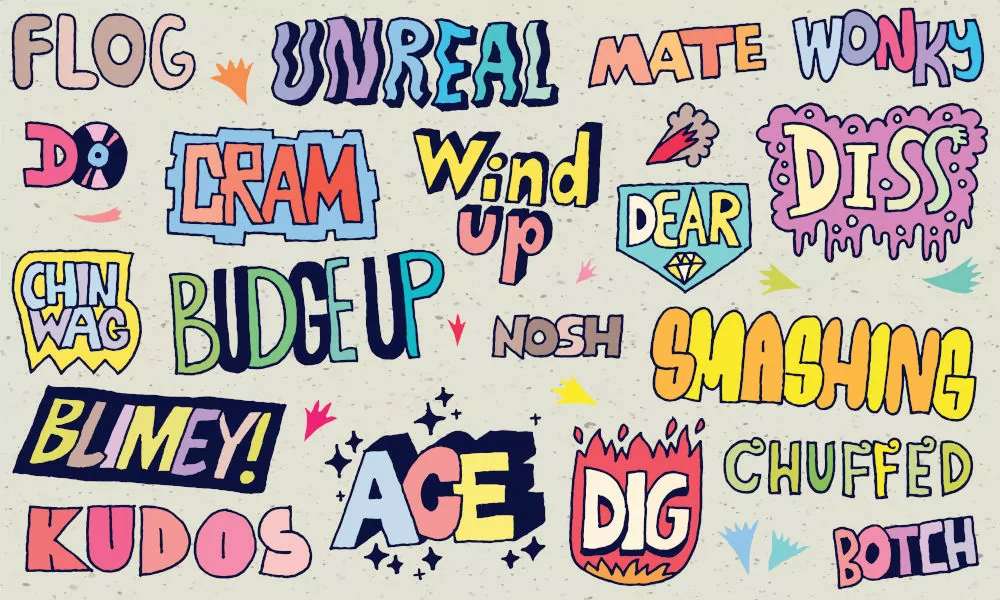
Entonces, buenas damas y caballeros, ¿qué es la jerga?
Debido a su naturaleza ambigua y polisémica, el caló puede adoptar muchas formas diferentes. Esto puede hacer que definir el caló sea un tanto confuso, amigos.
En su forma más básica, la jerga es un lenguaje informal y a menudo coloquial, lleno de expresiones inusuales, frases, palabras, juegos de palabras y humor.
Se utiliza principalmente dentro de grupos sociales o subculturas específicos para transmitir mensajes ocultos o validar un sentido de pertenencia.
Pero no me malinterpretes.
El caló también incluye préstamos lingüísticos, palabrotas, palabras inventadas y la jerga profesional.
Sin embargo,
Debido a la falta de las características estándar de los lenguajes formales, la jerga presenta problemas casi insuperables para los traductores en general.
Aquí tienes algunos ejemplos populares para ilustrar a qué me refiero.
Ejemplos populares de jerga
Esta es la parte divertida de este artículo, lo prometo 🙂 Como aviso previo, está lleno de jerga que quizás no envejezca bien. Solo lo digo.
Vamos directo al grano.
“Eres el GOAT” es una frase coloquial muy popular, especialmente entre la generación más joven. Significa que eres el mejor de todos los tiempos.
Por ejemplo, “Lionel Messi es el mejor de todos los tiempos en el fútbol”. O tal vez Cristiano Ronaldo sea más de tu agrado. Quien sea que te mueva el piso (¿captas lo que hice ahí de nuevo?).
Si alguien te dice que eres el GOAT, significa que eres increíble en lo que haces. Pero si tradujeras la frase al suajili, por ejemplo, obtendrías “wewe ni mbuzi”, que no transmite el mismo significado.
“Wewe ni mbuzi” significa que eres una cabra, el animal. No tiene el mismo significado que querías transmitir de la lengua de origen a la lengua de destino. Definitivamente ofendería al público lector al que va dirigido.
Otro ejemplo popular es el término jergal “shit” (mierda). No tiene un significado literal en inglés formal. Sin embargo, cuando se usa como jerga, puede significar una gran variedad de cosas dependiendo del contexto.
Por ejemplo, “you’re the shit” significa que eres el puto amo; lo mejor de lo mejor. “You’re shitting me” significa que me estás tomando el pelo, y “That movie was shit” significa que la película era una auténtica mierda.
Nuevamente, si tradujeras “you’re the shit” al suajili, obtendrías “wewe ni shit”, que es una jerga despectiva que significa “eres heces”. No es exactamente lo que pretendías para tu público objetivo, ¿verdad?
Tenga en cuenta que incluso los países o regiones de habla inglesa tienen diferentes jergas. Por ejemplo, “bum” en EE. UU. significa vagabundo.
En el Reino Unido, la misma palabra jergal se refiere a las partes íntimas de alguien. Un “fag” en el Reino Unido significa un cigarrillo, pero la misma palabra es un insulto lleno de odio contra los homosexuales en los EE. UU.
En el Oxford Learner Dictionary, “booty” significa bienes valiosos que son robados, especialmente por soldados durante una época de guerra.
Pero eso definitivamente no es lo que Samuel L. Jackson quería decir en la película Eje. Traducir la jerga literalmente a otro idioma hará que se pierda el significado deseado.
Aún más ejemplos
En muchas películas y contenidos informales, difícilmente encontrarás referencias directas a la “marihuana”.”
A menudo verás palabras de jerga como “doobie”, “herb”, “chronic” y otros términos que no tendrían sentido en otro idioma.
Especialmente sin una traducción adecuada y contextual.
Aquí tienes otra.
Los soldados estadounidenses están familiarizados con muchas palabras de jerga que solo tienen sentido para ellos.
Términos como “mecánico de coches”, “calamar”, “halcón azul” y “judía verde” no tendrían el menor sentido si se tradujeran a otro idioma palabra por palabra.
Y la jerga no se detiene ahí.
Se extiende a otras profesiones como la medicina y el derecho. ¿Quién lo hubiera adivinado?
En la práctica clínica, por ejemplo, a menudo se oyen términos de argot como “agujeros negros”, “mariposas”, “conejo” y “pavos”.”
Basta decir que ninguna de estas jergas significa lo que crees.
Traducir ese argot de la lengua de origen a la lengua de meta es una pesadilla, sobre todo porque, supongo, nunca antes has visto jerga médica.
Los anteriores son solo algunos ejemplos de jerga, pero apuesto a que ves a dónde quiero llegar con esto.
El argot es un buena herramienta de comunicación cuando se utiliza dentro de un grupo o cultura específicos. Sin embargo, presenta desafíos al traducirlo a otro idioma.
Ahora que sabes con qué estamos trabajando, aquí tienes algunos desafíos de la traducción de jerga.
Retos de la traducción de argot

Traducir el argot es importante para localización de contenido.
Transmitir el contexto y el significado del texto original en el idioma de destino hará que tus traducciones de jerga sean accesibles y genuinas.
Dicho esto, traducir texto con jerga plantea varios desafíos inevitables, entre ellos:
Evolución rápida
A diferencia de los idiomas formales como el inglés, la jerga evoluciona rápidamente. Dado que es predominantemente emotiva, siempre hay una necesidad de acuñar nuevos términos.
Esto presenta un desafío para los traductores, ya que hay que mantenerse al día con las últimas palabras y sus significados.
Además, la cultura pop, las redes sociales y las aplicaciones de mensajería dan origen a nuevos términos, lo que significa que la jerga cambia constantemente.
Matices culturales
Uno de los mayores desafíos de traducir la jerga son los matices culturales. Lo que se acepta como jerga en una cultura puede ser ofensivo (como un mono en negligé) para otro grupo.
Esto significa que el traductor requiere comprensión cultural para transmitir estos matices, lo que puede ser un desafío si eres de un origen diferente.
Además de eso, algunas palabras de la jerga pueden ser socialmente inapropiadas en distintas culturas. Esto significa que el traductor debe aprender a navegar las sensibilidades culturales con cuidado.
Sin un buen dominio de estos matices culturales, es probable que confundas u ofendas al público objetivo.
Ambigüedad y variaciones regionales
La mayoría de las veces, las expresiones de la jerga tienen múltiples significados (polisemiadependiendo del contexto. Esto genera ambigüedad en la traducción y posibles malentendidos.
Además, como vimos antes, la jerga varía según las regiones. Por lo tanto, traducir con precisión la jerga regional requiere conocimientos de las sutilezas lingüísticas locales.
Además, el argot suele utilizar expresiones que no tienen equivalentes directos en el idioma de destino. Esto dificulta la generación de traducciones precisas.
Otra cosa es que la jerga es muy contextual. Para traducciones correctas, se necesita una comprensión adecuada del contexto situacional o social.
Brecha generacional y la influencia de la cultura pop
Los diferentes grupos de edad usan y entienden los términos de jerga de manera diferente. Esto dificulta cerrar la brecha generacional y transmitir el significado deseado con éxito.
Además, el argot está fuertemente influenciado por la cultura pop, incluida la música, el cine y las redes sociales. Esto significa que debes estar al tanto de estas influencias y tendencias para una traducción precisa.
Por ejemplo. Hace unos años, los términos de jerga OMG y LMAO no eran frecuentes. “Estoy muerto” tampoco existía.
Falta de documentación formal
A diferencia de los términos y expresiones formales, la jerga no está ampliamente documentada en los diccionarios oficiales.
Por esta razón, los traductores suelen tener dificultades para encontrar fuentes fiables como referencia.
Para traducir la jerga eficazmente, se necesita agilidad lingüística y un profundo conocimiento de las diferencias culturales entre varios pares de lenguas.
Ahora que conoces los desafíos a los que se enfrentan muchos traductores, ¿por qué te molestaría traducir la jerga?
¿Por qué traducir jerga?

Traducir la jerga es una parte fundamental de la comunicación eficaz y la comprensión del idioma.
Aquí hay algunas razones de peso por las que deberías esforzarte por traducir la jerga eficazmente.
Comunicación mejorada
La mayoría de las veces, la jerga refleja los matices culturales de un grupo específico. Traducirla puentea las brechas culturales, lo que fomenta una mejor comunicación intercultural.
Si tu público objetivo puede entender y conectar con la jerga traducida, puedes transmitir con precisión el significado deseado.
Por otro lado, la jerga mal traducida genera confusión y pérdida de significado.
Y la pérdida de su dinero en marketing.
Evitando malas interpretaciones
Primero, el argot depende en gran medida del contexto. Traducir teniendo esto en cuenta conduce a traducciones que son apropiadas para las situaciones previstas.
En otras palabras, debe utilizar lenguajes que sean apropiados para diferentes entornos para evitar malentendidos.
En segundo lugar, debes comprender que los diferentes grupos sociales tienen su propia jerga. Una traducción precisa permite a las personas participar eficazmente dentro de estos grupos.
En tercer lugar, ten en cuenta que las expresiones de jerga suelen ser polisémicas (tienen múltiples significados). Cuando traduces la jerga con precisión, evitas la ambigüedad y las malas interpretaciones.
Es decir, una traducción precisa te permite elegir expresiones adecuadas para evitar ofensas. Esto es útil, especialmente si el texto fuente contiene jerga culturalmente sensible o inapropiada.
Al mismo tiempo, traducir adecuadamente la jerga es una forma fantástica de mostrar respeto por la diversidad cultural del público objetivo.
Esto es fundamental para generar confianza y buena voluntad en un nuevo sector demográfico.
Manteniendo la relevancia
Como traductor, debes hacer todo lo posible por mantenerte relevante para competir favorablemente en el mercado. Sin embargo, el argot es altamente dinámico y evoluciona rápidamente.
Traducir jerga te permite mantenerte al día y conservar la relevancia de tus traducciones. Piénsalo como si fuera práctica.
Para mantenerse a la vanguardia, vigila la cultura pop, la tecnología y las redes sociales, ya que tienen mucha influencia en la evolución del idioma.
A fin de cuentas, traducir la jerga te permite comprender y mantenerte al día con las tendencias de comunicación moderna.
Branding y marketing eficaces
La segmentación precisa es una parte importante de cualquier campaña de marca o marketing. Si fallas el blanco, tirarás tu dinero por el retrete.
Comprender y traducir correctamente el argot permite dirigirse a demografías específicas con campañas con las que se puedan identificar.
Probablemente hayas visto a grandes empresas como Coca-Cola hacer esto de manera eficaz.
Además, traducir la jerga garantiza que tus campañas publicitarias sean culturalmente apropiadas, evitando involuntariamente errores.
Fines educativos
Cuando aprendes un nuevo idioma, probablemente también querrás aprender los términos de jerga.
Traducir la jerga ayuda a los estudiantes a comprender expresiones coloquiales, lo que facilita una comprensión más integral del idioma.
Además, aprender la jerga de una región específica es una parte fundamental de la educación cultural, lo que fomenta una apreciación más profunda de la diversidad.
Configuración profesional
¿Sabías que “mouthpiece” es el término jergual para un abogado defensor penal? Ahora ya lo sabes.
La jerga que aparece en los documentos y procedimientos legales requiere los servicios de un traductor profesional. Esto ayuda a una interpretación precisa.
Y eso es solo en la profesión legal.
En otras palabras, la traducción precisa de la jerga es fundamental para una comunicación clara y profesional.
En resumen, traducir la jerga es crucial para una comunicación eficaz, lo que contribuye a interacciones fructíferas en entornos personales y profesionales.
Consejos y estrategias eficaces para la traducción de jerga
¿No ves la hora de aprender a traducir jerga? Si es así, te encantará la siguiente sección.
Primero, nos adentramos en varios consejos para la traducción eficaz de jerga. Después de eso, compartiremos tres métodos de traducción y concluiremos con uno de los mejores plugins de traducción para WordPress.
Pongámonos a trabajar.
Los 5 mejores consejos para traducir jerga
Para traducir eficazmente el argot, considere los siguientes consejos comprobados.
Sumérgete en la cultura
Pregunta rápida. ¿Cómo esperas traducir? De inglés a francés ¿jerga sin entender ninguna de las dos culturas?
Estamos de acuerdo en que es una tarea cuña arriba. ¿Verdad?
Para traducir eficazmente la jerga, tómate el tiempo de sumergirte en la cultura del idioma de origen y del público objetivo.
De este modo, comprenderás el origen, el uso y la adecuación situacional de la jerga.
No dudes en colaborar con hablantes nativos y expertos en idiomas.
Trabajar de cerca con estas personas puede ayudarte a aprender más sobre los matices culturales y contextuales de la jerga.
Además, los expertos en idiomas y los hablantes nativos pueden ofrecerte valiosos comentarios sobre la precisión y idoneidad de tus traducciones de jerga.
Mantente actualizado y participa en el aprendizaje continuo
Como hemos insinuado repetidamente a lo largo del artículo, la jerga es un entorno acelerado. Nuevos términos, estilos y frases surgen cada dos por tres.
Si vas a seguir siendo relevante y crear traducciones efectivas, debes actualizar regularmente tu conocimiento de la jerga.
Estar al tanto te permite mantenerte al día con las tendencias lingüísticas en evolución y las nuevas expresiones de jerga que te habrías perdido.
Además, ten en cuenta que la traducción de jerga no es un proceso rígido. A diferencia de los lenguajes normales, el panorama de la jerga cambia casi de la noche a la mañana.
Por lo tanto, debes ver la traducción de la jerga como una experiencia de aprendizaje continuo. Nada está escrito en piedra, así que mantente curioso y receptivo a nuevas expresiones y estilos lingüísticos.
Al mismo tiempo, mantén la flexibilidad en tu enfoque porque la jerga es dinámica y puede requerir una adaptación creativa para transmitir eficazmente el significado deseado.
Crear traducciones de jerga contextualmente relevantes
Las traducciones literal palabra por palabra normalmente no funcionan con la jerga, ya que a menudo depende del contexto.
En lugar de traducir solo palabras, céntrate en el significado cultural, contextual y situacional detrás de la jerga.
Esto te permite crear traducciones de jerga que sean relevantes para el público objetivo.
No evites analizar el contexto en el que se utiliza la jerga para determinar su significado pretendido y su idoneidad en diferentes escenarios.
Comprender la cultura pop
Para estar siempre al día, recuerda familiarizarte con las referencias de la cultura popular que influyen en la jerga. Estas incluyen música, películas, programas de televisión y tendencias de las redes sociales.
Monitorea activamente el rumor de las redes sociales donde la jerga a menudo se origina y evoluciona. Esto te armará con información valiosa sobre el uso del lenguaje no convencional.
Mientras estás en ello, recuerda que los diferentes grupos de edad y datos demográficos usan la jerga de manera diferente. Esto puede ayudarte a ajustar tus traducciones en consecuencia.
Utilizar recursos en línea
Aunque la documentación formal de la jerga puede ser difícil de encontrar, todavía hay montones de otros recursos que puedes usar para pulir tus traducciones.
Considere el uso de diccionarios de jerga especializada como Urban Dictionary y Diccionario del caló de Green. Puedes encontrar diccionarios de jerga específicos de cada idioma con una simple búsqueda en Google.
Por ejemplo, ingresar “diccionario de jerga” en el motor de búsqueda arrojará varios resultados útiles.
Aparte de los diccionarios, visita foros en línea y comunidades de idiomas para mantenerte informado sobre las últimas expresiones de jerga. Reddit y Quora son excelentes lugares para empezar.
Por ejemplo, aprendí mucho sobre ¿Qué idiomas tienen más jerga?. También descubrí a un brillante poeta irlandés que usa mucha jerga en sus obras. No puedes culparme, pasé mucho tiempo en ese hilo 🙂
Con los consejos anteriores, puedes navegar por los matices de la traducción de jerga, asegurando traducciones claras y contextualmente apropiadas.
Dicho esto, ¿qué métodos utilizan normalmente los traductores para traducir la jerga de los textos? Sigue leyendo para saber más.
Tres métodos probados para la traducción de jerga

Ya hemos establecido que traducir la jerga es importante para una comunicación intercultural eficaz. Además, hemos compartido un par de consejos útiles para ayudarte.
Dado que no quieres omitir la jerga en tu contenido por su toque especial, los traductores utilizan uno de los siguientes tres métodos para traducir la jerga.
El método que elijas depende de tus idiomas de origen y destino, el tipo de contenido que estés traduciendo y las expresiones de jerga específicas que estés traduciendo.
Para obtener los mejores resultados, recomendamos usar una combinación de los tres.
Traducción literal de jerga
Como probablemente puedas notar, la traducción literal implica traducir términos y expresiones coloquiales palabra por palabra del texto de origen al idioma de destino.
Este es el método más fácil de traducción de jerga y podría funcionar con traducción automática hasta cierto punto, pero para ciertos pares de idiomas.
Sin embargo, el método de traducción literal no es viable para idiomas que no tienen equivalentes de jerga. En tales casos, las traducciones tendrán un significado diferente al del texto fuente.
Toma la popular jerga “I'm dead”, por ejemplo. En inglés, significa que te parece algo extremadamente gracioso.
Hacer una traducción literal de esta expresión a otros idiomas significa que has fallecido, lo cual no tiene sentido.
Por ejemplo, “I’m dead” se traduce como “Estoy muerta” en español, lo cual no era el significado pretendido.
Compensación estilística
En segundo lugar, tenemos la compensación estilística. Este método de traducción de argot consiste en parafrasear los términos de argot originales con expresiones contextualmente apropiadas de la lengua meta.
Este es el método de traducción de jerga más común y efectivo, ya que tiene en cuenta el contexto de la jerga original.
Si bien puede dar lugar a traducciones más largas, transmite con precisión el significado y el contexto de la jerga en el idioma de destino.
Como ejemplo rápido, la compensación estilística podría funcionar para una expresión coloquial, como “I have plenty of dough”.”
En la jerga del inglés estadounidense, la palabra “dough” significa dinero.
Si tradujeras la expresión coloquial al español, obtendrías “me sobra masa”, que significa “I have leftover dough”.”
No dinero, sino la masa que usas para hornear.
Como puede ver, el significado original se ha perdido en la traducción. Aquí es donde entra en juego la compensación estilística.
Mediante la compensación estilística, puedes parafrasear la expresión con jerga equivalente de la lengua de llegada.
La traducción se convierte entonces en “tendo mucho plata”. Aquí, la palabra “plata” es jerga en español para dinero.
Ablandamiento
Y por último, pero no menos importante, tenemos la atenuación. Este método de traducir jerga consiste en suavizar las expresiones de jerga y los términos que son culturalmente ofensivos o inapropiados en el idioma de llegada.
Supongamos, por ejemplo, que te gustaría traducir la expresión coloquial “Ya no voy a vivir en esta puta casa” al español. “Puta” aquí es un término vulgar que no se traduce bien al español.
Una traducción literal se convierte en “Ya no viviré más en esta casa de mierda.” Como puedes ver, la palabra informal “crappy” se reemplaza por “mierda”, que significa “shit”.”
Como vimos antes, “shit” significa heces.
Para suavizar esta traducción, puedes suavizar la traducción a “Ya no viviré más en esta casa destartalada.”
Si traduces esta expresión de vuelta al inglés, obtienes “I won’t live in this dilapidated house.”
Espero que eso tenga sentido.
Traducir jerga ya es difícil de por sí. Por eso necesitas un formidable plugin de traducción para WordPress como TranslatePress.
Argumentos a favor del complemento TranslatePress para la traducción de jerga
El complemento TranslatePress es una solución versátil para la traducción de sitios web, incluida la traducción de jerga. Incluye una amplia gama de potentes funciones que te ayudan a traducir todo el contenido de tu sitio web.
En lo que respecta a la traducción de jerga, el complemento proporciona contexto visual a las traducciones gracias a su intuitivo editor de traducción, que tiene este aspecto:
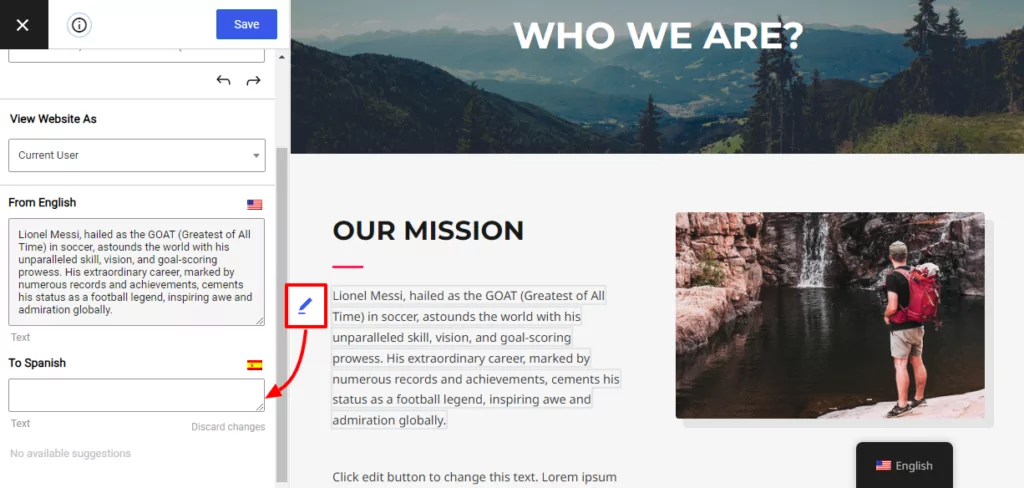
Con el editor de traducción visual anterior, puedes ajustar tus traducciones de jerga manualmente. Digo esto porque las traducciones automáticas no capturan los matices de la jerga.
Para facilitar esto, TranslatePress incluye otra función muy útil conocida como Cuentas de traductor. Este complemento te permite crear o permitir que un usuario existente (o un profesional) traduzca jerga con facilidad directamente en el sitio sin necesidad de conocimientos de programación.
El complemento TranslatePress incluye muchas más funciones características que hacen que la traducción de la jerga sea muy fácil. Entre sus características destacadas se incluyen:
- Traducción de imágenes, lo que significa que puedes traducir texto coloquial en tus imágenes;
- Compatibilidad total con Google Translate y Deepl;
- Selector de idioma personalizable para que los usuarios puedan elegir su idioma preferido fácilmente;
- Soporte de WooCommerce;
- Paquete SEO, para que puedas generar más tráfico a partir de tu contenido de jerga traducido;
- Y más.
Si quieres traducir jerga en tu sitio de WordPress sin complicarte la vida, no se me ocurre un mejor plugin de traducción.
Además, no tienes nada que perder. Hay Versión gratuita de TranslatePress en WordPress.org que te permite probar el terreno.
TranslatePress Multilingüe
Conclusión
La traducción de la jerga presenta muchos desafíos para muchos traductores. Para superar los desafíos que conlleva la traducción de la jerga, siga los consejos que hemos compartido anteriormente y use su creatividad para adaptar las traducciones al público al que van dirigidas.
¿Has traducido jerga alguna vez? ¿Te enfrentaste a algún reto? ¿Cómo traduces la jerga en tu sitio web? Por favor, comparte tus opiniones y sugerencias en la sección de comentarios a continuación.