
In diesem Beitrag
Die Expansion Ihres Unternehmens zu einem multinationalen Status ist keine Zauberei. Durch die Lokalisierung und Übersetzung Ihrer Website können Sie problemlos mit potenziellen globalen Kunden über Ihre Produkte und Dienstleistungen kommunizieren. Aber es reicht nicht aus, Ihre Website nur zu übersetzen und zu lokalisieren. Ihre Bemühungen werden erst dann sinnvolle Ergebnisse erzielen, wenn Sie noch einen Schritt weiter gehen und mehrsprachige SEO implementieren.
In diesem Artikel konzentrieren wir uns darauf, was Mehrsprachige SEO ist und warum Sie es für Ihre Website benötigen. Wir zeigen Ihnen auch die Schritt-für-Schritt-Anleitung zur Optimierung Ihrer Website-Inhalte mithilfe unseres mehrsprachigen SEO-Plugins namens TranslatePress.
TranslatePress Mehrsprachig
Inhaltsverzeichnis
- Was ist mehrsprachige SEO?
- 5 Vorteile der mehrsprachigen SEO
- Multilingual SEO Best Practices (7 Schritte und Tipps)
- Mehrsprachige SEO-FAQs
Was ist mehrsprachige SEO?
Mehrsprachige SEO ist der Prozess der Optimierung Ihrer Website für verschiedene Sprachen. Das Ziel ist es sicherzustellen, dass verschiedene Zielgruppen, die unterschiedliche Sprachen sprechen, von überall auf der Welt über die organische Suche problemlos auf die Inhalte Ihrer Website zugreifen können.
Multisprachiges SEO ermöglicht es Ihnen, Inhalte in mehreren Sprachen zu erstellen und sicherzustellen, dass diese Inhalte die richtigen Personen erreichen.
Obwohl die beliebteste Sprache im Internet amerikanisches Englisch ist, identifiziert sich nur ein kleiner Prozentsatz der Internetnutzer damit als Muttersprache. Das bedeutet, dass Sie Ihre SEO-Bemühungen über die englische Sprache hinaus ausdehnen müssen, wenn Ihr Unternehmen weltweiten Erfolg haben soll.
Sich bei der Übersetzung von Google-Suchergebnissen auf automatisierte Übersetzungen wie Google Translate zu verlassen, mag eine einfache Lösung sein. Wenn Sie jedoch die besten Ergebnisse erzielen möchten, ist der Einsatz einer mehrsprachigen SEO-Strategie für Websites wichtig.
5 Vorteile der mehrsprachigen SEO
Ihr Unternehmen kann viel davon profitieren, wenn Sie mehrsprachige Suchmaschinenoptimierung (SEO) in Ihre Website integrieren. Entdecken Sie diese fünf großartigen Vorteile der mehrsprachigen Suchmaschinenoptimierung.
1. Sie sind Ihren Mitbewerbern einen Schritt voraus. Früher waren einige Länder, wie die Vereinigten Staaten und das Vereinigte Königreich, die Hauptzentren des Online-Geschäfts. Heute nutzen jedoch auch andere Länder, wie Japan und China, den virtuellen Raum für geschäftliche Transaktionen.
Diese Nutzer kommen aus verschiedenen Sprachgruppen weltweit. Mit mehrsprachiger SEO können Sie Ihre Hauptkonkurrenten in Ihrer Branche übertreffen. Da SEO für mehrsprachige Websites Ihnen hilft, ein globales Publikum zu erreichen und mit ihm zu kommunizieren, können Sie weltweit Traffic auf Ihre Website lenken.
2. Sie verbessern das gesamte SEO-Ranking Ihrer Website. Übersetzte Versionen Ihrer Website können Ihre Chancen verbessern, auf der ersten Seite der Suchmaschinenergebnisse zu erscheinen. Eine mehrsprachige Website kann mehr Besucher anziehen als eine einsprachige. Suchmaschinen erkennen alle übersetzten Versionen als Teil einer einzigen Website. Suchanfragen auf all diesen Versionen der Website leiten Besucher zur Hauptwebsite weiter und sorgen für einen positiven, kumulativen SEO-Ranking-Effekt.
3. Sie erreichen eine spezifischere Zielgruppe. SEO für eine mehrsprachige Website geht über die bloße Übersetzung Ihrer Website in mehrere Sprachen hinaus. Der Prozess umfasst die Ermittlung der spezifischen Zielgruppe, die Sie erreichen möchten, sowie die Übersetzung Ihrer Website in deren Muttersprachen. Geo-Targeting ist nützlich, um eine Plattform für eine gezieltere Ansprache an bestimmten Standorten zu schaffen.
4. Anhaltendes Geschäftswachstum. Eine mehrsprachige Website ermöglicht es Ihnen außerdem, eine konsistente Struktur aufrechtzuerhalten, um das Bewusstsein für Ihre Marke zu schärfen und Ihr globales Publikum über Ihre Produkte und Dienstleistungen auf dem Laufenden zu halten. Sie werden in der Lage sein, mehr Traffic auf Ihre Website zu lenken und jetzt sowie langfristig Rendite auf Ihre Investition zu erzielen.
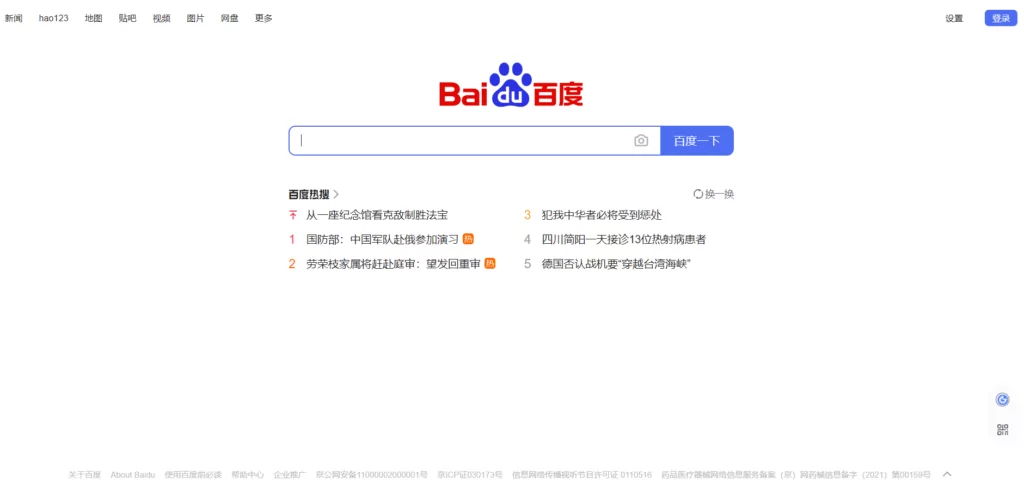
5. Zugang zu weiteren Suchmaschinen. Länder wie China und Japan verfügen über große Suchmaschinen, die sich von den bekannten wie Google und Bing unterscheiden. Suchmaschinen leiten Menschen zu Ihrer Website, und der Zugang zu vielen anderen lokalen Alternativen bedeutet mehr Traffic. Eine mehrsprachige Website ist der einzige Kanal, über den Sie dies erreichen können.
Multilingual SEO Best Practices (7 Schritte und Tipps)
Da Sie nun wissen, wie vorteilhaft mehrsprachige SEO für Ihr Unternehmen und Ihre Website ist, werfen wir einen Blick auf einige Tipps, wie Sie mehrsprachige SEO effektiv umsetzen.
1. Wählen Sie die richtige URL-Struktur
Es gibt vier Hauptansätze zur Strukturierung von URLs für mehrsprachige Websites:
- Unterordner
- Subdomains
- Getrennte Domains
- URL-Parameter.
Jede Option hat seine eigenen Vor- und Nachteile, was sich unterschiedlich auf SEO, die Nutzererfahrung und die Website-Wartung auswirkt.
Unterordner (oder Unterverzeichnisse)
Unterordner fügen direkt nach dem Domainnamen in der URL einen spezifischen Sprach- oder Ländercode hinzu (z. B. example.com/en/ für Englisch oder example.com/fr/ für Französisch).
Vorteile:
- Konsolidierte Domain Authority: Alle Sprachversionen tragen zur selben Domain Authority bei und verbessern möglicherweise das Gesamtranking der Website.
- Einfacheres Setup und einfachere Wartung: Einfacher zu verwalten als separate Domains oder Subdomains, da sich alles unter einer einzigen Domain befindet.
- Benutzerfreundlich: Eine klare und logische URL-Struktur für Benutzer, die die Sprache oder den regionalen Fokus direkt in der URL anzeigt.
Nachteile
- Potenzial für Content-Duplizierung: Suchmaschinen könnten ähnliche Inhalte in verschiedenen Unterordnern ohne ordnungsgemäße hreflang-Tags als doppelte Inhalte ansehen.
- Eingeschränkte Flexibilität beim Geo-Targeting: Zwar ist es gut für das Sprachen-Targeting, aber weniger flexibel für das Geo-Targeting spezifischer Länder.
Subdomains
Subdomains stellen den Sprach- oder Ländercode als Präfix vor die Hauptdomain (z. B. en.example.com für Englisch, fr.example.com für Französisch).
Vorteile:
- Geo-Targeting: Bietet bessere Geo-Targeting-Funktionen, da Suchmaschinen jede Subdomain als eigenständige Entität behandeln können.
- Flexibilität: Größere Flexibilität bei der Anpassung von Inhalten und Design an verschiedene Sprachen oder Regionen.
- Ressourcenverwaltung: Ermöglicht die Verteilung von Serverressourcen und verbessert so die Ladegeschwindigkeit für lokalisierte Versionen.
Nachteile
- Split-Domain-Authority: Jede Subdomain wird als separate Domain behandelt, was die Domain Authority verwässern und mehr Aufwand erfordern kann bei Linkbuilding für jede Sprache.
- Komplexes Setup und Wartung: Komplexer in der Einrichtung und Verwaltung als Unterordner, insbesondere bei SSL-Zertifikaten und Hosting-Konfigurationen.
Getrennte Domänen
Dieser Ansatz nutzt völlig unterschiedliche Domains für jede Sprache oder der Landesversion der Website (z. B. example.fr für Frankreich, example.de für Deutschland).
Vorteile:
- Maximales Geo-Targeting: Bietet das höchste Maß an Geo-Targeting und lokalen Signalen für Suchmaschinen und Nutzer.
- Kulturelle Anpassung: Ermöglicht eine umfangreiche Anpassung, um auf kulturelle Unterschiede und Vorlieben in jedem Markt einzugehen.
- Klare lokale Präsenz: Signalisiert eine starke lokale Präsenz und erhöht möglicherweise das Vertrauen und die Relevanz im Zielmarkt.
Nachteile
- Höhere Kosten und Wartung: Erfordert den Kauf und die Pflege mehrerer Domains sowie separate SEO-Strategien und Linkbuilding-Maßnahmen.
- Geteilte Domain-Autorität: Jede Domain fängt bei der Domain-Autorität bei Null an, was mehr Aufwand erfordert, um Glaubwürdigkeit aufzubauen und gut zu ranken.
URL-Parameter
URL-Parameter fügen Sprach- oder Länderinformationen als Abfragezeichenfolgen zur URL hinzu (z. B. example.com/?lang=de).
Vorteile:
- Einfach umzusetzen: Einfach zu bestehenden URLs hinzuzufügen, ohne nennenswerte Änderungen an der Struktur der Website.
- Flexibilität Kann dynamisch verwendet werden, um zwischen Sprachen zu wechseln, ohne separate Seiten zu erstellen.
Nachteile
- SEO-unfreundlich Im Allgemeinen für SEO nicht empfohlen, da Suchmaschinen Schwierigkeiten haben könnten, Inhalte korrekt zu crawlen und zu indexieren.
- Benutzerunfreundlich Erstellt unübersichtliche und weniger intuitive URLs für Benutzer, was sich möglicherweise negativ auf die Benutzererfahrung auswirkt.
Die Wahl der URL-Struktur für eine mehrsprachige Website hängt von verschiedenen Faktoren ab, darunter den geografischen Standorten der Zielgruppe, der Größe und Komplexität der Website sowie den verfügbaren Ressourcen für SEO und Wartung.
Unterordner werden oft wegen ihrer Einfachheit und gebündelten Domain-Autorität empfohlen, aber die beste Wahl variiert je nach spezifischen geschäftlichen Anforderungen und Zielen.
2. Beginnen Sie mit einer qualitativen Keyword-Recherche
Zu Beginn ist es wichtig, eine umfassende Keyword-Recherche durchzuführen, bevor Sie Ihre Website-Inhalte übersetzen. Dies liegt daran, dass verschiedene Segmente Ihres globalen Publikums unterschiedliche Interessen haben – mit anderen Worten: eine unterschiedliche Suchintention.
Betrachten wir zum Beispiel die Schlüsselwörter ‘content creation’ auf Englisch und ‘creation de contenu’ auf Französisch.
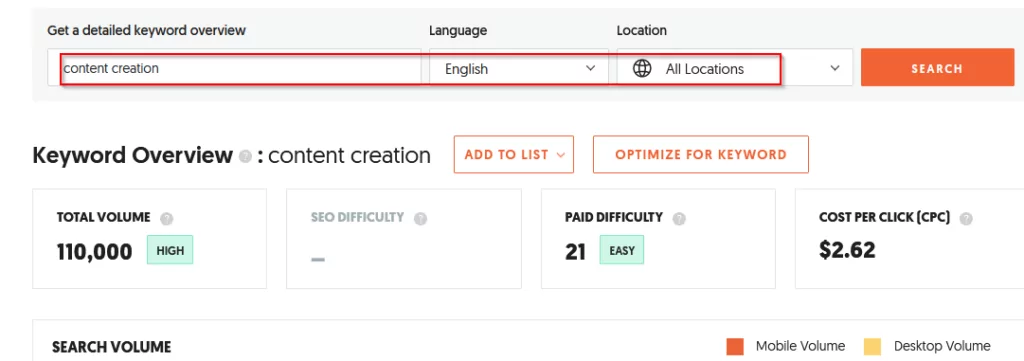
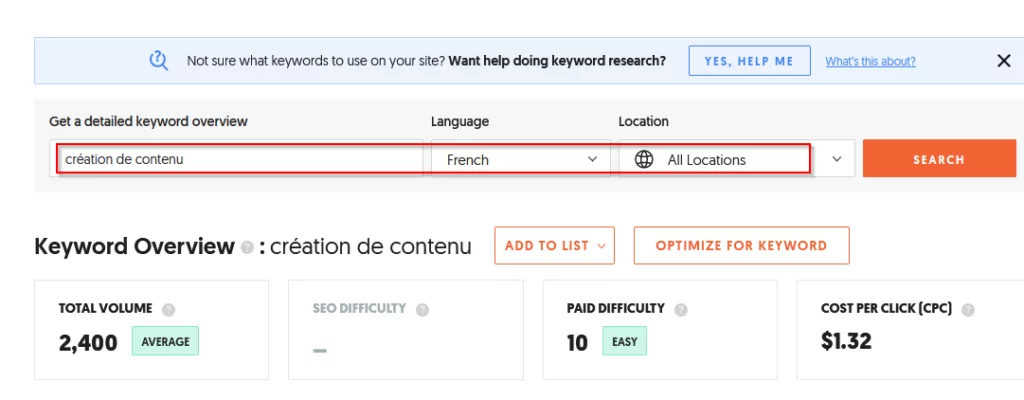
Die französische Übersetzung hat offensichtlich ein deutlich geringeres Suchvolumen als die englische Version.
Hochwertige Keyword-Recherche hilft Ihnen, Ihre Übersetzung und Lokalisierung Bemühungen ins rechte Verhältnis setzen. Auf diese Weise können Sie analytisch ermitteln, welchen Keywords Sie für jede übersetzte Version Ihrer Website mehr Aufmerksamkeit schenken sollten.
Ahrefs und Semrush sind hervorragende Tools, mit denen Sie das Suchvolumen Ihrer gewünschten Keywords in verschiedenen Sprachen ermitteln können.
Die Beherrschung der richtigen Verwendung von Keywords in Ihrer Sprache kann eine anstrengende Aufgabe sein. Sie werden versuchen sicherzustellen, dass Sie keine Keywords verwenden, die nicht dazu beitragen, die SEO-Leistung Ihrer Inhalte zu verbessern. Dies in mehreren Sprachen zu tun, die Sie nicht verstehen, könnte noch entmutigender sein.
Dennoch sind Keywords in den übersetzten Versionen Ihrer Website unerlässlich, und Sie müssen bei der Übersetzung auf sie achten. Das Erste, was Sie tun müssen, ist, die gängigsten englischen Keywords auf Ihrer Website herauszufinden. Ahrefs kann Ihnen helfen, den Einstieg zu finden.
Sobald Sie Ihre Liste zusammengestellt haben, suchen Sie nach den treffendsten Übersetzungen dieser Schlüsselwörter in der/den Zielsprache(n). TranslatePress kann diesen Prozess mit seiner automatische Übersetzungsfunktion. Sie müssen jedoch weiterhin jede Seite manuell gegenprüfen, da Maschinen bei Übersetzungen keine 100%-Genauigkeit garantieren können. Sollten Sie Fehler entdecken, nehmen Sie einfach eine manuelle Korrektur vor.
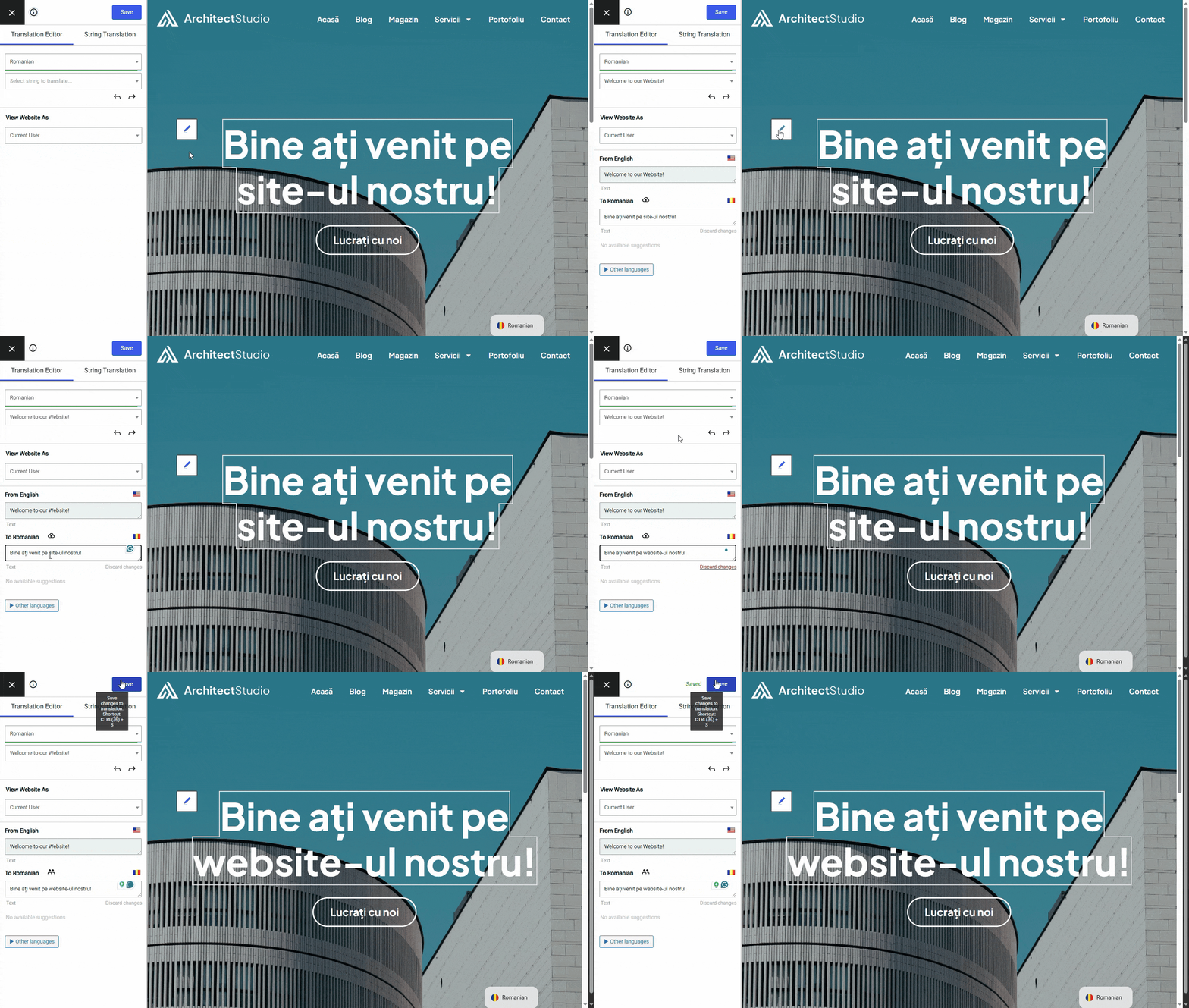
Sie können dies ganz einfach über die visuelle Übersetzungsschnittstelle tun, indem Sie einfach auf das Stiftsymbol neben einem Textstück klicken und dessen korrekte Übersetzung in die Seitenleiste eingeben, etwa so:
3. Übersetzen Sie Ihre URL-Slugs
Bei der Übersetzung Ihrer Website ist es auch wichtig, dass Sie auf Ihre URL-Slugs achten. Slugs sind die Teile Ihrer URL, die auf Ihren Domainnamen folgen. Wenn zum Beispiel die URL für die Zahlungsseite Ihrer Website mysite.com/payments, sollte ein Kunde, der nach der französischen Version Ihrer Website sucht, diese sehen als mysite.com/zahlungen. Die Slugs hier sind “payments” (Englisch) und “paiements” (Französisch). Dies ist sowohl für Suchmaschinen als auch für echte menschliche Besucher hilfreich, da es sehr deutlich macht, dass dies zwei Versionen derselben Seite sind, nur in verschiedenen Sprachen.
Aber wie macht man das? Sie können ein Plugin wie verwenden TranslatePress. Es macht es einfach, URL-Slugs zu ändern, während Sie jede Seite übersetzen.
Um URL-Slugs mit TranslatePress zu übersetzen, benötigen Sie das SEO-Add-on, erhältlich mit der die Premium-Tarife des Plugins. Sobald Sie das Pro-Plugin installiert und mindestens eine neue Sprache eingerichtet haben, ist der Prozess kinderleicht.
Navigieren Sie einfach zu Einstellungen → TranslatePress → Add-ons Tab. Identifiziere dann das SEO-Paket Add-On und klicken Sie auf Aktivieren Daneben.
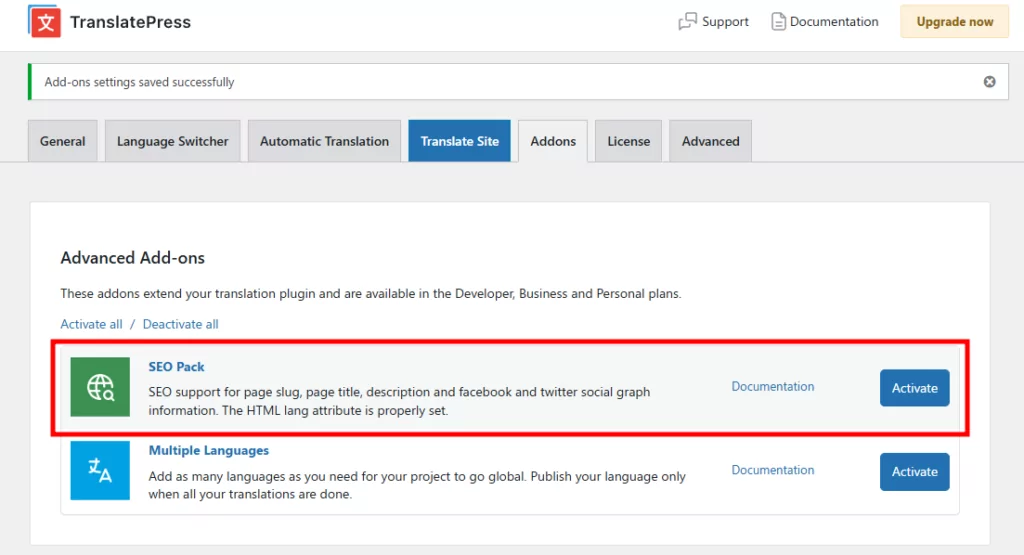
Jetzt können Sie einfach zum Frontend Ihrer Website gehen und auf das Seite übersetzen Schaltfläche im Admin-Dashboard und die Übersetzungsoberfläche öffnet sich. Von der Zeichenketten-Dropdown links kannst du einfach den Seiten-Slug auswählen und darunter dessen Übersetzung eingeben. Vergiss nicht zu drücken Speichern Sie die Übersetzung wenn du fertig bist.

Die Option zum Ändern des Slugs finden Sie direkt unter dem Sprachfeld. Darüber hinaus können Sie alle wichtigen SEO-Elemente einer Seite übersetzen, wie die Seitenbeschreibung, die Alt-Tags von Bildern und mehr.
4. Anwenden hreflang Stichwörter
Hreflang-Tags dienen als direkte Signale für Suchmaschinen und zeigen die Sprache sowie die geografische Ausrichtung des Inhalts einer Webseite an.
Hreflang-Tags sind unverzichtbar für Websites, die auf mehrere Länder oder Sprachen ausgerichtet sind. Sie sorgen dafür, dass Suchmaschinen den Nutzern die passende Version der Inhalte anzeigen. Wenn Ihre Website beispielsweise Inhalte auf Englisch für die USA und das Vereinigte Königreich hat, helfen korrekt implementierte Hreflang-Tags dabei, zwischen diesen Versionen zu unterscheiden und den feinen Unterschieden in der Sprachverwendung und den Präferenzen gerecht zu werden.
Indem hreflang-Tags Seiten als für verschiedene Sprachen oder Regionen bestimmt kennzeichnen, helfen sie dabei, Abstrafungen wegen Duplicate Content zu vermeiden. Obwohl der Inhalt über verschiedene Sprachversionen hinweg ähnlich oder identisch sein kann, signalisieren hreflang-Tags Suchmaschinen, dass dies gewollt und keine manipulative Duplizierung ist.
Ein hreflang-Tag ist ein HTML-Attribut, das Sie in den -Abschnitt einer Webseite einfügt. Es teilt Suchmaschinen wie Google die Sprache (unter Verwendung von ISO 639-1-Codes) und die geografische Zielgruppe der Seite (unter Verwendung von ISO 3166-1 Alpha-2-Codes) mit..
Beispielsweise würde eine französische Version einer Website, die sich an Nutzer in Frankreich richtet, das hreflang-Tag verwenden: . Dieses Tag hilft Suchmaschinen zu verstehen, dass diese bestimmte Seite für französischsprachige Nutzer in Frankreich bestimmt ist.
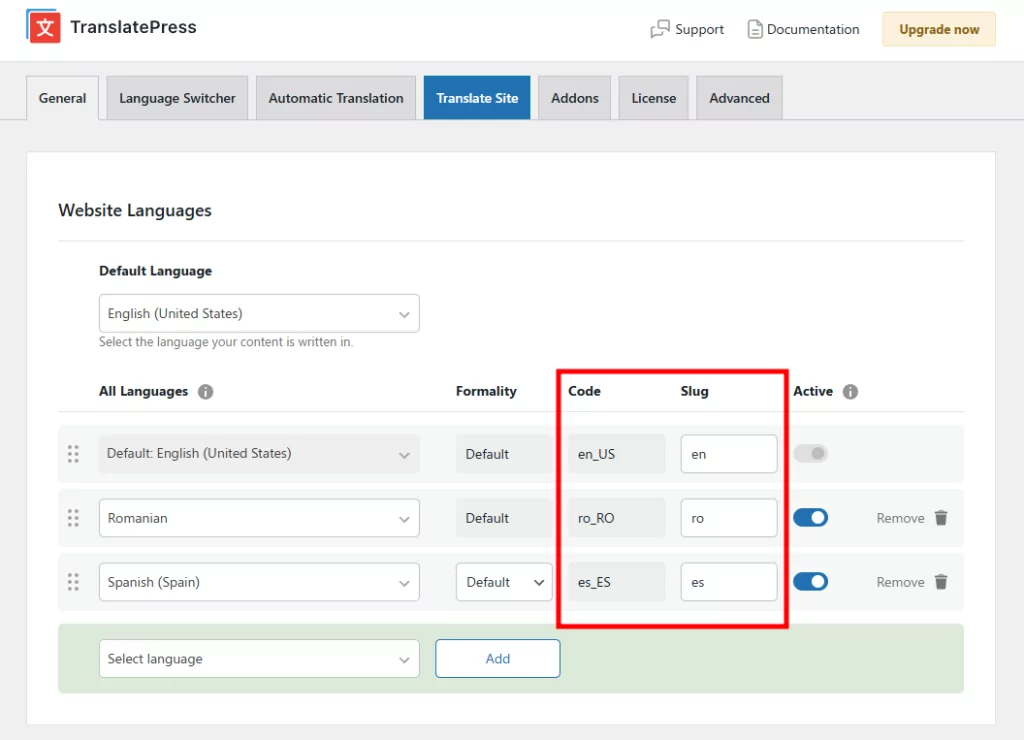
Sie können hreflang-Tags manuell auf Ihren Seiten einfügen. Sie können sich die Arbeit aber auch erleichtern, indem Sie TranslatePress nutzen. Für jede Sprache, die Sie hinzufügen, weist TranslatePress jeder Seite automatisch ein hreflang-Tag zu.
5. Erstellen einer mehrsprachigen XML-Sitemap
Genau wie eine normale Sitemap hilft die mehrsprachige Sitemap Google dabei, die Struktur Ihrer Website besser zu verstehen. Eine mehrsprachige XML-Sitemap teilt der Suchmaschine mit, welche Sprache und welche Region auf jeder einzelnen Seite der Website verwendet wird.
Das manuelle Erstellen einer solchen Sitemap kann jedoch eine entmutigende Aufgabe sein. Aber wir haben eine bessere Lösung.
TranslatePress lässt sich nahtlos mit den gängigsten SEO-Plugins (wie beispielsweise Yoast SEO, Rank Math, oder SEOPress) und erstellt Ihre mehrsprachige Sitemap automatisch. Sie müssen keinen Finger rühren, sobald das Plugin installiert ist.
6. Metadaten Ihrer Website übersetzen
Schließlich gibt es noch andere Komponenten Ihrer Website, die Nutzer nicht sehen können, weil sie exklusiv für Suchmaschinen bestimmt sind. Diese Komponenten werden zusammenfassend als Metadaten bezeichnet. Es ist praktisch unmöglich, Traffic von Personen, die andere Sprachen als Ihre Muttersprache sprechen, auf Ihre Website zu lenken, wenn Sie Ihre Metadaten nicht übersetzen.
Genauer gesagt bestehen die Metadaten Ihrer Website in erster Linie aus dem SEO-Titel und der Meta-Beschreibung jeder einzelnen Seite. Zu den weiteren Elementen zählen Tags, Bild-Alt-Texte usw. Um die bestmögliche mehrsprachige SEO-Leistung zu erzielen, sollten Sie jedes dieser Elemente auch für jede übersetzte Seite Ihrer Website übersetzen. Die gute Nachricht ist, dass TranslatePress Ihnen dabei hilft, dies ganz ohne Aufwand zu erreichen.
Dies ist wiederum über das SEO Pack-Add-on möglich, mit dem Sie beliebige Meta-Informationen übersetzen können. Gehen Sie daher im eingeloggten Zustand Ihres WordPress-Administrator-Kontos auf die Seite, die Sie bearbeiten möchten. Klicken Sie dann Seite übersetzen oben auf der Seite. Wählen Sie die zu bearbeitende Zeichenfolge aus Metainformationen Abschnitt im linken Bereich und beginne mit der Übersetzung. In diesem Fall übersetze ich den SEO-Seitentitel.

Wenn Sie fertig sind, klicken Sie Übersetzung speichern Und das war's! Sie haben Ihre Metadaten übersetzt.
7. Strategische interne Verlinkung
Interne Verlinkung, die Praxis, auf andere Seiten innerhalb derselben Website zu verlinken, ist für die Suchmaschinenoptimierung (SEO) von entscheidender Bedeutung. Sie hilft Suchmaschinen dabei, die Struktur Ihrer Website zu verstehen, verteilt die Domain-Autorität auf Ihre gesamte Domain und verbessert die Navigierbarkeit Ihrer Website für die Nutzer.
Beim Verwalten einer mehrsprachigen Website ist es von entscheidender Bedeutung sicherzustellen, dass interne Links zur korrekten Sprachversion einer Seite führen. Diese Praxis verbessert die Benutzererfahrung und stärkt die SEO-Leistung Ihrer Website, indem sie Suchmaschinen klare Signale über die Beziehung zwischen Seiten in verschiedenen Sprachen liefert.
Mehrsprachige SEO-FAQs
Welches CMS ist am besten für mehrsprachige SEO?
WordPress ist das wohl beste CMS im Internet für mehrsprachige SEO. Von Haus aus bietet die Software eine Vielzahl leistungsstarker und benutzerfreundlicher Funktionen, mit denen sich SEO für verschiedene Sprachen effektiv umsetzen lässt. Wenn es um Mehrsprachige WordPress-SEO, kannst du das Ganze ganz einfach mit einem Plugin wie TranslatePress einrichten. Du musst lediglich das Plugin installieren, die gewünschte Sprache auswählen und mit dem Übersetzen beginnen.
Was ist der Unterschied zwischen internationaler SEO und mehrsprachiger SEO?
Multisprachiges SEO umfasst den Prozess der Optimierung von Website-Inhalten für verschiedene Zielgruppen, die viele verschiedene Sprachen sprechen. Dies ist besonders wichtig für Unternehmen, die ein breiteres globales Publikum erreichen möchten.
Im Gegensatz dazu ist internationales SEO die Inhaltsoptimierung für andere Länder, aber nicht unbedingt für diejenigen, die andere Sprachen sprechen. So möchte beispielsweise ein in den USA ansässiges Unternehmen möglicherweise ein Publikum in Großbritannien erreichen. Was das Unternehmen in diesem Fall benötigt, ist internationales SEO wegen der unterschiedlichen Varianten der englischen Sprache und des kulturellen Kontextes.
Was brauchen Sie, um mehrsprachige SEO in WordPress einzurichten?
- Ein zuverlässiges Übersetzungs-Plugin oder ein Übersetzungsdienst wie TranslatePress
- Eine lesbare URL
- Sorgfältig recherchierte Keywords
- Hreflang-Tags
Geschäftserfolg durch mehrsprachige SEO vorantreiben
Die mehrsprachige Website-SEO ist zweifellos ein unverzichtbares Mittel, um Ihr Unternehmen auf ein globales Niveau zu heben. Die Übersetzung Ihrer Website in eine oder mehrere Sprachen ist ein Plus für Ihr Unternehmen, da sie Ihnen helfen kann, mehrsprachigen Traffic zu generieren sowie die Conversions zu steigern. Aber es reicht nicht aus, Ihre Website einfach nur zu übersetzen.
Sie müssen Best Practices für sprachliches SEO anwenden, um einen Schritt weiter zu gehen und Sie mit dem riesigen globalen Publikum zu verbinden, das Sie sich schon immer für Ihr Unternehmen gewünscht haben.
Der Prozess mag zwar aufwendig sein, aber zum Glück bietet Ihnen TranslatePress eine einfache Lösung, die mehrsprachiges SEO zum Kinderspiel macht.
TranslatePress Mehrsprachig
Wir hoffen, dass Ihnen dieser Artikel dabei geholfen hat, die wichtigsten Schritte für eine erfolgreiche SEO-Optimierung mehrsprachiger Websites zu erkennen. Bitte teilen Sie uns Ihre Fragen im Kommentarbereich unten mit.
Wenn Sie diesen Beitrag hilfreich fanden, schauen Sie sich bitte unsere an YouTube-Kanal, wo wir ständig kurze und leicht verständliche Video-Tutorials hochladen. Sie können uns auch folgen auf Facebook und Twitter um der Erste zu sein, der jedes Mal Bescheid weiß, wenn wir etwas posten.