

En esta publicación
¿Tiene dificultades para crear la estrategia adecuada de expansión de mercado para aventurarse en nuevos mercados? Quiere llevar su negocio a nivel mundial, ¿verdad?
Si es así, empecemos de inmediato.
Crear una estrategia de expansión de mercado exitosa para su empresa es más difícil de lo que la mayoría de los líderes empresariales suponen al principio.
Los gerentes de crecimiento novatos a menudo piensan que es tan simple como replicar su estrategia de crecimiento local. Eso es hasta que se dan de bruces contra la pared.
Si todo esto es nuevo para ti...
Expansión a nuevos mercados implica más que copiar y pegar lo que está funcionando en su mercado nacional. Las estrategias de expansión internacional requieren mucha atención, ya que hay muchas variables que incluso los mejores directivos pasan por alto.
¿Y sabes qué es lo gracioso?
La ejecución de estrategias de expansión de mercado exitosas no es un desafío solo para las pequeñas empresas. Las grandes corporaciones con grandes departamentos de marketing y enormes presupuestos tampoco se salvan.
En el pasado, muchas marcas de renombre han fracasado estrepitosamente al implementar estrategias de expansión internacional.
Ejemplos famosos incluyen Home Depot en China, Starbucks en Israel y Walmart en varios países. Hablaremos de cómo estas empresas fracasaron más adelante en el artículo. Te reirás cuando escuches la historia del fracaso de Walmart en Corea, así que quédate para eso 😀
Sigamos adelante.
Según un reciente estudio, el crecimiento es una prioridad fundamental para más de el 51% de los directores generales, Informe de Gartner, no puedes permitirte quedarte atrás.
Quiero decir...
Llevar sus productos a más países es una manera fantástica de impulsar el crecimiento y seguir siendo competitivo en una economía cada vez más globalizada.
Quedarse atrás en sus esfuerzos de internacionalización significa dejar mucho dinero sobre la mesa y volverse irrelevante.
Ahora no quieres eso, ¿verdad?
En la publicación de hoy, compartimos formas sencillas de expandir su negocio en nuevos mercados sin complicaciones.
¿Qué es una estrategia de expansión al mercado internacional?

Antes de entrar en materia, ¿a qué animal llamamos estrategia de expansión de marketing internacional?
En su forma más básica, una estrategia de expansión de marketing internacional es un plan que describe cómo su empresa se expandirá, ganará dinero y prosperará en países extranjeros.
La estrategia de expansión de mercado incluye todos los enfoques y métodos que llevará a cabo para penetrar en mercados extranjeros lejanos.
En otras palabras, es un plano que muestra a su equipo cómo la empresa planea ejecutar la expansión global mientras aumenta los beneficios y reduce los riesgos asociados con estas fronteras nunca antes exploradas.
Eso está mucho mejor, ¿verdad?
Puedes considerarlo como el plan maestro de dominación mundial para tu empresa.
A primera vista, parece bastante sencillo, ya sabes, como algo que podrías dibujar en una servilleta mientras tomas café. ¿Qué tan difícil podría ser para tu empresa con sede en EE. UU. vender productos en Sudáfrica, por ejemplo?
Todo el mundo lo hace. Apple lo hace. Google lo hace. Facebook lo hizo.
Pero la mala noticia es que no es fácil elaborar una estrategia de expansión de mercado que dé los resultados deseados. Debe reflexionar mucho sobre su estrategia de expansión en el mercado internacional e involucrar a todas las partes interesadas.
La expansión a nuevos mercados puede adoptar muchas formas, por lo que hay muchas opciones entre las que elegir. Comprender bien las estrategias de expansión internacional de las que dispone puede ayudar a determinar qué se adapta mejor a su empresa.
Aquí hay algunas estrategias comunes de expansión de mercado de productos para explorar.
Las 7 estrategias populares de expansión de mercado

Existen varias estrategias (o formas) para llevar su empresa al ámbito internacional. Puede ceñirse a una estrategia o combinar varias según sus necesidades, su presupuesto y el tipo de negocio, entre otras cosas.
No importa qué estrategias decidas implementar, es importante elegir siempre lo que funcione para los objetivos de tu negocio. Si una estrategia falla, siempre puedes perfeccionar o revisar tu enfoque o elegir algo completamente diferente.
Vamos al grano.
1. La exportación de sus productos como estrategia de expansión de mercado
¿Fabrican productos físicos? Si es así, exportar los productos a otro país es una estrategia viable de expansión de mercado a implementar. Este enfoque ha funcionado muy bien para muchos fabricantes de todo el mundo.
No faltan ejemplos que demuestren esta estrategia de expansión de mercado en acción.
Los fabricantes de automóviles como Toyota y Hyundai ejecutan esta estrategia de expansión de mercado de manera efectiva para llegar a clientes de todo el mundo.
¿Necesitas otro ejemplo?
Considere la estrategia que utilizan los fabricantes chinos para llegar a una audiencia global.
Por ejemplo, la mayor parte de nuestros productos electrónicos, ropa y otros artículos de nuestros hogares están hechos en China, lo que convierte a unos pocos empresarios en multimillonarios en el proceso.
Basta decir que se pueden encontrar productos hechos en China en los rincones más remotos del planeta. Eso, amigo mío, es la expansión de mercado en su máxima expresión.
Como fabricante en EE. UU., no tiene que reinventar la rueda. Simplemente adapte la estrategia para entrar y expandirse en nuevos mercados en todo el mundo.
Dicho esto, puede vender directamente a clientes extranjeros o asociarse con comerciantes externos como agentes de exportación, distribuidores y empresas comerciales.
Además, junto con tu sitio web oficial y otros canales digitales, puedes vender en múltiples mercados en línea que atienden a una audiencia global.
Con marketing estratégico y posicionamiento, puedes expandir rápidamente tu alcance de mercado tanto fuera de línea como en línea.
2. Franquicias y Licencias
Desde sus inicios, empresas como KFC, McDonald’s y Calvin Klein han cruzado fronteras internacionales.
¿Y sabes cómo lograron esta expansión exponencial del mercado para sus productos?
Lo adivinaste.
Todos ellos ponen en práctica la franquicia y la licencia. ¡Y funciona!
Dicho esto, ¿cuál es la diferencia entre franquicia y licencia?
Probablemente ya sepas esto, but si estás empezando o necesitas un recordatorio:
- Franquicia – Con este modelo, permites que empresas de otros países utilicen el modelo de negocio y la marca de tu empresa. De este modo, penetras en más mercados y obtienes ingresos de las tarifas iniciales de los franquiciados y de las regalías continuas; KFC, Hilton y Starbucks son excelentes ejemplos;
- Licenciamiento – Esta estrategia consiste en conceder a empresas extranjeras el derecho a utilizar la propiedad intelectual de su empresa. Esto incluye marcas registradas, patentes y derechos de autor. Usted amplía su mercado y obtiene ingresos a través de regalías. Esto es lo que hacen Calvin Klein, Nike y The Walt Disney Company.
Para obtener más información sobre esta estrategia de expansión de productos, no dude en consultar esto Franquicia frente a Licenciamiento: ¿Cuál es la diferencia? artículo de NerdWallet.
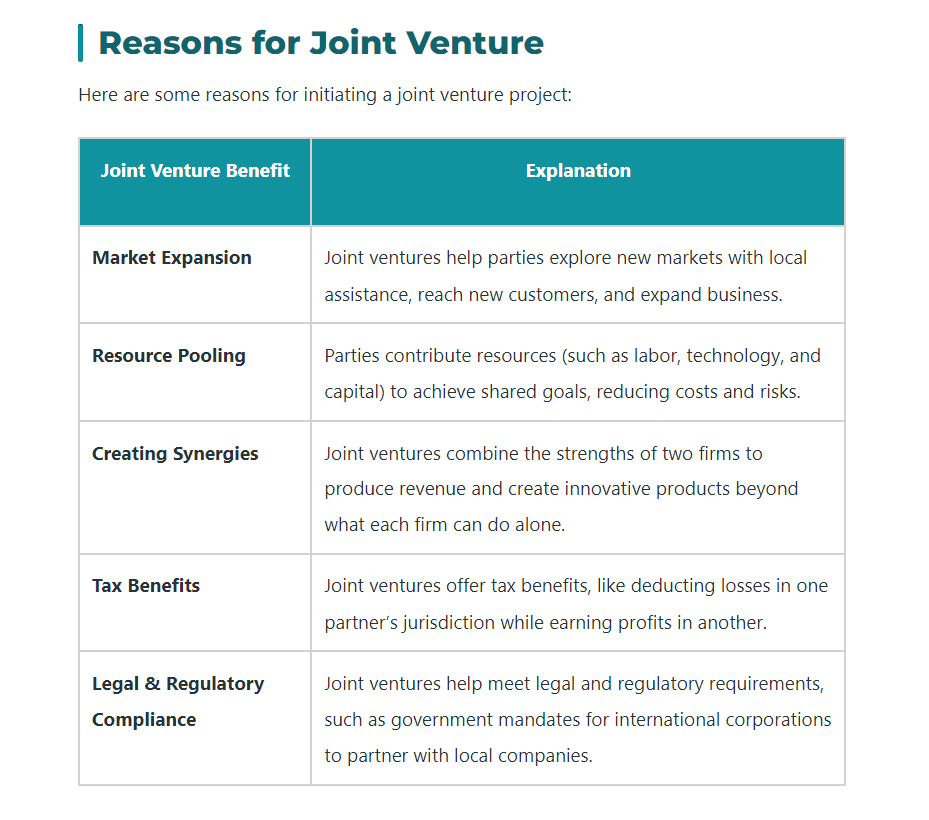
3. Las empresas conjuntas como estrategia de expansión de mercado
Otra estrategia popular de expansión de mercado son las empresas conjuntas. Con este modelo, su empresa se asocia con negocios en otros países para iniciar una nueva empresa o trabajar juntos en nuevos proyectos.
¿Cómo funciona todo esto?
Por ejemplo, digamos que heredé una empresa ABC que posee fincas de cacao de alta calidad pero carece de los recursos para construir fábricas para procesar mi producción.
Mientras tanto, al otro lado del mundo, eres dueño de una empresa XYZ con los recursos para procesar el producto, pero careces de una fuente confiable de cacao.
Podemos unir fuerzas y formar una empresa formidable que fabrique productos a base de cacao, como chocolate y todo eso. Podemos ponerle a nuestra nueva empresa conjunta el nombre que queramos. Digamos, la empresa COCO-AYZ.
Por un lado, proporciono suficiente cacao de gran calidad para mantener nuestra nueva empresa en marcha (y a los incesantes acreedores alejados).
Por otro lado, proporcionas los recursos que necesitamos para poner en marcha y hacer crecer nuestra nueva empresa.
A través de nuestra empresa conjunta, podemos colaborar de forma eficaz para llevar los productos finales a un mercado más amplio y disfrutar de los beneficios.
Espero que sea un ejemplo aceptable.
Si no, aquí tienes ejemplos populares de empresas que formaron empresas conjuntas exitosas:
- Molson Coors y SABMiller;
- Microsoft y General Electric;
- Walmart y Eko;
- Boeing y Lockheed Martin;
- The Walt Disney Company, News Corporation, NBC Universal de Comcast y Providence Equity Partners;
- BMW y Brilliance Auto Group.
Debes estar familiarizado con las empresas anteriores.
O no.
Lo que probablemente te resulte familiar son las empresas conjuntas que surgieron cuando las empresas anteriores unieron sus manos. Por ejemplo, Molson Coors y SABMiller dieron a luz a MillerCoors.
También probablemente estés familiarizado con Hulu, que es la empresa conjunta formada para emitir programas de los gigantes de los medios mencionados anteriormente.
¿Sabes qué empresas crearon Sony Ericsson?
4. Adquisiciones y fusiones como estrategias de expansión de mercado
Otra estrategia eficaz de expansión de mercado son las fusiones y adquisiciones.
La adquisición, como su propio nombre indica, implica comprar y controlar empresas en países extranjeros.
En lugar de empezar desde cero, tienes una plataforma de lanzamiento establecida.
La adquisición ofrece a su empresa varios beneficios, tales como:
- Menor competencia;
- Mejora de la experiencia del cliente;
- Acceso a una cartera de clientes consolidada;
- Canales de distribución establecidos;
- Cuota de mercado;
- Acceso a la tecnología y a los sistemas que ya funcionan en el mercado extranjero;
- Y más.
Además, facilita mucho la entrada en el mercado.
Por otro lado, una fusión implica combinar dos empresas en una sola. Así, en lugar de lanzar tu cadena de supermercados en un país diferente, podrías fusionarte con una empresa existente para obtener los mismos beneficios que ofrece la adquisición.
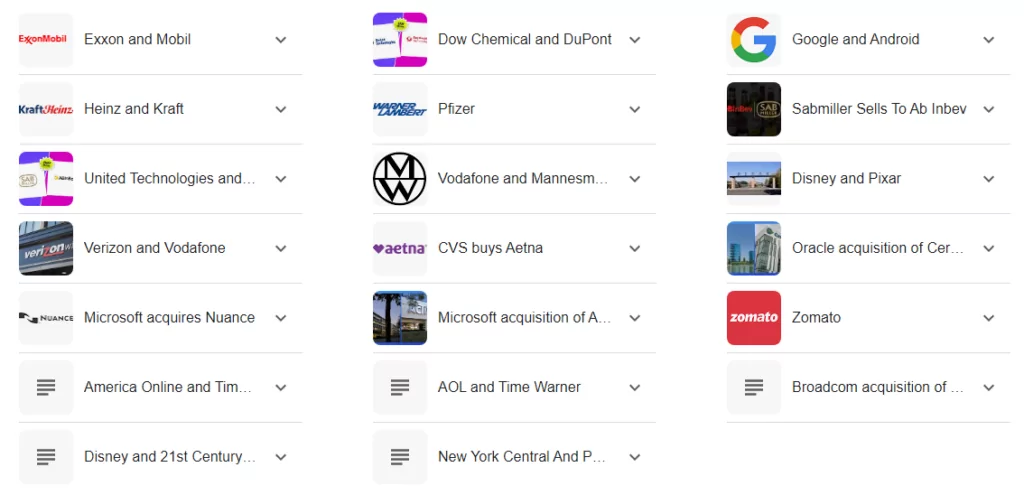
En la mayoría de los casos, las adquisiciones y las fusiones van de la mano. Hay muchos ejemplos de empresas que ejecutaron esta estrategia de expansión de productos con éxito.
Si le preguntas a cualquier principiante, probablemente te dirá que Android es una creación de Google. Pero mucha gente no sabe que Google adquirió Android por $50 millones en 2005. Esto permitió a Google entrar en el mercado de la telefonía móvil por primera vez.
Aquí hay más ejemplos de adquisiciones y fusiones.
5. Comercio electrónico y expansión digital
El comercio electrónico y la expansión digital como estrategia para expandirse a nuevos mercados es casi evidente por sí solo.
Bueno, a menos que vivas debajo de una piedra (en cuyo caso no estarías leyendo este artículo).
Internet ha hecho que llegar a audiencias amplias y diversas sea increíblemente fácil. Ha eliminado las barreras geográficas y físicas tradicionales que hacían que la expansión en el pasado fuera un tanto difícil.
Hoy en día, puedes crear y lanzar campañas de marketing digital exitosas desde tu escritorio con un par de clics. El comercio electrónico y el marketing digital internacional son herramientas rentables y eficientes para cualquier empresa que busque expandirse más allá del mercado nacional.
Hay montones de recursos para aprender más sobre el comercio electrónico internacional y el marketing digital que probablemente no podamos enumerar todo aquí.
Sin embargo, encontré un informe rápido en PDF que resume estrategias globales de comercio electrónico y marketing digital.
Aquí hay algunos puntos que reuní del informe si te falta tiempo:
- Es fácil de implementar pero conlleva sus desafíos, al igual que cualquier otra estrategia de expansión de mercado;
- El comercio electrónico te permite llegar a clientes en cualquier parte del mundo, para vender tanto al por menor como al por mayor;
- Existen innumerables estrategias de marketing digital que puedes utilizar para construir una presencia global;
- Esté preparado para navegar por terrenos complejos que incluyen adaptación cultural, logística de envíos internacionales, localización de contenido, y la gestión de diversas regulaciones y normativas;
- Puedes recopilar muchos datos útiles para tus campañas de marketing fácilmente;
- SEO multilingüe, el marketing de contenidos, las redes sociales y los anuncios pagados en línea son cruciales;
- Elige las plataformas adecuadas, incluidas las tuyas herramienta de traducción.
Muchas empresas han implementado esta estrategia con bastante éxito a lo largo de los años. Mi ejemplo favorito es Dollar Shave Club, que utilizó un video sencillo pero humorístico para impulsar lo que ahora es una empresa global multimillonaria.
Este video:
Hay tantas otras empresas de comercio electrónico exitosas que no podemos enumerarlas aquí.
Pero ejemplos obvios incluyen a empresas como Amazon, eBay, AppSumo, Shopify, Warby Parker, Gymshark, y la lista sigue y sigue.
Lecturas relacionadas: ¿Qué es el comercio electrónico transfronterizo (+ Consejos sobre cómo implementarlo)?.
6. Alianzas estratégicas y asociaciones como estrategias de expansión de mercado
¿Todavía no sabes cómo te vas a expandir a mercados extranjeros?
Bueno, saluda calurosamente a las alianzas estratégicas y asociaciones.
Antes de continuar, me gustaría mencionar que las empresas conjuntas también son un tipo de alianza estratégica.
En este párrafo, discutiremos alianzas estratégicas y asociaciones que no implican la creación de una entidad legal separada, como es el caso de las empresas conjuntas.
En primer lugar, ¿qué son las alianzas estratégicas o asociaciones? Alerta de spoiler: son exactamente lo que crees que son.
En pocas palabras...
Las alianzas estratégicas y las asociaciones son colaboraciones entre su empresa y entidades extranjeras o agencias gubernamentales.
En segundo lugar, este tipo de estrategias de expansión internacional conlleva muchos beneficios.
Puedes:
- Perseguir objetivos comunes como el desarrollo de productos, la investigación, las estrategias de entrada al mercado y las iniciativas de marketing en territorios extranjeros;
- Compartir costos y riesgos potenciales;
- Compartir experiencia y tecnología;
- Obtener acceso a canales de distribución muy necesarios;
- Cumplir con las leyes y normativas locales sin contratiempos;
- Y más.
El principal objetivo y beneficio para su empresa, por supuesto, es la expansión del mercado.
Por ejemplo, si eres una empresa de infraestructura que busca expandirse a otras partes del mundo, vale la pena establecer alianzas estratégicas con las autoridades locales en tus países de interés. De lo contrario, tus estrategias de expansión internacional se enfrentarán a una resistencia tremenda por parte de los lugareños.
Ya sabes, como esta gente: Los lugareños indonesios rechazan las inversiones en infraestructura china.
7. Inversiones Greenfield y Subsidiarias
Por último, pero no menos importante, tenemos lo que se conoce como inversiones de nueva planta y filiales.
Una inversión de nueva planta es una estrategia de expansión de mercado que implica el establecimiento de nuevas operaciones, entidades, filiales o instalaciones en países extranjeros.
El término "greenfield" (terreno virgen) proviene del hecho de que, en la mayoría de los casos, la empresa, a menudo una organización multinacional, comienza una nueva empresa desde cero. Construyendo oficinas, centros de distribución, instalaciones de producción y viviendas. Esto a menudo implica arar y preparar un campo verde.
Las inversiones de establecimiento ex novo y las filiales permiten a su empresa:
- Construye instalaciones personalizadas;
- Tener más control sobre las operaciones;
- Tener mayor autonomía y flexibilidad;
- Establecer una sólida presencia local.
Nótese, sin embargo, que esta estrategia de expansión del mercado implica una inversión inicial significativa y mayores riesgos.
Ahora que conoces qué es una estrategia de expansión al mercado internacional y algunas de las estrategias que puedes utilizar, pasemos a los beneficios.
Los 7 principales beneficios de la expansión al mercado internacional

Según un Informe de Wells Fargo, el 87% de las empresas estadounidenses coinciden en que la expansión en los mercados internacionales es necesaria para el crecimiento a largo plazo.
Además, el 69% de los encuestados coincide en que los mercados emergentes ofrecen las mayores oportunidades de crecimiento.
Aun así, muchas empresas estadounidenses aún no han llevado sus negocios a nivel internacional.
Si aún tienes dudas, los siguientes beneficios de la expansión internacional podrían darte el impulso que necesitas.
1. Base de consumidores ampliada
El beneficio más obvio de la expansión internacional es una base de clientes ampliada.
Llevar tu negocio a otros países te permite acceder a mercados inexplorados que pueden estar saturados o no disponibles en tu país de origen.
Al aprovechar mercados nuevos y diversos y segmentos de clientes, puede ampliar significativamente su base de consumidores y aumentar su potencial de ingresos.
2. Mayor visibilidad de marca
Ejecutar con éxito una estrategia de expansión internacional te ayuda a impulsar el reconocimiento y la reputación de la marca en todo el mundo.
Una imagen de marca positiva mejora la confianza del consumidor, lo que atrae a más clientes y fidelidad a la marca.
Más clientes y una mejor lealtad a la marca culminan en la defensa de la marca y el marketing boca a boca.
Ten en cuenta que 70% de clientes compran más a marcas en las que confían, y la gente gasta 25% más dinero en marcas de confianza.
3. Diversificación de las fuentes de ingresos
Depender de una sola fuente de ingresos en su mercado nacional puede exponer a su empresa a fluctuaciones económicas y acontecimientos imprevistos.
Por otro lado, llevar tu empresa a un nivel global te permite diversificar tus fuentes de ingresos y repartir los riesgos.
Si a tu empresa no le va muy bien en un mercado, puedes compensar las pérdidas teniendo éxito en otro mercado.
Además, un mercado internacional te ofrece la oportunidad de introducir nuevos productos, lo que puede impactar positivamente en tus ingresos.
Coca-Cola es un buen ejemplo de esto. La empresa sigue obteniendo buenos resultados en múltiples regiones mientras introduce nuevas marcas con regularidad.
4. Ventaja Competitiva
Expandirse hacia nuevos mercados ofrece a su empresa una ventaja competitiva sobre sus competidores exclusivamente nacionales.
En primer lugar, los clientes creen que son una empresa vanguardista que tiene sus mejores intereses en el corazón.
En segundo lugar, la internacionalización le permite establecer sistemas y presencia en el mercado en más mercados en comparación con sus competidores.
“El acceso a tecnologías innovadoras, recursos más económicos y la capacidad de adaptarse a diferentes normas culturales les permite ofrecer productos y servicios únicos que atraen a un público más amplio”. – Dr. Ariel King, LinkedIn.
5. Acceso a un grupo diverso de talento
Otro beneficio de la expansión en el mercado internacional es el acceso a un grupo de talento diverso y más amplio.
¿Por qué es esto importante?
Contratar experiencia y habilidades internacionales aporta creatividad, diversidad, diferentes idiomas e innovación a su empresa.
Esto fomenta culturas de trabajo inclusivas y dinámicas que impulsan la productividad.
6. Oportunidades de inversión extranjera
Operar únicamente en el mercado nacional puede impedirle disfrutar de diversas oportunidades de inversión extranjera disponibles para las empresas globales.
Por ejemplo, llevar su empresa a un ámbito global puede ofrecerle acceso a recursos más económicos y a nuevas tecnologías, ayudando a su negocio a escalar rápidamente.
Además, muchos gobiernos extranjeros ofrecen incentivos lucrativos como recortes de impuestos, comisiones y préstamos a las empresas que buscan invertir en sus países.
7. Economías de escala
Uno de los beneficios más pasados por alto de la expansión a nuevos mercados son las economías de escala.
Atender a los mercados internacionales implica lidiar con una base de clientes más amplia y con demandas diversas.
Esto significa que debes aumentar la producción, lo que reduce tu costo por unidad.
Las empresas globales que se benefician de las economías de escala pueden reducir los costos de producción e impulsar la rentabilidad.
Dejando a un lado los beneficios, veamos ahora cómo desarrollar una estrategia eficaz de expansión de mercado para su empresa.
Cómo crear una estrategia de expansión de mercado

Si bien puede parecer abrumador al principio, desarrollar una estrategia eficaz de expansión de mercado es fácil si se tiene la mentalidad adecuada y se sabe lo que se hace.
Dicho esto, es importante crear una estrategia que abarque desde la preparación y la ejecución hasta la medición de resultados.
Pongámonos a trabajar.
1. Define tus metas
El primer paso para crear una estrategia de expansión de mercado es definir tus objetivos. No puedes simplemente actuar de la nada y esperar que algo funcione.
¿De qué otra manera sabrás si tu estrategia de expansión de mercado está funcionando sin objetivos bien definidos y mensurables?
Teniendo esto en cuenta, ¿qué busca lograr con su estrategia de expansión internacional?
¿Está buscando:
- ¿Aumentar las ventas y los ingresos?
- ¿Aumentar el conocimiento de marca?
- ¿Lanzar nuevos productos?
- ¿Establecer nuevos mercados?
- ¿Mejorar la rentabilidad?
- ¿Investigar y desarrollar productos?
- ¿Reducir costos?
- ¿Adquirir nuevos recursos?
Estos son algunos de los objetivos a considerar al definir el propósito de la expansión.
Establece objetivos claros que guíen a tu equipo para ejecutar una estrategia exitosa.
De lo contrario, su estrategia será defectuosa desde el principio. Será como una gallina sin cabeza, corriendo de un lado para otro hasta que finalmente salga tambaleándose del nuevo mercado y renuncie a sus planes de expansión.
Con un propósito claro, procedamos al siguiente paso.
2. Realice una investigación de mercado astuta
No nos cansaremos de repetirlo: lanzarse a expandirse a nuevos mercados sin la debida investigación solo les estallará en la cara.
¿Existe realmente demanda para sus productos o servicios en la nueva región a la que se dirige?
Una investigación sólida debe ser la base de su estrategia de expansión de mercado.
¿Por qué?
Una investigación sólida le permite:
- Identificar mercados potenciales;
- Comprender la competencia;
- Acceder a los comportamientos y preferencias de los consumidores locales;
- Analizar los datos demográficos del mercado;
- Determinar la demanda y las oportunidades.
Por ejemplo, si vendes equipos de esquí, no querrías desperdiciar recursos comercializando en mercados tropicales.
Aquí tienes otro ejemplo divertido.
Porque Walmart no hizo el trabajo preparatorio adecuado al expandirse a Corea, instalaron estanterías más altas que las de los rivales locales.
Como resultado, los compradores coreanos se vieron obligados a estirarse o usar escaleras para alcanzar los artículos en los estantes altos 😀
Además, fracasaron estrepitosamente en la identificación de los hábitos de compra coreanos.
Los coreanos suelen preferir salir a diario a varias tiendas locales en lugar de hacer la compra una vez a semana en Walmart.
“Tienen pilas de productos en cajas”, dijo Lee Jin Sook, de 46 años, una ama de casa que viajaba en el metro en Seúl. “Eso puede ser bueno para algunas amas de casa estadounidenses que salen en sus propios autos”. Pero los coreanos, dijo, prefieren paquetes más pequeños: “¿Por qué comprarías una caja de botellas de champú?”.”
Cometieron errores igualmente catastróficos en Brasil, como pueden leer en este artículo: El recorrido de Walmart en Brasil: Una historia de auge, declive y adquisición.
Necesitas más ejemplos de empresas que fallaron el blanco debido a una mala investigación de mercado? Home Depot, Mattel y eBay fracasaron estrepitosamente en China.
Y aquí está por qué fracasó Starbucks en Israel y no pudo cosechar éxito en Australia.
3. Define su público objetivo
Una de las razones principales por las que estos gigantes fracasaron en los mercados extranjeros es que no entendieron al cliente sobre el terreno.
La mayoría de las empresas intentaron imponer el estilo y los perfiles de público objetivo que funcionaban en las tiendas estadounidenses.
Pensaron: si funciona en EE. UU., ¿por qué no iba a funcionar en Corea del Sur o en China?
Vaya que se equivocaban.
Claro, estás vendiendo los mismos productos, pero no cometas el error de asumir que los nuevos mercados tienen las mismas necesidades e intereses.
Por eso tu perfil de público objetivo estadounidense no funcionará en un mercado extranjero.
Definir públicos objetivo para diferentes mercados desde cero basándose en la investigación de mercado.
No te dispares en el pie. Puedes aprender más de Neil Patel en Cómo encontrar a tu público objetivo.
4. Aprovechar el marketing digital
Anteriormente, mencionamos que internet ha hecho que sea ridículamente fácil llegar a clientes en cualquier parte del mundo.
Para acelerar su entrada y expansión en el mercado, emplee todas las herramientas y tecnologías de marketing digital a su disposición.
Tienes muchas opciones en esta zona.
En primer lugar, puedes emplear optimización en motores de búsqueda (SEO) aparecer en los resultados de búsqueda local en mercados extranjeros.
De lo contrario, es posible que los clientes potenciales nunca encuentren su negocio, incluso cuando estén buscando los productos que usted ofrece.
En segundo lugar, recurra al marketing en redes sociales dirigido a los clientes en sus mercados objetivo. Tenga en cuenta que algunas plataformas de redes sociales son más prominentes en unos mercados que en otros.
Como tal, debes ser estratégico al diseñar tus campañas.
En tercer lugar, no olvides el marketing por correo electrónico.
Cuando se implementa bien, El marketing por correo electrónico tiene un elevado retorno de la inversión (ROI) de 4,000%!
Además, implementa campañas de marketing de contenidos dirigidas a estas nuevas regiones.
Si necesitas un poco de ayuda, echa un vistazo a esta práctica guía en PDF de HubSpot: Manual de marketing global.
Finalmente, no dejes de implementar soluciones de comercio electrónico y utiliza los mercados en línea para llegar a más clientes.
5. Cumplimiento de leyes y regulaciones
Supongo que esto es bastante sencillo y es responsabilidad de su departamento legal.
Antes de expandirte internacionalmente, asegúrate de que tu estrategia, modelo de negocio y oferta de productos no infrinjan ninguna ley.
Los diferentes países tienen diferentes requisitos legales para los inversores extranjeros.
Por lo tanto, consulte con su abogado para evitar sorpresas desagradables en forma de batallas judiciales y multas enormes.
6. Localización y Traducción
Según CSA Investigación, 76% de consumidores de 29 países afirmaron que prefieren comprar productos cuya información esté en su lengua materna.
Además, el 40% de los consumidores afirmó que nunca compraría en una página web en otros idiomas. Ya te puedes imaginar lo que eso significa para tus estrategias de expansión internacional.
Al expandirse a nuevos mercados, asegúrese de ofrecer productos y servicios en sus idiomas nativos. Eso significa que debe crear un sitio web con una localización y traducciones eficaces.
La localización significa ofrecer una experiencia de usuario que resuene con los lugareños. Eso significa cambiar el empaque de su producto, entre otras cosas.
La traducción implica convertir el contenido de su sitio web a otros idiomas.
No olvides que la localización y la traducción requieren que tengas un buen dominio de los matices y las preferencias culturales.
Por suerte para ti, adaptar y traducir tu sitio web no tiene por qué ser un desafío con una herramienta como TranslatePress.
TranslatePress es una solución fácil de usar para la traducción y localización de sitios web, que facilita la expansión multilingüe tanto a las grandes como a las pequeñas empresas.
TranslatePress Multilingüe
Conclusión
Esperamos que esta lectura extensa te haya dado el plano que necesitas para diseñar una estrategia de expansión de mercado sostenible.
Hemos esbozado los beneficios, las estrategias y algunas cosas que se deben considerar al formular su estrategia de expansión internacional.
Al expandirse a nuevos mercados, vale la pena comenzar con una investigación astuta para evitar errores comunes.
Después de eso, pon siempre las necesidades de tus clientes en primer lugar y respeta su cultura y sus leyes.
¿Cuál es tu conclusión principal?
Por favor, comparte tus consejos, pensamientos y sugerencias en la sección de comentarios a continuación.



Brillantemente articulado, has captado la esencia a la perfección, al igual que el mejor DJ de música electrónica masterizando un tema.
Gracias Devante por pasar y por el cumplido!