

In diesem Beitrag
Fällt es Ihnen schwer, die richtige Marktexpansionsstrategie zu entwickeln, um in neue Märkte vorzustoßen? Sie möchten Ihr Unternehmen global machen, nicht wahr?
Wenn dem so ist, lassen Sie uns direkt eintauchen.
Die Entwicklung einer erfolgreichen Marktexpansionstrategie für Ihr Unternehmen ist schwieriger, als die meisten Führungskräfte zunächst annehmen.
Growth-Manager, die zum ersten Mal in dieser Funktion tätig sind, glauben oft, es sei so einfach, ihre lokale Wachstumsstrategie zu kopieren. Das gilt so lange, bis sie gewaltig auf die Nase fallen.
Wenn das alles neu für Sie ist…
Expansion in neue Märkte erfordert mehr als nur das Kopieren dessen, was auf dem Heimatmarkt funktioniert. Strategien für die internationale Expansion erfordern große Aufmerksamkeit, da es viele Variablen gibt, die selbst die besten Führungskräfte übersehen.
Und weißt du, was das Lustige daran ist?
Die Umsetzung erfolgreicher Marktaneignungsstrategien ist nicht nur für kleine Unternehmen eine Herausforderung. Große Konzerne mit großen Marketingabteilungen und riesigen Budgets bleiben ebenfalls nicht verschont.
In der Vergangenheit haben viele bekannte Marken bei der Umsetzung internationaler Expansionsstrategien spektakuläre Misserfolge erlebt.
Zu den berühmten Beispielen gehören Home Depot in China, Starbucks in Israel und Walmart in mehreren Ländern. Wir werden später im Artikel darüber sprechen, wie diese Unternehmen gescheitert sind. Sie werden kichern, wenn Sie die Geschichte über das Scheitern von Walmart in Korea hören, bleiben Sie also dran für das😀
Gehen wir weiter.
Laut einer aktuellen Umfrage hat Wachstum für über 51% der CEOs oberste Priorität Gartner-Bericht, können Sie es sich nicht leisten, abgehängt zu werden.
Ich meine…
Die Einführung Ihrer Produkte in weiteren Ländern ist ein fantastischer Weg, um das Wachstum voranzutreiben und in einer zunehmend globalisierten Wirtschaft wettbewerbsfähig zu bleiben.
Wer bei der Internationalisierung hinterherhinkt, lässt viel Geld liegen und wird bedeutungslos.
Das willst du doch nicht, oder?
Im heutigen Beitrag stellen wir einfache Möglichkeiten vor, Ihr Unternehmen ohne großen Stress in neuen Märkten zu erweitern.
Was ist eine internationale Marktexpansionsstrategie?

Bevor wir ins Detail gehen, welches Tier nennen wir eine internationale Marketing-Expansionsstrategie?
In ihrer Grundform ist eine internationale Marketing-Expansionsstrategie ein Plan, der darlegt, wie Ihr Unternehmen in anderen Ländern expandieren, Geld verdienen und florieren wird.
Die Marktvielfaltsstrategie umfasst alle Ansätze und Methoden, die Sie umsetzen werden, um weit entfernte ausländische Märkte zu durchdringen.
Mit anderen Worten handelt es sich um einen Entwurf, der Ihrem Team zeigt, wie das Unternehmen die globale Expansion plant und dabei gleichzeitig die Gewinne steigert und die Risiken minimiert, die mit diesen völlig neuen und unerforschten Märkten verbunden sind.
Das ist viel besser, oder?
Das kann man sich wie den Weltherrschafts-Masterplan für Ihr Unternehmen vorstellen.
Oberflächlich betrachtet wirkt es ziemlich einfach – wissen Sie, wie etwas, das man bei einem Kaffee auf eine Serviette zeichnen könnte. Wie schwer kann es für Ihr in den USA ansässiges Unternehmen schon sein, Produkte zum Beispiel in Südafrika zu verkaufen?
Jeder tut es. Apple tut es. Google tut es. Facebook hat es getan.
Aber die schlechte Nachricht ist, dass es nicht einfach ist, eine Marktexpansionstrategie zu entwickeln, die die gewünschten Ergebnisse liefert. Sie müssen viel Überlegung in Ihre internationale Marktexpansionstrategie stecken und alle Beteiligten einbinden.
Die Expansion in neue Märkte kann viele Formen annehmen, daher gibt es zahlreiche Optionen zur Auswahl. Ein gutes Verständnis der Ihnen zur Verfügung stehenden internationalen Expansionsstrategien kann dabei helfen festzustellen, was gut zu Ihrem Unternehmen passt.
Hier sind einige gängige Strategien zur Produktmarktexpansion, die es zu erkunden gilt.
Die 7 beliebtesten Strategien zur Marktexpansion

Es gibt verschiedene Strategien (oder Wege), Ihr Unternehmen international auszurichten. Sie können sich an eine Strategie halten oder mehrere miteinander kombinieren, je nach Ihren Bedürfnissen, Ihrem Budget und Ihrer Geschäftsart sowie weiteren Faktoren.
Unabhängig von den Strategien, die Sie umzusetzen beschließen, ist es wichtig, immer das zu wählen, was zu Ihren geschäftlichen Zielen passt. Wenn eine Strategie fehlschlägt, können Sie Ihren Ansatz jederzeit verfeinern oder überprüfen oder etwas völlig anderes wählen.
Fangen wir an.
1. Export Ihrer Produkte als Marktexpansionstrategie
Stellen Sie physische Produkte her? Wenn ja, ist der Export der Produkte in ein anderes Land eine sinnvolle Marktexpansionstrategie. Dieser Ansatz hat sich für viele Hersteller auf der ganzen Welt als äußerst erfolgreich erwiesen.
Es mangelt nicht an Beispielen, die diese Marktexpansionstrategie in der Praxis demonstrieren.
Automobilhersteller wie Toyota und Hyundai setzen diese Marktexpansionsstrategie effektiv um, um Kunden auf der ganzen Welt zu erreichen.
Brauchst du noch ein Beispiel?
Betrachten Sie die Strategie, die chinesische Hersteller anwenden, um ein globales Publikum zu erreichen.
Beispielsweise werden die meisten unserer Elektronikartikel, Kleidungsstücke und andere Dinge in unseren Haushalten in China hergestellt, wodurch dabei einige Unternehmer zu Milliardären werden.
Es genügt zu sagen, dass man in den entlegensten Winkeln der Welt Produkte aus chinesischer Herstellung finden kann. Das, mein Freund, ist Marktexpansion vom Feinsten.
Als Hersteller in den USA müssen Sie das Rad nicht neu erfinden. Passen Sie einfach die Strategie an, um in neue Märkte weltweit einzutreten und zu expandieren.
Dennoch können Sie direkt an ausländische Kunden verkaufen oder mit Drittanbietern wie Exportagenten, Distributoren und Handelsgesellschaften zusammenarbeiten.
Zusätzlich zu Ihrer offiziellen Website und anderen digitalen Kanälen können Sie verkaufen auf mehrere Online-Marktplätze die sich an ein globales Publikum richten.
Durch strategisches Marketing und gezielte Positionierung können Sie Ihre Reichweite sowohl offline als auch online schnell ausbauen.
2. Franchising und Lizenzierung
Seit ihrer Gründung haben Unternehmen wie KFC, McDonald’s und Calvin Klein internationale Grenzen überschritten.
Und wissen Sie, wie sie diese exponentielle Marktexpansion für ihre Produkte erreicht haben?
Sie haben es erraten.
Sie setzten alle Franchising und Lizenzierung in die Tat um. Und es funktioniert!
Abgesehen davon, was ist der Unterschied zwischen Franchising und Lizenzierung?
Das weißt du wahrscheinlich schon, aber falls du gerade erst anfängst oder eine Erinnerung brauchst:
- Franchising – Bei diesem Modell erlauben Sie Unternehmen in anderen Ländern, das Geschäftsmodell und die Marke Ihres Unternehmens zu nutzen. Auf diese Weise dringen Sie in weitere Märkte vor und erzielen Einnahmen aus anfänglichen Franchisegebühren und laufenden Lizenzgebühren; KFC, Hilton und Starbucks sind dafür hervorragende Beispiele;
- Lizenzierung – Diese Strategie beinhaltet, ausländischen Unternehmen das Recht zu gewähren, das geistige Eigentum Ihres Unternehmens zu nutzen. Dies umfasst Marken, Patente und Urheberrechte. Sie erweitern Ihren Markt und erzielen Einnahmen durch Lizenzgebühren. Genau das tun Calvin Klein, Nike und The Walt Disney Company.
Um mehr über diese Produktwachstumsstrategie zu erfahren, schauen Sie sich gerne diesen Franchising vs. Lizenzierung: Was ist der Unterschied? Artikel von NerdWallet.
3. Joint Ventures als Marktexpansionstrategie
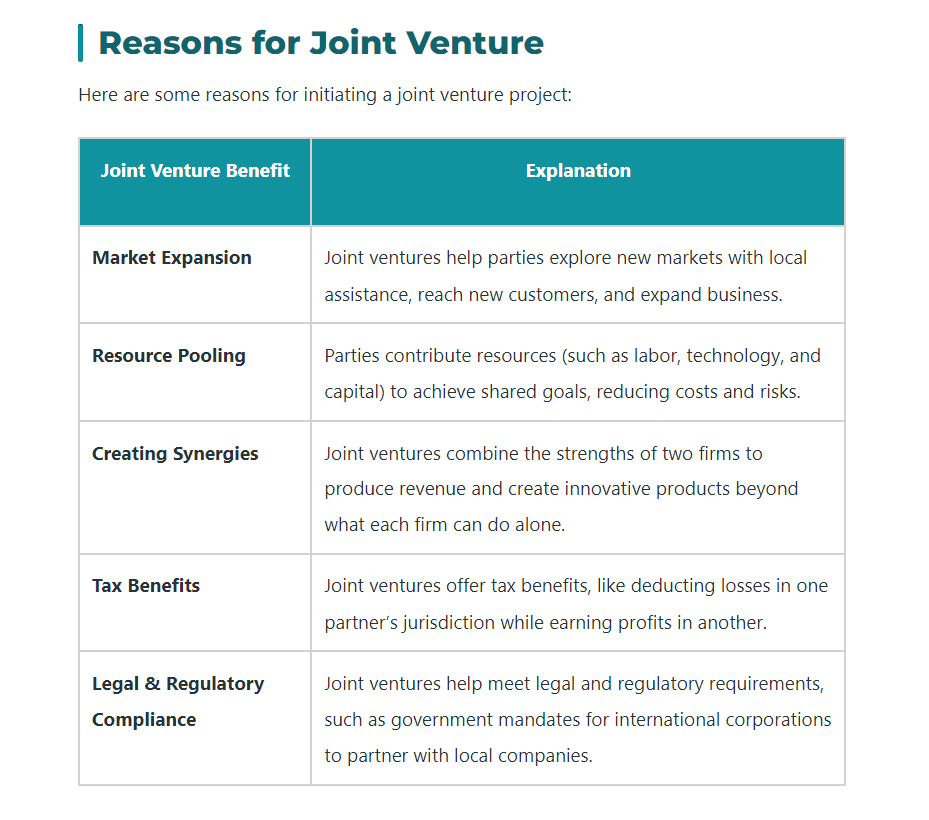
Eine weitere beliebte Strategie zur Marktexpansion sind Joint Ventures. Bei diesem Modell geht Ihr Unternehmen Partnerschaften mit Unternehmen in anderen Ländern ein, um gemeinsam eine neue Firma zu gründen oder an neuen Projekten zu arbeiten.
Wie funktioniert das Ganze?
Nehmen wir zum Beispiel an, ich habe ein Unternehmen ABC geerbt, das hochwertige Kakaophantagen besitzt, aber nicht über die Ressourcen verfügt, um Fabriken zum Verarbeiten meiner Ernte zu bauen.
Unterdessen besitzen Sie auf der anderen Seite der Welt das Unternehmen XYZ, das zwar über die Ressourcen zur Verarbeitung der Erzeugnisse verfügt, dem jedoch eine zuverlässige Kakaobeschaffungsquelle fehlt.
Wir können uns zusammentun und ein formidables Unternehmen gründen, das Produkte auf Kakaobasis wie Schokolade und dergleichen herstellt. Wir können unser neues Joint Venture benennen, wie wir wollen. Sagen wir, Firma COCO-AYZ.
Einerseits sorge ich für reichlich hochwertigen Kakao, damit unser neues Unternehmen am Laufen bleibt (und die unerbittlichen Gläubiger fernbleiben).
Andererseits stellen Sie die Ressourcen bereit, die wir benötigen, um unser neues Unternehmen auf den Weg zu bringen und wachsen zu lassen.
Durch unser Gemeinschaftsunternehmen können wir effektiv zusammenarbeiten, um die Endprodukte einem größeren Markt zugänglich zu machen und die Früchte zu ernten.
Ich hoffe, das ist ein passendes Beispiel.
Falls nicht, finden Sie hier einige bekannte Beispiele für Unternehmen, die erfolgreiche Joint Ventures gegründet haben:
- Molson Coors und SABMiller;
- Microsoft und General Electric;
- Walmart und Eko;
- Boeing und Lockheed Martin;
- The Walt Disney Company, News Corporation, Comcast’s NBC Universal und Providence Equity Partners;
- BMW und Brilliance Auto Group.
Sie müssen mit den oben genannten Unternehmen vertraut sein.
Oder auch nicht.
Was Ihnen wahrscheinlich bekannt ist, sind die Joint Ventures, die entstanden sind, als sich die oben genannten Unternehmen zusammengeschlossen haben. So entstand beispielsweise aus Molson Coors und SABMiller das Unternehmen MillerCoors.
Wahrscheinlich kennen Sie auch Hulu, das Gemeinschaftsunternehmen, das gegründet wurde, um die Programme der oben genannten Medienriesen auszustrahlen.
Können Sie erraten, welche Unternehmen Sony Ericsson ins Leben gerufen haben?
4. Übernahmen und Fusionen als Strategien zur Marktexpansion
Eine weitere wirksame Strategie zur Markterweiterung sind Übernahmen und Fusionen.
Akquisition beinhaltet, wie der Name treffend andeutet, den Kauf und die Kontrolle von Unternehmen im Ausland.
Anstatt ganz von vorne anzufangen, haben Sie bereits eine solide Ausgangsbasis.
Die Übernahme bietet Ihrem Unternehmen zahlreiche Vorteile, darunter:
- Verringerter Wettbewerb;
- Verbessertes Kundenerlebnis;
- Zugang zu einem bestehenden Kundenstamm;
- Etablierte Vertriebskanäle;
- Marktanteil;
- Zugang zu Technologien und Systemen, die auf dem ausländischen Markt bereits bewährt sind;
- Und mehr.
Außerdem erleichtert es den Markteintritt erheblich.
Andererseits beinhaltet eine Fusion die Zusammenlegung zweier Unternehmen zu einem einzigen. Anstatt also Ihre Supermarktkette in einem anderen Land zu gründen, könnten Sie mit einem bestehenden Unternehmen fusionieren, um dieselben Vorteile zu erzielen, die eine Akquisition bietet.
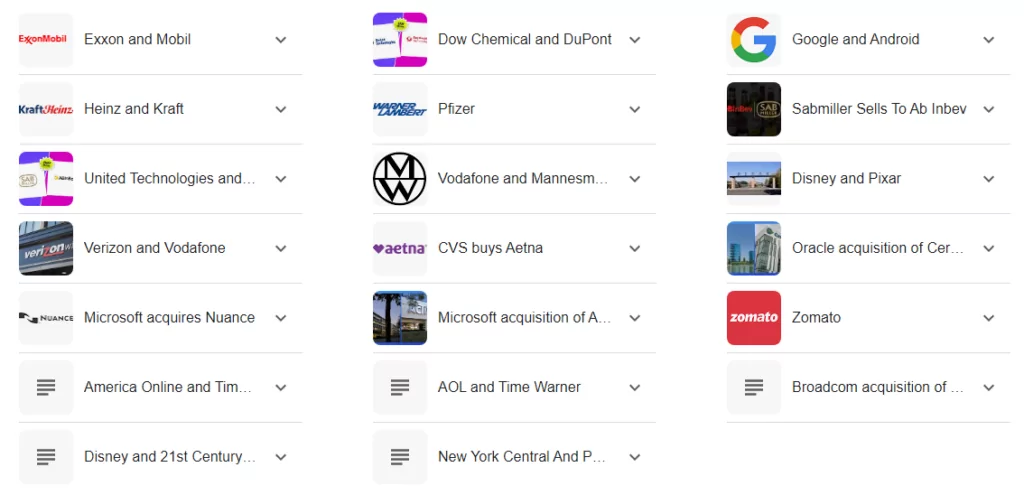
In den meisten Fällen gehen Akquisitionen und Fusionen Hand in Hand. Es gibt viele Beispiele von Unternehmen, die diese Produkterweiterungsstrategie erfolgreich umgesetzt haben.
Wenn man einen Neuling danach fragt, wird er wahrscheinlich antworten, dass Android eine Entwicklung von Google ist. Viele wissen jedoch nicht, dass Google Android im Jahr 2005 für $50 Millionen erworben hat. Dadurch gelang Google erstmals der Einstieg in den Mobilfunkmarkt.
Hier sind weitere Beispiele für Übernahmen und Fusionen.
5. E-Commerce und digitale Expansion
E-Commerce und digitale Expansion als Strategie zur Erschließung neuer Märkte erklären sich fast von selbst.
Nun, es sei denn, Sie leben hinterm Mond (in welchem Fall Sie diesen Artikel nicht lesen würden).
Das Internet hat es unglaublich einfach gemacht, ein weitreichendes und großes Publikum zu erreichen. Es hat geografische und traditionelle physische Barrieren beseitigt, die eine Expansion in früheren Zeiten etwas schwierig machten.
Heute können Sie mit nur wenigen Klicks direkt von Ihrem Schreibtisch aus erfolgreiche digitale Marketingkampagnen erstellen und starten. E-Commerce und internationales digitales Marketing sind kostengünstige und effiziente Werkzeuge für jedes Unternehmen, das über den Heimatmarkt hinaus expandieren möchte.
Es gibt jede Menge Ressourcen, um mehr über internationalen E-Commerce und digitales Marketing zu erfahren, die wir hier wahrscheinlich nicht alle auflisten können.
Ich habe jedoch einen kurzen PDF-Bericht gefunden, der zusammenfasst globale E-Commerce- und digitale Marketingstrategien.
Hier sind einige Punkte, die ich aus dem Bericht zusammengetragen habe, falls Sie keine Zeit haben:
- Es ist einfach umzusetzen, bringt aber wie jede andere Marktexpansionsstrategie auch seine Herausforderungen mit sich;
- E-Commerce ermöglicht es Ihnen, Kunden überall auf der Welt zu erreichen und sowohl im Einzel- als auch im Großhandel zu verkaufen;
- Es gibt unzählige digitale Marketingstrategien, mit denen Sie eine globale Präsenz aufbauen können;
- Seien Sie darauf vorbereitet, sich in einem komplexen Gelände zu bewegen, das Folgendes umfasst: kulturelle Anpassung, internationale Versandlogistik, Inhaltslokalisierung, und der Einhaltung verschiedener Vorschriften und Standards;
- Sie können ganz einfach viele nützliche Daten für Ihre Marketingkampagnen sammeln;
- Mehrsprachige SEO, Content-Marketing, Social Media und bezahlte Online-Werbung sind von entscheidender Bedeutung;
- Wählen Sie die richtigen Plattformen, einschließlich Ihrer Übersetzungstool.
Viele Unternehmen haben diese Strategie im Laufe der Jahre recht erfolgreich umgesetzt. Mein Lieblingsbeispiel ist Dollar Shave Club, das mit einem einfachen, aber humorvollen Video den Grundstein für ein heute globales Multimilliarden-Dollar-Unternehmen legte.
Dieses Video:
Es gibt so viele weitere erfolgreiche E-Commerce-Unternehmen, dass wir sie hier gar nicht alle aufzählen können.
Zu den offensichtlichen Beispielen gehören jedoch Unternehmen wie Amazon, eBay, AppSumo, Shopify, Warby Parker und Gymshark, und die Liste ließe sich schier endlos fortsetzen.
Weiterführende Literatur: Was ist grenzüberschreitender E-Commerce (+ Tipps zur Umsetzung).
6. Strategische Allianzen und Partnerschaften als Marktexpansionsstrategien
Sie wissen immer noch nicht, wie Sie in ausländische Märkte expandieren sollen?
Nun, sagen Sie Hallo zu strategischen Allianzen und Partnerschaften.
Bevor wir fortfahren, möchte ich erwähnen, dass Joint Ventures ebenfalls eine Art strategischer Allianz sind.
In diesem Absatz werden wir diskutieren strategische Allianzen und Partnerschaften die nicht wie bei Joint Ventures die Gründung einer separaten Rechtspersönlichkeit erfordern.
Erstens: Was sind strategische Allianzen oder Partnerschaften? Spoiler-Alarm: Sie sind genau das, wonach sie klingen.
Einfach ausgedrückt...
Strategische Allianzen und Partnerschaften sind Kooperationen zwischen Ihrem Unternehmen und ausländischen Einheiten oder Regierungsbehörden.
Zweitens gehen solche internationalen Expansionsstrategien mit vielen Vorteilen einher.
Sie können:
- Gemeinsame Ziele wie Produktentwicklung, Forschung, Markteintrittsstrategien und Marketinginitiativen in ausländischen Gebieten verfolgen;
- Kosten und potenzielle Risiken teilen;
- Fachwissen und Technologie austauschen;
- Zugang zu dringend benötigten Vertriebskanälen erhalten;
- Halten Sie lokale Gesetze und Vorschriften reibungslos ein;
- Und mehr.
Das Hauptziel und der Nutzen für Ihr Unternehmen ist natürlich die Marktexpansion.
Wenn Sie beispielsweise ein Infrastrukturunternehmen sind, das in andere Teile der Welt expandieren möchte, zahlt es sich aus, strategische Allianzen mit lokalen Behörden in Ihren Zielländern einzugehen. Andernfalls werden Ihre internationalen Expansionsstrategien auf massiven Widerstand der Einheimischen stoßen.
Weißt du, so wie diese Leute: Einheimische in Indonesien wehren sich gegen chinesische Infrastrukturinvestitionen.
7. Greenfield-Investitionen und Tochtergesellschaften
Zu guter Letzt haben wir die sogenannten Greenfield-Investitionen und Tochtergesellschaften.
Eine Greenfield-Investition ist eine Marktexpansionstrategie, bei der neue Geschäfte, Einheiten, Tochtergesellschaften oder Anlagen in fremden Ländern gegründet werden.
Der Begriff Greenfield leitet sich von der Tatsache ab, dass das Unternehmen, oft eine multinationale Organisation, in den meisten Fällen ein neues Vorhaben von Grund auf neu beginnt. Büros, Distributionszentren, Produktionsstätten und Wohnquartiere werden errichtet. Dies beinhaltet oft das Umpflügen und Vorbereiten einer grünen Wiese.
Grüninvestitionen und Tochtergesellschaften ermöglichen es Ihrem Unternehmen:
- Erstellen Sie maßgeschneiderte Einrichtungen;
- Haben Sie mehr Kontrolle über die Abläufe;
- Mehr Autonomie und Flexibilität haben;
- Bauen Sie eine starke lokale Präsenz auf.
Beachten Sie jedoch, dass diese Marktexpansionsstrategie erhebliche Vorabinvestitionen und höhere Risiken mit sich bringt.
Da Sie nun wissen, was eine internationale Marktexpansionsstrategie ist und welche Strategien Sie anwenden können, wollen wir uns nun den Vorteilen zuwenden.
Die 7 wichtigsten Vorteile der internationalen Marktexpansion

Laut einer Wells-Fargo-Bericht, 87% der US-Unternehmen sind der Meinung, dass eine internationale Marktexpansion für langfristiges Wachstum notwendig ist.
Zudem sind 69% der Befragten der Meinung, dass Schwellenländer die größten Wachstumschancen bieten.
Dennoch haben viele US-Unternehmen ihr Geschäft noch nicht international ausgerichtet.
Wenn Sie noch unentschlossen sind, könnten die folgenden Vorteile einer internationalen Expansion Ihnen genau den nötigen Anstoß geben.
1. Erweiterte Verbraucherbasis
Der offensichtlichste Vorteil einer internationalen Expansion ist ein erweiterter Kundenstamm.
Die Expansion Ihres Unternehmens in andere Länder verschafft Ihnen Zugang zu unerschlossenen Märkten, die in Ihrem Heimatland möglicherweise gesättigt oder nicht verfügbar sind.
Durch die Erschließung neuer und vielfältiger Märkte und Kundensegmente können Sie Ihre Verbraucherbasis erheblich erweitern und Ihr Umsatzpotenzial steigern.
2. Erhöhte Markensichtbarkeit
Die erfolgreiche Umsetzung einer internationalen Expansionsstrategie hilft Ihnen dabei, die Markenbekanntheit und den Ruf weltweit zu stärken.
Ein positives Markenimage stärkt das Vertrauen der Verbraucher, was mehr Kunden und Markentreue anzieht.
Mehr Kunden und eine bessere Markentreue gipfeln in Markenbotschaftern und Mundpropaganda-Marketing.
Beachten Sie bitte, dass 70% Kunden mehr von Marken kaufen, denen sie vertrauen, und Die Menschen geben 25% mehr Geld aus auf vertrauenswürdige Marken.
3. Diversifizierung der Einnahmequellen
Die Abhängigkeit von einer einzigen Einnahmequelle auf Ihrem Heimatmarkt kann Ihr Unternehmen wirtschaftlichen Schwankungen und unvorhergesehenen Ereignissen aussetzen.
Die Globalisierung Ihres Unternehmens ermöglicht es Ihnen andererseits, Ihre Einnahmequellen zu diversifizieren und Risiken zu streuen.
Wenn es Ihrem Unternehmen in einem Markt nicht so gut geht, können Sie die Verluste durch einen erfolgreichen Auftritt in einem anderen Markt ausgleichen.
Zusätzlich bietet Ihnen ein internationaler Markt die Chance, neue Produkte einzuführen, was sich positiv auf Ihren Umsatz auswirken kann.
Coca-Cola ist hierfür ein gutes Beispiel. Das Unternehmen schneidet in mehreren Regionen weiterhin gut ab und führt gleichzeitig regelmäßig neue Marken ein.
4. Wettbewerbsvorteil
Die Expansion in neue Märkte bietet Ihrem Unternehmen einen Wettbewerbsvorteil gegenüber Ihren rein nationalen Mitbewerbern.
Erstens glauben die Kunden, dass Sie ein zukunftsorientiertes Unternehmen sind, das ihre Interessen im Herzen trägt.
Zweitens ermöglicht Ihnen die Internationalisierung, im Vergleich zu Ihren Mitbewerbern Systeme und eine Marktpräsenz in mehr Märkten aufzubauen.
“Zugang zu innovativen Technologien, günstigeren Ressourcen und die Fähigkeit, sich an verschiedene kulturelle Normen anzupassen, ermöglichen es ihnen, einzigartige Produkte und Dienstleistungen anzubieten, die ein breiteres Publikum ansprechen.” – Dr. Ariel King, LinkedIn.
5. Zugang zu einem vielfältigen Talentpool
Ein weiterer Vorteil der internationalen Marktexpansion ist der Zugang zu einem vielfältigeren und größeren Pool an Talenten.
Warum ist das wichtig?
Die Einstellung internationaler Fachkräfte und Fähigkeiten bringt Kreativität, Vielfalt, andere Sprachen und Innovation in Ihr Unternehmen.
Dies fördert inklusive und dynamische Arbeitskulturen, die die Produktivität steigern.
6. Investitionsmöglichkeiten im Ausland
Wer ausschließlich auf dem Heimatmarkt tätig ist, verpasst möglicherweise verschiedene Auslandsinvestitionsmöglichkeiten, die globalen Unternehmen offenstehen.
Beispielsweise kann die Globalisierung Ihres Unternehmens Ihnen Zugang zu günstigeren Ressourcen und neuen Technologien verschaffen und Ihrem Unternehmen helfen, schnell zu wachsen.
Darüber hinaus bieten viele ausländische Regierungen lukrative Anreize wie Steuersenkungen, Provisionen und Kredite für Unternehmen an, die in ihren Ländern investieren möchten.
7. Skaleneffekte
Einer der am meisten übersehenen Vorteile der Expansion in neue Märkte sind Größenvorteile.
Die Bedienung internationaler Märkte bedeutet, mit einem größeren Kundenstamm mit unterschiedlichen Anforderungen umzugehen.
Das bedeutet, dass Sie die Produktion steigern müssen, was Ihre Stückkosten senkt.
Globale Unternehmen, die von Skaleneffekten profitieren, können die Produktionskosten senken und die Rentabilität steigern.
Nachdem wir nun die Vorteile geklärt haben, widmen wir uns der Frage, wie Sie eine effektive Marktexpansionstrategie für Ihr Unternehmen entwickeln.
So erstellen Sie eine Markt-Expansionsstrategie

Auch wenn es zunächst einschüchternd wirken mag, ist die Entwicklung einer effektiven Marktexpansionstrategie einfach, wenn man die richtige Einstellung hat und weiß, was man tut.
Dennoch ist es wichtig, eine Strategie zu entwickeln, die alles von der Vorbereitung über die Durchführung bis hin zur Messung der Ergebnisse abdeckt.
Lasst uns zur Sache kommen.
1. Definieren Sie Ihre Ziele
Der erste Schritt bei der Erstellung einer Marktexpansionsstrategie besteht darin, Ihre Ziele zu definieren. Man kann nicht einfach ins Blaue hineinschießen und erwarten, dass etwas hängen bleibt.
Wie wollen Sie sonst wissen, ob Ihre Marktexpansionsstrategie funktioniert, wenn Sie keine klar definierten und messbaren Ziele haben?
Vor diesem Hintergrund: Was möchten Sie mit Ihrer internationalen Expansionsstrategie erreichen?
Möchten Sie:
- Umsatz und Erlös steigern?
- Die Markenbekanntheit steigern?
- Neue Produkte auf den Markt bringen?
- Neue Märkte erschließen?
- Die Rentabilität steigern?
- Produkte erforschen und entwickeln?
- Kosten senken?
- Neue Ressourcen beschaffen?
Dies sind einige der Ziele, die bei der Definition des Zwecks der Expansion berücksichtigt werden sollten.
Legen Sie klare Ziele fest, die Ihrem Team als Leitfaden für die Umsetzung einer erfolgreichen Strategie dienen.
Andernfalls wird Ihre Strategie von vornherein fehlerhaft sein. Sie werden wie ein kopfloses Huhn herumlaufen, bis Sie schließlich schwankend den neuen Markt verlassen und Ihre Expansionspläne aufgeben.
Mit einem klaren Ziel vor Augen wollen wir nun zum nächsten Schritt übergehen.
2. Führen Sie eine fundierte Marktforschung durch
Wir können das gar nicht genug betonen: Wenn Sie ohne gründliche Recherche voreilig versuchen, neue Märkte zu erschließen, wird das nur nach hinten losgehen.
Gibt es in der neuen Region, die Sie ins Visier nehmen, überhaupt eine Nachfrage nach Ihren Produkten oder Dienstleistungen?
Eine fundierte Marktanalyse sollte die Grundlage Ihrer Marktexpansionsstrategie bilden.
Warum?
Solide Recherchen ermöglichen Ihnen:
- Potenzielle Märkte identifizieren;
- Den Wettbewerb verstehen;
- Einblicke in das lokale Verbraucherverhalten und die Präferenzen der Verbraucher gewinnen;
- Marktbedürfnisse analysieren;
- Ermitteln Sie den Bedarf und die Chancen.
Wenn Sie beispielsweise Skiausrüstung verkaufen, sollten Sie keine Ressourcen für Marketingmaßnahmen in tropischen Märkten verschwenden.
Hier ist noch ein lustiges Beispiel.
Weil Walmart hat keine ausreichende Vorarbeit geleistet Bei ihrer Expansion nach Korea installierten sie höhere Regale als ihre lokalen Konkurrenten.
Infolgedessen mussten sich die koreanischen Kunden strecken oder Leitern benutzen, um an die Waren in den hohen Regalen zu gelangen 😀
Zudem haben sie es kläglich versäumt, die Einkaufsgewohnheiten der Koreaner zu erkennen.
Koreaner ziehen es in der Regel vor, täglich in verschiedene Geschäfte in der Nachbarschaft zu gehen, anstatt einmal pro Woche bei Walmart einzukaufen.
“Die haben ganze Stapel von Waren in Kartons”, sagte Lee Jin Sook, 46, eine Hausfrau, die in einer U-Bahn in Seoul saß. “Das mag für manche amerikanischen Hausfrauen gut sein, die mit dem eigenen Auto unterwegs sind.” Aber Koreaner, so sagte sie, bevorzugten kleinere Verpackungen: “Warum sollte man eine ganze Schachtel mit Shampooflaschen kaufen?”
Auch in Brasilien haben sie ähnlich katastrophale Fehler begangen, wie Sie in diesem Artikel nachlesen können: Die Walmart-Reise in Brasilien: Eine Geschichte von Aufstieg, Niedergang und Übernahme.
Brauchen Sie weitere Beispiele für Unternehmen, die aufgrund mangelhafter Marktforschung ihr Ziel verfehlt haben? Home Depot, Mattel und eBay sind in China kläglich gescheitert.
Und hier ist Warum Starbucks in Israel gescheitert ist und konnte in Australien keinen Erfolg brauen.
3. Definieren Sie Ihre Zielgruppe
Einer der Hauptgründe, warum diese Giganten auf ausländischen Märkten scheiterten, war, dass sie den Kunden vor Ort nicht verstanden.
Die meisten Unternehmen versuchten, den Stil und die Zielgruppenprofile aufzuzwingen, die in amerikanischen Filialen funktioniert hatten.
Sie dachten sich: Wenn es in den USA funktioniert, warum sollte es dann nicht auch in Südkorea oder China funktionieren?
Da haben sie sich aber getäuscht.
Klar, Sie verkaufen dieselben Produkte, aber machen Sie nicht den Fehler anzunehmen, dass neue Märkte dieselben Bedürfnisse und Interessen haben.
Deshalb funktioniert Ihr amerikanisches Zielgruppenprofil in einem ausländischen Markt nicht.
Zielgruppen für verschiedene Märkte von Grund auf auf Basis von Marktforschung definieren.
Schieß dir nicht ins Bein. Du kannst von Neil Patel mehr lernen in Wie Sie Ihre Zielgruppe finden.
4. Digitales Marketing nutzen
Wir haben vorhin erwähnt, dass das Internet es lächerlich einfach gemacht hat, Kunden überall auf der Welt zu erreichen.
Um Ihren Markteintritt und Ihre Expansion zu beschleunigen, sollten Sie alle Ihnen zur Verfügung stehenden digitalen Marketing-Tools und -Technologien einsetzen.
Sie haben in diesem Bereich zahlreiche Möglichkeiten.
Erstens können Sie einsetzen Suchmaschinenoptimierung (SEO) in den lokalen Suchergebnissen auf ausländischen Märkten zu erscheinen.
Andernfalls finden potenzielle Kunden Ihr Unternehmen möglicherweise nie, selbst wenn sie nach den von Ihnen angebotenen Produkten suchen.
Zweitens sollten Sie Social-Media-Marketing betreiben, das auf Kunden in Ihren Zielmärkten ausgerichtet ist. Beachten Sie dabei, dass einige Social-Media-Plattformen in bestimmten Märkten prominenter sind als in anderen.
Daher müssen Sie bei der Konzeption Ihrer Kampagnen strategisch vorgehen.
Drittens, vergessen Sie das E-Mail-Marketing nicht.
Wenn sie gut umgesetzt wird, E-Mail-Marketing weist einen hohen ROI von 4.000% auf.!
Starten Sie darüber hinaus Content-Marketing-Kampagnen, die auf diese neuen Regionen ausgerichtet sind.
Wenn Sie ein wenig Hilfe benötigen, schauen Sie sich diesen praktischen PDF-Leitfaden von HubSpot an: Globales Marketing-Playbook.
Schließlich sollten Sie unbedingt E-Commerce-Lösungen implementieren und Online-Marktplätze nutzen, um mehr Kunden zu erreichen.
5. Einhaltung von Gesetzen und Vorschriften
Das ist schätze ich ziemlich unkompliziert und liegt in der Verantwortung Ihrer Rechtsabteilung.
Bevor Sie international expandieren, stellen Sie sicher, dass Ihre Strategie, Ihr Geschäftsmodell und Ihr Produktangebot gegen keine Gesetze verstoßen.
Verschiedene Länder haben unterschiedliche rechtliche Anforderungen für ausländische Investoren.
Besprich dich also mit deinem Anwalt, um unangenehme Überraschungen in Form von Gerichtsverfahren und hohen Geldstrafen zu vermeiden.
6. Lokalisierung und Übersetzung
Laut CSA Forschung, 76% Verbraucher in 29 Ländern gaben an, dass sie Produkte bevorzugt kaufen, deren Informationen in ihrer Muttersprache verfasst sind.
Zudem gaben 40% der Verbraucher an, dass sie niemals auf einer Website in einer anderen Sprache einkaufen würden. Sie können sich vorstellen, was das für Ihre internationalen Expansionsstrategien bedeutet.
Stellen Sie bei der Expansion in neue Märkte sicher, dass Sie Produkte und Dienstleistungen in den jeweiligen Landessprachen anbieten. Das bedeutet, dass Sie eine Website mit effektiver Lokalisierung und Übersetzung erstellen müssen.
Lokalisierung bedeutet, eine Nutzererfahrung zu bieten, die bei den Einheimischen Anklang findet. Das bedeutet unter anderem, die Produktverpackung zu ändern.
Übersetzung beinhaltet die Umwandlung Ihrer Website-Inhalte in andere Sprachen.
Vergiss nicht, dass Lokalisierung und Übersetzung ein gutes Verständnis kultureller Nuancen und Vorlieben erfordern.
Zum Glück für Sie muss die Lokalisierung und Übersetzung Ihrer Website mit einem Tool wie kein Problem sein TranslatePress.
TranslatePress ist eine benutzerfreundliche Lösung für die Übersetzung und Lokalisierung von Websites, die großen und kleinen Unternehmen den Einstieg in die mehrsprachige Expansion erleichtert.
TranslatePress Mehrsprachig
Schlussfolgerung
Wir hoffen, dass dieser ausführliche Artikel Ihnen den Leitfaden gegeben hat, den Sie benötigen, um eine nachhaltige Marktexpansionsstrategie zu entwickeln.
Wir haben die Vorteile, Strategien und einige wichtige Aspekte skizziert, die Sie bei der Formulierung Ihrer Strategie für die internationale Expansion berücksichtigen sollten.
Bei der Expansion in neue Märkte zahlt es sich aus, mit einer klugen Recherche zu beginnen, um häufige Fehltritte zu vermeiden.
Stellen Sie danach immer die Bedürfnisse Ihrer Kunden an die erste Stelle und respektieren Sie deren Kultur und Gesetze.
Was ist dein wichtigstes Fazit?
Bitte teilt eure Tipps, Gedanken und Vorschläge unten im Kommentarbereich.



Brillant formuliert, Sie haben den Kern perfekt getroffen, genau wie der beste elektronische DJ beim Mastering eines Tracks.
Danke Devante für das Vorbeischauen und das Kompliment!