

Dans ce post
Rencontrez-vous des difficultés à créer la bonne stratégie d'expansion pour vous aventurer sur de nouveaux marchés ? Vous voulez internationaliser votre entreprise, n'est-ce pas ?
Dans ce cas, plongeons-nous directement dedans.
Créer une stratégie d'expansion de marché réussie pour votre entreprise est plus difficile que la plupart des dirigeants d'entreprise ne le supposent au départ.
Les responsables de la croissance débutants pensent souvent que c'est aussi simple que de reproduire leur stratégie de croissance locale. C'est du moins ce qu'ils croient jusqu'à ce qu'ils s'en mordent les doigts.
Si tout cela est nouveau pour vous...
Expansion sur de nouveaux marchés implique plus qu'un simple copier-coller de ce qui fonctionne sur votre marché domestique. Les stratégies d'expansion internationale nécessitent une attention particulière car il existe de nombreuses variables que même les meilleurs dirigeants négligent.
Et tu sais quel est le plus drôle ?
Mettre en œuvre des stratégies d'expansion de marché réussies n'est pas un défi réservé aux petites entreprises. Les grandes corporations dotées de services marketing importants et de budgets astronomiques ne sont pas épargnées non plus.
Dans le passé, de nombreuses grandes marques ont échoué de manière spectaculaire lors de la mise en œuvre de stratégies d'expansion internationale.
Des exemples célèbres incluent Home Depot en Chine, Starbucks en Israël et Walmart dans plusieurs pays. Nous verrons comment ces entreprises ont échoué plus tard dans l'article. Vous rirez en entendant l'histoire de l'échec de Walmart en Corée, alors restez avec nous pour ça 😀
Passons à autre chose.
La croissance étant une priorité absolue pour plus de 51% de PDG, selon une récente Rapport Gartner, vous ne pouvez pas vous permettre d'être laissé pour compte.
Je veux dire…
Exporter vos produits vers de nouveaux pays est un moyen fantastique de stimuler la croissance et de rester compétitif dans une économie de plus en plus mondialisée.
Prenez du retard dans vos efforts d'internationalisation et vous laisserez beaucoup d'argent sur la table tout en devenant insignifiant.
Vous ne voulez pas de ça, n'est-ce pas ?
Dans l'article d'aujourd'hui, nous partageons des moyens simples pour développer votre entreprise sur de nouveaux marchés sans effort.
Qu'est-ce qu'une stratégie d'expansion sur le marché international ?

Avant d'entrer dans le vif du sujet, quel animal qualifions-nous de stratégie d'expansion marketing internationale ?
Dans sa forme la plus simple, une stratégie d'expansion du marketing international est un plan qui décrit comment votre entreprise va se développer, gagner de l'argent et prospérer dans des pays étrangers.
La stratégie d'expansion sur le marché comprend toutes les approches et méthodes que vous mettrez en œuvre pour pénétrer les marchés étrangers éloignés.
En d'autres termes, il s'agit d'un plan directeur montrant à votre équipe comment l'entreprise envisage de réaliser son expansion mondiale tout en augmentant ses profits et en réduisant les risques liés à ces frontières inexplorées.
C'est beaucoup mieux, n'est-ce pas ?
Vous pouvez voir cela comme le plan directeur de domination mondiale de votre entreprise.
À première vue, cela semble plutôt simple — vous savez, du genre de truc qu'on pourrait dessiner sur une napkin en prenant un café. Ça ne devrait pas être si difficile pour votre entreprise basée aux États-Unis de vendre des produits en Afrique du Sud, par exemple ?
Tout le monde le fait. Apple le fait. Google le fait. Facebook l'a fait.
Mais la mauvaise nouvelle, c'est qu'il n'est pas facile d'élaborer une stratégie d'expansion sur le marché qui donne les résultats escomptés. Vous devez mûrement réfléchir à votre stratégie d'expansion sur le marché international et y impliquer toutes les parties prenantes.
L'expansion vers de nouveaux marchés peut prendre de nombreuses formes, il existe donc de nombreuses options parmi lesquelles choisir. Avoir une bonne compréhension des stratégies d'expansion internationale à votre disposition peut vous aider à déterminer ce qui convient le mieux à votre entreprise.
Voici quelques stratégies courantes d'expansion sur le marché à explorer.
Top 7 des stratégies populaires d'expansion du marché

Il existe plusieurs stratégies (ou manières) pour internationaliser votre entreprise. Vous pouvez vous en tenir à une seule stratégie ou en combiner plusieurs en fonction de vos besoins, de votre budget et de votre type d'entreprise, entre autres.
Peu importe les stratégies que vous décidez de mettre en œuvre, il est toujours important de choisir ce qui correspond à vos objectifs commerciaux. Si une stratégie échoue, vous pouvez toujours affiner ou revoir votre approche, ou en choisir une totalement différente.
Allons-y.
1. L'exportation de vos produits comme stratégie d'expansion sur le marché
Fabriquez-vous des produits physiques ? Si c'est le cas, l'exportation des produits vers un autre pays est une stratégie viable d'expansion sur le marché à adopter. Cette approche a très bien fonctionné pour de nombreux fabricants du monde entier.
Les exemples illustrant cette stratégie d'expansion de marché ne manquent pas.
Les constructeurs automobiles tels que Toyota et Hyundai exécutent efficacement cette stratégie d'expansion du marché pour atteindre des clients du monde entier.
Besoin d'un autre exemple ?
Considérez la stratégie que les fabricants chinois utilisent pour toucher un public mondial.
Par exemple, la plupart de nos appareils électroniques, de nos vêtements et d'autres objets de nos maisons sont fabriqués en Chine, ce qui fait de quelques entrepreneurs des milliardaires au passage.
Il suffit de dire que l'on peut trouver des produits fabriqués en Chine dans les coins les plus reculés du globe. Ça, mon ami, c'est l'expansion du marché par excellence.
En tant que fabricant aux États-Unis, vous n'avez pas besoin de réinventer la roue. Adaptez simplement la stratégie pour pénétrer et vous développer sur de nouveaux marchés dans le monde entier.
Cela dit, vous pouvez vendre directement à des clients étrangers ou vous associer à des marchands tiers tels que des agents à l'exportation, des distributeurs et des sociétés de négoce.
De plus, en plus de votre site Web officiel et d'autres canaux numériques, vous pouvez vendre sur plusieurs places de marché en ligne qui s'adressent à un public mondial.
Grâce à un marketing stratégique et un bon positionnement, vous pouvez rapidement élargir votre portée de marché, tant hors ligne qu'en ligne.
2. Franchise et licence
Depuis leur création, des entreprises telles que KFC, McDonald's et Calvin Klein ont franchi les frontières internationales.
Et savez-vous comment ils ont réalisé cette expansion exponentielle du marché pour leurs produits ?
Vous l'avez deviné.
Ils ont tous mis en œuvre la franchise et la licence. Et ça marche !
Cela étant dit, quelle est la différence entre la franchise et la licence ?
Vous le savez probablement déjà, mais si vous débutez ou avez besoin d'un rappel :
- Franchise – Avec ce modèle, vous permettez à des entreprises d'autres pays d'utiliser le modèle commercial et la marque de votre entreprise. De cette façon, vous pénétrez de nouveaux marchés et générez des revenus grâce aux frais de franchise initiaux et aux redevances continues ; KFC, Hilton et Starbucks en sont des exemples parfaits ;
- LicLicence – Cette stratégie consiste à accorder à des entreprises étrangères le droit d'utiliser la propriété intellectuelle de votre entreprise. Cela comprend les marques, les brevets et les droits d'auteur. Vous élargissez votre marché et générez des revenus grâce aux redevances. C'est ce que font Calvin Klein, Nike et The Walt Disney Company.
Pour en savoir plus sur cette stratégie d'expansion de produits, n'hésitez pas à consulter ceci Franchise ou licence : quelle est la différence ? article par NerdWallet.
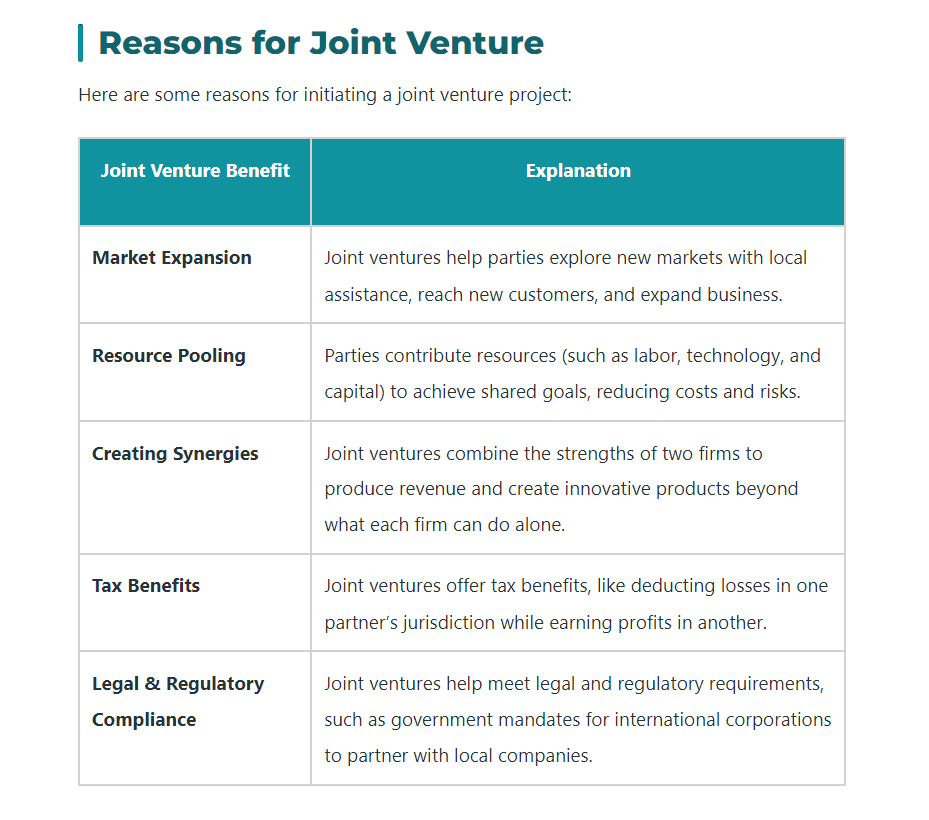
3. Les coentreprises comme stratégie d'expansion sur le marché
Une autre stratégie d'expansion de marché populaire est la coentreprise. Avec ce modèle, votre entreprise s'associe à des entreprises d'autres pays pour créer une nouvelle entreprise ou travailler ensemble sur de nouveaux projets.
Comment tout cela fonctionne-t-il ?
Par exemple, disons que j'ai hérité d'une entreprise ABC qui possède des plantations de cacao de haute qualité mais qui manque de ressources pour construire des usines afin de transformer ma production.
Pendant ce temps, à l'autre bout du monde, vous possédez une entreprise XYZ disposant des ressources nécessaires pour transformer les produits agricoles, mais vous manquez d'une source fiable de cacao.
Nous pouvons nous donner la main et former une entreprise formidable qui fabrique des produits à base de cacao tels que du chocolat et j'enpasse. Nous pouvons nommer notre nouvelle coentreprise comme nous le voulons. Disons, l'entreprise COCO-AYZ.
D'une part, je fournis suffisamment de cacao de haute qualité pour faire tourner notre nouvelle entreprise (et tenir à l'écart les créanciers insatiables).
D'un autre côté, vous fournissez les ressources dont nous avons besoin pour lancer et faire croître notre nouvelle entreprise.
Grâce à notre coentreprise, nous pouvons collaborer efficacement pour amener les produits finis vers un marché plus large et en récolter les fruits.
J'espère que c'est un exemple convenable.
Sinon, voici des exemples populaires d'entreprises qui ont formé des coentreprises réussies :
- Molson Coors et SABMiller;
- Microsoft et General Electric;
- Walmart et Eko;
- Boeing et Lockheed Martin;
- The Walt Disney Company, News Corporation, NBC Universal de Comcast et Providence Equity Partners ;
- BMW et Brilliance Auto Group.
Vous devez connaître les entreprises ci-dessus.
Ou pas.
Ce qui vous est probablement familier, ce sont les coentreprises qui ont vu le jour lorsque les entreprises ci-dessus se sont associées. Par exemple, Molson Coors et SABMiller ont donné naissance à MillerCoors.
Vous connaissez aussi probablement Hulu, qui est la coentreprise créée pour diffuser les programmes des géants des médias susmentionnés.
Pouvez-vous deviner quelles entreprises nous ont apporté Sony Ericsson ?
4. Acquisitions et fusions en tant que stratégies d'expansion sur le marché
Une autre stratégie efficace d'expansion sur le marché est celle des acquisitions et des fusions.
L'acquisition, comme son nom l'indique si bien, consiste à acheter et à contrôler des entreprises dans des pays étrangers.
Au lieu de repartir de zéro, vous disposez d'une rampe de lancement établie.
L'acquisition offre à votre entreprise plusieurs avantages, tels que :
- Concurrence réduite;
- Expérience client améliorée ;
- Accès à une clientèle établie ;
- Canaux de distribution établis ;
- Part de marché;
- Accès à la technologie et aux systèmes qui fonctionnent déjà sur le marché étranger ;
- Et plus.
Cela facilite également beaucoup l'entrée sur le marché.
D'un autre côté, une fusion implique la combinaison de deux entreprises en une seule. Ainsi, au lieu de lancer votre chaîne de supermarchés dans un autre pays, vous pourriez fusionner avec une entreprise existante pour obtenir les mêmes avantages que l'acquisition offre.
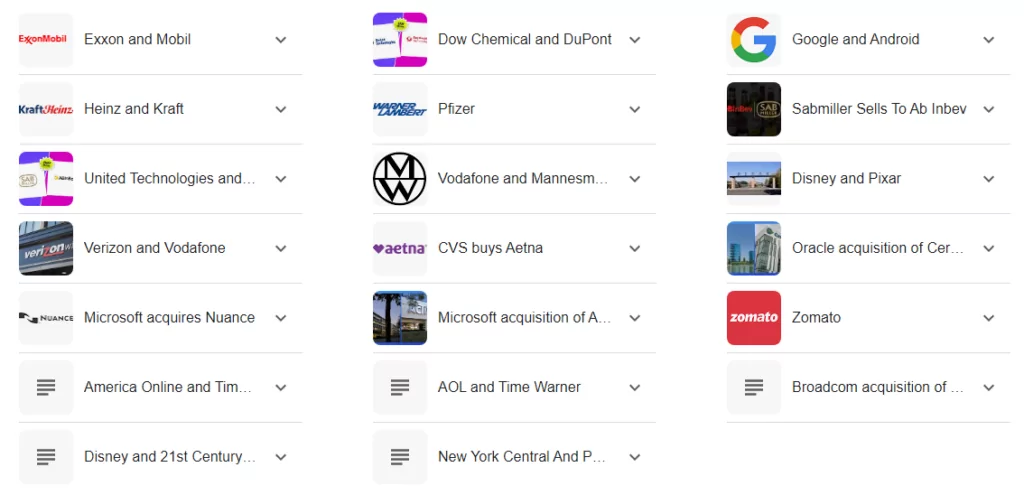
Dans la plupart des cas, les acquisitions et les fusions vont de pair. Il existe de nombreux exemples d'entreprises qui ont exécuté cette stratégie d'expansion de produits avec succès.
Si vous posez la question à n'importe quel novice, il vous répondra sans doute qu'Android est une création de Google. Mais beaucoup de gens ignorent que Google a racheté Android pour $50 millions en 2005. Cela a permis à Google de faire son entrée sur le marché de la téléphonie mobile.
Voici d'autres exemples d'acquisitions et de fusions.
5. E-commerce et expansion numérique
Le e-commerce et l'expansion numérique en tant que stratégie pour s'implanter sur de nouveaux marchés vont presque de soi.
Eh bien, à moins de vivre sous une roche (auquel cas vous neisseriez pas cet article).
Internet a rendu l'accès à un public vaste et lointain incroyablement facile. Il a éliminé les barrières géographiques et physiques traditionnelles qui rendaient l'expansion autrefois un peu difficile.
Aujourd'hui, vous pouvez concevoir et lancer des campagnes de marketing numérique réussies directement depuis votre bureau en quelques clics. Le commerce électronique et le marketing numérique international sont des outils rentables et efficaces pour toute entreprise qui cherche à s'implanter au-delà de son marché national.
Il existe des tonnes de ressources pour en savoir plus sur le commerce électronique international et le marketing numérique, nous ne pouvons probablement pas tout lister ici.
Cependant, j'ai trouvé un court rapport PDF qui résume stratégies mondiales de commerce électronique et de marketing numérique.
Voici quelques points que j'ai tirés du rapport si vous manquez de temps :
- Il est facile à mettre en œuvre mais comporte ses propres défis, tout comme toute autre stratégie d'expansion sur le marché ;
- Le commerce électronique vous permet de toucher des clients partout dans le monde, de vendre à la fois au détail et en gros ;
- Il existe d'innombrables stratégies de marketing numérique que vous pouvez utiliser pour bâtir une présence mondiale ;
- Préparez-vous à naviguer dans des terrains complexes qui comprennent adaptation culturelle, logistique du transport international, localisation de contenu, et de la gestion de diverses réglementations et normes ;
- Vous pouvez facilement recueillir de nombreuses données utiles pour vos campagnes marketing ;
- SEO multilingue, le marketing de contenu, les médias sociaux et les publicités en ligne payantes sont cruciaux ;
- Choisissez les bonnes plateformes, y compris la vôtre outil de traduction.
De nombreuses entreprises ont mis en œuvre cette stratégie avec beaucoup de succès au fil des ans. Mon exemple préféré est Dollar Shave Club, qui a utilisé une vidéo simple mais humoristique pour lancer ce qui est aujourd'hui une entreprise mondiale de plusieurs milliards de dollars.
Cette vidéo :
Il y a tant d'autres entreprises de commerce électronique prospères que nous ne pouvons pas toutes les énumérer ici.
Mais des exemples évidents incluent des entreprises comme Amazon, eBay, AppSumo, Shopify, Warby Parker, Gymshark, et la liste est longue.
Lectures recommandées: Qu'est-ce que le commerce électronique transfrontalier (+ Conseils pour sa mise en œuvre).
6. Alliances stratégiques et partenariats en tant que stratégies d'expansion sur le marché
Vous ne trouvez toujours pas comment vous allez vous développer sur les marchés étrangers ?
Eh bien, dites un grand bonjour aux alliances stratégiques et aux partenariats.
Avant d'aller plus loin, je tiens à mentionner que les coentreprises sont également un type d'alliance stratégique.
Dans ce paragraphe, nous aborderons alliances stratégiques et partenariats qui n'impliquent pas la création d'une entité juridique distincte, comme c'est le cas pour les coentreprises.
Premièrement, que sont les alliances stratégiques ou partenariats ? Alerte spoiler : c'est exactement ce que vous pensez.
En un mot...
Les alliances stratégiques et les partenariats sont des collaborations entre votre entreprise et des entités étrangères ou des organismes gouvernementaux.
Deuxièmement, ce type de stratégie d'expansion internationale comporte de nombreux avantages.
Vous pouvez :
- Poursuivre des objectifs communs tels que le développement de produits, la recherche, les stratégies d'entrée sur le marché et les initiatives marketing sur des territoires étrangers;
- Partager les coûts et les risques potentiels ;
- Partager l'expertise et la technologie;
- Accéder à des canaux de distribution indispensables ;
- Se conformer aux lois et règlements locaux sans encombre ;
- Et plus.
L'objectif principal et l'avantage pour votre entreprise, bien sûr, sont l'expansion du marché.
Par exemple, si vous êtes une entreprise d'infrastructure qui cherche à s'implanter dans d'autres régions du monde, il est judicieux de nouer des alliances stratégiques avec les autorités locales de vos pays d'intérêt. Sinon, vos stratégies d'expansion internationale se heurteront à une résistance considérable de la part des populations locales.
Tu sais, comme ces gens-là : Les habitants indonésiens s'opposent aux investissements chinois dans les infrastructures.
7. Investissements nouveaux et filiales
Enfin et surtout, nous avons ce que l'on appelle les investissements de création ex nihilo et les filiales.
Un investissement de création (greenfield investment) est une stratégie d'expansion sur le marché qui consiste à implanter de nouvelles activités, entités, filiales ou installations dans des pays étrangers
Le terme « greenfield » (terrain vierge) vient du fait que, dans la plupart des cas, l'entreprise, souvent une organisation multinationale, lance une nouvelle activité à partir de zéro : construction de bureaux, de centres de distribution, d'installations de production et de logements. Cela implique souvent de labourer et de préparer un terrain vert.
Les investissements de création (greenfield) et les filiales permettent à votre entreprise de :
- Construisez des installations personnalisées ;
- Avoir un meilleur contrôle sur les opérations ;
- Bénéficier d'une plus grande autonomie et flexibilité ;
- Établissez une forte présence locale.
Notez toutefois que cette stratégie d'expansion sur le marché implique un investissement initial important et des risques plus élevés.
Maintenant que vous savez ce qu'est une stratégie d'expansion sur le marché international et certaines des stratégies que vous pouvez utiliser, passons aux avantages.
Les 7 principaux avantages de l'expansion sur les marchés internationaux

Selon un Rapport de Wells Fargo, 87% d'entreprises américaines estiment que l'expansion sur les marchés internationaux est nécessaire à leur croissance à long terme.
Par ailleurs, 69% des personnes interrogées s'accordent à dire que les marchés émergents offrent les meilleures opportunités de croissance.
Pourtant, de nombreuses entreprises américaines n'ont pas encore étendu leurs activités à l'international.
Si vous hésitez encore, les avantages suivants de l'expansion internationale pourraient bien vous donner l'impulsion nécessaire.
1. Élargissement de la base de consommateurs
Le bénéfice le plus évident de l'expansion internationale est l'élargissement de la base de clients.
Développer votre entreprise dans d'autres pays vous permet d'accéder à des marchés inexploités qui peuvent être saturés ou indisponibles dans votre pays d'origine.
En explorant de nouveaux marchés et segments de clientèle diversifiés, vous pouvez élargir considérablement votre base de consommateurs et augmenter votre potentiel de revenus.
2. Visibilité de la marque accrue
Exécuter avec succès une stratégie d'expansion internationale vous aide à renforcer la notoriété et la réputation de votre marque à travers le monde.
Une image de marque positive renforce la confiance des consommateurs, ce qui attire davantage de clients et favorise la fidélité à la marque.
Plus de clients et une meilleure fidélité à la marque aboutissent à la promotion de la marque et au marketing de bouche-à-oreille.
Gardez à l'esprit que 70% de clients achètent davantage de marques en lesquelles ils ont confiance, et les gens dépensent 25% de plus sur des marques de confiance.
3. Diversification des sources de revenus
Dépendre d'une seule source de revenus sur votre marché intérieur peut exposer votre entreprise aux fluctuations économiques et à des événements imprévus.
D'un autre côté, étendre votre entreprise à l'international vous permet de diversifier vos sources de revenus et de répartir les risques.
Si votre entreprise ne réalise pas de bons résultats sur un marché donné, vous pouvez compenser ces pertes en obtenant de bons résultats sur un autre marché.
De plus, un marché international vous offre la chance d'introduire de nouveaux produits, ce qui peut avoir un impact positif sur votre chiffre d'affaires.
Coca-Cola en est un bon exemple. L'entreprise continue de bien performer dans de multiples régions tout en introduisant régulièrement de nouvelles marques.
4. Avantage concurrentiel
L'expansion sur de nouveaux marchés offre à votre entreprise un avantage concurrentiel sur vos concurrents exclusivement nationaux.
Premièrement, les clients pensent que vous êtes une entreprise avant-gardiste qui a leurs intérêts à cœur.
Deuxièmement, l'internationalisation vous permet d'établir des systèmes et une présence sur le marché dans un plus grand nombre de marchés par rapport à vos concurrents.
“ L'accès à des technologies innovantes, à des ressources moins chères et la capacité de s'adapter à différentes normes culturelles leur permettent de proposer des produits et services uniques qui séduisent un public plus large. ” – Dr. Ariel King, LinkedIn.
5. Accès à un vivier de talents diversifié
Un autre avantage de l'expansion sur les marchés internationaux est l'accès à un vivier de talents plus diversifié et plus vaste.
Pourquoi est-ce important ?
Le recrutement d'experts et de professionnels internationaux apporte à votre entreprise créativité, diversité, pluralité linguistique et innovation.
Cela favorise des cultures de travail inclusives et dynamiques qui stimulent la productivité.
6. Opportunités d'investissement étranger
Le simple fait d'opérer sur le marché intérieur peut vous empêcher de profiter de diverses opportunités d'investissement à l'étranger accessibles aux entreprises mondiales.
Par exemple, internationaliser votre entreprise peut vous offrir un accès à des ressources moins chères et à de nouvelles technologies, ce qui aide votre entreprise à se développer rapidement.
De plus, de nombreux gouvernements étrangers offrent des incitations lucratives telles que des réductions d'impôts, des commissions et des prêts aux entreprises qui cherchent à investir dans leur pays.
7. Économies d'échelle
L'un des avantages les plus négligés de l'expansion sur de nouveaux marchés réside dans les économies d'échelle.
Être présent sur les marchés internationaux implique de s'adresser à une clientèle plus large, aux besoins variés.
Cela signifie que vous devez augmenter la production, ce qui réduit votre coût par unité.
Les entreprises mondiales qui bénéficient d'économies d'échelle peuvent réduire leurs coûts de production et accroître leur rentabilité.
Maintenant que nous avons abordé les avantages, voyons comment élaborer une stratégie d'expansion de marché efficace pour votre entreprise.
Comment créer une stratégie d'expansion sur le marché

Bien que cela puisse sembler intimidant au début, élaborer une stratégie d'expansion de marché efficace est facile si l'on a le bon état d'esprit et que l'on sait ce que l'on fait.
Cela dit, il est important de créer une stratégie qui couvre tout, de la préparation à l'exécution et à la mesure des résultats.
Passons aux choses sérieuses.
1. Définissez vos objectifs
La première étape pour créer une stratégie d'expansion sur le marché est de définir vos objectifs. Vous ne pouvez pas simplement agir à l'aveuglette et espérer que cela fonctionne.
Comment saurez-vous autrement si votre stratégie d'expansion sur le marché fonctionne sans objectifs bien définis et mesurables ?
Dans cette optique, que cherchez-vous à accomplir avec votre stratégie d'expansion internationale ?
Cherchez-vous à :
- Augmenter les ventes et les revenus ?
- Développer la notoriété de la marque ?
- Lancer de nouveaux produits ?
- Établir de nouveaux marchés ?
- Améliorer la rentabilité ?
- Rechercher et développer des produits ?
- Réduire les coûts ?
- Acquérir de nouvelles ressources ?
Voici quelques-uns des objectifs à prendre en compte lors de la définition de l'objectif de l'expansion.
Fixez des objectifs clairs qui guideront votre équipe pour exécuter une stratégie réussie.
Sinon, votre stratégie sera erronée dès le départ. Vous serez comme une poule sans tête, courant dans tous les sens jusqu'à ce que vous quittiez enfin le nouveau marché en trébuchant et renonciez à vos projets d'expansion.
Avec un objectif clair, passons à l'étape suivante.
2. Réaliser une étude de marché judicieuse
Nous ne le répéterons jamais assez, mais se lancer à la hâte dans de nouveaux marchés sans étude préalable ne fera que vous exploser à la figure.
Y a-t-il seulement une demande pour vos produits ou services dans la nouvelle région que vous ciblez ?
Une recherche rigoureuse doit être le fondement de votre stratégie d'expansion sur le marché.
Pourquoi ?
Des recherches solides vous permettent de :
- Identifier des marchés potentiels ;
- Comprendre la concurrence ;
- Accéder aux comportements et préférences des consommateurs locaux;
- Analyser la démographie du marché;
- Déterminer la demande et les opportunités.
Par exemple, si vous vendez du matériel de ski, vous ne voudriez pas gaspiller des ressources en faisant du marketing sur des marchés tropicaux.
Voici un autre exemple amusant.
Parce que Walmart n'a pas fait le travail préparatoire adéquat Lors de leur expansion en Corée, ils ont installé des rayonnages plus hauts que ceux de leurs concurrents locaux.
Par conséquent, les acheteurs coréens ont été contraints de s'étirer ou d'utiliser des échelles pour atteindre les articles sur les étagères hautes 😀
De plus, ils ont lamentablement échoué à identifier les habitudes d'achat coréennes.
Les Coréens préfèrent généralement faire des sorties quotidiennes dans divers magasins locaux plutôt que de faire leurs courses une fois par semaine chez Walmart.
“ Ils ont des piles de marchandises dans des cartons ”, a déclaré Lee Jin Sook, 46 ans, une femme au foyer assise dans une rame de métro à Séoul. “ C’est peut-être bien pour certaines Américaines qui se déplacent en voiture. ” Mais les Coréens, a-t-elle ajouté, préfèrent les petits formats : “ Pourquoi acheter un carton de bouteilles de shampooing ? ”
Ils ont commis des erreurs tout aussi catastrophiques au Brésil, comme vous pouvez le lire dans cet article : Le parcours de Walmart au Brésil : une histoire d'essor, de déclin et d'acquisition.
Besoin de plus d'exemples d'entreprises qui ont raté le coche à cause d'une mauvaise étude de marché ? Home Depot, Mattel et eBay ont échoué lamentablement en Chine.
Et voici pourquoi Starbucks a échoué en Israël et n'a pas réussi à s'implanter en Australie.
3. Définissez votre public cible
L'une des principales raisons pour lesquelles ces géants ont échoué sur les marchés étrangers est qu'ils n'ont pas compris le client sur place.
La plupart des entreprises ont essayé d'imposer le style et les profils de public cible qui avaient fonctionné dans les magasins américains.
Ils se sont dit : si ça marche aux États-Unis, pourquoi est-ce que ça ne marcherait pas en Corée du Sud ou en Chine ?
Se sont-ils trompés !.
Bien sûr, vous vendez les mêmes produits, mais ne faites pas l'erreur de supposer que les nouveaux marchés ont les mêmes besoins et intérêts.
C'est pourquoi le profil de votre public cible américain ne fonctionnera pas sur un marché étranger.
Définir des publics cibles pour différents marchés à partir de zéro sur la base d'études de marché.
Ne vous tirez pas une balle dans le pied. Vous pouvez apprendre davantage de Neil Patel en Comment trouver votre public cible.
4. Exploiter le marketing numérique
Plus tôt, nous avons mentionné que l'Internet a rendu ridiculement facile de toucher des clients partout dans le monde.
Pour accélérer votre entrée et votre expansion sur le marché, déployez tous les outils et technologies de marketing numérique à votre disposition.
Vous avez l'embarras du choix dans ce domaine.
Premièrement, vous pouvez employer référencement naturel pour apparaître dans les résultats de recherche locale sur les marchés étrangers.
Sinon, les clients potentiels risquent de ne jamais trouver votre entreprise, même lorsqu'ils recherchent les produits que vous proposez.
Deuxièmement, lancez-vous dans le marketing sur les réseaux sociaux en ciblant les clients de vos marchés cibles. Notez que certaines plateformes de réseaux sociaux sont plus importantes sur certains marchés que sur d'autres.
En tant que tel, vous devez être stratégique lors de la conception de vos campagnes.
Troisièmement, n'oubliez pas l'e-mail marketing.
Lorsqu'il est bien mis en œuvre, Le marketing par e-mail affiche un retour sur investissement élevé de 4 000%!
De plus, déployez des campagnes de marketing de contenu ciblant ces nouvelles régions.
Si vous avez besoin d'un peu d'aide, consultez ce guide PDF astucieux de HubSpot : Guide marketing mondial.
Enfin, n'oubliez pas de mettre en œuvre des solutions de commerce électronique et d'utiliser les places de marché en ligne pour toucher plus de clients.
5. Conformité aux lois et règlements
C'est assez simple, je suppose, et c'est de la responsabilité de votre service juridique.
Avant de vous développer à l'international, assurez-vous que votre stratégie, votre modèle économique et votre offre de produits ne enfreignent aucune loi.
Les différents pays ont des exigences juridiques différentes pour les investisseurs étrangers.
Consultez donc votre avocat pour éviter les mauvaises surprises sous forme de batailles judiciaires et d'amendes colossales.
6. Localisation et traduction
Selon CSA Recherches, 76% de consommateurs répartis dans 29 pays ont déclaré préférer acheter des produits dont les informations sont rédigées dans leur langue maternelle.
Par ailleurs, 40% des consommateurs ont déclaré qu'ils n'achèteraient jamais sur un site web dans une autre langue. Vous pouvez imaginer ce que cela implique pour vos stratégies d'expansion à l'international.
Lors de votre expansion sur de nouveaux marchés, veillez à proposer des produits et services dans leurs langues maternelles. Cela signifie que vous devez créer un site web doté d'une localisation et de traductions efficaces.
La localisation consiste à offrir une expérience utilisateur qui résonne auprès des locaux. Cela implique de modifier l'emballage de votre produit, entre autres choses.
La traduction consiste à convertir le contenu de votre site web dans d'autres langues.
N'oubliez pas que la localisation et la traduction exigent une bonne maîtrise des nuances et des préférences culturelles.
Heureusement pour vous, la localisation et la traduction de votre site Web ne doivent pas nécessairement être un défi avec un outil tel que TranslatePress.
TranslatePress est une solution conviviale dédiée à la traduction et à la localisation de sites web, qui permet aux entreprises, grandes comme petites, de se développer à l'international.
TranslatePress Multilingue
Conclusion
Nous espérons que cette lecture approfondie vous a fourni le plan d'action dont vous avez besoin pour élaborer une stratégie d'expansion de marché durable.
Nous avons exposé les avantages, les stratégies et quelques éléments à prendre en compte lors de l'élaboration de votre stratégie d'expansion internationale.
Lors de l'expansion sur de nouveaux marchés, il est judicieux de commencer par des recherches approfondies pour éviter les faux pas courants.
Après cela, faites toujours passer les besoins de vos clients en premier et respectez leur culture et leurs lois.
Quel est votre principal enseignement ?
Veuillez partager vos conseils, vos réflexions et vos suggestions dans la section des commentaires ci-dessous.



Brillamment formulé, vous avez capté l'essence à la perfection, tout comme le meilleur DJ électro qui masterise un morceau.
Merci Devante d'être passé et pour le compliment !