
Dans ce post
Recherchez-vous le meilleur référencement SEO pour petite entreprise ? Si c'est le cas, vous êtes sur la bonne voie – nous assurons vos arrières comme toujours.
Je pense que vous conviendrez avec moi : maîtriser le référencement naturel est souvent une tâche ardue pour les petites entreprises.
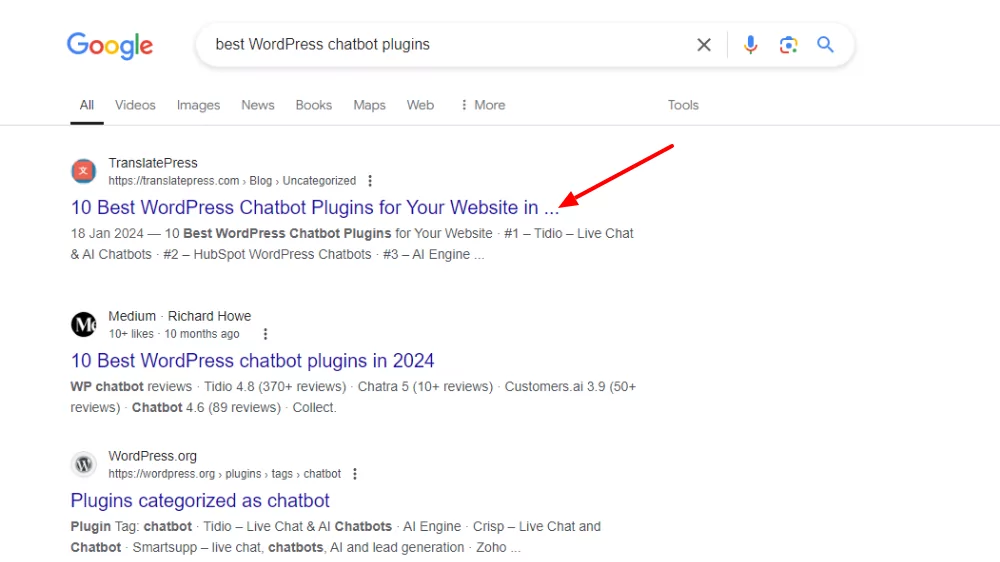
Mais nous allons changer tout cela. Nous allons vous montrer comment nous nous classons sur la première page de Google pour des mots-clés tels que “les meilleurs plugins de chatbot pour WordPress“:
Ou “Paiements WooCommerce vs PayPal“:
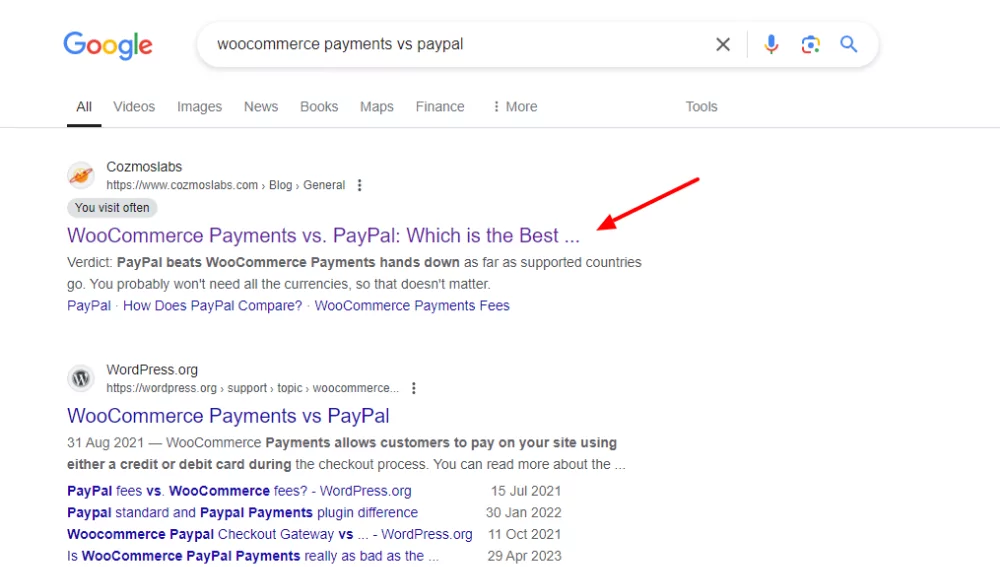
Et bien d'autres mots-clés.
“Mais je suis une petite entreprise !”Vous dites. Nous vous comprenons. Nous comprenons que :
Tout d'abord, les petites entreprises doivent très probablement travailler avec un budget marketing limité. Déployer des campagnes de référencement (SEO) à grande échelle devient alors difficile, voire impossible.
Par exemple, vous pourriez ne pas avoir l'argent nécessaire pour acquérir les outils SEO requis ou engager les talents nécessaires. On peut faire tellement de choses avec un petit budget, n'est-ce pas ?
Ensuite, vous devez rivaliser avec les gros poissons. Vous savez – les grandes entreprises et les sociétés dotées de départements marketing coûteux et de budgets publicitaires à dépenser.
On ne peut pas leur en vouloir. Tout le monde veut cette fameuse première position sur Google.
Une concurrence acharnée signifie que ces grandes entreprises dominent les premiers résultats des moteurs de recherche. Elles peuvent également déployer des campagnes de référencement (SEO) d'une portée considérable en un claquement de doigts.
Pour la plupart des propriétaires de petites entreprises, cela pourrait vous donner l'impression que le référencement (SEO) n'en vaut pas la peine. Mais vous ne pourriez pas être plus loin de la vérité. Le référencement est une stratégie durable à long terme pour générer du trafic organique pertinent vers votre site web. Ai-je mentionné que c'est peu coûteux ?
Oui. Vous pouvez le donner à votre concurrence, aussi acharnée soit-elle, et obtenir un bon classement sur Google sans vider vos caisses.
Sans vouloir me vanter, sur les captures d'écran ci-dessus, vous pouvez voir que nous devançons des géants comme WordPress.org, WooCommerce et Zendesk 🙂
Faites défiler pour en savoir plus.
Quel est le meilleur SEO pour une petite entreprise ?
Avant de répondre à cette question, parlons un peu de référencement naturel.
Qu'est-ce que le référencement naturel (SEO) et en quoi cela consiste-t-il ? Et, plus important encore, pouvez-vous y parvenir en tant qu'entrepreneur individuel ou petite entreprise avec un budget limité ?
La réponse à la deuxième question est un grand OUI ! Vous pouvez attirer du trafic organique ciblé vers votre site Web grâce au référencement (SEO) sans vous ruiner.
L'optimisation pour les moteurs de recherche (SEO) consiste à affiner votre contenu et votre site Web pour qu'ils soient mieux classés dans les pages de résultats des moteurs de recherche (SERP).
Pour les débutants absolus, cela signifie se classer sur la première page de Google, Yahoo!, Bing, Yandex, Baidu et d'autres moteurs de recherche.
De cette façon, plus de personnes peuvent trouver votre site Web pour des requêtes de recherche pertinentes.
Si les prospects trouvent ce que vous proposez, vous êtes un peu plus près de les convertir en clients fidèles et payants.
À propos, saviez-vous que Google a environ 85 milliards de visiteurs mensuelsSavez-vous ce que cela signifie ?
Une stratégie SEO bien exécutée génère un volume important de trafic qualifié vers votre site web. Encore une fois, sans y consacrer une fortune.
Le référencement naturel est divisé en trois composantes principales. Vous avez SEO on-page, SEO off-page, et SEO technique.
Discutons rapidement de chaque composant pour que vous sachiez ce qui doit être réparé ou mis en œuvre.
SEO On-Page pour petite entreprise
SEO sur page implique toutes les activités d'optimisation que vous appliquez directement à votre site Web pour stimuler sa visibilité et son classement. Elle couvre tous les divers éléments contribuant à la qualité et à la pertinence du contenu de votre site Web.
Premièrement, vous devez vous efforcer de créer du contenu de haute qualité, informatif et captivant qui répond aux besoins de votre public cible.
Deuxièmement, vous devez optimisez votre contenu pour vos mots-clés. C'est ce qu'on appelle l'optimisation des mots-clés, et cela consiste à placer stratégiquement vos mots-clés dans le texte principal, la méta-description, le texte alternatif, le titre de la page et les en-têtes. Cela aide les visiteurs humains et les moteurs de recherche à comprendre le sujet de votre contenu et à le faire correspondre à des requêtes de recherche pertinentes.
Troisièmement, vous avez maillage interne, ce qui aide les moteurs de recherche à découvrir davantage de votre contenu et à améliorer l'expérience utilisateur puisque vous pouvez orienter les visiteurs vers du contenu pertinent supplémentaire.
En parlant de liens, assurez-vous que vos URL sont courtes et contiennent les mots-clés pertinents.
Des URL bien structurées peuvent augmenter les taux de clics et aider les moteurs de recherche à indexer rapidement votre contenu.
Enfin, le SEO on-page implique optimisation multimédia, ce que la plupart des gens oublient souvent. Cela inclut l'utilisation d'un texte alternatif et de noms de fichiers pertinents et la garantie que votre contenu multimédia est optimisé pour se charger rapidement.
SEO Hors Page pour Petites Entreprises
Référencement hors page Cela englobe toutes les techniques d'optimisation que vous mettez en œuvre en dehors de votre site web. L'objectif est de renforcer l'autorité, la crédibilité et la popularité de votre site web sur d'autres sites.
Tout d'abord, gagner rétroliens provenant de sites web réputés est un moyen infaillible d'améliorer vos classements SEO. Ces liens indiquent aux moteurs de recherche que vous êtes une valeur sûre et que votre contenu est précieux et digne de confiance.
Deuxièmement, réseaux sociaux peut vous aider à améliorer votre visibilité en générant davantage de trafic vers votre site et en augmentant vos chances d'obtenir des liens entrants. De plus, interagir activement avec votre audience sur les réseaux sociaux peut renforcer la notoriété et l'autorité de votre marque.
Un autre élément du référencement hors page est article invité. Cela consiste à publier des articles sur d'autres sites web afin de générer du trafic, de renforcer sa crédibilité et d'obtenir des liens entrants.
Et enfin, le référencement hors page implique marketing d'influence. Ici, vous collaborez avec des experts de votre niche pour amplifier la visibilité de votre contenu. Les influenceurs partagent votre contenu avec leur audience afin de générer plus de trafic vers votre site et d'augmenter la probabilité d'obtenir des backlinks.
Référencement technique pour PME
Enfin, nous avons le référencement technique. Comme son nom l'indique, cela concerne tous les aspects techniques de votre site qui affectent les performances et la manière dont les moteurs de recherche explorent et indexent votre contenu.
Tout d'abord, il y a la question de optimisation de la vitesse. Personne n'apprécie les sites web lents. Les sites qui mettent une éternité à se charger affichent des taux de rebond élevés, ce qui indique aux moteurs de recherche que vous ne méritez pas un bon classement. Envisagez des techniques telles que la compression d'images, la mise en cache et la minification du code.
Deuxièmement, vous voulez vous assurer que votre site Web est adaptatif et optimisé pour les appareils mobiles. Google utilise l'indexation mobile-first, ce qui signifie qu'il récompense les sites web adaptés aux mobiles.
De plus, le référencement technique (SEO) implique résolution des problèmes liés à l'exploration et à l'indexation. Cela implique notamment d'ajouter un plan du site au format XML, de corriger le fichier robot.txt et d'éliminer les contenus en double.
Ce n'est pas tout. Vous devez veiller à ce que Le site web est sécurisé et utilise un certificat SSL. Google récompense les sites web sécurisés en leur attribuant un meilleur classement, et n'hésitera pas à signaler au monde entier que vous n'utilisez pas le protocole HTTPS. Je suis sûr que vous avez déjà vu ces avertissements indiquant qu'un site web n'est pas sécurisé.
Dans le cadre du référencement technique, on trouve également les données structurées, plus connues sous le nom de balisage Schema. Cela peut aider les moteurs de recherche et les visiteurs à mieux comprendre votre contenu. Cela enrichit vos résultats de recherche grâce à des données détaillées et des extraits, tels que les horaires d'ouverture, les avis, les notes, les détails sur les produits, etc.
Alors, quel est le meilleur SEO pour les petites entreprises ? Eh bien, une excellente stratégie impliquera ces trois composantes. Elle doit également être abordable et flexible à mesure que vous développez votre entreprise.
De plus, nous ne saurions trop insister sur l'importance d'un contenu de haute qualité et d'une expérience utilisateur fluide.
Voici quelques éléments à prendre en compte, même lors de la recherche des meilleurs services de référencement (SEO) pour les petites entreprises. Posez ces questions à votre expert SEO.
Les bases étant acquises, approfondissons le sujet et apprenons à mettre en œuvre le meilleur référencement SEO pour les petites entreprises.
Comment mettre en œuvre le meilleur référencement SEO pour une petite entreprise
Maintenant que le SEO ne ressemble plus à du chinois et que vous savez à quoi vous avez affaire, explorons des stratégies éprouvées pour booster votre visibilité en ligne et vous positionner en haut des moteurs de recherche.
J'ai une petite confession à faire. Quand j'ai lancé mon premier site web il y a plusieurs années, je n'avais aucune idée de ce qu'était le référencement naturel (SEO). Je pensais sincèrement que si je créais “ suffisamment ” de contenu, les visiteurs afflueraient.
Je me suis vraiment trompé. Quand on parle d'attentes irréalistes….
J'ai donc fait des recherches et j'ai beaucoup appris auprès de personnalités comme Neil Patel, Brian Dean, Moz, Google, ainsi que de plusieurs cours gratuits et payants.
Ensuite, j'ai mis en œuvre les stratégies que je m'apprête à partager et ouah ! – mes classements SEO et mon trafic ont décollé presque instantanément.
Ensuite, j'ai arrêté de mettre à jour ce blog régulièrement en raison d'autres engagements hors ligne et j'ai perdu mon référencement ! J'ai appris qu'il est important de mettre à jour fréquemment le contenu de son blog pour rester pertinent et bien se positionner dans les moteurs de recherche.
Ceci étant dit, les techniques et astuces SEO que nous partageons ci-dessous fonctionneront que vous cibliez un public local ou marchés internationaux. Vous n'avez pas non plus besoin d'un gros budget.
Définissez votre public cible

Commencer sans comprendre votre public cible est l'un des premiers péchés capitaux que vous pouvez commettre lors de la mise en œuvre du référencement (SEO) pour votre petite entreprise.
Étonnamment, c'est ce que la plupart d'entre nous font, ou du moins ce que j'ai fait. D'après mon expérience, c'est une perte de temps et de ressources absurde parce que vous n'arriverez nulle part.
N'oubliez pas que l'obtention de meilleurs classements ne consiste pas à “ manipuler ” les algorithmes des moteurs de recherche en utilisant techniques de référencement black hat. Cela a tout à voir avec la fourniture de haute qualité, précieux, et pertinent contenu pour répondre à vos les besoins du public cible.
En d'autres termes, vous voulez créer du contenu adapté aux besoins de votre public cible que Google veut positionner devant la concurrence pour vos mots-clés. C'est aussi simple que cela.
Mais comment ferez-vous cela si vous ne connaissez pas votre public cible ? Écrire pour le monde entier est une perte totale de temps et de ressources.
Vous souhaitez vous spécialiser afin de créer du contenu concret et utile qui résonne auprès de votre public.
Quand j'ai commencé, je n'ai pas défini mon public cible. En conséquence, j'ai écrit une série d'articles de blog décousus en me disant que les gens viendraient. Ils ne sont jamais venus.
Mais, malheureusement, ce n'est pas ainsi que cela fonctionne, comme je l'ai appris plus tard. Commencer sans public cible clair vous retardera dans l'atteinte des objectifs commerciaux fixés. Ce sera comme jouer Duck Hunt les yeux fermés.
Vue à vol d’oiseau...
Vous souhaitez avoir une vue d'ensemble de votre public cible. Considérez les réponses à des questions telles que :
- Qui sont-ils ? Qui essayez-vous d'attirer avec votre contenu ? Vous ne voulez pas cibler l'univers entier. Vous voulez cibler une catégorie spécifique (ou niche) de personnes les plus intéressées par ce que vous offrez ;
- Où vivent-ils ? Pour une petite entreprise, vous voulez identifier d'où vient votre public cible. Si vous vendez des services de plomberie dans la région de New York, vous ne voulez probablement pas cibler des personnes à New Delhi, en Inde. Référencement local aide avec ceci;
- Quels sont leurs points de douleur ? Grâce à une compréhension claire du public cible, vous pouvez identifier ses points de douleur et créer du contenu qui répond à ces besoins. Google et les autres moteurs de recherche valorisent la pertinence du contenu comme signal de classement ;
Attendez, mais ce n'est pas tout…
- Quelles sont leurs habitudes d'achat et leur budget ? En comprenant les préférences, les besoins et les habitudes de consommation du public cible, vous pouvez apporter de la valeur dans les moments qui comptent le plus, améliorer votre portée et influencer les décisions d'achat ;
- Où est-ce qu'ils traînent en ligne ? En matière de référencement hors page, vous souhaitez atteindre les clients potentiels sur les plateformes qu'ils fréquentent. S'ils passent principalement du temps sur TikTok, vous pourriez vouloir ajouter la plateforme à votre stratégie de référencement. Et ainsi de suite ;
- Quel type de contenu préfèrent-ils ? Certains utilisateurs adorent les longs articles. D'autres aiment les vidéos ou les livres audio, et un autre segment préfère un mélange de tout. Avec une vision claire du public cible, vous pouvez diffuser du contenu sous le format le plus percutant tout en stimulant l'engagement.
Ce ne sont là que quelques questions que vous devriez vous poser lors de la création de votre profil de client idéal. L'objectif primordial est ici de comprendre pour qui vous créez du contenu. Viser au hasard et vous vous tirerez probablement une balle dans le pied.
Ressources associées :
Définir votre public cible fait l'objet d'un article à part entière, mais j'ai trouvé ces guides plutôt utiles :
- Comment trouver votre public cible par Neil Patel;
- Comment trouver votre public cible en 5 étapes – HubSpot;
- Comment trouver votre public cible – Évolution du marché.
Est-il besoin de vous rappeler que de nombreuses petites entreprises gaspillent des milliards de dollars à cause de mauvaises campagnes publicitaires et de référencement qui ne parviennent pas à intéresser le public cible ?
Prenez le temps d'identifier les personnes que vous souhaitez atteindre (celles qui sont le plus susceptibles de vouloir vos produits ou services), ce qui nous amène à la section suivante.
Effectuer une recherche de mots-clés

Maintenant que vous avez une idée claire du public cible, vous pouvez facilement effectuer une recherche de mots-clés pour votre petite entreprise.
La recherche de mots-clés est le fondement du référencement (SEO) et d'autres formes de marketing numérique. Elle consiste à identifier les mots et expressions que les gens utilisent pour trouver votre contenu, vos produits ou vos services.
Par exemple, si vous cherchiez une nouvelle paire de chaussures de course ou des écouteurs, vous entreriez probablement “ chaussures de course Nike ”, “ magasins de chaussures près de chez moi ’ ou “ écouteurs Bluetooth à réduction de bruit ” dans Google.
Google trouvera ensuite les résultats les plus pertinents et vous les affichera. Il en va de même pour vos visiteurs Web.
Ils se tournent vers Google et d'autres moteurs de recherche chaque fois qu'ils veulent trouver du contenu, des produits ou des services.
Une recherche de mots-clés judicieuse vous permet d'identifier les mots et expressions que votre public cible utilise pour trouver ce que vous proposez. Vous pouvez ensuite créer un contenu qui correspond à son intention de recherche.
Vous pouvez catégoriser l'intention de recherche en trois grandes catégories :
- Intention informationnelle – Les visiteurs du Web veulent des informations ou des réponses à des questions simples. Par exemple, “ comment choisir le meilleur service de traduction ” ou “comment maîtriser la traduction commerciale.”
- Intention de navigation – Les visiteurs recherchent activement une page ou un site Web spécifique. Par exemple, “ Connexion Facebook ” ou “ Site Web de Bose ”.”
- Intention transactionnelle – La requête de recherche de l'utilisateur démontre qu'il est prêt à acheter. Par exemple “ acheter des chaussures de course ” ou “ acheter des écouteurs en ligne à prix réduit ”.”
- Enquête commerciale – L'internaute envisage un achat et compare différentes options. Par exemple : “ meilleures chaussures de course pour hommes ”.”
Comprendre l'intention de recherche vous permet de créer du contenu qui non seulement se classe bien, mais répond également aux besoins de votre public cible, ce qui génère plus d'engagement et de conversions.
En tant que petite entreprise, vous ne devriez vous concentrer que sur les mots-clés les plus pertinents par rapport à votre contenu, vos produits et vos services.
Cibler les bons mots-clés vous aidera à attirer votre public – les personnes les plus susceptibles de se convertir en clients.
Et vous savez ce qui est le mieux ? La recherche de mots-clés n'a rien de compliqué grâce aux nombreux outils SEO gratuits et payants, tels que :
- Google Keyword Planner;
- Google Search Console;
- AnswerThePublic;
- Ubersuggest;
- Ahrefs;
- Semrush;
- Moz Keyword Explorer;
- Et plus.
De plus ?
Si vous disposez d'un point de vente physique, vous devriez envisager de mettre en place une stratégie de référencement local. Les mots-clés locaux font référence à des lieux géographiques précis, tels que des noms de villes, des départements et des régions.
Par exemple, une petite entreprise pourrait souhaiter cibler l'expression “ services de conception de sites web à Austin ” plutôt que le terme plus général “ services de conception de sites web ”.”
Vous pouvez utiliser la fonction de saisie semi-automatique de Google, les statistiques de Google My Business et les outils de référencement mentionnés ci-dessus. Pour ce dernier, veillez à sélectionner au préalable un lieu précis.
De plus, n'oubliez pas d'utiliser des mots-clés “ long-tail ”, qui sont souvent plus longs et plus précis. Par exemple, “ services de référencement abordables pour les petites entreprises à Boston ” plutôt que « services de référencement ».”
Bien qu'ils génèrent peu de trafic, les mots-clés « longue traîne » permettent généralement d'obtenir des taux de conversion plus élevés, car ils correspondent à des intentions de recherche plus ciblées.
L'analyse de la concurrence constitue un autre excellent moyen d'affiner votre stratégie de mots-clés. Elle consiste à identifier les mots-clés pour lesquels vos concurrents sont bien classés afin de découvrir des opportunités que vous auriez pu manquer.
Des outils tels qu'Ahrefs et SEMRush proposent des fonctionnalités d'analyse de la concurrence qui facilitent grandement cette tâche.
Optimisation SEO on-page

Comme nous l'avons déjà évoqué, le référencement « on-page » englobe toutes les techniques d'optimisation que vous appliquez au contenu de votre site web afin d'améliorer son classement et sa visibilité dans les moteurs de recherche.
L'objectif est de rendre le contenu, la structure et l'expérience utilisateur de votre site web aussi adaptés que possible aux moteurs de recherche.
Voici quelques stratégies de référencement sur la page à garder à l'esprit :
Balises de titre et méta-descriptions
La balise « title » est l'un des éléments les plus importants du référencement naturel sur la page. Il s'agit du titre cliquable que les internautes voient dans les résultats de recherche et qui joue un rôle clé dans leur décision de cliquer ou non sur le lien.
Alors, comment rédiger des titres optimisés pour le référencement ?
Tout d'abord, placez votre mot-clé principal au début du titre afin d'indiquer aux utilisateurs et aux moteurs de recherche le sujet de la page. Par exemple, “ Le meilleur référencement pour les petites entreprises : tout ce que vous devez savoir ” vous indique d'emblée ce que vous allez découvrir dans l'article.
Deuxièmement, veillez à ce que vos titres SEO soient courts et accrocheurs. Visez environ 60 caractères pour vous assurer que le titre soit bien visible sur les pages de résultats de recherche. Utilisez également des verbes d'action qui incitent les utilisateurs à cliquer pour accéder à votre site web.
Les méta-descriptions sont de courts résumés qui apparaissent sous le titre dans les résultats des moteurs de recherche. Bien qu'elles n'aient pas d'impact direct sur le classement, elles peuvent augmenter considérablement les taux de clics.
Tout comme pour les balises de titre, veillez à inclure vos mots-clés dans la méta-description. Ces mots-clés sont souvent mis en évidence dans les résultats de recherche, ce qui les rend plus visibles pour les utilisateurs.
Rédigez également des méta-descriptions claires et convaincantes qui résument le contenu de la page et incitent les utilisateurs à cliquer. Intégrez des expressions d'appel à l'action telles que “ en savoir plus ”, “ découvrir plus ”, etc., qui incitent les utilisateurs à passer à l'action.
Si l'espace le permet, ajoutez le nom de votre marque à la fin du titre. Cela s'avère particulièrement utile pour la page d'accueil et les autres pages axées sur la marque.
Optimisation du contenu
En matière de référencement naturel (SEO) pour les petites entreprises, le contenu est et restera toujours roi. Je parle ici d’un contenu pertinent et de grande qualité, qui répond à l’intention de recherche et aux besoins de l’utilisateur. Ce type de contenu indique aux moteurs de recherche que votre site web est une ressource précieuse et fiable, qui mérite un meilleur classement.
Tout d'abord, vous devez adopter une approche stratégique pour le placement des mots-clés. Intégrez votre mot-clé principal dans les 100 premiers mots, tout au long de votre contenu et dans les titres. Par exemple, avec cet article, nous visons le mot-clé “ meilleur référencement pour les petites entreprises ”.
N'oubliez pas la valeur des mots-clés SEO locaux, en particulier si vous avez un emplacement physique. Cela aide votre entreprise à apparaître dans les résultats des moteurs de recherche lorsque des clients à proximité recherchent vos produits ou services.
Pendant que vous y êtes, n'oubliez pas de configurer et d'optimiser votre Google My Business profil. C'est un moyen gratuit d'améliorer votre classement et de vous assurer que votre entreprise apparaisse dans la section « Carte » lors des recherches locales.
Dans tout ce que vous faites, évitez le bourrage de mots-clés. Utilisez les mots-clés de manière naturelle et en fonction du contexte au sein de votre contenu.
Deuxièmement, utilisez des balises d'en-tête (H1, H2, H3, etc.) dans votre contenu. Votre page ne doit comporter qu'une seule balise H1, qui correspond généralement au titre principal.
Utilisez ensuite des sous-titres (h2, h3, etc.) pour diviser votre contenu en sections faciles à lire. Cela rend votre contenu plus accessible et permet aux moteurs de recherche de comprendre le sujet de la page.
Troisièmement, veillez à créer un contenu complet qui traite le sujet de manière approfondie. Les pages proposant un contenu détaillé qui répond aux attentes des utilisateurs sont mieux classées dans les moteurs de recherche.
En parlant de contenu de qualité, vous devriez intégrer des éléments multimédias tels que des images, des vidéos et des infographies afin de rendre votre site web plus attrayant et de faciliter la compréhension des sujets complexes.
Optimisez les éléments multimédias en conséquence. Par exemple, utilisez des noms de fichiers descriptifs et riches en mots-clés, ainsi que des textes alternatifs pour les images. De plus, ajoutez des transcriptions et des sous-titres aux vidéos afin d'améliorer le référencement naturel et l'expérience utilisateur.
Autre chose : n'oubliez pas de mettre en place des liens internes. Cette pratique permet aux utilisateurs et aux moteurs de recherche de découvrir davantage de votre contenu. C'est un moyen efficace de répartir l'autorité des pages et d'améliorer l'expérience utilisateur.
Des outils gratuits tels que Yoast SEO, Rank Math, ou Tout-en-un SEO peut vous aider à optimiser votre contenu rapidement, même si c'est votre première fois.
SEO Hors Page pour Petites Entreprises
Le meilleur référencement (SEO) pour les petites entreprises implique également des stratégies hors page. Ce sont toutes les techniques d'optimisation que vous effectuez en dehors de votre site Web pour renforcer l'autorité, la confiance et la réputation.
Tout d'abord, vous devez vous efforcer d'acquérir davantage de backlinks de haute qualité. Également connus sous le nom de liens entrants, les backlinks sont des liens provenant d'un autre site web.
Pourquoi les backlinks sont-ils importants pour le référencement naturel ?
Les moteurs de recherche considèrent les backlinks comme des votes de confiance. De nombreux liens de haute qualité provenant de sites web réputés indiquent aux moteurs de recherche comme Google que votre site est précieux et digne de confiance.
En plus d'améliorer l'autorité et la confiance, les backlinks peuvent également vous générer un trafic de référence important provenant d'autres sites web.
Comment obtenir des backlinks
Obtenir des backlinks de haute qualité ne devrait pas être difficile. Avec un peu d'efforts, vous n'avez même pas besoin de dépenser d'argent pour créer un profil de backlinks solide. Rappelez-vous que l'objectif ici est de viser la qualité et non la quantité. N'oubliez pas non plus de faire des liens vers du contenu et des sites web pertinents.
- Articles d'invités – Le blogging d'invité est l'un des moyens les plus simples d'acquérir rapidement des liens de haute qualité. Vous rédigez des articles de qualité pour d'autres sites web de votre secteur. En retour, vous obtenez un lien retour vers votre site web ;
- Marketing de contenu – Vous devez créer du contenu de haute qualité et partageable tel que des articles, des vidéos et infographie auxquels les gens veulent faire des liens. Le contenu unique qui résout des problèmes a tendance à attirer plus de backlinks ;
- Création de liens brisés – Contactez des sites web réputés comportant des liens brisés. Faites savoir aux propriétaires qu'ils peuvent remplacer le lien brisé par un contenu pertinent et de valeur présent sur votre site web. C'gagnant-gagnant : le propriétaire du site obtient de la valeur et vous obtenez un lien retour ;
- La technique du gratte-ciel – Tout d'abord, identifiez le meilleur contenu de votre secteur et créez-en un meilleur. Contactez ensuite les sites qui renvoient vers le contenu d'origine et suggérez-leur de le remplacer par un lien vers votre contenu amélioré ;
Engagement sur les réseaux sociaux
Bien que les liens des réseaux sociaux n'aient pas d'impact direct sur le classement des moteurs de recherche, ils peuvent vous aider à générer du trafic, à accroître votre visibilité et à renforcer la notoriété de votre marque.
Partager votre contenu sur les plateformes de réseaux sociaux est un moyen rentable de générer du trafic vers votre site. Plus de trafic entraîne de meilleures métriques d'engagement, ce qui influence le référencement (SEO) en améliorant l'autorité globale et la crédibilité de votre site.
Deuxièmement, les médias sociaux vous permettent d'interagir avec votre public, les blogueurs, les influenceurs, les journalistes et d'autres entreprises. Vous pouvez nouer des relations solides qui conduisent à plus de mentions, de partages et de liens retours.
L'engagement sur les réseaux sociaux ne doit pas nécessairement être difficile. Publiez régulièrement, interagissez avec votre public, utilisez des hashtags de manière stratégique et exploitez le marketing d'influence.
Mesurer et suivre le référencement
Le suivi et la mesure de vos performances SEO sont importants pour comprendre l'efficacité de votre stratégie SEO et prendre des décisions fondées sur les données.
Les indicateurs clés du référencement (SEO) à surveiller comprennent :
- Trafic organique;
- Classements des mots-clés;
- Taux de clics;
- Taux de rebond;
- Taux de conversion;
- Temps de chargement de la page;
- Profil de liens retour;
Utiliser des outils comme Google Analytics, Google Search Console, Ahrefs, SEMRush, Google PageSpeed Insights, et Moz pour suivre et mesurer le succès de votre référencement naturels.
SEO multilingue
Le meilleur référencement SEO pour une petite entreprise devrait prendre en compte SEO multilingue. Cibler des publics multilingues est un moyen fantastique d'élargir votre portée sur de nouveaux marchés.
Vous serez heureux d'apprendre que créer un site Web multilingue avec WordPress est incroyablement facile et bon marché (quand ce n'est pas gratuit).
Vous avez seulement besoin d'un outil tel que TranslatePress.
Le plugin est fourni avec TranslatePress AI, qui traduit votre tout le contenu du site web en combinant les principaux moteurs de traduction automatique basés sur l'IA neuronale au monde, tels que DeepL, Google Translate et Microsoft Translator.
De plus, TranslatePress AI détecte et traduit tout nouveau contenu ou toute modification, y compris les métadonnées SEO, garantissant ainsi que les traductions de votre site web générées par l'IA sont à jour et respectent les meilleures pratiques en matière de référencement multilingue.
Cela signifie que vous obtenez des traductions de haute qualité et plus précises qu'un seul service ne peut en offrir. Tout cela sans dépenser une fortune ni perdre de temps à configurer des API compliquées.
TranslatePress Multilingue
Vous pouvez commencer dès maintenant. Après tout, TranslatePress propose un version gratuite sur le site officiel de WordPress. Cependant, vous aurez besoin du version premium pour débloquer TranslatePress AI, les fonctionnalités SEO et d'autres options.
Le meilleur référencement pour les petites entreprises : Conclusion
Mettre en œuvre le meilleur référencement SEO pour une petite entreprise ne devrait pas être difficile ni coûteux. Vous pouvez facilement positionner votre site web sur Google. Je l'ai fait. Beaucoup l'ont fait avant.
Suivez les conseils ci-dessus et vous positionnerez votre contenu sur la première page de Google en un rien de temps. En résumé, définissez votre audience, effectuez une recherche de mots-clés, créez du contenu de qualité et obtenez des backlinks.
Avant de partir, le référencement naturel (SEO) est une stratégie à long terme pour générer du trafic vers votre site web. Ne vous attendez pas à des résultats immédiats. Cependant, si vous y mettez les efforts nécessaires, c'est une source de trafic durable qui fonctionnera pendant des années.
Avons-nous oublié quelque chose ? N'hésitez pas à nous faire part de vos réflexions dans les commentaires et à partager l'article.



Excellentes informations, merci du partage.
Merci Amr d'être passé et pour le compliment 🙂 Nous mettons beaucoup d'efforts et de fierté à rédiger ces articles !
J'apprécie particulièrement l'accent mis sur des stratégies abordables que les petites entreprises peuvent mettre en œuvre sans nécessiter de ressources importantes. Super