
In diesem Beitrag
Wenn Sie entscheiden möchten, welche Übersetzen Sie Ihre Website Es kann Ihnen Hinweise darauf geben, welche Sprachen es sinnvoll ist anzunehmen und welche nicht.
Schließlich bietet es viele Vorteile, Ihre Website mehrsprachig zu gestalten. Es kann zu mehr Traffic, gesteigerten Verkäufen, besseren Conversions und einem höheren Vertrauen der Verbraucher führen. Jedoch, In welche Sprachen sollten Sie Ihre Website übersetzen? um das zu erreichen? Welche Sprachen würden es Ihnen ermöglichen, effektiv die meisten Menschen zu erreichen?
Um bei der Beantwortung dieser Fragen zu helfen, untersuchen wir in diesem Beitrag die meistgesprochenen Sprachen der Welt und im Internet (wie Sie sehen werden, sind diese nicht immer identisch). Sie erfahren, welche Sprachen die meisten Muttersprachler haben und wie sich dies in ihrer Verwendung in Online-Inhalten widerspiegelt.
Die Wahl einer Sprache für Ihre Website-Übersetzung hängt jedoch von mehr als nur reinen Zahlen ab. Aus diesem Grund werden wir auch Faktoren besprechen, die Sie zusätzlich berücksichtigen sollten, wenn Sie Ihrer Website neue Sprachen hinzufügen. Schließlich empfehlen wir Ihnen eine Möglichkeit, die Lokalisierung Ihrer Website auf einfachste Weise umzusetzen.
Was sind die meistgesprochenen Sprachen der Welt und im Internet?
Schauen wir uns zu Beginn an, welche Sprachen weltweit die meisten Muttersprachler haben. Danach werden wir untersuchen, wie sich dies auf die am häufigsten verwendeten Sprachen im Internet bezieht.
Die 10 meistgesprochenen Sprachen der Welt
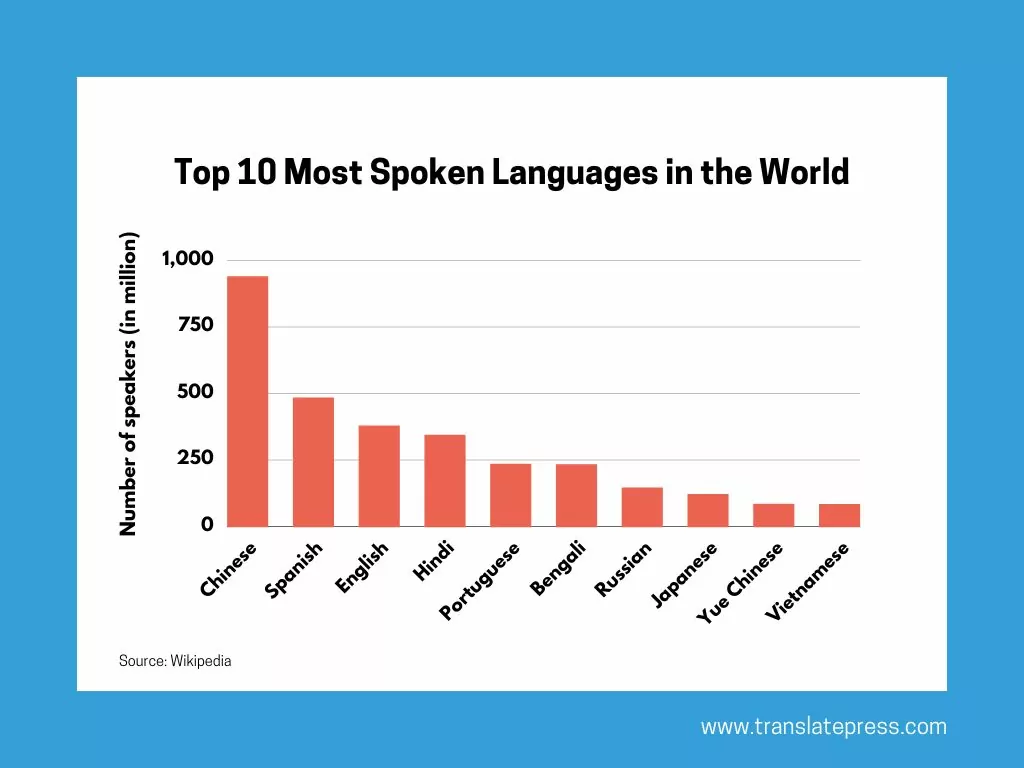
Hier sind die weltweit am häufigsten gesprochenen Sprachen. Die folgende Liste basiert auf Informationen von Wikipedia, das seine Daten von Ethnologue.
- Weltweit, Mandarin Chinesisch ist die am häufigsten verwendete Sprache mit 939 Millionen Muttersprachler. Kein großer Überraschung angesichts der Tatsache, dass China das bevölkerungsreichste Land der Welt und Mandarin seine Amtssprache ist.
- Auf dem zweiten Platz kommt Spanisch, mit 485 Millionen. Auch das ist nicht überraschend. Es gibt eine Vielzahl von Ländern, in denen es als Muttersprache gesprochen wird, insbesondere in Südamerika.
- Englisch geht um den dritten Platz. Das ist vor allem den USA zu verdanken, die mehr als 300 der 380 Millionen Muttersprachler.
- Auf dem vierten Platz ist Hindi, einer der meistgesprochenen Sprachen Indiens (345 Millionen Menschen Indien ist tatsächlich das Land mit den meisten Einwohnern, da es jedoch in verschiedene Sprachen aufgeteilt ist, beansprucht keine davon den Spitzenplatz für sich.
- Portugiesisch ist die fünfthäufigste gesprochene Sprache der Welt. Auch hier haben wir Südamerika zu danken. Brasilien stellt etwa 200 der insgesamt 236 Millionen nativ Portugiesischsprachige.
- Auf Platz sechs befindet sich eine weitere Sprache des indischen Subkontinents, Bengali. 234 Millionen Menschen sprechen Sie es, hauptsächlich in Bangladesch, wo es die Hauptsprache ist, und im östlichen Teil Indiens.
- Nummer sieben ist Russisch, das über 147 Millionen Sprecher. Als das größte Land der Welt und mit einer entsprechenden Bevölkerung ist es nur natürlich, dass es unter die Top Ten kommt.
- Unsere Nummer acht ist Japanisch mit 123 Millionen Muttersprachler. Obwohl Japan relativ klein ist, ist es ein dicht besiedeltes Land, weshalb es bei den meistgesprochenen Sprachen der Welt weit oben rangiert.
- Yue-Chinesisch einschließlich Kantonesisch belegt den neunten Platz. Es ist eine Gruppe chinesischer Dialekte, die hauptsächlich im Süden Chinas gesprochen werden. Bedenken Sie jedoch, dass es immer noch 86,1 Millionen Menschen und es als ihre Muttersprache beanspruchen.
- Schließlich, auf Platz zehn ist Vietnamesisch mit 85 Millionen Sprecher. Fun Fact: Vietnamesisch wird auch in einer kleinen Region Südchinas gesprochen.
Plätze 11-20
Wer sind die Zweitplatzierten? Gehen wir sie mal kurz durch:
- Türkisch (84 Millionen Sprechers)
- Wu-Chinesisch (z. B. Schanghainisch, 83,4 Millionen)
- Marathi (gesprochen hauptsächlich in der Region Maharashtra in Indien, 83,2 Millionen)
- Telugu (83 Millionen Sprecher, eine andere indische Sprache, die in Andhra Pradesh und Telangana beheimatet ist)
- Koreanisch (81,7 Millionen Sprecher)
- Französisch (80,8 Millionen)
- Tamilisch (gesprochen im indischen Bundesstaat Tamil Nadu, Sri Lanka, Singapur und anderen von 78,6 Millionen Menschen)
- Ägyptisch-Arabisch (77,4 Millionen)
- Standarddeutsch (es gibt 75,3 Millionen von uns
- Urdu (70,6 Millionen Sprecher, hauptsächlich in Pakistan und Indien)
Kontrastieren Sie das mit den dominantesten Sprachen in Online-Inhalten
Also scheint es aus dem Obenstehenden, dass man, wenn man das größtmögliche Publikum erreichen will, einfach Übersetzen Sie Ihre Website ins Chinesische, Englisch und Spanisch, oder? Erledigt.
So einfach ist das jedoch nicht.
Einmal deshalb, weil es, wie wir unten sehen werden, einige Sprachen gibt, die wir noch nicht einmal abgedeckt haben. Außerdem bedeutet die Tatsache, dass viele Menschen eine bestimmte Sprache sprechen, nicht, dass es sinnvoll ist, sie auf Ihrer Website anzubieten. Schließlich entspricht die Sprachverteilung im Internet nicht der in der tatsächlichen Welt. Tatsächlich ist sie sehr unterschiedlich. Schauen Sie sich den Anteil der Sprachen an Online-Inhalten an, laut W3Techs unten.
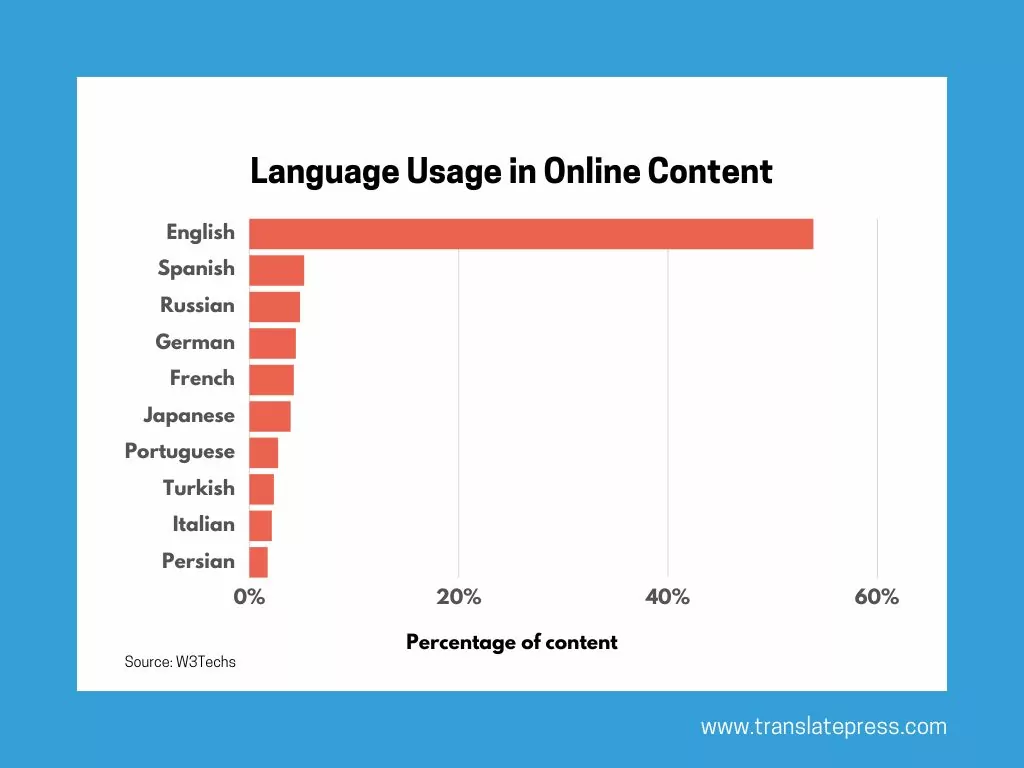
Wie Sie sehen können, dominiert Englisch mit fast 54% aller Online-Inhalte absolut. Im Vergleich dazu beträgt sein Anteil an den weltweit gesprochenen Sprachen tatsächlich nur etwa 5%. Als Nächstes folgen Spanisch und Russisch mit jeweils nur etwa 5%. In der Realität machen sie 6% bzw. 2% der weltweit am häufigsten gesprochenen Sprachen aus.
Deutsch, das zuvor nicht einmal die Top Ten erreicht hatte, liegt nun auf dem vierten Platz. Darüber hinaus ist die länderspezifische Domainendung Deutschlands die fünfthäufigste der Welt.
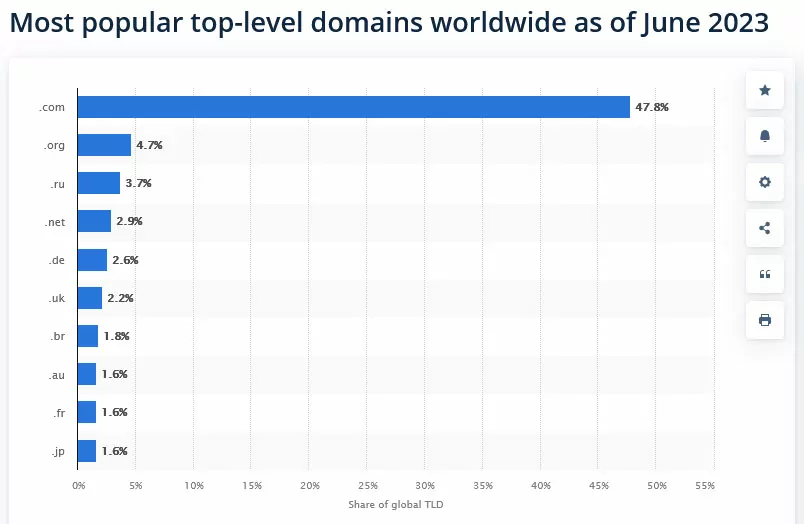
Demgegenüber liegt Chinesisch, das – wie wir uns erinnern – die Sprache mit den meisten Muttersprachlern ist, mit einem Anteil von 1,4 % an den Online-Inhalten nur auf Platz 13.
Merkwürdig, nicht wahr?
Am häufigsten verwendete Sprachen auf beliebten Websites
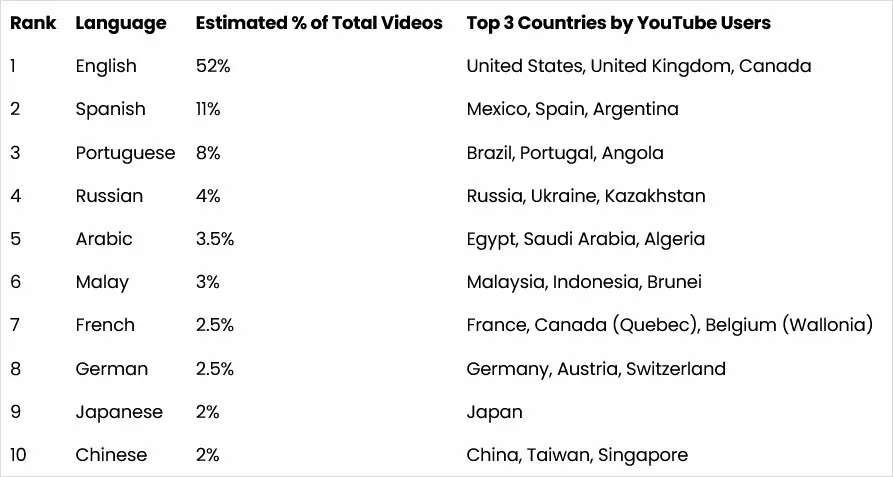
Dennoch setzt sich der Trend zu Englisch als dominanter Sprache für Online-Inhalte fort, wenn man sich einzelne beliebte Websites ansieht. Ein gutes Beispiel dafür ist YouTube oder die “zweitbeliebteste Suchmaschine der Welt”. Ein Analyse Eine Auswertung der 250 beliebtesten YouTube-Kanäle ergab, dass 66% auf Englisch, 15% auf Spanisch, 7% auf Portugiesisch, 5% auf Hindi und 2% auf Koreanisch sind.
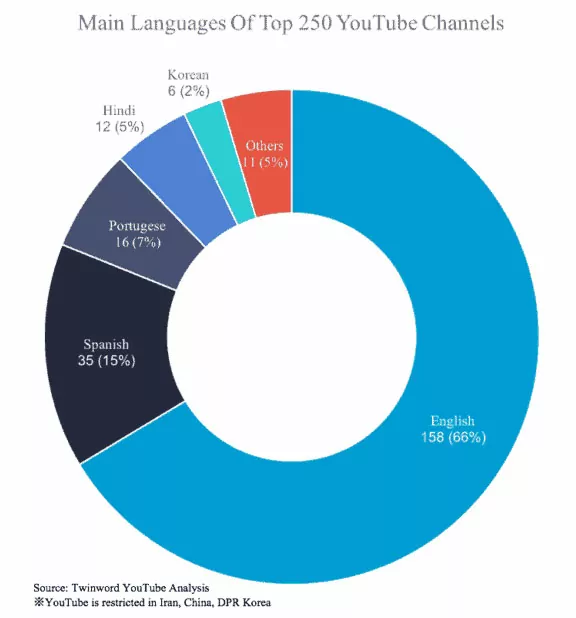
Es ist nicht klar, von wann diese Zahlen sind, und YouTube veröffentlicht dazu keine offiziellen Zahlen, aber es ist eine interessante Momentaufnahme. Außerdem, Alan Spicer kommt zu ähnlichen Schlüssen.
Ein weiteres Beispiel ist Wikipedia. Sie haben eine Aufschlüsselung des täglichen Verkehrs für die verschiedenen Sprachversionen ihrer Website.
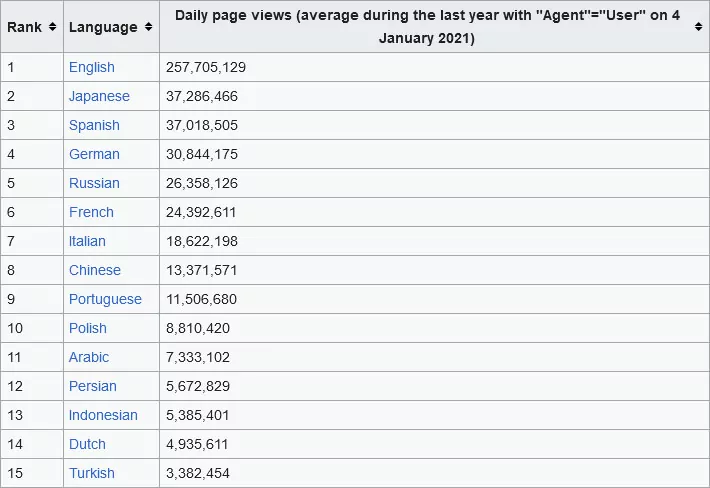
Hier ist ebenfalls Englisch der Spitzenreiter, interessanterweise gefolgt von Japanisch, dann Spanisch und dann Deutsch. Wie Sie sehen, ändert sich die Sprachpräferenz jedoch auch je nach Inhaltsstoff, wobei Englisch jedoch immer an der Spitze liegt.
Also, spricht einfach jeder im Netz Englisch?
Wenn Sie über den Unterschied in der Sprachverteilung im Internet und im echten Leben verwirrt sind, gehen wir weiter unten auf die Gründe dafür ein. Ein ausschlaggebender Faktor ist jedoch auch, woher Sie Ihre Daten beziehen.
Die obigen Informationen von W3Techs basieren beispielsweise auf den 10 Millionen weltweiten Websites, die wahrscheinlich stark zu Gunsten des Englischen verzerrt sind. Etwas anders sieht es aus, wenn man die Zahlen von InternetWorldStats, die die Gesamtzahl der weltweiten Internetnutzer nach Sprachen im Jahr 2020 schätzen.
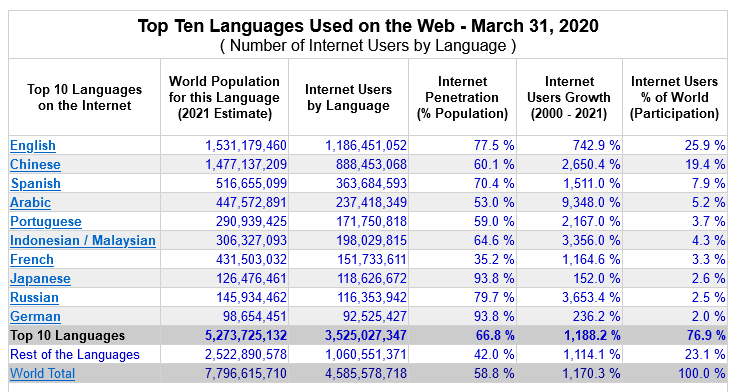
Auch hier regiert das Englische uneingeschränkt. Es wird jedoch viel dichter von Chinesisch, gefolgt von Spanisch und Arabisch, das wir noch gar nicht besprochen hatten, gefolgt. Darüber hinaus ist es überraschend, Indonesisch/Malaysisch sowie Französisch und Deutsch unter den Top-Zehn-Internetsprachen zu sehen.
Der Grund, warum Arabisch nicht früher auftauchte, ist, dass es aus vielen Dialekten besteht, die sich stark voneinander unterscheiden können. Deshalb wird es von anderen Quellen nicht als eine einzige Sprache gezählt. Gleichzeitig variiert das geschriebene Arabisch nicht auf dieselbe Weise. Daher kann man es bei (geschriebenen) Online-Inhalten als eine einzige Sprache zählen.
Sie werden außerdem feststellen, dass die englischsprachige Weltbevölkerung mit mehr als 1,5 Milliarden angegeben wird, obwohl wir gerade gelernt haben, dass es nur etwa 380 Millionen Muttersprachler gibt. Es scheint, dass es viele andere Menschen gibt, die Englisch als ihre primäre Online-Sprache nutzen.
Abschließend ist noch interessant festzustellen, dass die verschiedenen Sprachen nach wie vor unterschiedlich viele Menschen in den Kreis der Internetnutzer einbringen. Während beispielsweise die Internetdurchdringung unter Japanischsprechenden bei fast 100% liegt, können ihre chinesischen Pendants ihre Reihen noch um buchstäblich Hunderte Millionen Menschen erweitern.
Das bedeutet, dass Chinesisch auf lange Sicht tatsächlich die vorherrschende Sprache im Netz sein könnte, zumindest was die Zahl der Sprecher angeht. Um beim verfügbaren Inhalt aufzuholen, hat es allerdings noch einen Weg vor sich. Wir müssen jedoch bedenken, dass diese Zahlen drei Jahre alt sind, sodass die Dinge jetzt wahrscheinlich etwas anders aussehen.
Was bedeutet das alles für Ihre Website?
Die Frage ist, was lernen wir aus dem Obenstehenden? Zuallererst ist Englisch eindeutig die dominante Sprache des Internets. Das ist keine große Überraschung, da das Web ursprünglich darauf aufgebaut wurde und folglich einen Vorsprung hatte. Außerdem ist es die Weltsprache. Es gibt massenhaft Nicht-Muttersprachler des Englischen, die dennoch Inhalte in dieser Sprache konsumieren und produzieren (wie ich).
Das bedeutet auch, dass Englisch eine gute Wahl für die Übersetzung ist, falls sich Ihre Website derzeit in einer anderen Sprache befindet. Damit erzielen Sie das beste Preis-Leistungs-Verhältnis. So können Sie ein großes und vielfältiges Publikum erreichen, nicht nur Muttersprachler.
TranslatePress Mehrsprachig
Eine weitere wichtige Erkenntnis ist, dass die Beliebtheit in der realen Welt sich nicht auf das Online-Publikum überträgt. Deutsch ist eine weltweit gesehen relativ kleine Sprache, hat aber eine vergleichsweise große Präsenz im Internet. Dies sollte man berücksichtigen, wenn man entscheidet, in welche Sprachen man seine Website übersetzen möchte.
Einer der Hauptgründe dafür ist wahrscheinlich der Internetzugang, der sich zwischen den Sprachgruppen unterscheidet. Dies kann sowohl schlicht auf einen Mangel an technischer Infrastruktur zurückzuführen sein als auch auf andere Hürden. Beispielsweise ist YouTube in China gesperrt. Daher wird es für Sie schwierig sein, Kanäle vom chinesischen Festland auf der Plattform zu finden. Je nachdem, worum es auf Ihrer Website geht, könnte dies relevant sein.
Schließlich gibt es noch eine Reihe aufstrebender Sprachmärkte. Chinesisch, Arabisch, Portugiesisch und Französisch werden in den kommenden Jahren alle neue Nutzer zum Internet hinzufügen. Das bedeutet, dass Sie sich als früher Anwender einen geschäftlichen Vorteil verschaffen können. Sie können sich möglicherweise etablieren, bevor andere auf denselben Sprachtrend aufspringen, und möglicherweise auch in einen weniger gesättigten Markt vordringen.
Wie Sie die Sprachen für die Übersetzung Ihrer Website auswählen
Bleibt die Frage: Sollten Sie Sprachen allein aufgrund der schieren Anzahl ihrer Sprecher zu Ihrer Website hinzufügen? Natürlich nicht. Der Entscheidungsbaum dafür ist komplexer. Besprechen wir andere wichtige Faktoren, die Sie berücksichtigen sollten.
Definieren Sie Ihre Zielgruppe
Der erste Schritt, wenn Sie Änderungen an Ihrer Website in Erwägung ziehen, besteht immer darin, sich auf Ihre Zielgruppe zurückzubesinnen. Wen genau möchten Sie mit Ihrer Website ansprechen und erreichen? Letztendlich spielt es keine Rolle, ob die von Ihnen angebotenen Sprachen im Internet am häufigsten verwendet werden, wenn Ihre Zielgruppe sie nicht spricht.
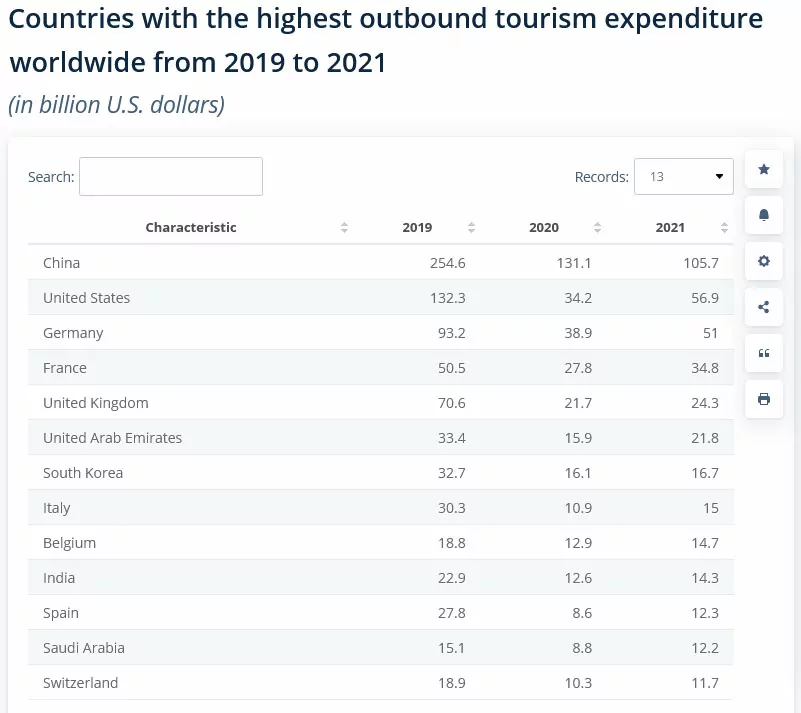
Wenn Sie zum Beispiel Geschäfte in Island machen, könnte es Ihre Besucher weniger als egal sein, ob Ihre Website auf Chinesisch ist, selbst wenn es statistisch gesehen die meistgesprochene Sprache der Welt ist. Andererseits kann Mandarin als Gastronomiebetrieb in der Nähe eines jeden touristischen Hotspots in Europa eine gute Wahl sein, da die Chinesen Weltmeister im Reisen.
Andererseits kann es für ein lokales Café, das in einer Stadt mit vielen Expats (wie Berlin) betrieben wird, eine gute Idee sein, Englisch zu Ihrer Website hinzuzufügen, um mehr Kunden anzulocken.
Einfach ausgedrückt, müssen Sie Ihre Website-Übersetzung – genau wie Ihre Website-Inhalte – auf Ihre beabsichtigte Zielgruppe ausrichten. Es hängt von mehr ab als nur von der Anzahl der Sprecher, die Sie erreichen können. Wenn Sie Ihrer Website eine Sprache hinzufügen, sollten Sie einen guten Grund dafür haben.
Untersuchen Sie die Märkte, in denen Sie tätig sind
Neben Ihrer Zielgruppe kann auch der Markt, in dem Ihr Unternehmen tätig ist, bereits einige Anhaltspunkte für die Sprachwahl auf Ihrer Website liefern.
Wenn Sie Ihre Dienste weltweit anbieten, kann es tatsächlich eine Möglichkeit sein, sich an den meistgesprochenen Sprachen der Welt in absteigender Reihenfolge zu orientieren. Dies ermöglicht es Ihnen, die größte Reichweite zu erzielen und zusätzlichen Traffic zu generieren. Wenn Ihr Markt hingegen strikt lokal ist, macht dieser Ansatz keinen Sinn.
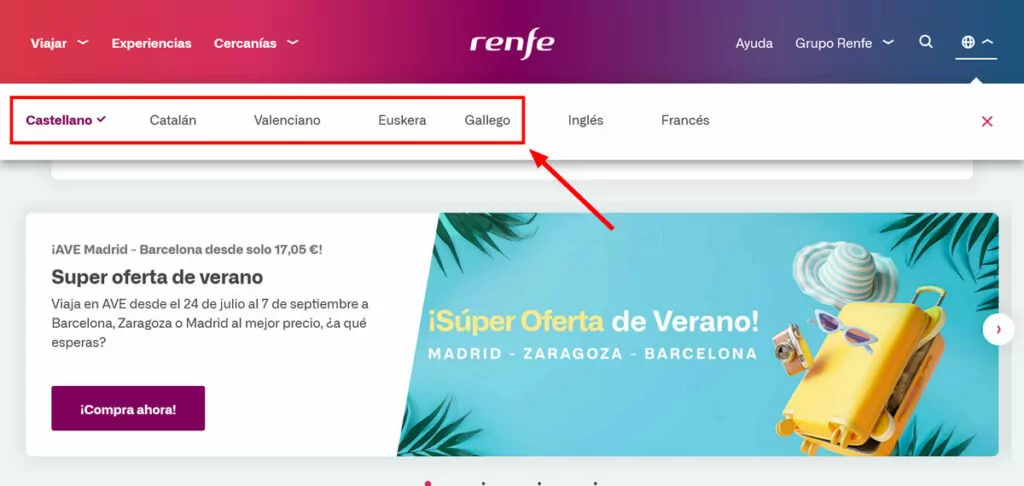
Darüber hinaus kann der Standort Ihres Unternehmens tatsächlich die Sprachen Ihrer Website bestimmen. Es gibt weltweit mehrere Länder, in denen Sie von vornherein mehr als eine Sprache anbieten müssen. Beispielsweise ist es in Spanien ratsam, Ihre Website neben Spanisch auch auf Katalanisch, Galicisch und/oder Baskisch anzubieten.
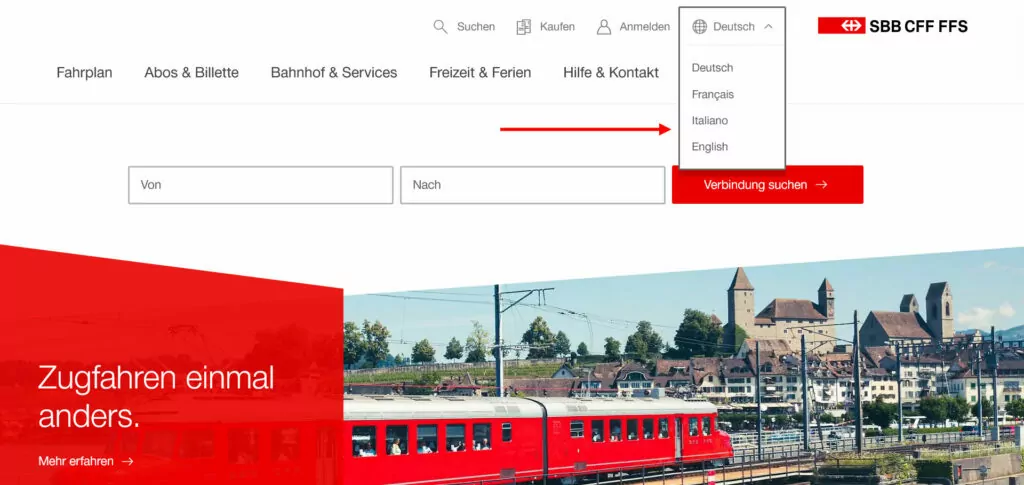
Eine in der Schweiz betriebene Website benötigt drei Sprachen: Französisch, Italienisch und Deutsch.
Es ist jedoch nicht nur etwas für den Fall, dass Ihnen Ihre Region mehr als eine Sprache aufzwingt. Es kann auch eine bewusste Entscheidung sein, um neue Käufer zu erschließen und zu bedienen.
Die Übersetzung Ihrer Website in die Sprachen von Nachbarländern kann ein guter Weg sein, um dortige Geschäfte anzuziehen. Erstens ermöglicht dies Ihrer Website, bei relevanten Suchanfragen in diesen Sprachen zu erscheinen. Zweitens ist es ein wichtiger Faktor bei Kaufentscheidungen. Für viele Menschen ist die Möglichkeit, Informationen in ihrer Muttersprache zu erhalten, ein wichtiger Vertrauensfaktor.
Überprüfen Sie Ihre Analysen und Ihren Traffic
Ein weiterer Aspekt bei der Übersetzung Ihrer Website ist die Sprache der Besucher. Eine Sprache mag zwar zu den meistgesprochenen der Welt oder sogar des Internets gehören, aber spricht Ihr Publikum sie auch?
Um diese Frage zu beantworten, tun Sie gut daran, Ihre Website-Analysen heranzuziehen. In Google Analytics und ähnlichen Lösungen können Sie eine Karte einsehen, aus der hervorgeht, woher Ihre Besucher kommen und welche Spracheinstellungen ihre Browser haben.
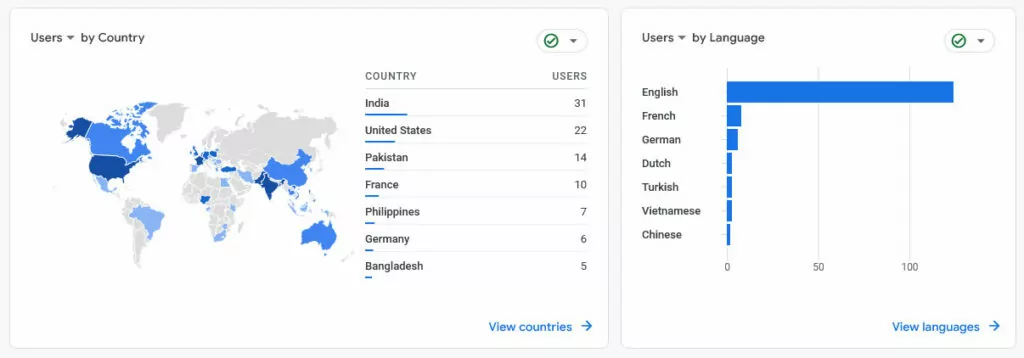
Dies kann Ihnen sehr dabei helfen, Entscheidungen darüber zu treffen, welche Sprache auf Ihrer Website sinnvoll ist. Wenn Sie deren Sprache derzeit noch nicht anbieten, aber Menschen aus diesem Land Ihre Website dennoch besuchen, stellen Sie sich einfach vor, wie viele erst kommen würden, wenn Sie in ihrer Muttersprache kommunizieren würden.
Andere Quellen für diese Art von Informationen können Keywords in Webmaster-Tools, Support-Anfragen oder Nachrichten in sozialen Medien sein.
Führe eine Wettbewerbsanalyse durch
Eine andere Möglichkeit, um herauszufinden, welche der meistgesprochenen Sprachen der Welt wahrscheinlich sinnvoll für Ihre Website sind, besteht darin, sich Ihre Konkurrenz anzusehen. Überprüfen Sie die Webpräsenz Ihrer direkten Wettbewerber und sehen Sie nach, welche Sprachen sie anbieten. Oft sind diese aus gutem Grund vorhanden. Möglicherweise wissen Ihre Mitbewerber etwas, das Sie noch nicht wissen.
Natürlich müssen Sie Ihre eigenen Entscheidungen treffen, aber ein Blick auf andere kann Ihnen eine Ahnung davon geben, welche Sprachen Ihnen dabei helfen könnten, mehr Besucher, Verkäufe und Conversions zu erzielen. Es ermöglicht Ihnen, vom Erfolg und der Recherche anderer zu profitieren.
Berücksichtigen Sie Design- und Kostenbeschränkungen
Schließlich müssen Sie bei der Betrachtung der gängigsten Sprachen im Internet und der Entscheidung, ob Sie eine oder mehrere zu Ihrer Website hinzufügen möchten, Ihr Website-Design und die damit verbundenen Kosten berücksichtigen.
Warum ist das Design wichtig?
Weil sich nicht jedes Design problemlos in jede Sprache übertragen lässt. Zum Beispiel sind einige Sprachen wortreicher, was bedeutet, dass sie mehr oder längere Wörter benötigen, um dasselbe auszudrücken wie andere. Andererseits neigen zeichenbasierte Sprachen wie Chinesisch, Japanisch und Koreanisch dazu, viel weniger Platz zu benötigen, da sie mehr Informationen auf kompaktere Weise ausdrücken können.
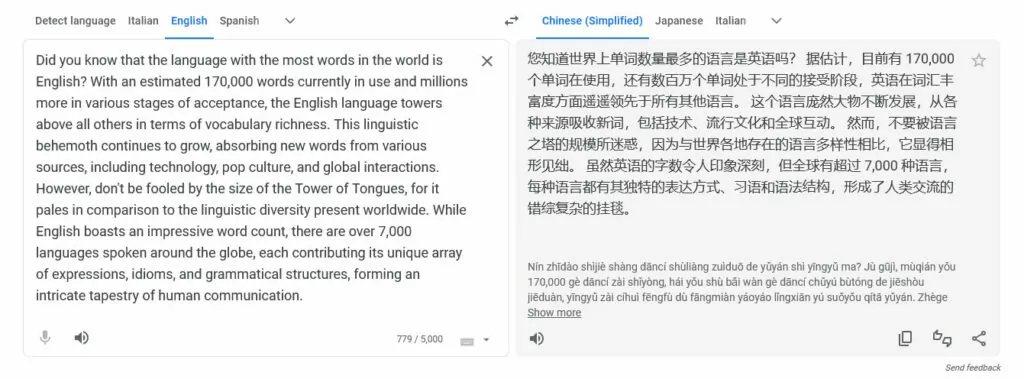
Darüber hinaus verlaufen einige Sprachen von rechts nach links statt umgekehrt. Arabisch ist ein solches Beispiel und Hebräisch ein weiteres. Beide können Ihr Layout aufgrund unterschiedlicher Platzanforderungen durcheinanderbringen, und Sie müssen dafür eine Lösung finden.
Wenn Sie eine Sprache anbieten möchten, die sich stark von Ihrer Ursprungssprache unterscheidet, benötigen Sie möglicherweise ein völlig anderes Website-Design und -Layout. Sind Sie darauf vorbereitet, das zu erstellen? Macht das für die Menge an zusätzlicher Zugriffe Sinn, die diese Sprache wahrscheinlich einbringen wird?
Schließlich sind einige Sprachen billiger zu übersetzen als andere. Spanisch und Englisch verfügen über einen großen Pool an fähigen Übersetzern, andere, weniger beliebte oder kompliziertere Sprachen nicht so sehr. Dies sind alles wichtige Überlegungen.
Nutzen Sie TranslatePress, um Ihre Website in gängige Sprachen zu übersetzen
Der Blick auf die meistgesprochenen Sprachen ist ein guter Anfang, um darüber nachzudenken, was Sie Ihrer WordPress-Website hinzufügen sollten. Sobald Sie sich jedoch entschieden haben, ist es ebenso wichtig, dass Sie über ein gutes Tool zu deren Implementierung verfügen. An dieser Stelle möchten wir bescheiden vorschlagen TranslatePress als dieses Werkzeug, und hier ist der Grund dafür.
Benutzerfreundliche Oberfläche
Bei TranslatePress erfolgt der Großteil der Übersetzungsarbeit über dieselbe benutzerfreundliche Oberfläche. Rechts wird eine Vorschau Ihrer Website angezeigt, während Sie links die Übersetzungen vornehmen.
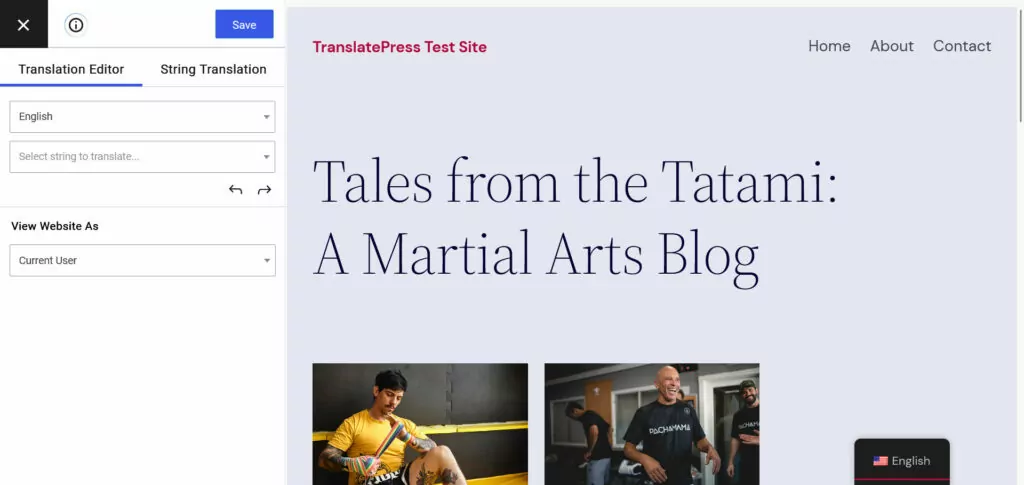
Verwenden Sie die Vorschau, um zu der Seite zu navigieren, die Sie in eine andere Sprache konvertieren möchten. Wählen Sie dann einen der Strings entweder über das Dropdown-Menü, die linken und rechten Pfeile oder direkt von der Seite aus.
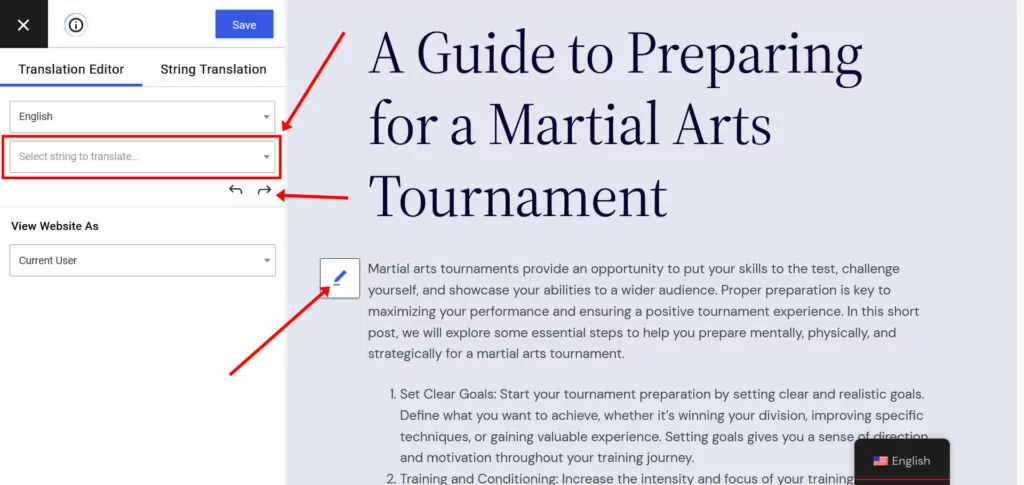
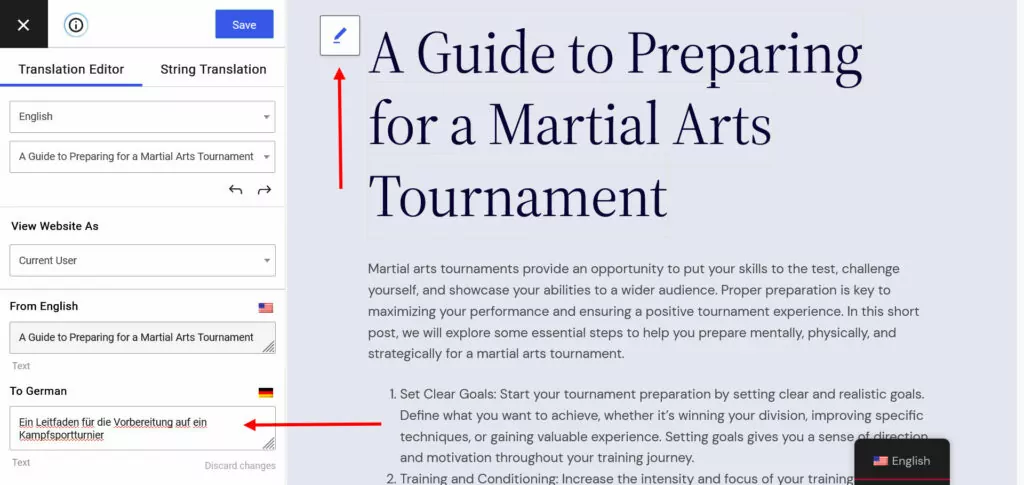
Dadurch wird links ein neues Textfeld geöffnet, in dem Sie die Übersetzung hinzufügen können. Speichern Sie sie anschließend einfach, und von nun an wird der übersetzte Text auf Ihrer Website angezeigt.
Möglichkeit, Bilder zu übersetzen
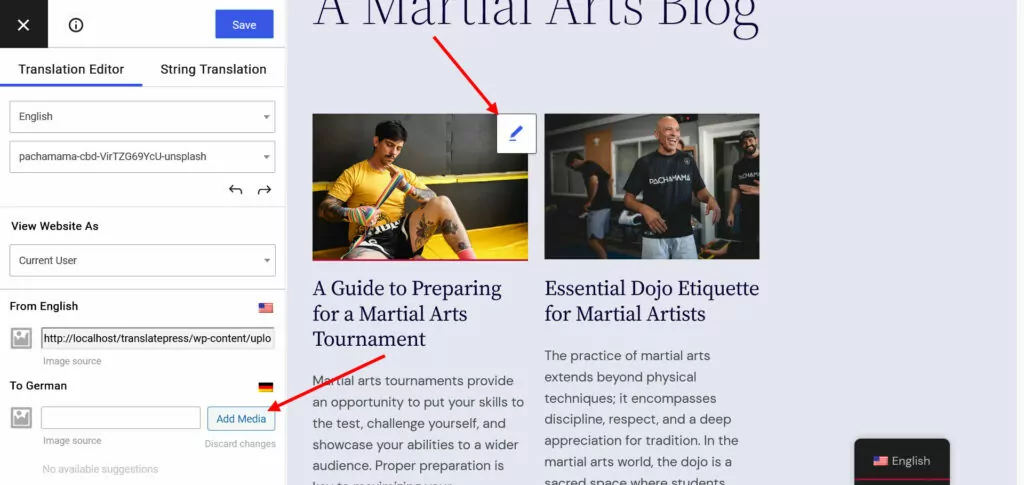
Darüber hinaus ermöglicht Ihnen TranslatePress auch die Lokalisierung Ihrer Bilder. Dies ist besonders wichtig, wenn Sie Text in Ihren Grafiken verwenden. Es kann jedoch auch sinnvoll sein, für eine andere Region ein völlig anderes Bild zu verwenden, insbesondere um die ethnische Zusammensetzung verschiedener Regionen besser darzustellen.

So oder so: In TranslatePress können Sie auch ein Bild über die Benutzeroberfläche zur Übersetzung auswählen und dann links eine Alternative angeben. Diese wird automatisch genauso angezeigt wie Ihr übersetzter Text.
Automatische Übersetzungsoptionen
Darüber hinaus bietet TranslatePress automatische Übersetzungen über TranslatePress AI oder über APIs von Google Translate und DeepL. Schalten Sie es einfach ein unter Einstellungen → TranslatePress → Automatische Übersetzung, wählen Sie dann Ihre Übersetzungsmaschine.
Wir empfehlen TranslatePress AI, da diese Lösung keine Einrichtung erfordert und die genaueste ist. Diese Funktion ist standardmäßig ausgewählt, sofern Sie über eine gültige Lizenz für Ihre Website verfügen.
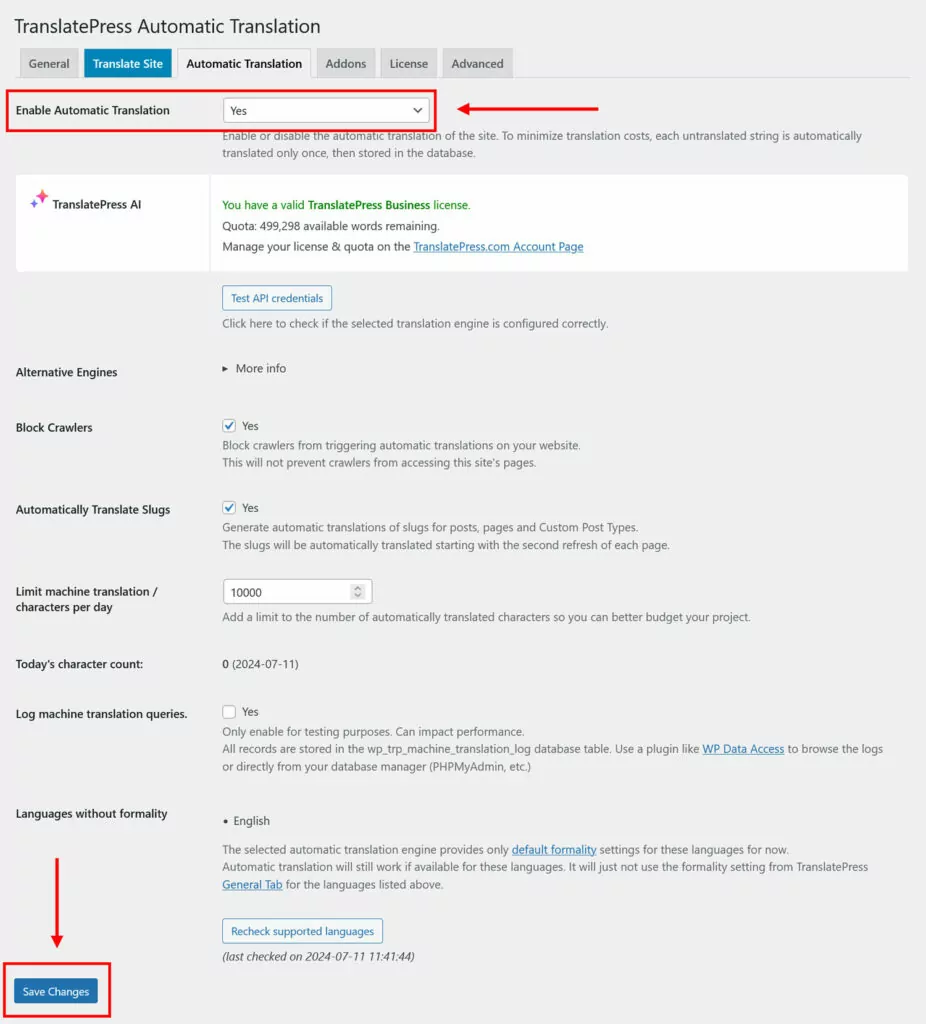
Sobald Sie Ihre Änderungen gespeichert haben, beginnt TranslatePress AI mit der Übersetzung Ihrer Website und nutzt dabei die gebündelte Leistung aller führenden neuronalen maschinellen Übersetzungsengines, um Ihnen die bestmögliche Genauigkeit zu bieten. Einfach anschließen und loslegen – schon haben Sie präzise Übersetzungen, noch bevor der Kaffee kalt wird.
Alternativ können Sie sich auch über einen API-Schlüssel bei Google Translate oder DeepL anmelden.
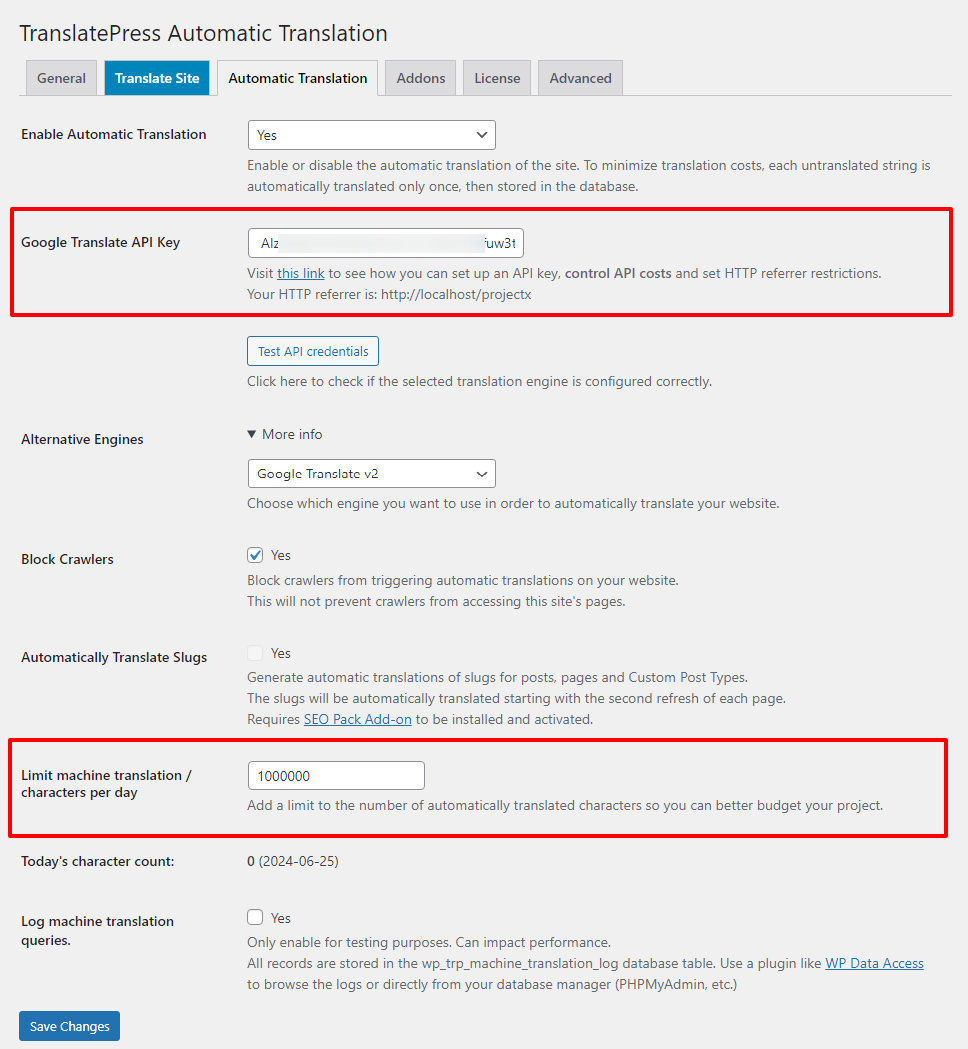
Hinweis: Die Nutzung der API von Google Translate ist in der kostenlosen Version von TranslatePress möglich.
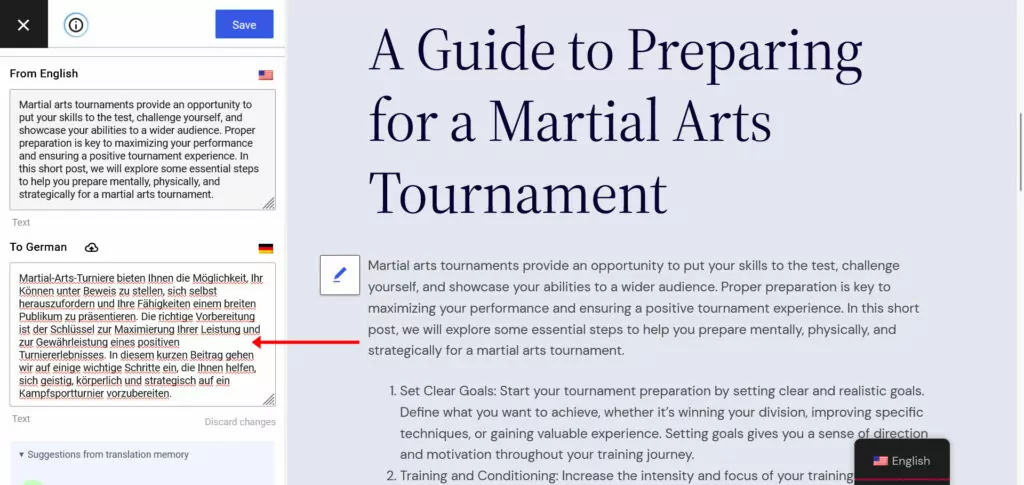
Wenn die automatische Übersetzung aktiviert ist, können Sie die Übersetzungsschnittstelle weiterhin verwenden, wenn Sie Zeichenfolgen bearbeiten möchten. Sie finden dort alle bereits automatisch übersetzten Zeichenfolgen, die Sie bearbeiten können.
Mehrsprachige SEO
Schließlich verfügt das TranslatePress über ein mehrsprachige SEO Paket (in der Premium-Version verfügbar). Damit können Sie Ihre Seiten-Links, SEO-Titel, Meta-Beschreibungen, ALT-Tags und andere wichtige SEO-Marker übersetzen.
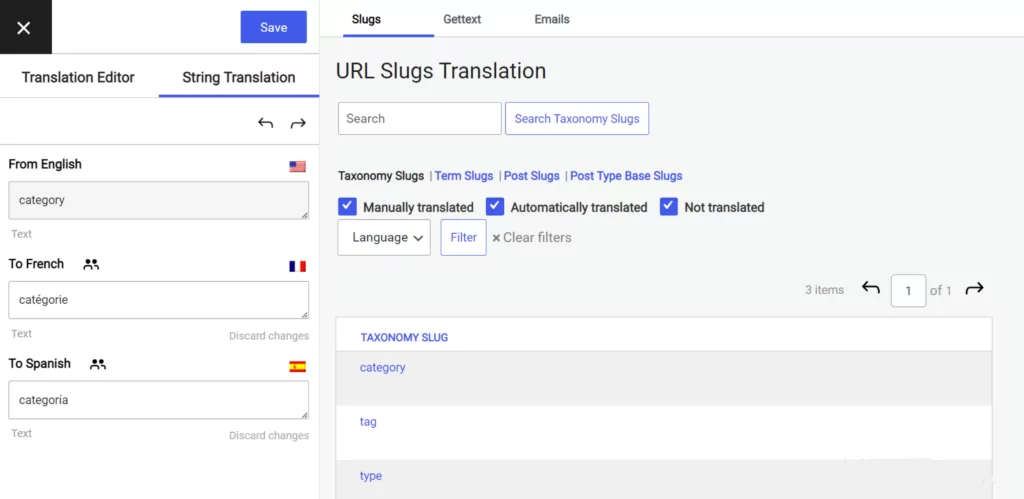
Es erstellt auch mehrsprachige Sitemaps, die bei Suchmaschinen eingereicht werden können, und funktioniert mit den meisten gängigen WordPress-SEO-Plugins. All dies hilft Ihnen dabei, bei Suchanfragen in Ihren übersetzten Sprachen tatsächlich zu erscheinen.
In welche gängigen Internet-Sprachen werden Sie Ihre Website übersetzen?
Zu wissen, welche Sprachen weltweit und im Internet am häufigsten gesprochen werden, ist ein guter Ausgangspunkt, wenn man überlegt, in welche Sprachen man seine Website übersetzen sollte. Schließlich kann man, wenn man der Website eine Sprache hinzufügt, die von vielen Menschen gesprochen wird, potenziell Hunderte von Millionen zusätzlicher Besucher erreichen.
Die Popularität einer Sprache ist jedoch nur ein zu berücksichtigender Faktor. Wie wir oben gesehen haben, fließt viel mehr in die Entscheidung ein, welche weiteren Sprachen auf Ihrer Website sinnvoll sind. Nur weil einige zu den weltweit am häufigsten gesprochenen Sprachen gehören, bedeutet das nicht, dass sie für Ihr spezielles Internetgeschäft oder Ihre Website sinnvoll sind. Nutzen Sie die obigen Richtlinien, um eine eigene Entscheidung zu treffen, und fügen Sie dann hinzu TranslatePress es Wirklichkeit werden zu lassen.
TranslatePress Mehrsprachig
Wie wählen Sie aus, in welche Sprachen Ihre Website übersetzt werden soll? Schreiben Sie es uns in die Kommentare!