
Dans ce post
Connaître les langues les plus utilisées sur Internet et les langues les plus parlées au monde est une information importante pour décider de ce qu'il faut traduire votre site web Il peut vous donner des conseils sur les langues qu'il est judicieux d'adopter et celles qui ne le sont pas.
Après tout, rendre votre site multilingue présente de nombreux avantages. Cela peut entraîner un trafic plus important, une augmentation des ventes, de meilleures conversions et une plus grande confiance des consommateurs. Cependant, dans quelles langues devriez-vous traduire votre site web pour y parvenir ? Quelles langues vous permettraient de toucher efficacement le plus de personnes ?
Pour vous aider à répondre à ces questions, dans cet article, nous examinerons les langues les plus parlées au monde et sur Internet (comme vous le verrez, ce ne sont pas toujours les mêmes). Vous découvrirez quelles langues ont le plus de locuteurs natifs et comment cela se reflète dans leur utilisation dans le contenu en ligne.
Cependant, le choix d'une langue pour la traduction de votre site web ne dépend pas seulement des chiffres bruts. Pour cette raison, nous aborderons également les facteurs que vous devriez en outre prendre en compte lors de l'ajout de nouvelles langues à votre site. Enfin, nous vous recommanderons un moyen de mettre en œuvre la localisation de votre site web de la manière la plus simple.
Quelles sont les langues les plus parlées au monde et en ligne ?
Pour commencer, examinons quelles langues comptent le plus de locuteurs natifs dans le monde. Ensuite, nous examinerons le rapport avec les langues les plus utilisées sur Internet.
Les 10 langues les plus parlées au monde
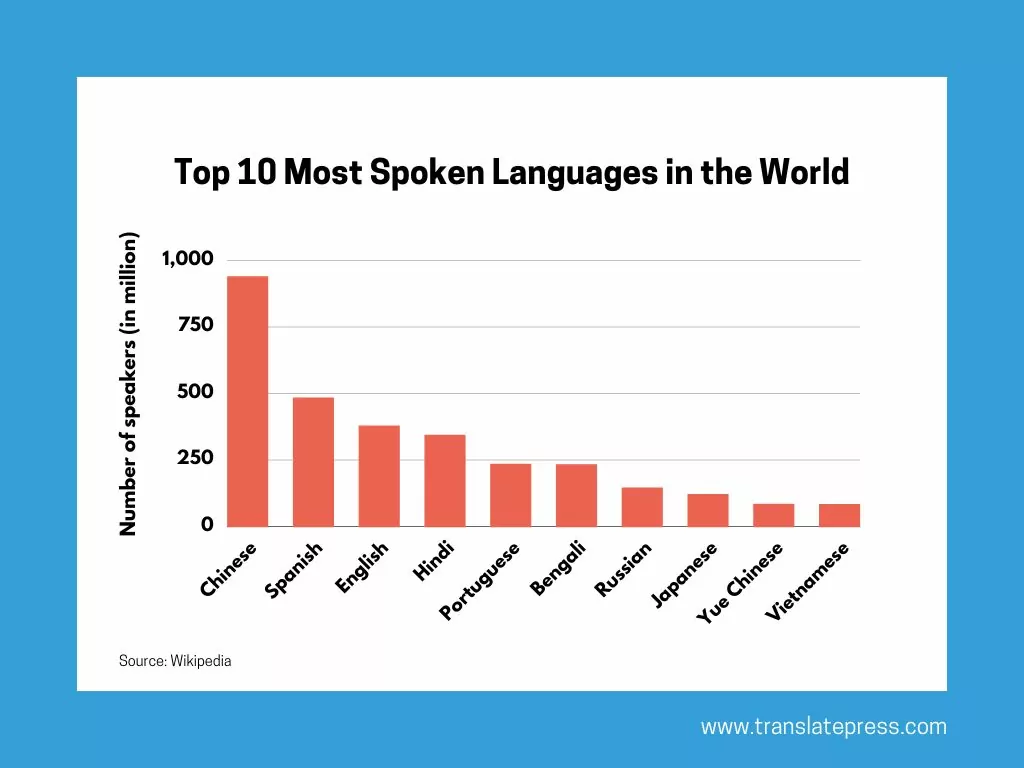
Voici les langues les plus parlées au monde. La liste ci-dessous est basée sur des informations provenant de Wikipédia, qui tirait ses données de Ethnologue.
- À l'échelle mondiale, Chinois mandarin est la langue la plus utilisée avec 939 millions de locuteurs natifs. Ce n'est pas une grande surprise puisque la Chine est le deuxième pays le plus peuplé du monde et le mandarin sa langue officielle.
- À la deuxième place arrive Espagnol, avec 485 millions. Cela n'a rien de surprenant non plus. Il y a une multitude de pays qui le revendiquent comme leur langue maternelle, en particulier en Amérique du Sud.
- Anglais visse la troisième place. C'est particulièrement grâce aux États-Unis, qui fournissent plus de 300 des 380 millions de locuteurs natifs.
- À la quatrième place se trouve Hindi, l'une des langues les plus parlées en Inde (345 millions de personnes parlez-la ). L'Inde est en fait le pays qui compte le plus d'habitants, cependant, comme elle est divisée en plusieurs langues différentes, aucune d'entre elles ne revendique la première place.
- Portugais est la cinquième langue la plus parlée au monde. Ici aussi, nous le devons à l'Amérique du Sud. Le Brésil en fournit environ 200 sur le total 236 millions natif les lusophones.
- Au rang six se trouve une autre langue du sous-continent indien, Bengali. 234 millions de personnes parlé, principalement au Bangladesh, où c'est la langue principale, et dans la partie orientale de l'Inde.
- Le numéro sept est Russe, qui a 147 millions de locuteurs. En tant que plus grand pays du monde avec une population correspondante, il est naturel qu'il se classe dans le top dix.
- Notre numéro huit est Japonais avec 123 millions de locuteurs natifs. Bien que relativement petit, le Japon est un pays densément peuplé, ce qui explique pourquoi il se classe haut parmi les langues les plus parlées au monde.
- Chinois Yue y compris Cantonais arrive au neuvième rang. C'est un groupe de dialectes chinois principalement parlés dans le sud de la Chine. Cependant, attention, il y a encore 86,1 million de personnes le revendiquant comme leur langue maternelle.
- Enfin, à la dixième place se trouve Vietnamien avec 85 millions de locuteurs. Fait amusant, le vietnamien est également parlé dans une petite région du Sud de la Chine.
Places 11-20
Qui sont les finalistes ? Passons-les rapidement en revue :
- Turc (84 millions de locuteurss)
- Le wu (par exemple, le shanghaïen, 83,4 millions)
- Marathi (parlé principalement dans la région du Maharashtra en Inde, 83,2 millions)
- Télougou (83 millions de locuteurs, une autre langue indienne originaire de l'Andhra Pradesh et du Telangana)
- Coréen (81,7 millions de locuteurs)
- Français (80,8 millions)
- Tamoul (parlé dans l'État indien du Tamil Nadu, au Sri Lanka, à Singapour et ailleurs par 78,6 millions de personnes)
- Arabe égyptien (77,4 millions)
- Allemand standard (il y a 75,3 millions d'entre nous
- Ourdou (70,6 millions de locuteurs, principalement au Pakistan et en Inde)
Mettez cela en contraste avec les langues les plus dominantes du contenu en ligne
Donc, d'après ce qui précède, il semble que si vous voulez toucher le plus grand public possible, vous deviez simplement traduisez votre site en chinois, en anglais et en espagnol, n'est-ce pas ? Affaire classée.
Cependant, ce n'est pas aussi simple que cela.
Déjà parce que, comme nous le verrons ci-dessous, il y a certaines langues que nous n'avons même pas encore couvertes. De plus, ce n'est pas parce qu'un grand nombre de personnes parlent une langue particulière qu'il est judicieux de la proposer sur votre site web. Enfin, la répartition des langues sur Internet n'est pas la même que dans le monde réel. En fait, elle est très différente. Jetez un œil à la part des langues dans le contenu en ligne selon W3Techs ci-dessous.
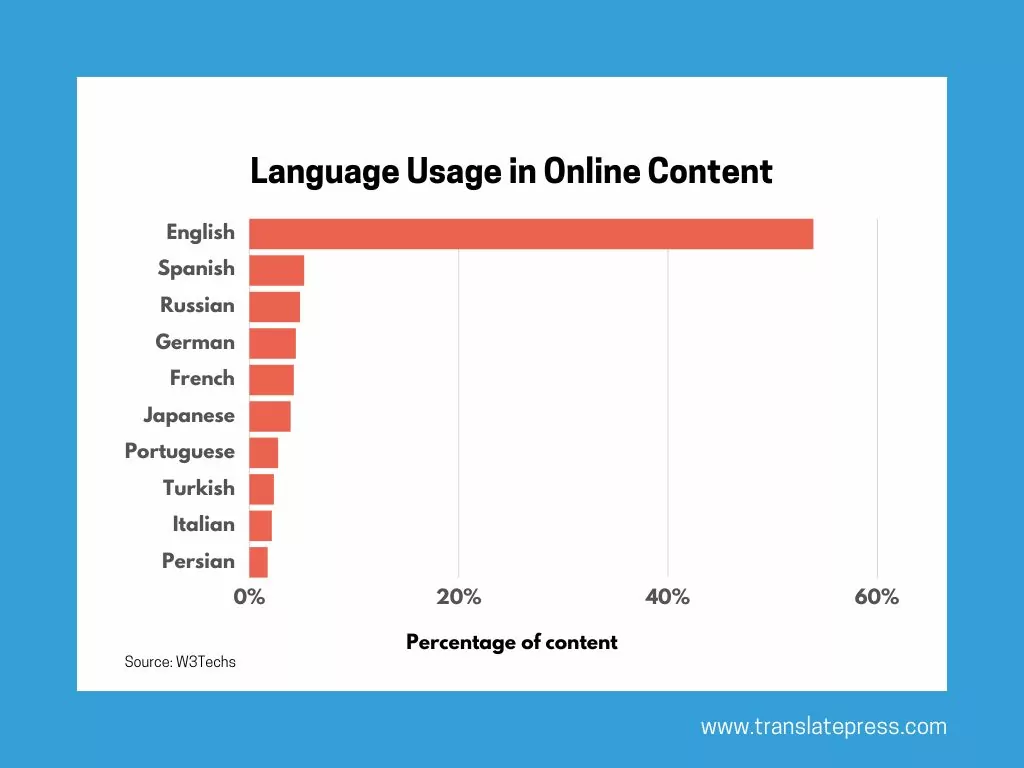
Comme vous pouvez le constater, l'anglais domine largement avec près de 54% de l'ensemble du contenu en ligne. En comparaison, parmi toutes les langues du monde, sa part n'est en réalité que d'environ 5%. Viennent ensuite l'espagnol et le russe, avec seulement environ 5% chacun. Dans la réalité, ils représentent respectivement 6% et 2% des langues les plus parlées au monde.
L'allemand, qui ne figurait même pas dans le top dix auparavant, se trouve à la quatrième place. De plus, l'extension de domaine spécifique à l'Allemagne est le cinquième plus courant au monde.
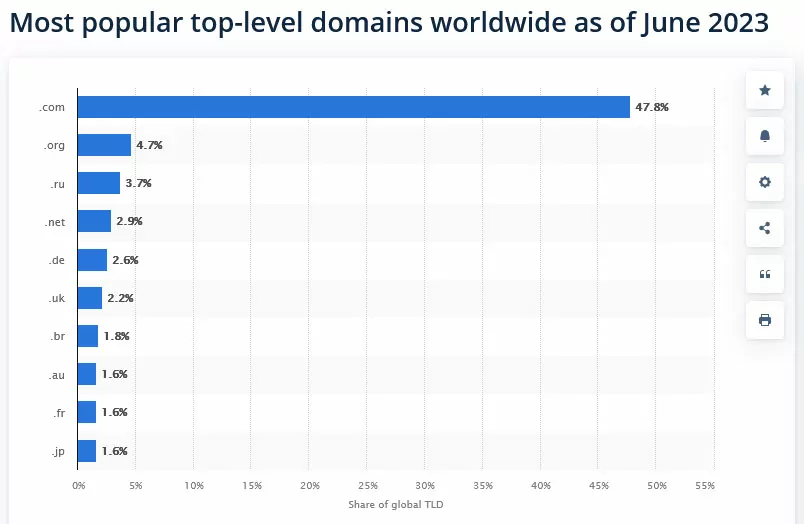
En revanche, le chinois, qui, comme on le sait, est la langue comptant le plus grand nombre de locuteurs natifs, n'occupe que la 13e place, avec une part de 1,4 % dans le contenu en ligne.
Curieux, n'est-ce pas ?
Les langues les plus couramment utilisées sur les sites web populaires
Cependant, la tendance à l'anglais comme langue dominante pour le contenu en ligne se poursuit si l'on examine les sites Web populaires pris individuellement. Un bon exemple en est YouTube, ou le “ deuxième moteur de recherche le plus populaire au monde ”. Un analyse Une analyse des 250 chaînes YouTube les plus populaires a révélé que 66% sont en anglais, 15% en espagnol, 7% en portugais, 5% en hindi et 2% en coréen.
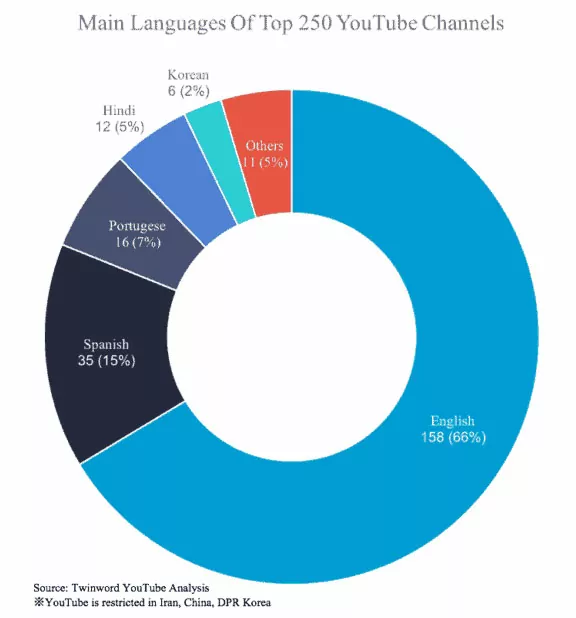
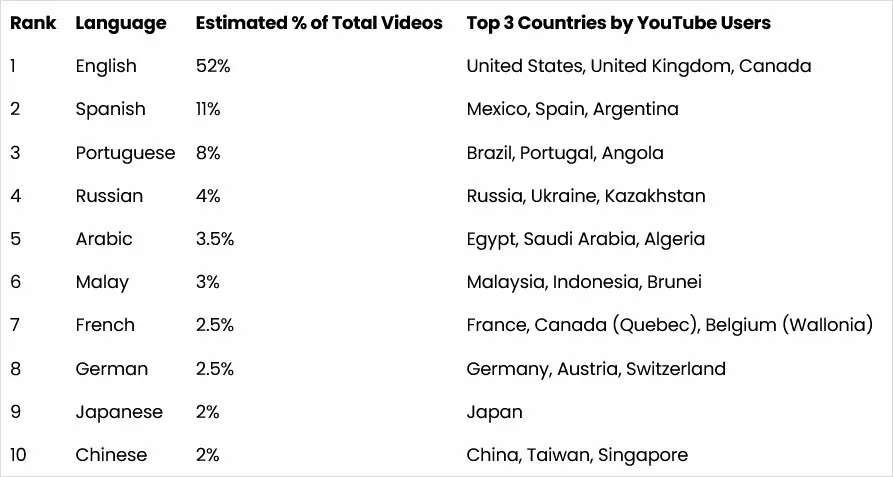
On ne sait pas exactement de quand datent ces chiffres et YouTube ne publie pas de chiffres officiels à ce sujet, mais c'est un aperçu intéressant. De plus, Alan Spicer aboutit à des conclusions similaires.
Un autre exemple est Wikipédia. Ils ont un répartition du trafic quotidien pour les différentes versions linguistiques de leur site.
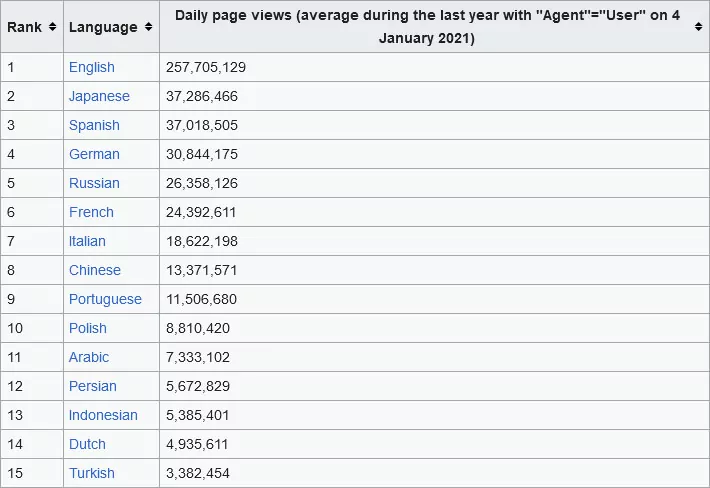
Ici aussi, l'anglais arrive en tête, suivi de près et de manière intéressante par le japonais, puis par l'espagnol et enfin l'allemand. Comme vous pouvez le voir, la préférence linguistique varie également en fonction du type de contenu, mais l'anglais reste toujours en tête.
Alors, est-ce que tout le monde sur le Web parle simplement anglais ?
Si vous êtes perplexe face à la différence de répartition des langues en ligne et dans la vraie vie, nous en examinerons les raisons plus en détail ci-dessous. Cependant, un facteur déterminant est également la provenance de vos données.
Par exemple, les informations de W3Techs ci-dessus sont basées sur les 10 millions de sites Web les plus visités au monde, qui penchent probablement fortement vers l'anglais. Les choses semblent un peu différentes si l'on prend les chiffres de InternetWorldStats, qui estiment le nombre total d'internautes dans le monde par langue en 2020.
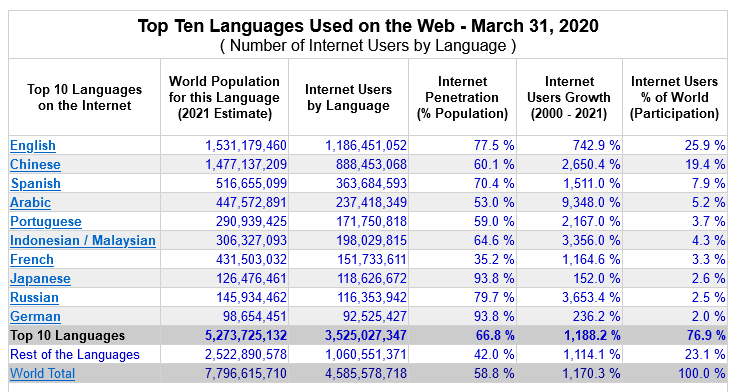
Ici aussi, l'anglais règne en maître. Pourtant, il est de très près suivi par le chinois, puis l'espagnol et l'arabe, dont nous n'avions même pas encore discuté. En plus de cela, il est surprenant de voir l'indonésien/malaisien dans le lot ainsi que le français et l'allemand dans le top dix des langues d'Internet.
La raison pour laquelle l'arabe n'est pas apparu plus tôt est qu'il se compose de nombreux dialectes qui peuvent être très différents les uns des autres. C'est pourquoi d'autres sources ne le considèrent pas comme une seule langue. En même temps, l'arabe écrit ne varie pas de la même manière. Par conséquent, dans le contenu en ligne (écrit), vous pouvez le considérer comme une seule langue.
Vous remarquerez également que la population anglophone mondiale est estimée à plus de 1,5 milliard d'habitants, alors même que nous venons d'apprendre qu'il n'y a qu'environ 380 millions de locuteurs natifs. Il semble qu'il y ait beaucoup d'autres personnes qui utilisent l'anglais comme principale langue en ligne.
Enfin, il est intéressant de noter que, selon les langues, le nombre de personnes susceptibles de rejoindre la communauté des internautes varie encore considérablement. Par exemple, alors que le taux de pénétration d’Internet chez les locuteurs japonais avoisine les 100%, leurs homologues chinois comptent encore littéralement des centaines de millions de personnes susceptibles de rejoindre leurs rangs.
Cela signifie qu'à long terme, le chinois pourrait bien devenir la langue dominante du web, du moins en nombre de locuteurs. Pour rattraper son retard en termes de contenu disponible, il lui reste encore du chemin à parcourir. Il faut toutefois garder à l'esprit que ces chiffres datent de trois ans, la situation est donc probablement un peu différente aujourd'hui.
Qu'est-ce que tout cela signifie pour votre site web ?
La question est de savoir ce que nous enseigne ce qui précède ? Tout d'abord, l'anglais est clairement la langue dominante d'Internet. Ce n'est pas une grande surprise puisque c'est sur cette base que le Web a été conçu à l'origine et qu'il a donc pris une longueur d'avance. De plus, c'est la langue universelle du monde. Il y a énormément de non-anglophones de naissance qui consomment et produisent néanmoins du contenu dans cette langue (comme moi).
Cela signifie également que, si votre site Web est actuellement dans une autre langue, l'anglais est un bon choix pour vous d'y être traduit. Cela vous permettra d'en avoir pour votre argent. Cela vous permet de cibler un public large et diversifié, et pas seulement les locuteurs natifs.
TranslatePress Multilingue
Une autre conclusion importante est que la popularité dans le monde réel ne se traduit pas par un public en ligne. L'allemand est une langue relativement peu parlée à l'échelle mondiale, mais elle bénéficie d'une présence en ligne comparativement importante. C'est un élément à prendre en compte lors du choix des langues pour la traduction de votre site Web.
L'une des principales raisons à cela est probablement l'accès à Internet, qui varie selon les groupes linguistiques. Cela peut être dû simplement à un manque d'infrastructure technique ou à la présence d'autres obstacles. Par exemple, YouTube est bloqué en Chine. Par conséquent, vous aurez du mal à trouver des chaînes de Chine continentale sur la plateforme. Selon le sujet de votre site web, cela pourrait être pertinent.
Enfin, il reste un certain nombre de marchés linguistiques émergents. Le chinois, l'arabe, le portugais et le français verront tous de nouveaux utilisateurs arriver sur Internet dans les années à venir. Cela signifie que, si vous êtes un précurseur, cela peut vous donner un avantage commercial. Vous pourriez être en mesure de vous implanter avant que d'autres ne suivent la même tendance linguistique et potentiellement de pénétrer un marché moins saturé.
Comment choisir les langues vers lesquelles traduire votre site web
Cela laisse supposer la question suivante : devez-vous simplement choisir les langues à ajouter à votre site web en raison du nombre considérable de personnes qui les parlent ? Bien sûr que non. L'arbre de décision en la matière est plus complexe. Discutons d'autres facteurs importants à prendre en compte.
Précisez votre groupe cible
La première étape lorsque vous envisagez d'apporter des modifications à votre site web est toujours de revenir à votre groupe cible. Qui essayez-vous exactement d'attirer et à qui voulez-vous parler avec votre site ? En fin de compte, peu importe que les langues que vous proposez soient les plus utilisées sur Internet si votre public cible ne les parle pas.
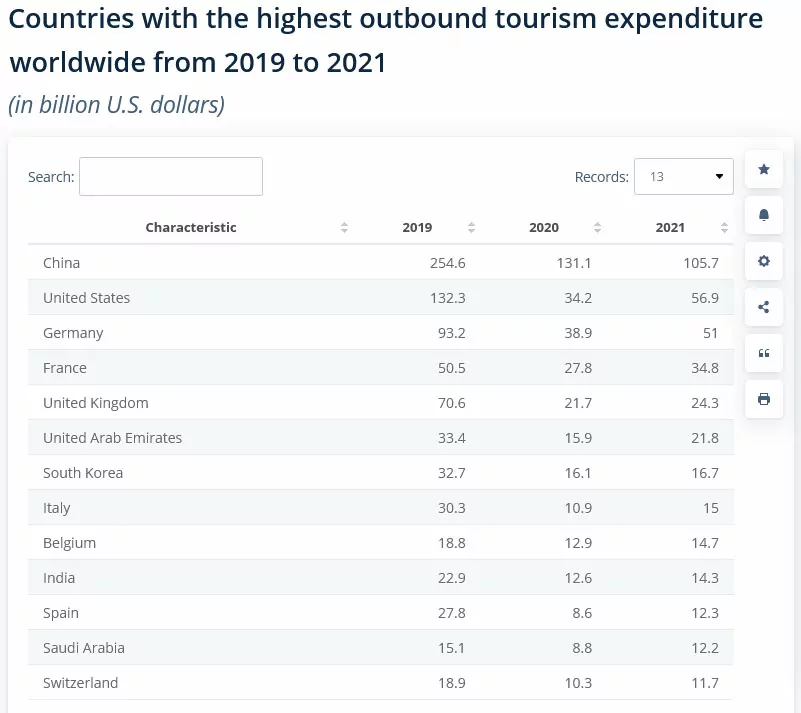
Par exemple, lorsque vous faites des affaires en Islande, vos visiteurs se fichent éperdument que votre site web soit en chinois, même s'il s'agit statistiquement de la langue la plus parlée au monde. D'un autre côté, en tant qu'entreprise hôtelière près de n'importe quel point chaud touristique en Europe, le mandarin peut être un bon choix puisque les Chinois champions du monde du voyage.
D'un autre côté, si vous êtes un café de quartier situé dans une ville qui compte beaucoup d'expatriés (comme Berlin), ajouter l'anglais à votre site web peut être une bonne idée pour attirer plus de clients.
En clair, tout comme le contenu de votre site web, vous devez adapter la traduction de votre site à votre public cible. Cela dépend de bien plus que du simple nombre de locuteurs que vous pouvez atteindre. Si vous ajoutez une langue à votre site, vous devez avoir une bonne raison de le faire.
Examinez les marchés dans lesquels vous opérez
En plus de votre groupe cible, le marché sur lequel votre entreprise opère peut déjà fournir quelques indications pour le choix de la langue sur votre site.
Si vous proposez vos services à l'échelle mondiale, opter pour les langues les plus parlées au monde par ordre décroissant peut effectivement être une bonne stratégie. Cela vous permet de couvrir un maximum de terrain et d'attirer du trafic supplémentaire. En revanche, si votre marché est strictement local, cette approche n'a pas de sens.
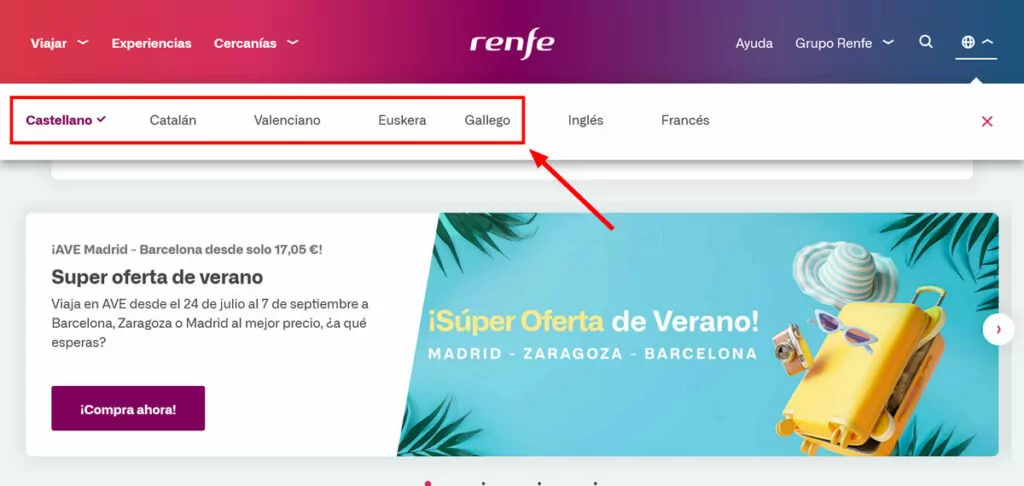
De plus, l'emplacement de votre entreprise peut réellement dicter les langues de votre site Web. Il existe plusieurs pays dans le monde où vous devez proposer plus d'une langue dès le départ. Par exemple, en Espagne, outre l'espagnol, il vous est vivement conseillé de proposer également votre site Web en catalan, en galicien et/ou en basque.
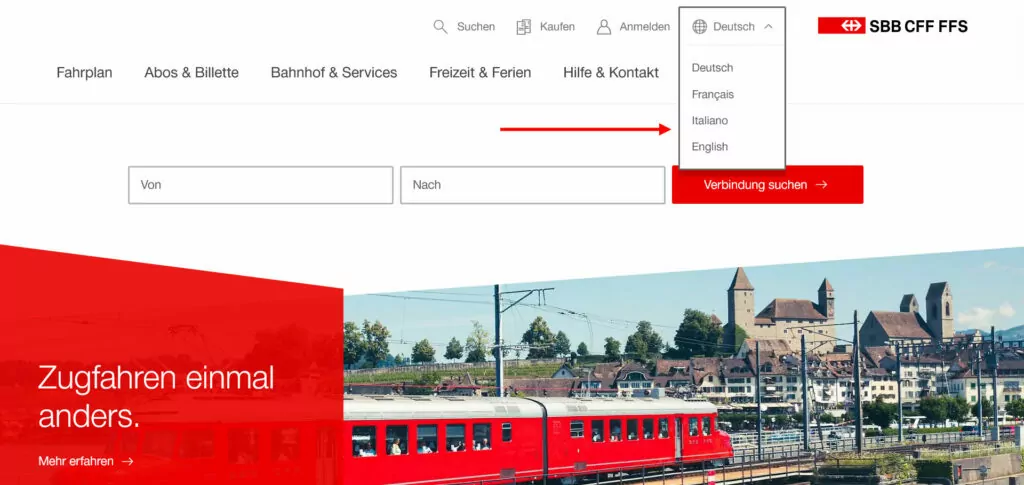
Un site web opérant en Suisse a besoin de trois langues : le français, l'italien et l'allemand.
Cependant, ce n'est pas seulement quelque chose à faire lorsque votre localité vous impose plus d'une langue. Cela peut aussi être une décision consciente afin de commencer à explorer et à servir de nouveaux acheteurs.
Traduire votre site dans les langues des pays voisins peut être un bon moyen d'y attirer des clients. Tout d'abord, cela permettra à votre site d'apparaître pour les requêtes de recherche pertinentes dans ces langues. Deuxièmement, c'est un facteur déterminant dans les décisions d'achat. Pour de nombreuses personnes, la possibilité d'obtenir des informations dans leur langue maternelle est un important facteur de confiance.
Vérifiez vos analyses et votre trafic
Une autre considération pour la traduction de votre site web est la langue des visiteurs. Une langue est peut-être l'une des plus parlées au monde ou même sur Internet, mais est-ce celle que parle votre public ?
Pour répondre à cette question, vous feriez bien de vous tourner vers les analyses de votre site web. Dans Google Analytics et d'autres solutions de ce type, vous pouvez voir une carte d'où viennent vos visiteurs ainsi que les paramètres de langue de leurs navigateurs.
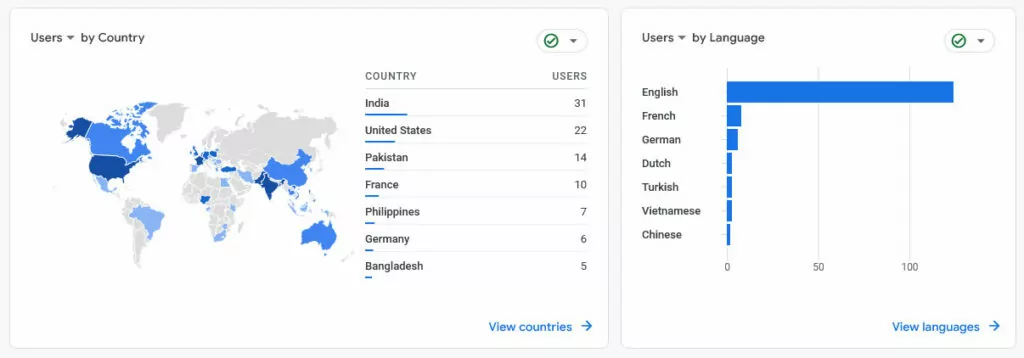
Cela peut grandement vous aider à prendre des décisions quant à la langue qu'il est judicieux de proposer sur votre site. Si vous ne proposez pas encore leur langue mais que des personnes de ce pays visitent tout de même votre site, imaginez combien viendraient si vous communiquiez dans leur langue maternelle.
D'autres sources pour ce type d'informations peuvent être les mots-clés dans les outils pour webmasters, les demandes d'assistance ou les messages sur les réseaux sociaux.
Effectuer une analyse concurrentielle
Une autre façon de trouver des idées sur les langues les plus parlées au monde qu'il est probablement judicieux d'intégrer à votre site est d'examiner votre concurrence. Analysez la présence en ligne de vos concurrents les plus proches et voyez quelles langues ils incluent. Bien souvent, ils y sont pour une bonne raison. Vos concurrents en savent peut-être plus que vous.
Bien sûr, vous devez toujours prendre vos propres décisions, mais observer les autres peut vous donner une idée des langues qui pourraient vous aider à attirer plus de visiteurs, de ventes et de conversions. Cela vous permet de capitaliser sur la réussite et les recherches des autres.
Prendre en compte les contraintes de conception et de coût
Enfin, lorsque vous examinez les langues les plus courantes sur Internet et décidez d'en ajouter une ou plusieurs à votre site, vous devez tenir compte de la conception de votre site et du coût impliqué.
Pourquoi le design est-il important ?
Parce que toute conception n'est pas facile à adapter à toutes les langues. Par exemple, certaines langues sont plus verbeuses, ce qui signifie qu'elles ont besoin de mots plus nombreux ou plus longs pour exprimer la même chose que d'autres. D'un autre côté, les langues basées sur des caractères comme le chinois, le japonais et le coréen ont tendance à nécessiter beaucoup moins d'espace car elles peuvent exprimer plus d'informations de manière condensée.
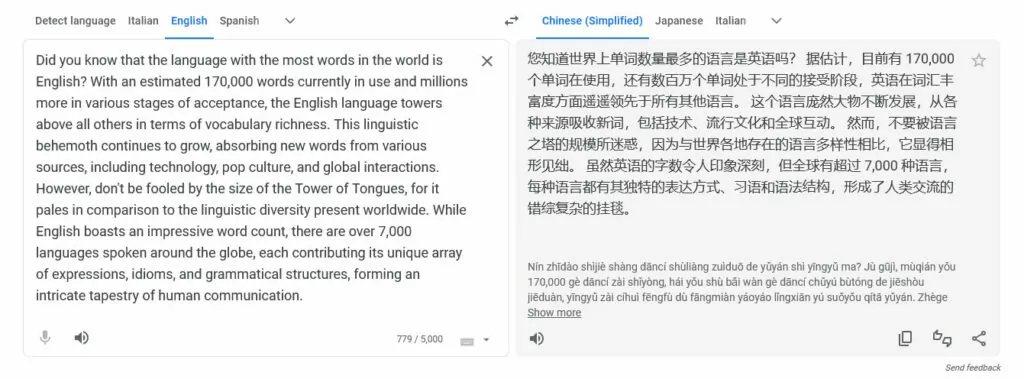
De plus, certaines langues vont de droite à gauche au lieu du contraire. L'arabe en est un exemple, et l'hébreu en est un autre. L'une ou l'autre peut perturber votre mise en page en raison de besoins d'espacement différents et vous devez trouver une solution à cela.
Si vous souhaitez proposer une langue très différente de votre langue d'origine, vous aurez peut-être besoin d'une conception et d'une mise en page de site Web entièrement différentes. Êtes-vous préparé à créer cela ? Est-ce que cela a du sens par rapport au volume de trafic supplémentaire que cette langue va probablement générer ?
Enfin, certaines langues sont moins coûteuses à traduire que d'autres. L'espagnol et l'anglais disposent d'un large bassin de traducteurs qualifiés, ce qui n'est pas le cas d'autres langues, moins populaires ou plus complexes. Ce sont là autant de considérations importantes.
Utilisez TranslatePress pour traduire votre site web dans les langues les plus courantes
Examiner les langues les plus parlées est un bon début pour réfléchir à ce qu'il faut ajouter à votre site Web WordPress. Cependant, une fois que vous avez pris une décision, il est tout aussi important de disposer d'un bon outil pour les mettre en œuvre. À ce stade, nous tenons à suggérer modestement TranslatePress en tant qu'cet outil, et voici pourquoi.
Interface facile à utiliser
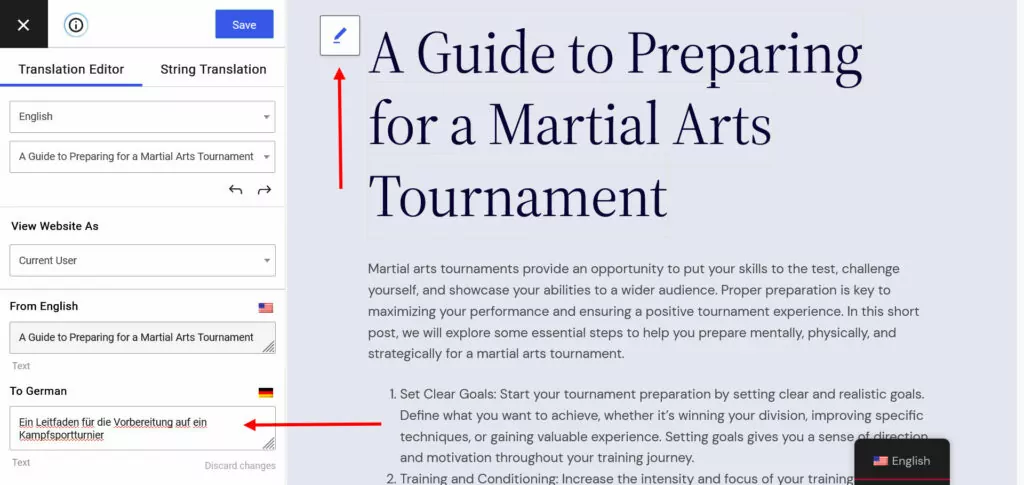
Dans TranslatePress, la majeure partie du travail de traduction s'effectue au sein d'une même interface intuitive. Celle-ci affiche un aperçu de votre site à droite, tandis que vous effectuez l'ensemble de la traduction à gauche.
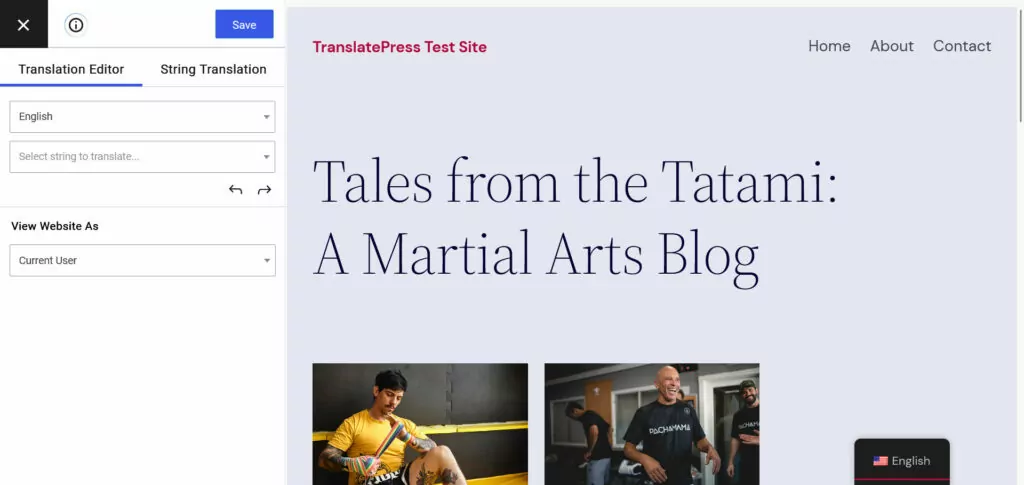
Utilisez l'aperçu pour naviguer vers la page que vous souhaitez convertir dans une autre langue. Ensuite, choisissez l'une des chaînes de caractères qui s'y trouvent, soit via le menu déroulant, soit à l'aide des flèches gauche et droite, ou directement depuis la page.
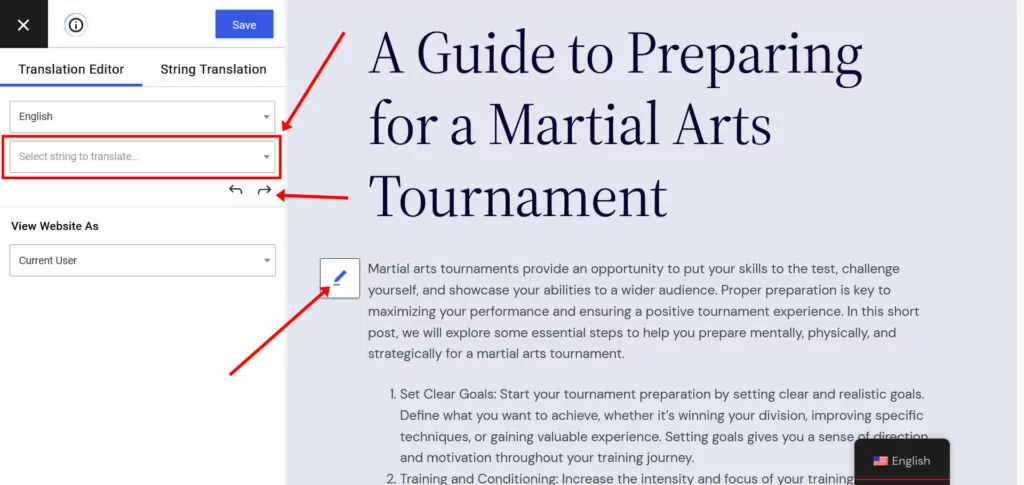
Cela ouvrira une nouvelle zone de texte sur la gauche où vous pourrez ajouter la traduction. Une fois terminé, enregistrez simplement et, à partir de maintenant, le texte traduit apparaîtra sur votre site web.
Possibilité de traduire des images
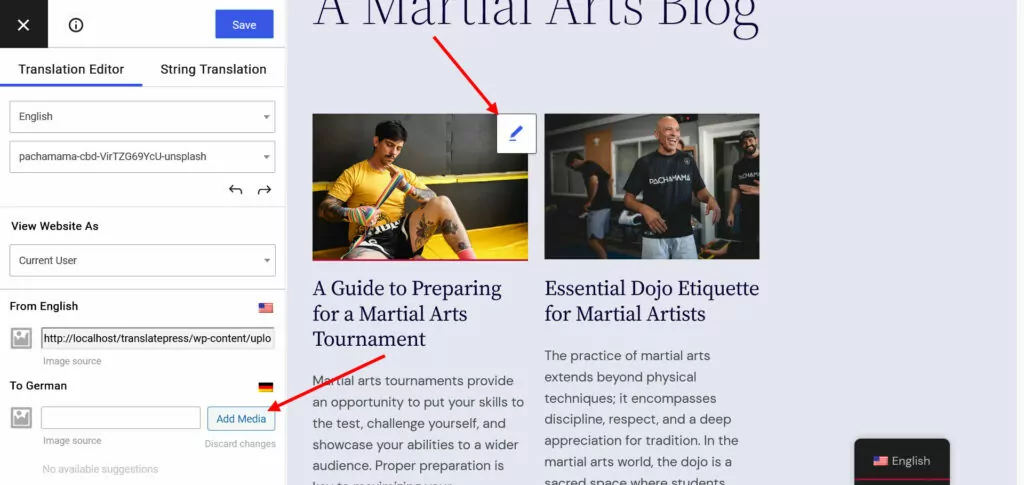
En plus de ce qui précède, TranslatePress vous permet également de localiser vos images. Cela revêt une importance particulière lorsque vos visuels contiennent du texte. Cependant, il peut également s'avérer judicieux d'utiliser une image totalement différente pour une autre région, notamment afin de mieux refléter l'ethnicité des différentes régions.

Quoi qu'il en soit, dans TranslatePress, vous pouvez également sélectionner une image à traduire depuis l'interface, puis proposer une alternative à gauche. Celle-ci s'affichera automatiquement, de la même manière que votre texte traduit.
Options de traduction automatique
De plus, TranslatePress propose des traductions automatiques via TranslatePress AI ou via des API de Google Translate et DeepL. Il suffit de l'allumer sous Paramètres → TranslatePress → Traduction automatique, puis choisissez votre moteur de traduction.
Nous recommandons TranslatePress AI, car cette solution ne nécessite aucune configuration et est la plus précise. Cette fonctionnalité est sélectionnée par défaut si vous disposez d'une licence valide sur votre site.
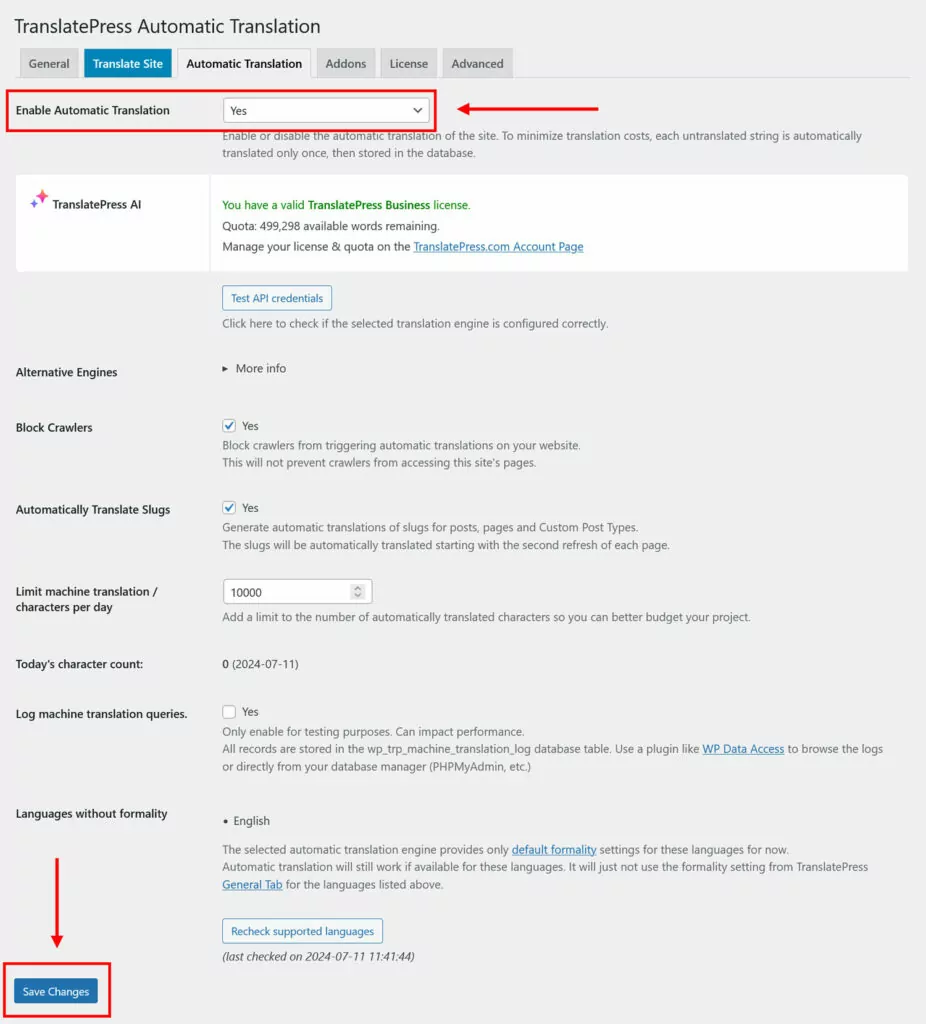
Une fois vos modifications enregistrées, TranslatePress AI commencera à traduire votre site en exploitant la puissance combinée de tous les moteurs de traduction automatique neuronale de pointe, vous offrant ainsi la meilleure précision possible. Il suffit de brancher et c'est parti : vous obtiendrez des traductions précises avant même que votre café ne refroidisse.
Vous pouvez également vous connecter à Google Translate ou DeepL à l'aide d'une clé API.
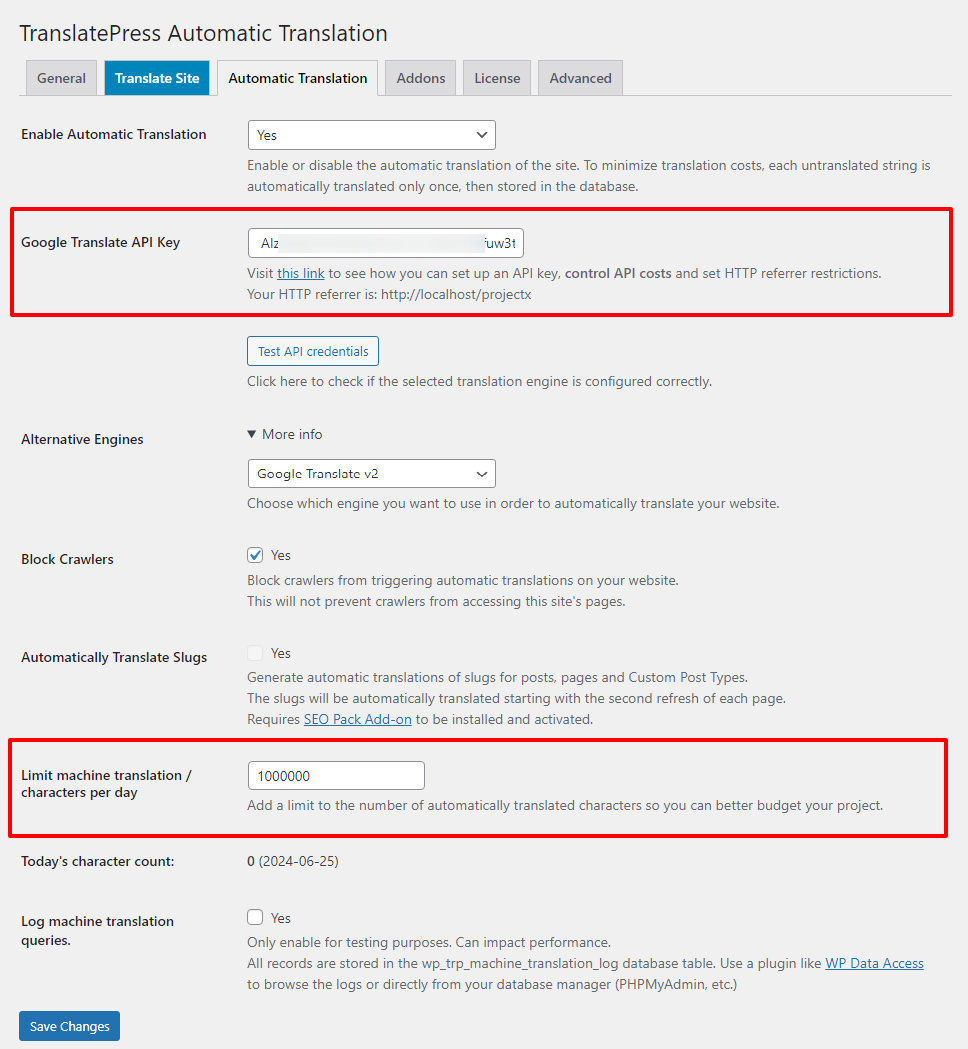
Remarque : L'API de Google Translate est accessible dans la version gratuite de TranslatePress.
Avec la traduction automatique activée, vous pouvez toujours utiliser l'interface de traduction si vous souhaitez modifier des chaînes. Vous y trouverez toutes les chaînes déjà traduites automatiquement, que vous pourrez alors modifier.

SEO multilingue
Enfin, le TranslatePress est équipé d'un SEO multilingue pack (disponible dans la version premium). Cela vous permet de traduire les liens de vos pages, titres SEO, méta-descriptions, balises ALT et autres balises SEO importantes.
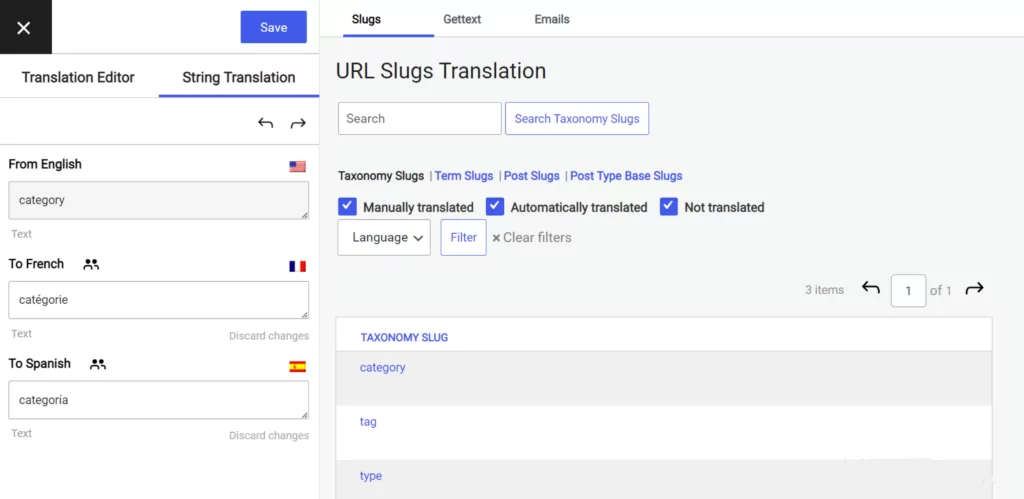
Il crée également des sitemaps multilingues à soumettre aux moteurs de recherche et fonctionne avec la plupart des extensions SEO WordPress les plus populaires. Tout cela vous aide à apparaître réellement dans les résultats de recherche pour vos langues traduites.
Dans quelles langues populaires d'Internet allez-vous traduire votre site ?
Savoir quelles sont les langues les plus parlées dans le monde et en ligne constitue un bon point de départ lorsqu'on envisage de traduire son site web. Après tout, lorsque vous ajoutez à votre site une langue parlée par un grand nombre de personnes, vous pouvez potentiellement toucher des centaines de millions de visiteurs supplémentaires.
Cependant, la popularité des langues n'est qu'un facteur à prendre en compte. Comme nous l'avons vu plus haut, bien d'autres éléments entrent en jeu pour déterminer quelles langues supplémentaires ont du sens sur votre site. Ce n'est pas parce que certaines font partie des langues les plus parlées au monde qu'elles sont pertinentes pour votre entreprise en ligne ou votre site Web. Utilisez les directives ci-dessus pour prendre votre propre décision, puis ajoutez TranslatePress pour en faire une réalité.
TranslatePress Multilingue
Quel est votre processus pour choisir les langues dans lesquelles traduire votre site ? Dites-le-nous dans les commentaires ci-dessous !