
In this post
It’s no secret that a localized website will see higher conversion rates than non-localized ones. If your site operates in multiple languages but you’re not treating each version as its own conversion funnel, that’s a current and active gap. The future for your site is good, however, if you apply the right conversion rate optimization techniques.
What’s more, the principle is the same whether you have one language version or ten: find what stops visitors from converting and remove it. A multilingual site will have a few of these ‘friction points’ within your translated content that don’t typically exist on a single-language site. Let’s spend a few minutes running over the aspects that most multilingual site owners never look for.
Quick Answer: To optimize conversion rates on a multilingual site, treat each language version as its own conversion funnel. Segment analytics by language to find underperforming versions, audit translated CTAs and form copy on the live front end, adapt social proof for each market, and use TranslatePress to manage and review every conversion touchpoint without affecting other language versions.
What Is Conversion Rate Optimization and Why Does It Matter for Multilingual Sites?
In short, Conversion Rate Optimization (CRO) is how you increase the percentage of visitors who complete a ‘target action’ on your site, such as a purchase or a form submission. IRP Commerce has benchmark data (updated on a regular basis) that offers an average conversion rate percentage of around 1.5–2.0 percent:
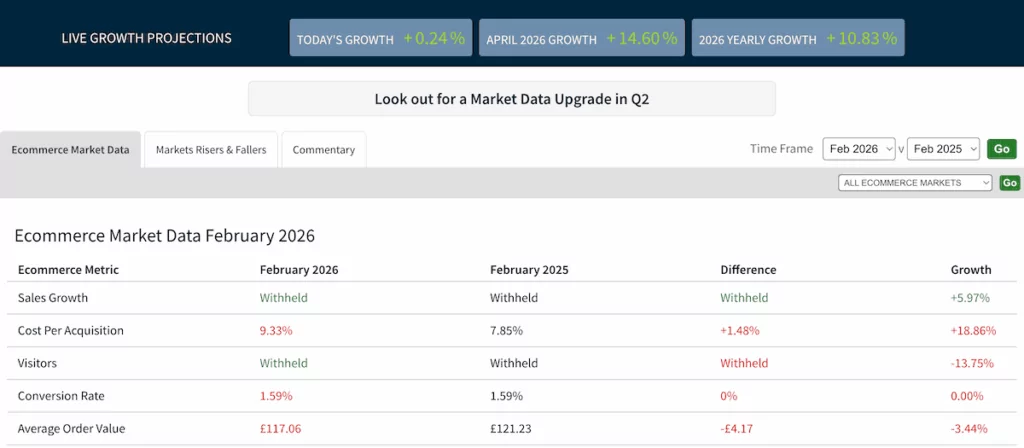
However, Shopify places the target for a well-optimized store at a higher rate: up to six percent in some industries. It also notes that conversion rates for localized e-commerce stores are around 10 to 15 percent higher than non-localized sites.
As such, CRO is important because it generates more revenue from your existing traffic without increasing what you spend on acquisition. With optimization, you stand to deliver a more effective experience without any additional spend.
Why your CRO matters (for any website)
While paid acquisition brings visitors in, your conversion rate determines what you do with them. So, if your site has good traffic but a flat or declining conversion rate, it means it costs more to generate the same level of income over time.
As such, CRO should be a continuous practice based on the consumer’s expectations, your product ranges, and new traffic sources. It’s a shifting target over time, especially if you’ve added languages but not optimized them.
Your content translation is not the finish line in the process, however. If you’re adding languages, confirming the content renders, then moving on, know that translation is the start of the whole multilingual CRO process.
The goal is to work on the conversion barriers within each localized version of your site rather than consider them as copies of your primary site. If you consider a German visitor landing on a checkout page with English error messages, or a French visitor reading a testimonial from a company in a market they’ve never heard of, you’ll begin to understand the importance of multilingual CRO.
What to look for when looking to increase your multilingual conversion rate
Done right, a multilingual site will create new populations of potential customers who would otherwise leave after reading content they can’t engage with.
DeepL’s own study shows that three-quarters of marketers believe localized content to help increase customer engagement. In that same study, almost everyone polled reported a positive return from localization.
As such, a visitor reading your product pages in a native language is further along the path to purchasing than one who leaves from a poor experience. By extension, each additional language version is a new conversion funnel for a market you didn’t have access to.
So, before you can apply any multilingual conversion rate optimization techniques, you need to assess the quality of each version of your site through measuring each language version independently rather than looking at your site’s aggregate performance.
Setting benchmarks for each language version
First, look to segment your analytics by language (for instance, with Google Analytics’ audience or segment filters). This gives you a baseline conversion rate for each language.
An internal comparison will be more beneficial than anything else. So, if your Spanish version converts at 2.8 percent and your French version at 1.1 percent, the gap is unlikely to be a traffic quality issue.
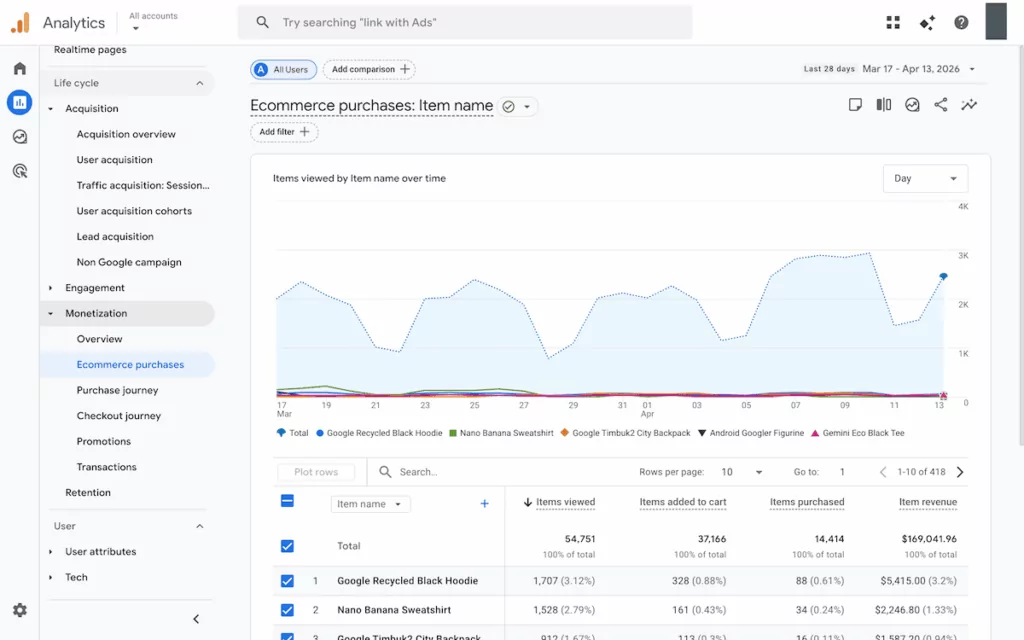
You can also look to track regional mismatches. For instance, a site with strong conversions for Spanish yet weak for Mexican may have a localization problem rather than a traffic quality problem.
Translation bottlenecks that inhibit conversion
There are conversion rate roadblocks associated with multilingual sites that monolingual ones won’t be exposed to. In my experience, these bottlenecks occur where intent is the highest:
- Checkout and form copy in the source language. Untranslated form labels, error messages, or notifications often appear at the exact moment a visitor needs clarity in order to convert.
- Short, isolated strings. Button labels, image alt text, category names, and navigation items can all carry translation errors due to context limitations for your translation engine.
- Untranslated metadata. Without translated page titles and meta descriptions, your pages may fail to appear in local search results, which is a basic issue that affects who arrives at your localized site in the first place.
The fix for all three is to review the live front end of each language version and hunt for issues, although there is still a time and place for working with a typical list of strings.
CTA optimization across different languages
A Call to Action (CTA) has two jobs: brevity and intent. It’s hard to satisfy both at the same time when you translate a CTA because languages don’t ‘compress’ the same way.
For example, German is an expansive language. “Buy Now” translates roughly to “Jetzt Kaufen” (I’m using DeepL’s online translator for this task!). This is only slightly longer. However, “Add to Cart” becomes “In den Warenkorb”, which needs more space.
As such, button text that fits one layout can overflow others. This design constraint can then force a compromise that weakens the CTA or breaks the layout.

Here, rather than ask what a phrase says in the target language, I’d ask what a native speaker would write on this button to produce the same response. That answer is often a phrase that differs from a literal translation but preserves the intent and fits design constraints.
Adapting social proof for different regions and markets
Social proof is one of the most reliable ways to judge conversions, but the impact is often regional. For instance, a testimonial from a US company could carry limited weight with German buyers with no frame of reference. Even case studies written for a US context (such as specific pricing, market conditions, or compliance considerations) won’t ‘hit’ the same for a European visitor.
Here, multilingual social proof will see you select the testimonials that fit each market’s context and concerns, then present them in an authoritative format using a variety of techniques:
- Quantifiable evidence, such as star ratings, review counts, and specific metrics tend to perform well in markets that respond to measurable proof.
- Personal testimonials from named individuals with recognizable context work better where trust is built through familiarity rather than data.
- In-market reviews (testimonials from customers within the same region as the visitor) carry more relevance and conversion impact than testimonials sourced from a different market.
Where possible, look to source social proof from customers within your target market. The format, the context, and the source of the content should each reflect what carries authority for that particular audience.
How TranslatePress can help you increase and optimize your conversion rate
Each of the conversion rate optimization techniques I mention needs a way to review, adapt, and manage each language version without affecting the others. This is exactly what TranslatePress is built to do.
TranslatePress Multilingual
For example, the visual translation editor lets you click any CTA, button label, or form field on the front end and edit the translation in context. This means layout issues are visible immediately.
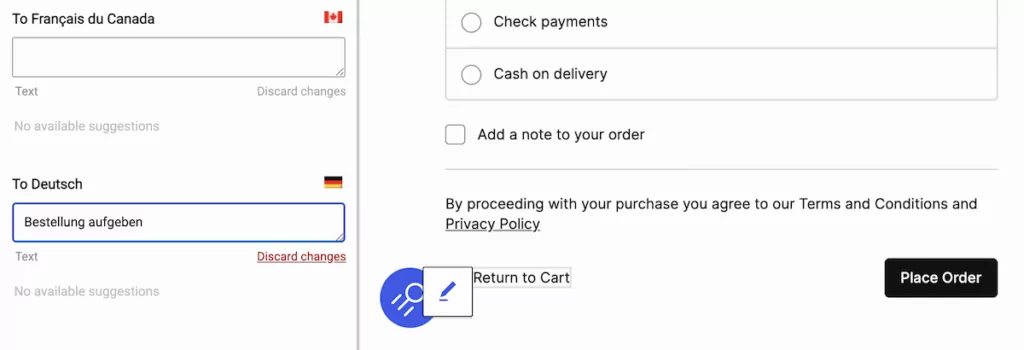
TranslatePress also covers the entire conversion funnel: product pages, carts, checkouts, and the customer account area across all active languages. This includes deeper metadata such as form labels and error messages.
The automatic content detection catches every word on your site, so you won’t have unoptimized (yet hidden) aspects to worry about. TranslatePress AI will also detect and translate any new content or updates, so no language version falls behind as your site changes.
I’ve got a few other cool aspects of and use cases for TranslatePress too:
- Social proof by region. Image translation lets you swap testimonial photos, customer images, and trust badges by language version from the same visual editor, without affecting any other version of the site.
- Early-funnel drop-off. Automatic User Language Detection routes first-time visitors to a preferred language, so they arrive at the right version by default rather than having to find a language switcher.
- Per-market conversion paths. The Navigation Based on Language add-on lets you surface different menu items, landing pages, and promotions for each language version, so each market’s conversion path reflects what that audience needs to see.
Together, they handle the multilingual CRO workflow from end to end and give you the tools to adapt every conversion touchpoint over time.
Frequently asked questions about multilingual conversion rate optimization
What is a good conversion rate for a multilingual website?
The range is wide depending on where you get your info from, but about two or three percent is a good target. In reality, the most useful number is your conversion rate per language version, not the global average. An underperforming version means that should be the focus of your CRO work.
Does adding more languages to your site automatically increase conversion rate?
Adding languages creates more conversion opportunities by bringing in visitors who would otherwise exit because the experience doesn’t serve them. Whether that turns into a measurable improvement depends on the quality of your localization. Unoptimized sites will typically convert at a lower rate.
How do you identify conversion bottlenecks in translated content?
Start by segmenting conversion rate by language version in your analytics platform. For underperforming versions, focus on product pages, checkout flows, and lead capture forms. Using TranslatePress’ visual editor will let you check how every string renders on the live front end in that language, specially short strings and form copy.
Should CTAs be translated literally?
No, you should adapt CTAs rather than translate them word-for-word. The goal is to preserve the intent and directness of the original, not reproduce its exact phrasing. A purpose-written equivalent outperforms the literal translation on both readability and response and should fit the button’s character constraints better.
How does social proof work differently across markets?
The format and source of your social proof can carry different weights in different markets. For instance, star ratings and review counts perform well in markets that respond to measurable proof. Personal testimonials from named individuals with recognizable context work better where trust is built through familiarity.
Start treating each language version as its own conversion funnel
Multilingual CRO will be an ongoing practice of reviewing each language version against its own benchmarks, finding friction points within that translated content, then adapting the experience for your visitors. As part of that process, you’ll need the right translation management plugin.
TranslatePress gives you the tools to do this from a single interface. There’s a visual editor to review and correct translations on the front end, automatic language detection, image translation, and full WooCommerce support that covers the entire purchase journey for every language your store serves.
Translation gets visitors to the page — CRO determines what they do when they get there.
TranslatePress Multilingual
What conversion rate optimization techniques are you planning to use on your own sites? I’d love to hear your thoughts in the comments section below!