
En esta publicación
Conocer los idiomas más usados en Internet y los idiomas más hablados del mundo es información importante a la hora de decidir qué traducir tu sitio web en él. Puede darte pistas sobre qué idiomas tiene sentido adoptar y cuáles no.
Después de todo, hacer que tu sitio sea multilingüe tiene muchos beneficios. Puede generar más tráfico, mayores ventas, mejores conversiones y una mayor confianza del consumidor. Sin embargo, a qué idiomas debes traducir tu sitio web ¿para lograr eso? ¿Qué idiomas te permitirían llegar eficazmente a la mayor cantidad de gente?
Para ayudar a responder estas preguntas, en esta publicación examinaremos los idiomas más hablados del mundo y en Internet (como verás, estos no siempre son los mismos). Aprenderás qué idiomas tienen la mayor cantidad de hablantes nativos y cómo eso se refleja en su uso en el contenido en línea.
Sin embargo, elegir un idioma para la traducción de su sitio web depende de algo más que de las cifras puras. Por esa razón, también analizaremos los factores que debe tener en cuenta adicionalmente al añadir nuevos idiomas a su sitio. Por último, le recomendaremos una forma de implementar la localización de su sitio web de la manera más sencilla.
¿Cuáles son los idiomas más hablados del mundo y en línea?
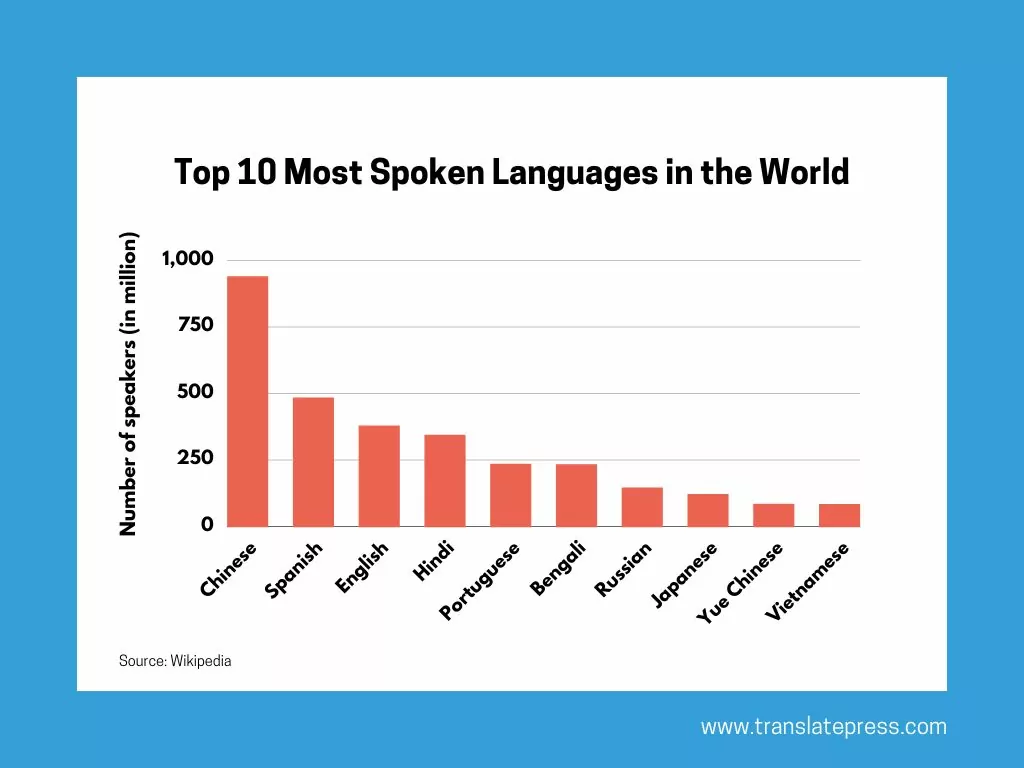
Para empezar, examinemos qué idiomas tienen más hablantes nativos en el mundo. Después de eso, examinaremos cómo se relaciona esto con los idiomas más utilizados en Internet.
Los 10 idiomas más hablados del mundo
Aquí están los idiomas más hablados del mundo. La siguiente lista se basa en información de Wikipedia, que extrajo sus datos de Ethnologue.
- A nivel mundial, Chino mandarín es el idioma más usado con 939 millones de hablantes nativos. No es una gran sorpresa dado que China es el segundo país más poblado del mundo y el mandarín su idioma oficial.
- En segundo lugar llega Español, con 485 millones. Esto tampoco es sorprendente. Hay una multitud de países que lo tienen como lengua materna, especialmente en América del Sur.
- Inglés va por el tercer lugar. Eso es especialmente gracias a EE. UU., que aporta más de 300 de los 380 millones de hablantes nativos.
- En cuarto lugar está Hindi, uno de los idiomas más hablados en la India (345 millones de personas dilo ). India es en realidad el país con más habitantes; sin embargo, como está dividido en varios idiomas diferentes, ninguno de ellos ocupa el primer puesto.
- Portugués es el quinto idioma más hablado del mundo. También aquí tenemos que agradecer a América del Sur. Brasil aporta unos 200 del total 236 millones nativo hispanohablantes.
- En el puesto número seis se encuentra otro idioma del subcontinente indio, Bengalí. 234 millones de personas se habla, principalmente en Bangladés, donde es el idioma principal, y en la parte oriental de la India.
- El número siete es Ruso, que tiene 147 millones de hablantes. Como el país más grande del mundo y con una población correspondiente, es natural que se encuentre entre los diez primeros.
- Nuestro número ocho es Japonés con 123 millones de hablantes nativos. Aunque relativamente pequeño, Japón es un país densamente poblado, razón por la cual ocupa un lugar destacado entre los idiomas más hablados del mundo.
- Chino yue incluyendo cantonés ocupa el noveno lugar. Es un grupo de dialectos chinos que se hablan principalmente en el sur de China. Sin embargo, ten en cuenta que todavía hay 86,1 millones de personas lo reclaman como su lengua materna.
- Finalmente, en el número diez está Vietnamita con 85 millones de hispanohablantes. Dato curioso, el vietnamita también se habla en una pequeña región del sur de China.
Puestos 11-20
¿Quiénes son los subcampeones? Repasémoslos rápidamente:
- Turco (84 millones de hablantess)
- Chino Wu (por ejemplo, el shanghainés, 83,4 millones)
- Maratí (hablado principalmente en la región de Maharastra, en la India, 83,2 millones)
- Telugu (83 millones de hispanohablantes, otra lengua india nativa de Andhra Pradesh y Telangana)
- Coreano (81,7 millones de hispanohablantes)
- Francés (80,8 millones)
- Tamil (hablado en el estado indio de Tamil Nadu, Sri Lanka, Singapur y otros por 78,6 millones de personas)
- Árabe egipcio (77,4 millones)
- alemán estándar (hay 75,3 millones de nosotros
- Urdu (70,6 millones de hablantes, principalmente en Pakistán e India
Contrasta eso con los idiomas más dominantes en el contenido en línea
Por lo tanto, de lo anterior parece que si quieres llegar a la mayor audiencia posible, simplemente traduce tu sitio web al chino, Inglés y Español, ¿verdad? Trabajo hecho.
Sin embargo, no es tan sencillo como eso.
Por una parte porque, como veremos a continuación, hay algunos idiomas que ni siquiera hemos cubierto todavía. Además, el hecho de que mucha gente hable un idioma en particular no significa que tenga sentido ofrecerlo en su sitio web. Por último, la distribución de idiomas en Internet no es la misma que en el mundo real. De hecho, es muy diferente. Echa un vistazo a la cuota de idiomas en los contenidos en línea según W3Techs abajo.
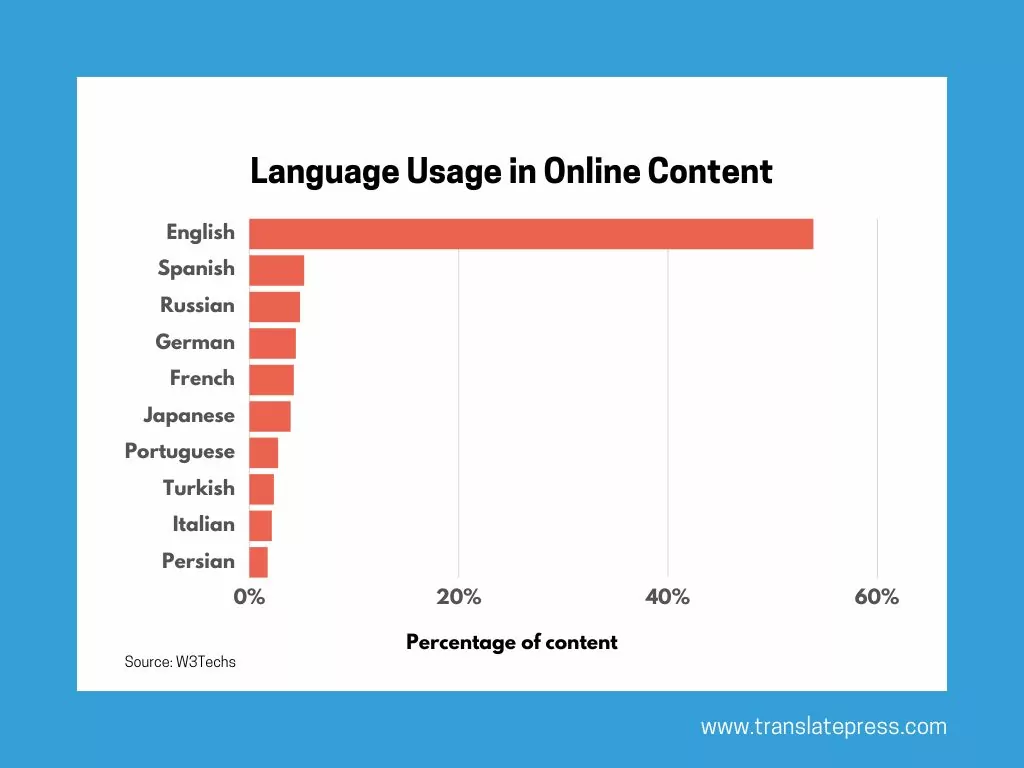
Como se puede ver, el inglés domina con creces, con casi 54% del contenido total en línea. En comparación, si se tienen en cuenta todos los idiomas del mundo, su cuota es, en realidad, de solo unos 5%. Le siguen el español y el ruso, con solo unos 5% cada uno. En el mundo real, representan el 6% y el 2% de los idiomas más hablados del mundo, respectivamente.
El alemán, que ni siquiera entró en el top diez anteriormente, se encuentra en cuarto lugar. Además, la terminación de dominio específica de Alemania es el quinto más común del mundo.
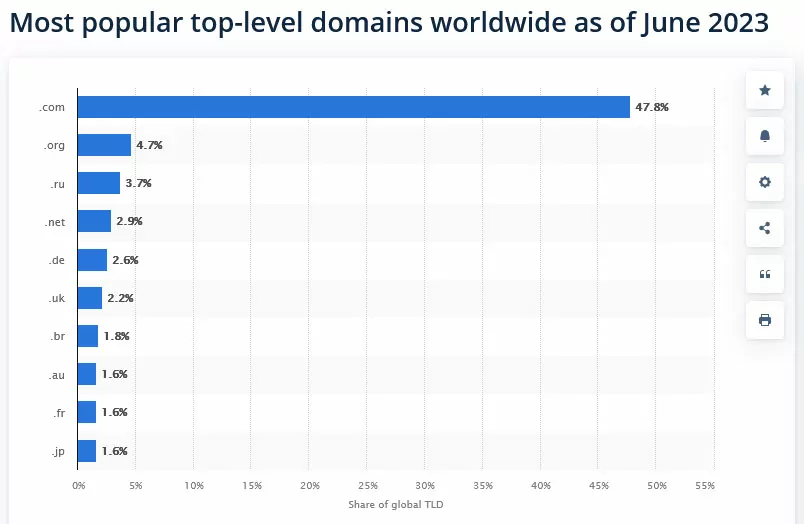
Por otro lado, el chino, que, como recordamos, es la lengua con más hablantes nativos, solo ocupa el puesto 13, con una cuota del 1,4 % del contenido en línea.
Curioso, ¿verdad?
Idiomas más utilizados en sitios web populares
Sin embargo, la tendencia hacia el inglés como lengua dominante para el contenido en línea continúa si se observan los sitios web populares individuales. Un buen ejemplo de ello es YouTube, o el “segundo motor de búsqueda más popular del mundo”. Un análisis De los 250 canales más populares de YouTube, 66% están en inglés, 15% en español, 7% en portugués, 5% en hindi y 2% en coreano.
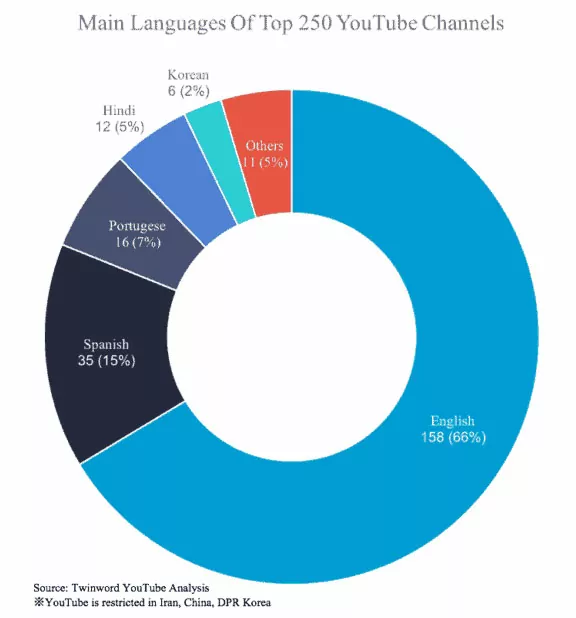
No está claro de cuándo son estas cifras y YouTube no publica cifras oficiales al respecto, pero es una instantánea interesante. Además, Alan Spicer llega a conclusiones similares.
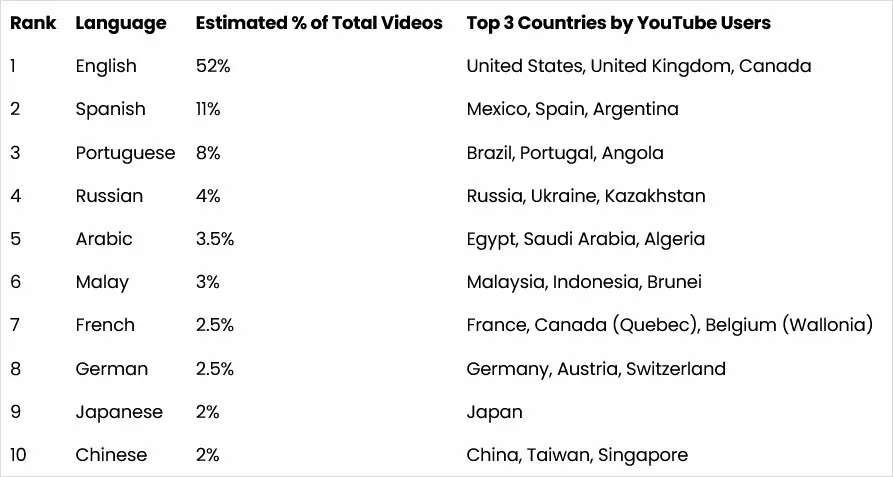
Otro ejemplo es Wikipedia. Tienen un desglose del tráfico diario para las diferentes versiones de idiomas de su sitio.
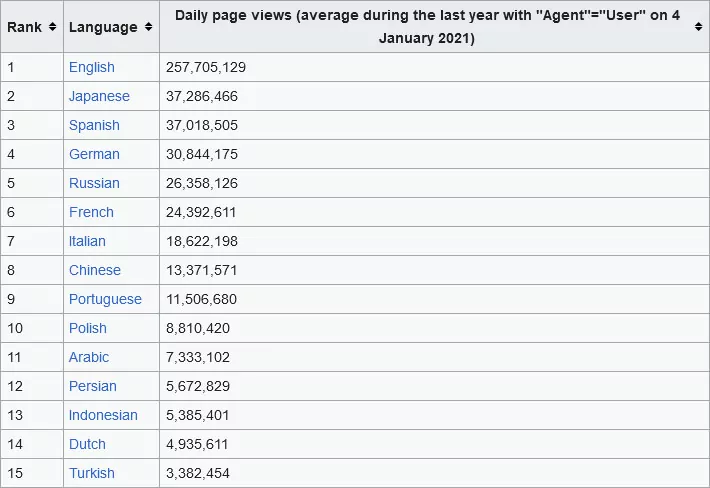
Aquí también el inglés encabeza la lista, seguido curiosamente por el japonés, luego el español y después el alemán. Como puede ver, la preferencia de idioma también cambia según el tipo de contenido; sin embargo, el inglés siempre está a la cabeza.
Entonces, ¿todo el mundo en la web simplemente habla inglés?
Si estás perplejo por la diferencia en la distribución de idiomas en línea y en la vida real, profundizaremos en las razones más adelante. Sin embargo, un factor decisivo es también de dónde obtienes tus datos.
Por ejemplo, la información de W3Techs anterior se basa en los 10 millones de sitios web principales de todo el mundo, los cuales probablemente se inclinan fuertemente hacia el inglés. Las cosas se ven un poco diferentes si se toman los números de InternetWorldStats, que estiman el total de usuarios globales de Internet por idioma en 2020.
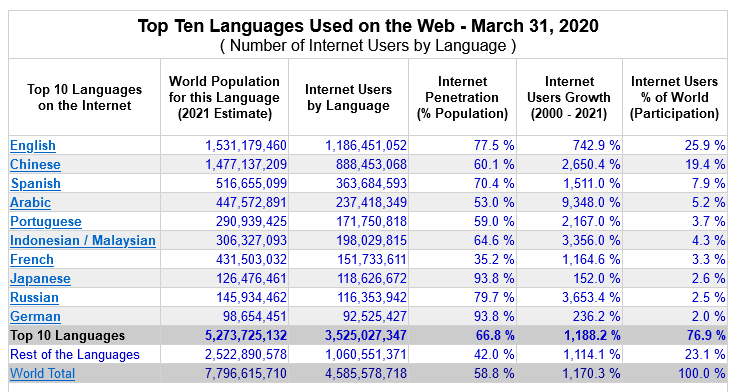
Aquí también reina el inglés. Sin embargo, le siguen de cerca el chino, luego el español y el árabe, que ni siquiera habíamos discutido aún. Aparte de eso, es sorprendente ver al indonesio/malayo entre ellos, así como al francés y al alemán en el top ten de los idiomas de internet.
La razón por la que el árabe no apareció antes es que consta de muchos dialectos, que pueden ser muy diferentes entre sí. Por eso otras fuentes no lo consideran un solo idioma. Al mismo tiempo, el árabe escrito no varía de la misma manera. Por lo tanto, en el contenido en línea (escrito), se puede contar como uno solo.
También notarán que la población del mundo de habla inglesa se indica como más de 1.500 millones, a pesar de que acabamos de enterarnos de que solo hay alrededor de 380 millones de hablantes nativos. Parece que hay muchas otras personas que usan el inglés como su idioma principal en línea.
Por último, cabe destacar que los distintos idiomas siguen aportando un número diferente de personas al conjunto de usuarios de Internet. Por ejemplo, mientras que los hablantes de japonés alcanzan ya casi el 100% de penetración de Internet, sus homólogos chinos aún tienen, literalmente, cientos de millones de personas que se sumarán a sus filas.
Eso significa que, a la larga, el chino podría ser en realidad el idioma dominante de la web, al menos por el número de hablantes. Para ponerse al día en cuanto a contenido disponible, todavía le queda un buen trecho por recorrer. Sin embargo, debemos tener en cuenta que estas cifras tienen tres años, por lo que las cosas probablemente sean un poco diferentes ahora.
¿Qué significa todo esto para su sitio web?
La pregunta es, ¿qué aprendemos de lo anterior? En primer lugar, el inglés es claramente el idioma dominante de Internet. No es una gran sorpresa, ya que es sobre lo que se construyó originalmente la web y, por lo tanto, ha tenido una ventaja inicial. Además, es el idioma universal del mundo. Hay un montón de hablantes no nativos de inglés que, sin embargo, consumen y producen contenido en ese idioma (como yo).
Eso también significa que, si tu sitio web está actualmente en otro idioma, el inglés es una buena opción para traducirlo. Hacerlo te dará el mayor rendimiento por tu dinero. Te permite llegar a una audiencia grande y diversa, no solo a los hablantes nativos.
TranslatePress Multilingüe
Otra conclusión principal es que la popularidad en el mundo real no se traduce a la audiencia en línea. El alemán es un idioma relativamente pequeño a nivel mundial, pero tiene una presencia en línea comparativamente grande. Esto es algo que debe tenerse en cuenta al decidir a qué idiomas traducir su sitio web.
Una de las principales razones de esto es probablemente el acceso a Internet, que difiere entre los grupos lingüísticos. Esto puede deberse tanto a una simple falta de infraestructura técnica como a la existencia de otros obstáculos. Por ejemplo, YouTube está bloqueado en China. Por lo tanto, le costará mucho encontrar canales de China continental en la plataforma. Dependiendo de cuál sea el tema de su sitio web, esto podría ser relevante.
Por último, todavía existen varios mercados lingüísticos emergentes. El chino, el árabe, el portugués y el francés sumarán usuarios a Internet en los próximos años. Esto significa que, si es de los primeros en adoptar estas tecnologías, puede obtener una ventaja comercial. Es posible que pueda establecerse antes de que otros se sumen a la misma tendencia lingüística y también, posiblemente, penetrar en un mercado menos saturado.
Cómo elegir a qué idiomas traducir su sitio web
Eso plantea la pregunta: ¿debería simplemente elegir idiomas para agregar a su sitio web debido a la gran cantidad de personas que los hablan? Por supuesto que no. El árbol de decisiones para eso es más complejo. Analicemos otros factores importantes a tener en cuenta.
Aclara tu grupo objetivo
El primer paso al plantearse hacer cambios en su sitio web es siempre volver a su grupo objetivo. ¿A quién intenta atraer y con quién intenta hablar exactamente con su sitio? Al final, no importa si los idiomas que ofrece son los más usados en Internet si su público objetivo no los habla.
Por ejemplo, al hacer negocios en Islandia, a sus visitantes les importa un bledo si su sitio web está en chino, incluso si estadísticamente es el idioma más hablado del mundo. Por otro lado, como empresa de hostelería cerca de cualquier punto turístico de Europa, el mandarín puede ser una buena opción ya que los chinos son campeones mundiales en viajes.
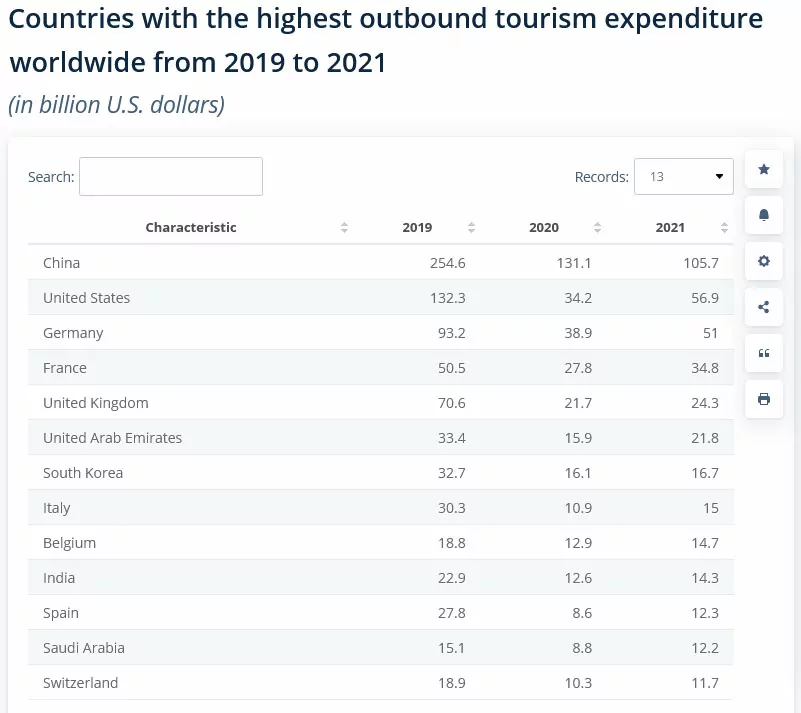
Por otro lado, si eres una cafetería local que opera en una ciudad con muchos expatriados (como Berlín), añadir inglés a tu sitio web puede ser una buena idea para atraer a más clientes.
En pocas palabras, al igual que el contenido de su sitio web, debe alinear la traducción de su sitio web con su público objetivo. Depende de más que simplemente la cantidad de hablantes a los que puede llegar. Si añade un idioma a su sitio, debe tener una buena razón para ello.
Analiza los mercados en los que operas
Además de tu público objetivo, el mercado en el que opera tu empresa ya puede ofrecer algunas pautas para la elección del idioma en tu sitio web.
Si ofreces tus servicios a nivel mundial, centrarte en los idiomas más hablados del mundo, por orden descendente, puede ser una buena estrategia. Esto te permite abarcar el mayor número posible de personas y atraer más tráfico. Por otro lado, si tu mercado es estrictamente local, este enfoque no tiene sentido.
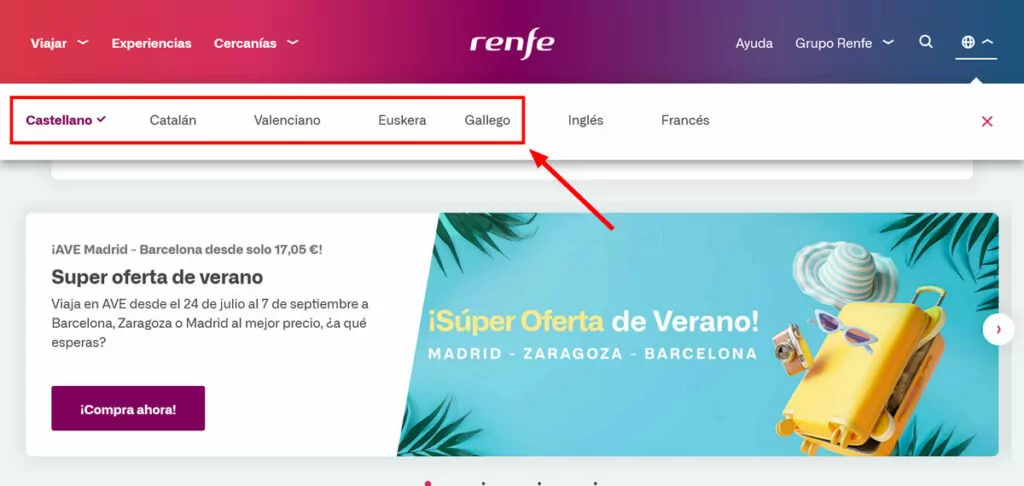
Lo que es más, la ubicación de su empresa puede determinar de hecho los idiomas de su sitio web. Hay varios países en el mundo donde necesita ofrecer más de un idioma desde el principio. Por ejemplo, en España, además del español, haría bien en ofrecer también su sitio web en catalán, gallego y/o vasco.
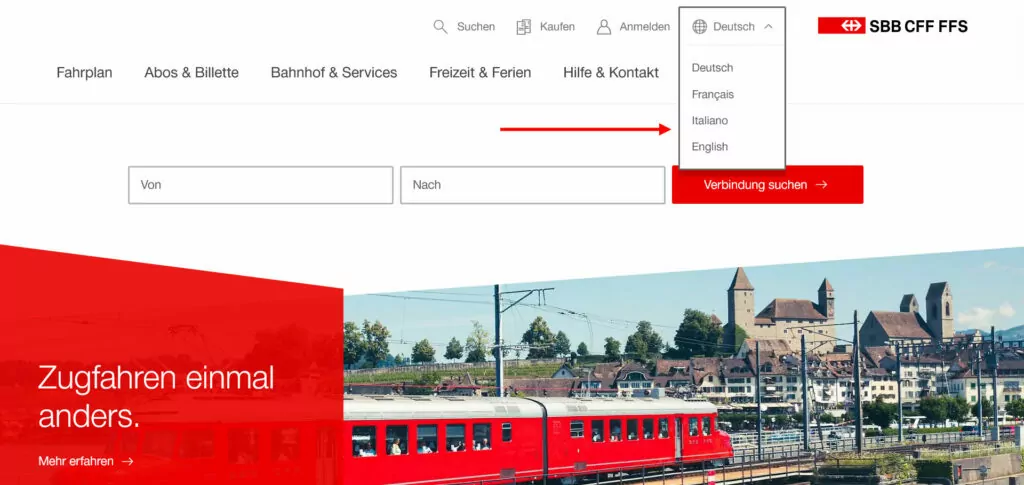
Un sitio web que opera en Suiza necesita tres idiomas: francés, italiano y alemán.
Sin embargo, no es solo algo para cuando tu localidad te impone más de un idioma. También puede ser una decisión consciente para empezar a explorar y atender a nuevos compradores.
Traducir su sitio a los idiomas de los países vecinos puede ser una buena manera de atraer negocios de allí. En primer lugar, hacerlo permitirá que su sitio aparezca en consultas de búsqueda relevantes en esos idiomas. En segundo lugar, es un factor importante en las decisiones de compra. Para muchas personas, la capacidad de obtener información en su lengua materna es un factor de confianza importante.
Consulta tus analíticas y tráfico
Otra consideración para traducir su sitio web es el idioma del visitante. Un idioma puede ser uno de los más usados en el mundo o incluso en Internet, pero ¿es el que habla su audiencia?
Para responder a esa pregunta, harías bien en recurrir a las analíticas de tu sitio web. En Google Analytics y otras soluciones similares, puedes ver un mapa de dónde son tus visitantes y también la configuración de idioma de sus navegadores.
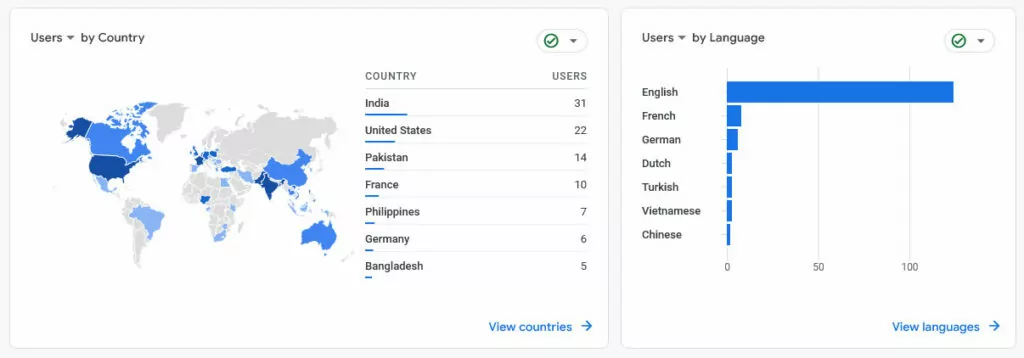
Esto puede ayudarte enormemente a decidir qué idioma tiene sentido ofrecer en tu página web. Si actualmente no ofreces su idioma, pero aún así hay personas de ese país que visitan tu página, imagínate cuántas vendrían si te comunicaras en su lengua materna.
Otras fuentes de este tipo de información pueden ser las palabras clave en las herramientas para webmasters, las consultas al servicio de asistencia o los mensajes en las redes sociales.
Realiza un análisis de la competencia
Otra forma de tener una idea de cuál de los idiomas más hablados del mundo es probablemente una buena idea tener en su sitio es observar a su competencia. Compruebe la presencia en la web de sus competidores más cercanos y vea qué idiomas incluyen. A menudo, están ahí por una buena razón. Sus competidores pueden saber algo que usted no sabe.
Claro, aún necesitas tomar tus propias decisiones; sin embargo, consultar a los demás te puede dar una idea de qué idiomas podrían ayudarte a conseguir más visitantes, ventas y conversiones. Te permite aprovechar el éxito y la investigación de otras personas.
Ten en cuenta las limitaciones de diseño y de coste
Finalmente, al observar los idiomas más comunes en Internet y decidir si añadir uno o más a su sitio, debe considerar el diseño de su sitio y el costo involucrado.
¿Por qué es importante el diseño?
Porque no todos los diseños son fáciles de adaptar a todos los idiomas. Por ejemplo, algunos idiomas son más prolijos, lo que significa que necesitan más palabras o palabras más largas para expresar lo mismo que otros. Por otro lado, los idiomas basados en caracteres, como el chino, el japonés y el coreano, suelen necesitar mucho menos espacio, ya que pueden expresar más información de forma más concisa.
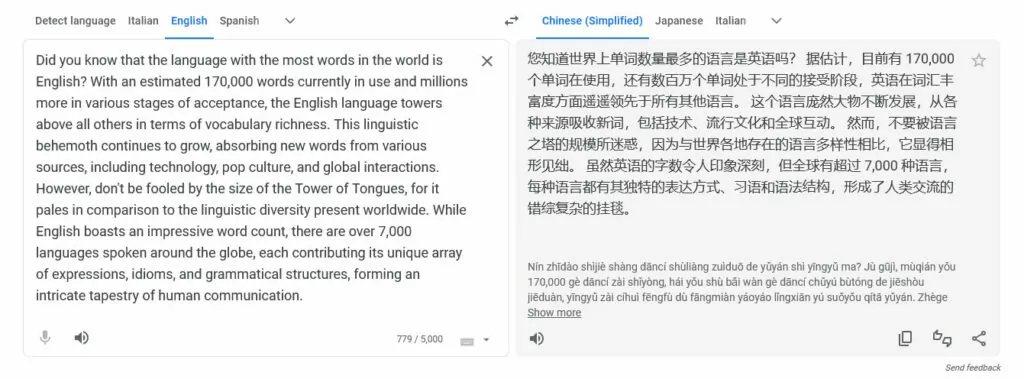
Además, algunos idiomas van de derecha a izquierda en lugar de al revés. El árabe es un ejemplo de ello, y el hebreo es otro. Cualquiera de los dos puede arruinar tu diseño debido a los diferentes requisitos de espacio y necesitas encontrar una solución para eso.
Si quieres ofrecer un idioma muy diferente al original, es posible que necesites un diseño y una estructura de sitio web completamente distintos. ¿Estás preparado para crear eso? ¿Tiene sentido para la cantidad de tráfico adicional que este idioma probablemente traerá?
Finalmente, algunos idiomas son más baratos de traducir que otros. El español y el inglés cuentan con un gran grupo de traductores competentes; otros idiomas, menos populares o más complicados, no tanto. Todas estas son consideraciones importantes.
Utiliza TranslatePress para traducir tu página web a los idiomas más habituales
Mirar los idiomas más hablados es un buen punto de partida para pensar en qué añadir a tu sitio web de WordPress. Sin embargo, una vez que hayas tomado una decisión, es igual de importante contar con una buena herramienta para implementarlos. En este punto, queremos sugerir humildemente TranslatePress como esa herramienta, y te explico por qué.
Interfaz fácil de usar
En TranslatePress, la mayor parte del trabajo de traducción se realiza en la misma interfaz intuitiva. Muestra una vista previa de tu sitio web a la derecha, mientras que toda la traducción se lleva a cabo a la izquierda.
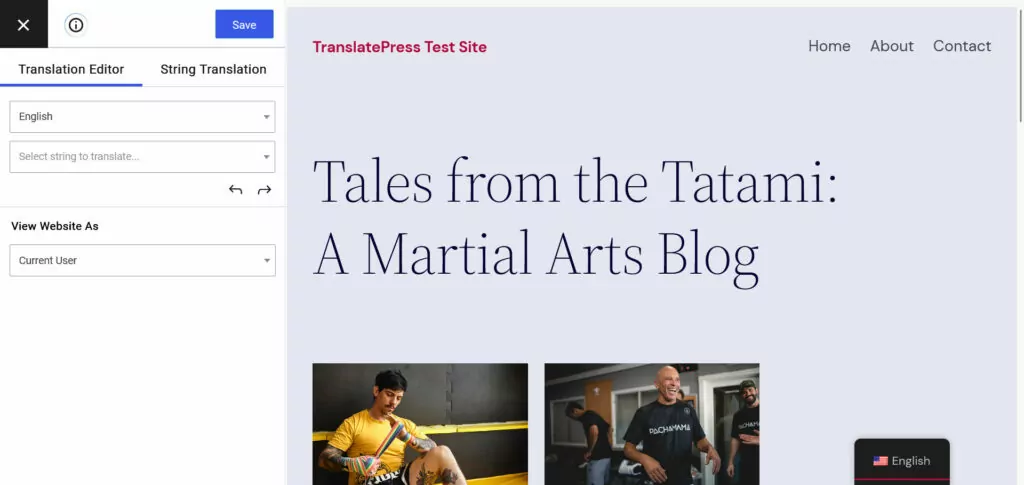
Utiliza la vista previa para navegar a la página que deseas convertir a otro idioma. Luego, elige cualquiera de las cadenas en ella, ya sea a través del menú desplegable, las flechas izquierda y derecha, o directamente desde la página.
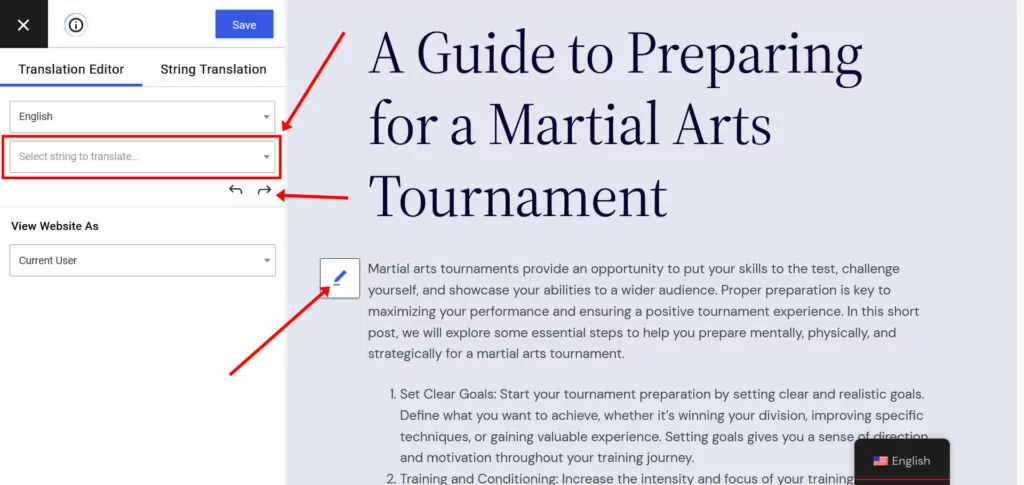
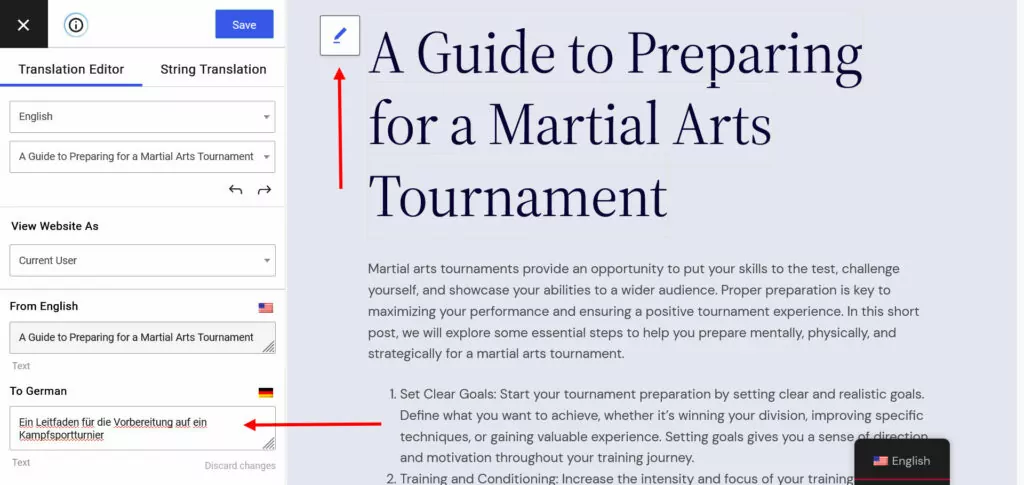
Esto abrirá un nuevo cuadro de texto a la izquierda donde puedes agregar la traducción. Cuando termines, simplemente guárdala y a partir de ahora el texto traducido aparecerá en tu sitio web.
Posibilidad de traducir imágenes
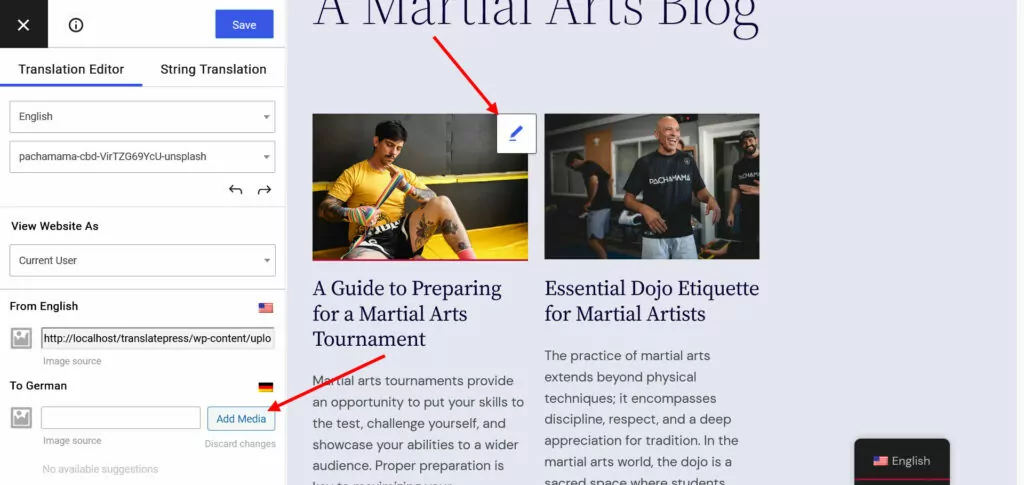
Además de lo anterior, TranslatePress también te permite adaptar tus imágenes a cada región. Esto es especialmente importante cuando utilizas texto en tus elementos visuales. Sin embargo, también puede tener sentido utilizar una imagen totalmente diferente para otra región, sobre todo para representar mejor la etnicidad de las distintas regiones.

En cualquier caso, en TranslatePress también puedes seleccionar una imagen para traducir desde la interfaz y, a continuación, introducir una alternativa a la izquierda. Aparecerá automáticamente de la misma forma que el texto traducido.
Opciones de traducción automática
Además, TranslatePress ofrece traducciones automáticas a través de TranslatePress AI o a través de API de Google Translate y DeepL. Simplemente enciéndelo debajo Configuración → TranslatePress → Traducción automática, luego elige tu motor de traducción.
Recomendamos TranslatePress AI, ya que no requiere configuración alguna y es la solución más precisa. Esta función viene seleccionada por defecto si dispones de una licencia válida en tu sitio web.
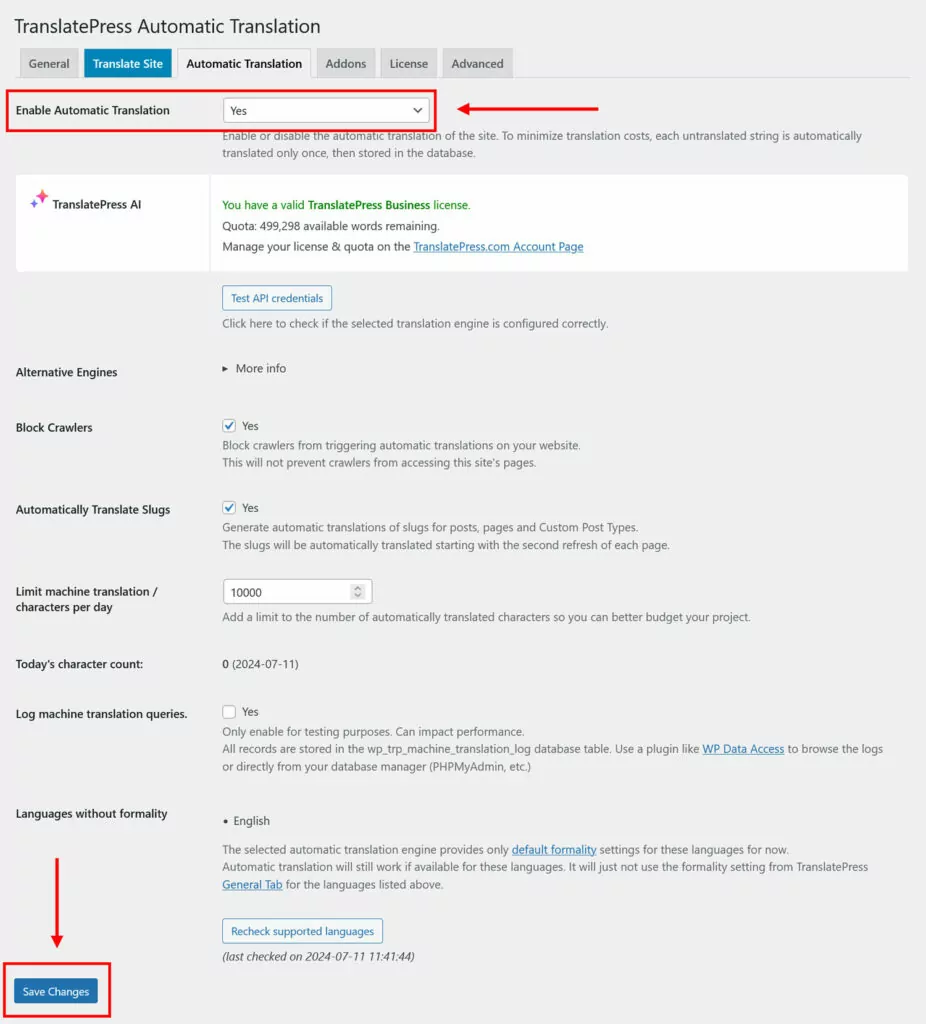
Una vez que guardes los cambios, TranslatePress AI comenzará a traducir tu sitio web utilizando la potencia combinada de todos los motores de traducción automática neuronal de primer nivel, lo que te garantizará la mayor precisión posible. Solo tienes que conectarlo y ya está: obtendrás traducciones precisas antes de que se enfríe el café.
Como alternativa, también puedes conectarte a Google Translate o DeepL mediante una clave API.
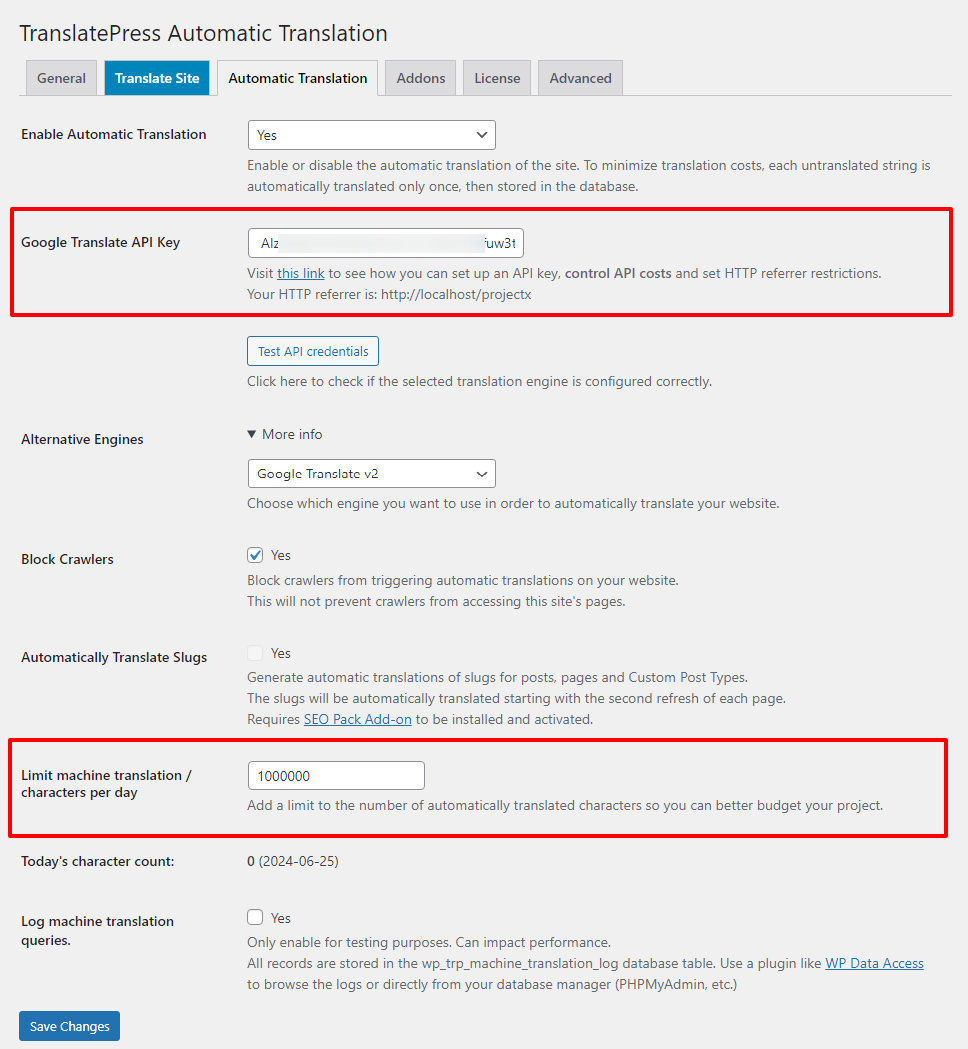
Nota: En la versión gratuita de TranslatePress es posible utilizar la API de Google Translate.
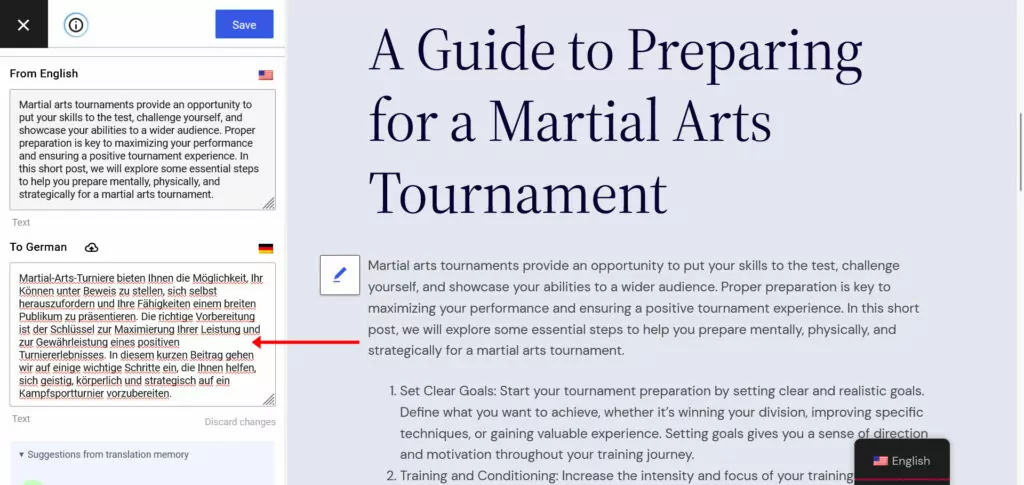
Con la traducción automática activada, aún puedes usar la interfaz de traducción si deseas editar cualquier cadena. Encontrarás todas las cadenas ya traducidas automáticamente allí, donde podrás modificarlas.
SEO multilingüe
Por último, TranslatePress incluye un SEO multilingüe paquete (disponible en la versión prémium). Esto le permite traducir los enlaces de su página, títulos SEO, meta descripciones, etiquetas ALT y otros marcadores SEO importantes.
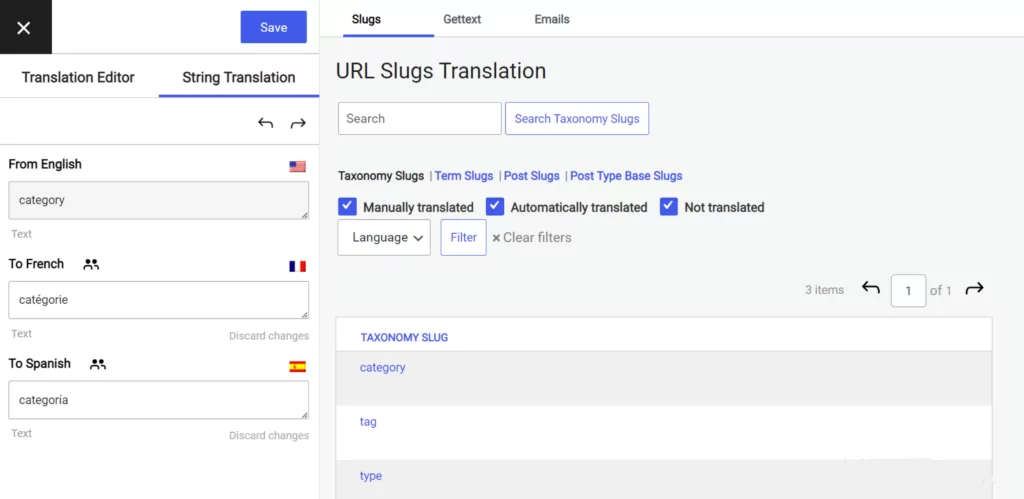
También crea sitemaps multilingües para enviar a los motores de búsqueda y funciona con la mayoría de los plugins de SEO de WordPress más populares. Todo esto te ayuda a aparecer realmente en las consultas de búsqueda en tus idiomas traducidos.
¿A qué lenguajes populares de internet traducirás tu sitio?
Saber cuáles son los idiomas más hablados en el mundo y en línea es un buen punto de partida al considerar a qué idiomas traducir su sitio web. Después de todo, cuando añade a su sitio un idioma que mucha gente habla, potencialmente puede llegar a cientos de millones de visitantes adicionales.
Sin embargo, la popularidad de los idiomas es solo un factor a tener en cuenta. Como hemos visto anteriormente, hay mucho más involucrado en qué idiomas adicionales tienen sentido para su sitio. El hecho de que algunos formen parte de los idiomas más hablados del mundo no significa que tengan sentido para su negocio en Internet o sitio web en particular. Utilice las pautas anteriores para tomar una decisión por sí mismo y luego agregue TranslatePress para hacerlo realidad.
TranslatePress Multilingüe
¿Cuál es tu proceso para elegir los idiomas a los que traduces tu sitio web? ¡Cuéntanos en los comentarios a continuación!