
In diesem Beitrag
Ich denke, Sie werden mir zustimmen, wenn ich sage, dass es Dutzende internationale E-Commerce-Websites und -Plattformen gibt, die jeweils das Blaue vom Himmel versprechen.
Das kann die Wahl der richtigen E-Commerce-Plattform für Ihr Unternehmen verwirrend, wenn nicht sogar herausfordernd machen.
Wenn das nicht genug wäre, gibt es viele Fragen zu beantworten, bevor Sie sich für eine E-Commerce-Plattform entscheiden.
Zum Beispiel…
- Bietet die internationale E-Commerce-Plattform alle Funktionen, die Sie für Ihren Online-Erfolg benötigen?
- Bietet die E-Commerce-Plattform Zahlungsanbieter, die für Sie und Ihre Zielgruppe funktionieren?
- Wird Ihr Budget die Kosten für die richtige E-Commerce-Plattform für Ihr Unternehmen decken?
- Welche Herausforderungen werden beim internationalen Verkauf auf Ihrer gewählten Plattform auf Sie zukommen?
- Wie sicher ist die E-Commerce-Website oder -Plattform?
- Bietet die E-Commerce-Plattform die Integrationen, die Sie benötigen?
- Und so weiter.
Außerdem ist jeder E-Commerce-Plattformanbieter hinter Ihrem Geld her. Das ist die harte Wahrheit.
Ich meine.
Internationale E-Commerce-Websites und -Plattformen sind mit verlockenden Marketingmaterialien ausgestattet, die es schwer machen zu erkennen, wer auf Ihrer Seite steht und wer Sie über den Tisch zieht.
Deshalb haben wir viele Stunden damit verbracht, verschiedene E-Commerce-Websites und -Plattformen zu testen, um Ihnen zu helfen, eine fundierte Entscheidung zu treffen.
Im heutigen Artikel helfen wir Ihnen, die richtige internationale E-Commerce-Plattform für Ihr Unternehmen auszuwählen, egal ob Sie einen neuen Shop eröffnen oder den Anbieter wechseln möchten.
Wir werden Funktionen, Integrationen, Preise und alles andere behandeln, was jede E-Commerce-Plattform von der Konkurrenz abhebt.
Bevor der Artikel zu Ende ist, sollten Sie alles haben, was Sie brauchen, um die richtige E-Commerce-Plattform auszuwählen, um Ihr Unternehmen global zu machen.
Ohne weiteres Umschweife, lassen Sie uns direkt eintauchen.
Was sind internationale E-Commerce-Websites und -Plattformen?

Als Erstes: Was sind internationale E-Commerce-Websites oder -Plattformen?
Bevor wir uns in die Details verlieren, halten wir es für wichtig, ein klares Bild davon zu haben, womit wir es zu tun haben.
Also, was ist eine internationale E-Commerce-Website oder -Plattform?
Eine E-Commerce-Plattform ist eine Softwarelösung, mit der Sie einen Online-Shop erstellen und betreiben können. Sie bietet eine Vielzahl von Funktionen, die Unternehmen helfen, schnell online zu gehen.
Diese Funktionen umfassen unter anderem Hosting, Design, Sicherheit, Bestandsverwaltung, Zahlungsabwicklung und Marketing-Tools.
Im Großen und Ganzen kann eine internationale E-Commerce-Plattform zwei Dinge bedeuten.
#1. Selbst gehostete oder SaaS-basierte internationale E-Commerce-Websites
Erstens haben wir Softwarelösungen (entweder selbst gehostet oder als SaaS), die Ihnen helfen, einen Onlineshop zu erstellen und zu betreiben. Hervorragende Beispiele hierfür sind Lösungen wie Shopify, BigCommerce, und WooCommerce.
Was ist also der Unterschied zwischen selbstgehosteten und SaaS-E-Commerce-Plattformen?
Self-hosted bedeutet, dass Sie sich um Domain-Registrierung, Website-Design, Hosting und Wartung kümmern. Sie haben die vollständige Kontrolle über Ihren Onlineshop und können praktisch alles tun, was Sie möchten, solange es sich im Rahmen des Gesetzes bewegt.
Mit anderen Worten, Sie besitzen eine E-Commerce-Website und haben das Sagen.
SaaS, kurz für Software as a Service, bedeutet, dass der internationale E-Commerce-Website-Anbieter das Hosting, die Sicherheit und einige weitere administrative Aufgaben übernimmt.
Du konzentrierst dich in erster Linie auf den Aufbau deines Onlineshops. Zwar hast du weniger administrative Aufgaben, aber du hast nur begrenzte Kontrolle über deinen Onlineshop.
Beispielsweise könnte es Ihnen schwerfallen, das Design Ihres Onlineshops vollständig anzupassen.
So oder so erstellen Sie einen E-Commerce-Shop von Grund auf und haben die volle (oder eine gewisse) Kontrolle über Ihr Online-Geschäft.
#2. Online-Marktplätze
Zweitens haben wir das, was wir Online-Marktplätze nennen.
Ein Online-Marktplatz ist eine E-Commerce-Plattform, mit der Sie einen Online-Shop “mieten” können. Sie besitzen die Plattform nicht und müssen die Anforderungen Ihres E-Commerce-Plattformanbieters befolgen.
Einige gute Beispiele für solche E-Commerce-Plattformen sind Alibaba Seller Central, Walmart Marketplace, und das Amazon-Verkäufer Programm.
Anstatt also Ihren Onlineshop von Grund auf neu zu erstellen, zahlen Sie Walmart oder Amazon eine monatliche Gebühr, um auf deren Plattform zu verkaufen. Ich hoffe, das ist verständlich.
Später in diesem Beitrag werden wir uns den ersten Typ von E-Commerce-Plattformen ansehen, damit Sie entscheiden können, welcher für Ihr Geschäftsmodell der richtige ist. Auf Online-Marktplätze werden wir nicht eingehen.
Schauen wir uns einige Vorteile internationaler E-Commerce-Websites und -Plattformen an. Oder vielmehr die Vorzüge des internationalen Verkaufs.
Vorteile internationaler E-Commerce-Websites und -Plattformen

Zunächst, grenzüberschreitender E-Commerce mag auf einen Anfänger einschüchternd wirken. Viele bewegliche Teile müssen ständig geölt und verbessert werden, was viele angehende Unternehmer abschreckt.
Aber wussten Sie, dass der internationale Verkauf über E-Commerce-Websites und -Plattformen einige tolle Vorteile bietet?
Das ist richtig, und in diesem Abschnitt werden wir einige Vorteile behandeln, wenn Sie Ihr Unternehmen international ausrichten.
Lasst uns eintauchen.
Erweiterte globale Reichweite
Die Erweiterung der globalen Reichweite ist einer der offensichtlichsten Vorteile internationaler E-Commerce-Websites und -Plattformen.
Sie haben die Vorbereitung getroffen, Verbindungen geknüpft und sogar Ich habe Ihre Inhalte in mehrere Sprachen übersetzt.
Was nun?
Wenn Sie Ihr Unternehmen wirklich global aufstellen möchten, bietet Ihnen eine internationale E-Commerce-Plattform Zugang zu dem vielfältigen weltweiten Markt, den Sie benötigen.
Mit nur wenigen Mausklicks können Sie neue Zielgruppen erschließen und an Menschen in verschiedenen Ländern und Sprachregionen verkaufen.
Das Amazon-Seller-Programm verschafft Ihnen beispielsweise Zugriff auf über 310 Millionen Kunden weltweit. Der Walmart Marketplace gewährt Ihnen Zugang zu über 220 Millionen Kunden.
Aber selbst wenn Sie sich für eine selbst gehostete internationale E-Commerce-Plattform wie WooCommerce (oder eine SaaS-Alternative wie Shopify) entscheiden, schadet es nicht, Ihre globale Reichweite zu erweitern.
Außerdem ist das Erreichen eines internationalen Publikums ein fantastischer Weg, um die Markenbekanntheit, Glaubwürdigkeit und das Vertrauen bei globalen Käufern zu steigern.
Gesteigerter Umsatz
Der zweite Vorteil internationaler E-Commerce-Websites und -Plattformen sind gesteigerte Verkäufe und Umsätze.
Komm schon. Ist das nicht völlig offensichtlich?
Der Verkauf an ein diverses und großes globales Publikum ermöglicht es Ihnen, Ihre Verkäufe und Ihren Umsatz beachtlich zu steigern. Dies vergleichen wir natürlich mit Ihren Mitbewerbern, die noch nicht international sind.
Es gibt unzählige Beispiele von Unternehmen, die erfolgreich umgesetzt haben internationale Marktexpansion.
Sie haben wahrscheinlich mehrere Produkte von globalen Marken in Ihrem Zuhause oder Büro. Und Sie haben diese Artikel wahrscheinlich auf einer E-Commerce-Plattform gekauft.
Internationale E-Commerce-Plattformen bieten Ihnen die Möglichkeit, die Nachfrage nach Ihren Produkten in Ländern zu bedienen, in denen Kunden bisher nicht einmal wussten, dass Sie existieren.
Darüber hinaus hilft Ihnen das Erreichen eines größeren globalen Publikums dabei, Ihren Markt zu diversifizieren. Dies verhindert die Abhängigkeit von einer einzigen Einnahmequelle aus einem einzigen Land, Markt oder einer einzigen Region.
Kostengünstig und rund um die Uhr verfügbar
Ein weiterer Vorteil internationaler E-Commerce-Websites und -Plattformen besteht darin, dass ihre Einrichtung und ihr Betrieb in der Regel kostengünstig sind.
Es ist weitaus kostengünstiger, E-Commerce-Plattformen zu starten, als physische Geschäfte in mehreren Ländern zu errichten.
Sie müssen sich nicht um Ausgaben wie Miete, Nebenkosten und Personal an mehreren Standorten kümmern. Außerdem ermöglichen internationale E-Commerce-Websites Ihnen die Automatisierung von Prozessen, wodurch Ihre Kosten weiter gesenkt werden.
Denken Sie außerdem daran, dass wir erwähnt haben, dass es sich bei diesen Plattformen um Softwarelösungen handelt. Setzen Sie sie in Gang, und die Website wird rund um die Uhr funktionieren.
Kunden können schnell und jederzeit einkaufen, was bequem ist und gleichzeitig die Kosten für die Umsatzgenerierung senkt.
Noch etwas. Internationale E-Commerce-Plattformen bieten Integrationen und Dienste, die den Bestellabwicklungsprozess optimieren. Das spart Ihnen viel Zeit und Geld. Viele E-Commerce-Plattformen helfen Ihnen beispielsweise gerne bei der Lagerhaltung und dem Versand.
Kundendaten
Ein weiterer großer Vorteil internationaler E-Commerce-Plattformen besteht darin, dass sie Ihnen helfen, mühelos viele Kundendaten zu sammeln.
E-Commerce-Plattformen bieten detaillierte Dashboards, Tools und Berichte, mit denen Sie das Verhalten, die demografischen Merkmale, die Präferenzen und die Schmerzpunkte der Kunden besser verstehen können.
Sie können diese Daten nutzen, um bessere geschäftliche Entscheidungen zu treffen, Ihre Produkte zu verbessern und den Umsatz zu steigern.
Personalisierung und Lokalisierung
Da sie ihre Kunden besser verstehen, machen es E-Commerce-Plattformen unglaublich einfach, das Einkaufserlebnis der Kunden zu personalisieren.
Mit den Daten, die Sie sammeln, können Sie Ihre Produkte und Dienstleistungen auf die Bedürfnisse des Kunden abstimmen, was ein personalisiertes und lohnenderes Einkaufserlebnis schafft.
Zusätzlich können Sie Ihre Inhalte und Marketingbotschaften so anpassen, dass sie bei den Kunden optimal ankommen, was später zu mehr Verkäufen führt.
Schließlich können Sie Ihre Website und Ihre Produkte ganz einfach lokalisieren, um besser mit Kunden in verschiedenen geografischen und sprachlichen Regionen in Kontakt zu treten.
Weitere Vorteile internationaler E-Commerce-Plattformen
Die oben genannten sind nur fünf Vorteile von E-Commerce-Plattformen. Weitere schnelle Vorteile sind:
- Erschwingliche Werbung und Marketing;
- Einfache Produkt- und Preisvergleiche;
- Schnellere Reaktion auf Kunden- und Marktanforderungen;
- Gut skalierbar;
- Reduzierte Vertriebs- und Kundendienstkosten;
- Upsells und Cross-Sells;
- Effiziente Bestandsverwaltung;
- Community-Building-Funktionen und Social-Media-Integrationen;
- Und mehr.
Wie Sie sehen können, hat die Investition in eine E-Commerce-Plattform viele Vorteile, die sie zu einem lohnenden Vorhaben machen.
Aber gibt es Nachteile? Und ob – alles, was Vorteile hat, bringt auch Nachteile mit sich.
Nachteile internationaler E-Commerce-Websites und -Plattformen

Bevor Sie auf einer der internationalen E-Commerce-Plattformen, die wir später im Artikel vorstellen, einen Onlineshop starten, ist es wichtig, ein wenig über die möglichen Probleme zu erfahren, mit denen Sie konfrontiert werden könnten.
Auf diese Weise wissen Sie, was Sie erwartet, und können sich im Voraus darauf vorbereiten. Gleichzeitig sparen Sie sich später viel unnötigen Stress, Geld und Zeit.
Ich sage das, weil einige dieser Probleme teuer und zeitaufwändig sind. Sie können sich auch negativ auf Ihr Markenimage und Ihren Ruf auswirken.
Also, was sind die Herausforderungen beim Verkauf auf internationalen E-Commerce-Websites und -Plattformen?
Lesen Sie weiter, um mehr zu erfahren.
Sicherheitsprobleme
Erstens ist Datensicherheit eine der häufigsten Herausforderungen, mit denen jeder konfrontiert ist, der eine Website betreibt.
Ab und zu lesen wir von teuren Datendiebstählen, bei denen sensible Benutzerinformationen preisgegeben wurden. Dazu gehören Namen, Telefonnummern, Kreditkartennummern und Sozialversicherungsnummern.
Wenn Sie ein E-Commerce-Unternehmen im Gesundheitssektor sind, beinhaltet dies sensible medizinische Akten, die Sie nicht in den falschen Händen haben möchten.
Es ist wichtig, die Beste EMR für kleine Praxen um sicherzustellen, dass diese Aufzeichnungen geschützt und ordnungsgemäß behandelt werden.
Zum Beispiel, wenn Yahoo wurde bereits 2016 gehackt., Der Vorfall legte die Daten von drei Milliarden Yahoo-Nutzern offen. Zu den gestohlenen Daten gehörten Namen, E-Mail-Adressen und Passwörter.
Normalerweise führen solche Datenlecks zu enormen Verlusten, Geldstrafen und rechtlichen Problemen. So zahlte Yahoo beispielsweise rund $470 Millionen zur Deckung der Kosten für Ermittlungen, gerichtliche Vergleiche, Abhilfemaßnahmen und Schadensbegrenzung.
Ein weiteres Unternehmen, Equifax, gab $1,4 Milliarden aus, um die Folgen eines Datenlecks zu beseitigen, das hätte vermieden werden können, wenn man das Sicherheitszertifikat erneuert hätte.
Ich war auch gehackt zuvor, also weiß ich, wie frustrierend die Dinge werden können.
Ich möchte damit sagen, dass Sicherheit für E-Commerce-Unternehmen ein wichtiges Anliegen ist.
Wir empfehlen Ihnen, eine E-Commerce-Plattform zu wählen, bei der Sicherheit an erster Stelle steht. Wenn Sie sich für eine selbst gehostete Lösung entscheiden, sollten Sie sicherstellen, dass Ihr Online-Shop über Sicherheit auf Militärniveau verfügt, oder einen Fachmann beauftragen.
Verwenden Sie beispielsweise SSL-Zertifikate, Firewalls, Backups und sichere Zahlungs-Gateways, um die Daten Ihrer Kunden zu schützen.
Hohe Konkurrenz
Sich selbstständig zu machen oder einen Onlineshop für Ihr bestehendes Unternehmen zu gründen, ist aufregend.
In der Hitze des Gefechts übersehen Sie möglicherweise, dass der E-Commerce aufgrund geringer Marktzutrittsschranken hart umkämpft ist.
Ich meine. Du kannst heute noch einen Onlineshop auf Shopify starten und einsatzbereit sein.
Hinzu kommt, dass einige Nischen überfüllt sind, was den Verkauf Ihrer Produkte oder Dienstleistungen erschweren könnte.
Die meisten Menschen beginnen, mehr für Werbung auszugeben, was Ihnen helfen kann, die Nachricht zu verbreiten.
Es gibt jedoch auch andere kostengünstige Möglichkeiten der Website-Werbung, wie zum Beispiel SEO, E-Mail, und Marketingübersetzung.
Es gibt viele andere Möglichkeiten, auf sich aufmerksam zu machen, aber der Erfolg Ihres Online-Shops hängt letztendlich davon ab, wie hart Sie arbeiten.
Technische Probleme
Während die meisten internationalen E-Commerce-Websites normalerweise einfach zu bedienen sind, kann der manuelle Prozess der Erstellung eines Online-Shops für Personen, die nicht technikaffin sind, eine Herausforderung darstellen.
Das Einrichten einer funktionalen E-Commerce-Website erfordert möglicherweise technische Kenntnisse in den Bereichen Webdesign, SEO und Leistungsoptimierung.
Andernfalls könnten Sie am Ende eine langsame Website haben, die schwer zu bedienen ist.
Abgesehen davon benötigen Sie möglicherweise technisches Fachwissen, um eventuell auftretende Probleme zu beheben.
Sie sollten beispielsweise über die Fähigkeiten verfügen, Probleme mit Zahlungsabwicklern, Plugin-Inkompatibilitäten, defektem Design und mehr zu beheben.
Wenn Ihre E-Commerce-Website abstürzt, verlieren Sie wahrscheinlich Verkäufe und Kunden. Es zahlt sich aus, über einige Grundkenntnisse zu verfügen, um das Problem zu beheben und den Fehler schnell zu lösen.
Am besten ist es, Ihre E-Commerce-Website einfach zu halten, aber wenn Ihnen das technische Know-how fehlt, empfehlen wir die Beauftragung eines Experten.
Versandlogistik
Eine weitere Herausforderung, mit der E-Commerce-Unternehmen oft konfrontiert sind, ist die Versandlogistik.
Der Versand ist normalerweise kein Problem, wenn Sie in einem physischen Geschäft verkaufen, da die Kunden hineingehen und einkaufen.
Und wenn Sie jemals etwas an einen Kunden versenden müssen, können Sie jederzeit lokale Kurierdienste nutzen.
Beim Online-Verkauf ist das anders, da Sie ein globales Publikum bedienen und auf sowohl lokale als auch internationale Versanddienste angewiesen sind.
Hier wird es kompliziert.
Normalerweise zahlen die Leute beim Online-Kauf oft extra für den Versand.
Diese zusätzlichen Versandkosten basieren auf Faktoren wie Produktgewicht, Zielort, Liefermethode, Entfernung, Zoll und mehr. Zum Beispiel kostet eine Lieferung am selben Tag oft mehr als eine Standardlieferung.
Die Versandkosten erhöhen den Gesamtpreis des Produkts.
Wenn der Gesamtpreis des Kaufs aufgrund dieser Versandkosten zu hoch ist, könnte das Käufer davon abhalten, Käufe abzuschließen.
Gleichzeitig könnte eine ungenaue Kalkulation dieser zusätzlichen Gebühren Ihre Gewinnspannen schmälern.
Da wir nun die Vor- und Nachteile internationaler E-Commerce-Plattformen kennen, wollen wir uns einige der besten Anbieter auf dem Markt ansehen.
Die besten internationalen E-Commerce-Websites und -Plattformen
Wir haben die folgenden E-Commerce-Websites und -Plattformen in keiner bestimmten Reihenfolge aufgelistet.
Prüfen Sie sorgfältig, bevor Sie sich entscheiden, und wählen Sie stets eine Lösung, die zu Ihren geschäftlichen Anforderungen passt.
Also, welches ist die beste internationale E-Commerce-Plattform?
Lasst uns anfangen.
WooCommerce
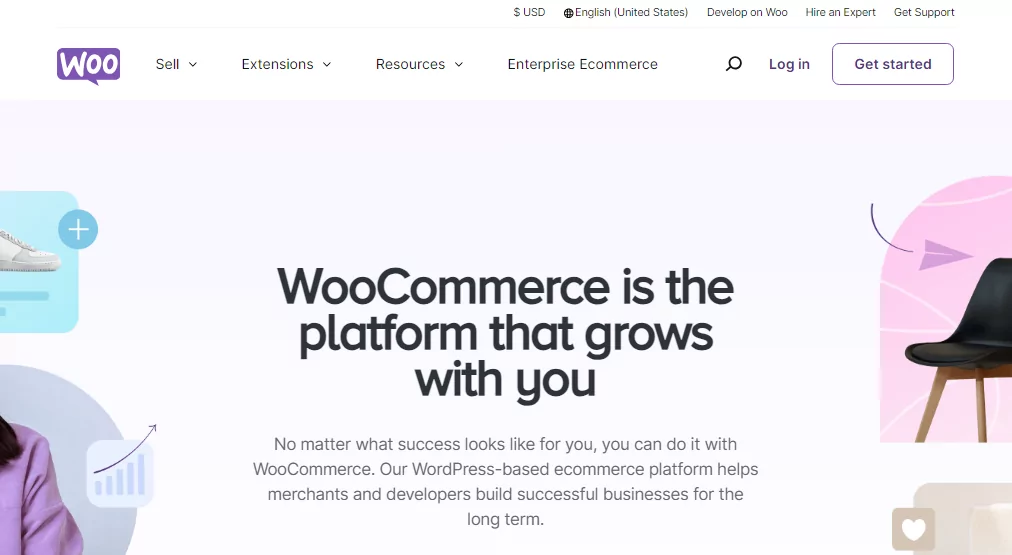
Ich bin hier vielleicht ein wenig voreingenommen, da ich ein riesiger Fan von WordPress bin, aber WooCommerce ist zweifellos eine der besten E-Commerce-Plattformen auf dem Markt.
Es ist ein leistungsstarkes Plugin zum Erstellen einer E-Commerce-Website mit dem WordPress-CMS.
Voller aufregender Funktionen und Optionen ist es leicht zu verstehen, warum WooCommerce laut über sieben Millionen aktive Installationen vorweist WordPress.org.
Erstens ist WooCommerce frei, wodurch Sie Ihren Onlineshop starten und mit dem Wachstum Ihres Unternehmens skalieren können. Dies bedeutet auch, dass Sie für immer die vollständige Kontrolle über die Inhalte und Daten Ihres Shops behalten.
Um Ihnen zu helfen, einen optisch ansprechenden Onlineshop zu erstellen, bietet WooCommerce über 85 hochwertige Themes. Sie können auch Ihr WordPress-Theme verwenden und haben so kreative Freiheit.
Und um die erforderliche Funktionalität hinzuzufügen, haben Sie mehr als 844 Erweiterungen.
WooCommerce ermöglicht es Ihnen, Banküberweisungen, Bargeld, Kreditkarten und mobile Zahlungen über mehr als 100 Zahlungsdienstleister, einschließlich PayPal und Stripe, zu akzeptieren.
Diese E-Commerce-Plattform unterstützt den internationalen Versand über beliebte Versanddienstleister wie FedEx, UPS, USPS und Royal Mail.
WooCommerce ist in mehrere Sprachen übersetzt. Darüber hinaus können Sie die E-Commerce-Plattform übersetzen und lokalisieren mit Hilfe von TranslatePress Plugin.
TranslatePress Mehrsprachig
Darüber hinaus können Sie WooCommerce integrieren mit WordPress-Chatbot-Plugins mehrsprachigen Kundensupport anbieten.
Wenn Sie Entwickler sind, können Sie WooCommerce über eine leistungsstarke REST-API und Webhooks mit praktisch jedem Dienst verbinden.
Hauptmerkmale:
- Kostenlos;
- Viele Themes und Erweiterungen;
- SEO-optimiert;
- Mehrere Zahlungsanbieter und Versandoptionen;
- Mehrsprachige Unterstützung;
- Bestandsverwaltung;
- Mobile App (Android und iOS);
- Exzellenter Kundensupport.
WooCommerce ist eine solide E-Commerce-Plattform zum Verkauf physischer und digitaler Produkte. Sie eignet sich am besten für kleine bis mittlere Unternehmen und alle, die gerne unter die Haube schauen.
Shopify

Als ich das erste Mal auf Shopify Vor ein paar Jahren war es eine ganz gewöhnliche E-Commerce-Plattform. Der Einrichtungsprozess war verwirrend und der Online-Shop-Baukasten war schwerfällig.
Aber seitdem hat sich viel zum Besseren verändert.
Heute ist Shopify eine leistungsstarke E-Commerce-Plattform, mit der Sie einen Onlineshop erstellen oder persönlich verkaufen können. Ihr vertrauen mehr als 4,5 Millionen Website-Besitzer weltweit.
Die Erstellung eines Shops ist unglaublich einfach, da Sie mit einer kostenlosen Testversion beginnen können, um alles einzurichten, bevor Sie vollständig starten.
Du hast ein Drag-and-Drop-Shop-Builder mit dem Sie Ihre Website ohne jegliche Programmierkenntnisse erstellen können. Meiner Meinung nach ist es jedoch gut für einfache Website-Designs.
Um Ihr Design anzupassen, haben Sie Zugriff auf 196 Themen. Um Funktionen hinzuzufügen, bietet Shopify über 8K-Apps.
Die Handelsplattform verarbeitet Zahlungen über Shopify Payments – deren integrierten Zahlungsabwickler. Sie können jedoch über mehr als 100 Zahlungs-Gateways von Drittanbietern gegen eine zusätzliche Gebühr Zahlungen akzeptieren.
Um bei der Versandlogistik zu helfen, gibt es das Shopify Fulfillment Network. Darüber hinaus unterstützt Shopify mehrere Währungen und Sprachen.
Shopify bietet schnelles, sicheres Hosting mit PCI-Konformität der Stufe 1 und einem 256-Bit-SSL-Zertifikat.
Hauptmerkmale:
- Integrierte SEO-Tools;
- Riesiger Theme-Store;
- Integrationen über Apps;
- Detaillierte Analysen;
- Starke Sicherheit;
- Verkaufsstelle;
- Integrierte Marketing-Tools;
- Großartiger 24/7-Kundenservice.
Shopify ist eine hervorragende E-Commerce-Plattform, um schnell einen Online-Shop zu eröffnen oder Zahlungen vor Ort entgegenzunehmen. Es werden vier Preispläne angeboten, die von $24 pro Monat bis zu $2.300 pro Monat reichen.
Wix E-Commerce
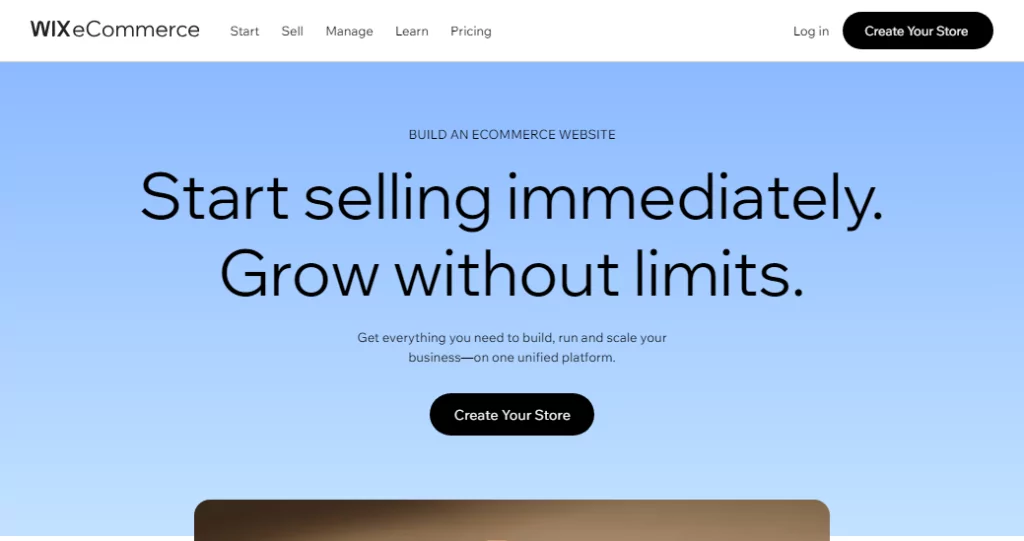
Ein weiterer starker Anwärter auf unserer Liste ist Wix E-Commerce, der E-Commerce-Lösung von Wix.com, der vertraut wird von 3+ Millionen Unternehmen.
Wix eCommerce ist eine remarkably easy-to-use E-Commerce-Plattform, die sich perfekt für absolute Anfänger eignet, unabhängig von deinen Programmierkenntnissen. Egal, ob du jemals zuvor einen Online-Shop erstellt hast oder nicht, diese Plattform hält dir den Rücken frei.
Die Erstellung eines Online-Shops ist superleicht, du könntest innerhalb einer Woche international verkaufen.
Sie können aus über 900 kostenlosen und vollständig anpassbaren Website-Vorlagen. Passe deine Vorlage mit dem intuitiven Wix Editor an, mit dem die Erstellung des perfekten Designs zum Kinderspiel wird.
Wenn Sie den Prozess beschleunigen möchten, haben Sie ein mächtiges KI-Website-Builder das übernimmt die ganze Schwerarbeit.
Um Ihre Website zu beschleunigen und Integrationen hinzuzufügen, bietet Wix eCommerce eine reichhaltige App-Markt mit Hunderten von Erweiterungen.
Sie können auf Ihrer Website, persönlich (entweder mit Wix Retail POS oder Wix Mobile POS) sowie auf beliebigen Marktplätzen (z. B. Amazon) verkaufen und alles zentral im Wix-Dashboard verwalten.
Der Versand mit Wix ist ein Vergnügen. Sie können vergünstigte Versandetiketten von zahlreichen Versanddienstleistern direkt in Ihrem Dashboard kaufen und drucken.
Dank Wix Multilingual, Währungsumrechner und über 80 Zahlungsanbietern ist der internationale Verkauf ein Kinderspiel.
Hauptmerkmale:
- Umfangreiche Vorlagenbibliothek;
- Robuster App-Markt;
- Integrierte Marketing-Tools;
- Blitzschnelles und sicheres Hosting;
- Wix-Editor;
- Wix Retail POS und Wix Mobile POS;
- KI-Website-Builder;
- Exzellenter 24/7-Support;
Wix eCommerce ist die perfekte Lösung, um schnell einen Onlineshop einzurichten. Sie können physische Güter, digitale Produkte und Dropshipping verkaufen (Wix Dropshipping-Plattform), Print-on-Demand und Abonnements.
Der Preis reicht von $29/Monat bis $159/Monat, um E-Commerce-Funktionen von der Basis bis hin zu fortgeschrittenen Funktionen freizuschalten.
BigCommerce
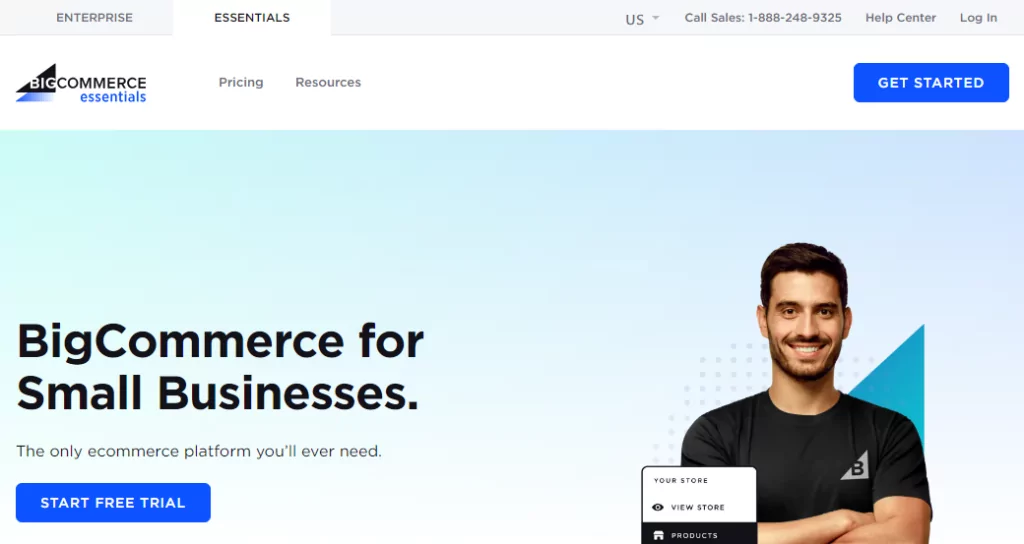
BigCommerce ist eine zuverlässige SaaS-E-Commerce-Plattform, der viele Unternehmen vertrauen, darunter bekannte Marken wie BMW, Johnnie Walker und General Electric.
Mit einer langen Liste an Funktionen auf Unternehmensebene und einer nahtlosen Implementierung gibt es nicht genug Worte, um BigCommerce gerecht zu werden. Aufgrund der enormen Anzahl an Funktionen gibt es für Anfänger eine leichte Lernkurve.
Sobald Sie ein Konto haben, erstellen Sie einen Shop, indem Sie eines der vielen auswählen und anpassen Themen in einem visuellen Page Builder. Das Beste daran ist, dass Sie HTML und CSS direkt bearbeiten können, um genau das Aussehen zu erzeugen, das Sie sich wünschen.
Zusätzlich können Sie Ihren Online-Shop dank des robusten BigCommerce App-Marktplatz mit Hunderten von leistungsstarken Unternehmensintegrationen. Sie können BigCommerce sogar in WordPress integrieren.
BigCommerce ermöglicht es Ihnen, ein echtes Cross-Channel-Erlebnis zu starten. Sie können auf mehreren Storefronts, Marktplätzen, in sozialen Medien und im Geschäft verkaufen – und das alles über ein einziges Dashboard.
Die E-Commerce-Plattform ermöglicht es Ihnen, Zahlungen in über 100 Währungen über verschiedene Zahlungs-Gateways wie PayPal, Stripe und Apple Pay ohne Transaktionsgebühren zu akzeptieren.
Der Versand erfolgt über ShipperHQ und eine Vielzahl weiterer Partner zu branchenführenden Tarifen.
BigCommerce ist mehrsprachig, sodass Sie Ihren Onlineshop mithilfe von Apps und Übersetzungs-APIs von Drittanbietern lokalisieren und übersetzen können.
Hauptmerkmale:
- Globales CDN für schnell ladende Onlineshops;
- Themen und Integrationen;
- Militärische Sicherheit;
- Berichterstattung und Analytik;
- Integrierte SEO-Funktionen;
- Unbegrenzte Bandbreite und Produktspeicherung bei allen Tarifen;
- Unbegrenzte Mitarbeiterkonten;
- Einzelhandels-Kassensystem;
- Mobiles App;
- Warenkorb-Abbrecher-Retter;
- Und vieles mehr!
Unter uns: BigCommerce ist ein Kraftpaket, das sich ideal für alle Unternehmen eignet, ob groß oder klein. Es ist robust und hochgradig skalierbar und dennoch relativ einfach zu bedienen.
Für kleine Unternehmen liegen die Preise zwischen $29/Monat und $299/Monat bei jährlicher Abrechnung. Für den Enterprise-Tarif müssen Sie sich an das Vertriebsteam wenden.
Webflow E-Commerce
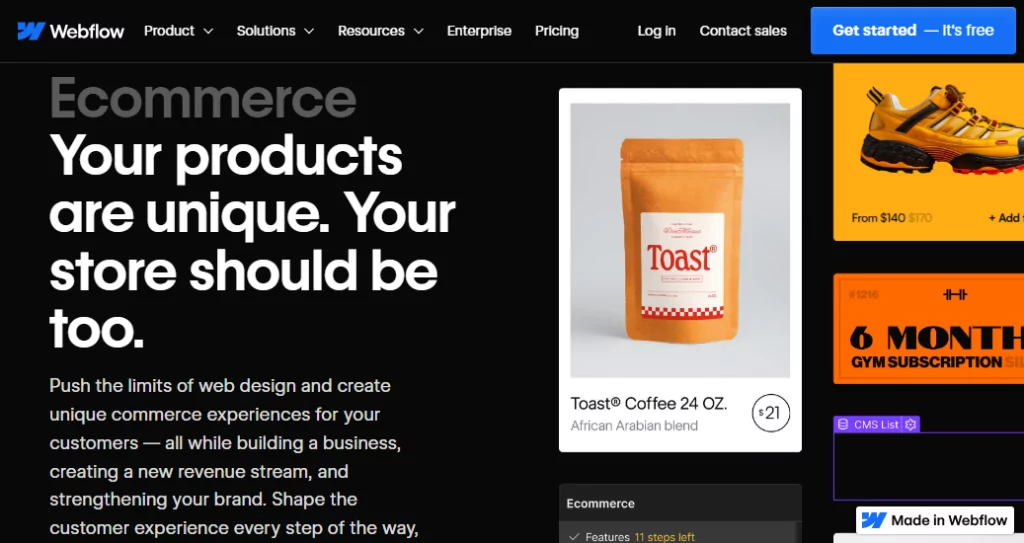
Das Schlusslicht bildet Webflow E-Commerce, eine agile E-Commerce-Plattform, mit der Sie ohne Programmierkenntnisse einen attraktiven E-Commerce-Shop erstellen können.
Und diese Typen glauben ihren eigenen Mist auch noch. Sie haben die Website Webflow.com – Sie ahnen es – mit Webflow erstellt!
Der Einstieg ist einfach und kostenlos. Dies führt Sie direkt zum visuellen Seiten-Builder mit Onboarding-Schritten. Hier wählen Sie aus, dass Sie einen E-Commerce-Shop erstellen möchten. Von dort aus können Sie mit dem Aufbau Ihres Online-Shops beginnen. Kinderleicht.
Man merkt, dass diese Leute Mühe in ihren Drag-and-Drop-Page-Builder (bekannt als Designer) gesteckt haben. Man beginnt mit einer leeren Website oder wählt aus 2.000 kostenlose und kostenpflichtige Vorlagen.
Um Ihrer Website mehr Funktionen und Leistung zu verleihen, schauen Sie sich die Webflow Apps Marketplace mit zahlreichen kostenlosen und kostenpflichtigen Integrationen. Sie können Ihren Shop auch mit Zapier verbinden, um noch mehr Dienste zu integrieren.
Webflow ermöglicht es Ihnen, physische und digitale Produkte zu verkaufen und Zahlungen in über 200 Ländern über Stripe, PayPal, Google Pay und Apple Pay zu akzeptieren.
Die Auftragsabwicklung ist mit Webflow ein Kinderspiel, da Sie benutzerdefinierte Versandregionen und -regeln einrichten können. Darüber hinaus können Sie Versandetiketten erstellen und die Sendungsverfolgung automatisieren.
Sie können Ihren Webflow Online-Shop ganz einfach im Designer lokalisieren und übersetzen.
Hauptmerkmale:
- Intuitiver Designer-Drag-and-Drop-Website-Builder;
- SEO-freundlich;
- Anpassbare Transaktions-E-Mails;
- 2.000 anpassbare Vorlagen;
- Ein recht großer App-Marktplatz;
- Analytik;
- Großartiger 24/7-Kundenservice.
Webflow ist eine brillante Lösung, um ganz ohne Anstrengung einen Onlineshop zu erstellen. Die E-Commerce-Plattform ist perfekt für Freiberufler, Agenturen und Unternehmen.
Die E-Commerce-Tarife reichen von $29 pro Monat bis zu $212 pro Monat bei jährlicher Abrechnung.
Und da sind wir.
Wir haben fünf der besten internationalen E-Commerce-Plattformen vorgestellt. In einem späteren Beitrag behandeln wir möglicherweise, wie man international über Online-Marktplätze wie Amazon, Alibaba, Walmart, Tmall, eBay, Wayfair und weitere verkauft.
Dennoch, welche E-Commerce-Website oder Plattform solltest du wählen? Hier ist meine kurze Einschätzung.
Zusammenfassung: Internationale E-Commerce-Websites
- WooCommerce – Meiner Ansicht nach die beste Gesamtlösung, wenn Sie eine vollwertige E-Commerce-Plattform aufbauen möchten. Sie ist außerdem ideal für alle, die gerne an Code und Einstellungen tüfteln. Je nach Inventar kann es etwas dauern, einen Onlineshop zu starten, aber es lohnt sich. Es gibt zahlreiche Anpassungsoptionen, mit denen man gerne herumprobiert, aber denken Sie daran, dass manche Erweiterungen teuer werden können.
- Shopify – Dies ist eine vielseitige E-Commerce-Plattform, mit der man schnell durchstarten kann. Der Funktionsumfang ist ansprechend, aber der Onlineshop-Baukasten ist meiner Erfahrung nach etwas gewöhnungsbedürftig. Insgesamt ist es eine gute Option, vor allem wenn man Dropshipping mit Oberlo und AliExpress in Betracht zieht.
- Wix E-Commerce – Eine fantastische E-Commerce-Plattform, speziell für absolute Anfänger. Sie bietet einen intuitiven visuellen Builder und viele Optionen, ohne die mentale Belastung komplexer Plattformen.
- BigCommerce – Eine leistungsstarke E-Commerce-Plattform, perfekt für Unternehmen und solche, die vor dem Wachstum stehen.
- Webflow E-Commerce – Entspricht Wix.
Also, was ist Ihre bevorzugte E-Commerce-Plattform? Bitte teilen Sie uns Ihre Gedanken und wie wir den Artikel verbessern können in den Kommentaren mit. Wenn Ihnen dieser Beitrag gefallen hat, gehen Sie nicht, ohne ihn zu teilen.
Viel Spaß beim Erstellen und auf deinen Erfolg!



Wenn Leute Themes und Plugins für WordPress international verkaufen, ist Freemius ebenfalls eine großartige Option.
Das stimmt, Nathan. Danke fürs Vorbeikommen und die Empfehlung.
Toller Beitrag, Freddy! Du hast internationale E-Commerce-Plattformen wirklich gut aufgeschlüsselt. Ich hätte nur eine kurze Frage: Wie würdest du vorschlagen, Funktionen und Kosten bei der Auswahl einer Plattform in Einklang zu bringen? Bei all den Optionen da draußen verliert man schnell mal den Überblick.
Hallo Rafael! Danke fürs Lesen und Kommentieren. Ich würde sagen, nimm die E-Commerce-Plattform mit den Funktionen, die dein Unternehmen braucht, aber bleibe in deinem Budget. Klärt das die Sache? Oder wie hast du das gemeint?