
En esta publicación
Creo que estará de acuerdo conmigo cuando digo que hay docenas de sitios web y plataformas de comercio electrónico internacionales que prometen el oro y el moro.
Esto puede hacer que la elección de la plataforma de comercio electrónico adecuada para su negocio sea confusa, si no desafiante.
Si eso no fuera suficiente, hay muchas preguntas que responder antes de decidir sobre una plataforma de comercio electrónico.
Por ejemplo…
- ¿La plataforma de comercio electrónico internacional ofrece todas las funciones que necesitas para tener éxito en línea?
- ¿La plataforma de comercio electrónico ofrece pasarelas de pago que funcionen para ti y tu público objetivo?
- ¿Tu presupuesto cubrirá los costos de la plataforma de comercio electrónico adecuada para tu negocio?
- ¿A qué retos te enfrentarás a la hora de vender a nivel internacional en la plataforma que hayas elegido?
- ¿Qué tan seguro es el sitio web o la plataforma de comercio electrónico?
- ¿La plataforma de comercio electrónico ofrece las integraciones que necesitas?
- Etc.
Además, todos los proveedores de plataformas de comercio electrónico buscan tu dinero. Es la cruda verdad.
Quiero decir.
Las páginas web y plataformas internacionales de comercio electrónico incluyen materiales de marketing muy atractivos, lo que hace difícil distinguir quién está de tu lado y quién te está engañando.
Por eso dedicamos muchas horas a probar varios sitios web y plataformas de comercio electrónico para ayudarte a tomar una decisión informada.
En el artículo de hoy, te ayudaremos a elegir la plataforma de comercio electrónico internacional adecuada para tu negocio, ya sea que estés abriendo una nueva tienda o buscando cambiar de proveedor.
Analizaremos las funciones, las integraciones, los precios y todo lo demás que hace que cada plataforma de comercio electrónico destaque frente a la competencia.
Antes del final del artículo, deberías tener todo lo que necesitas para elegir la plataforma de comercio electrónico adecuada para internacionalizar tu negocio.
Sin más preámbulos, vamos a empezar.
¿Qué son los Sitios y Plataformas de Comercio Electrónico Internacional?

Lo primero es lo primero. ¿Qué son los sitios o plataformas de comercio electrónico internacional?
Antes de perdernos en los detalles, creemos que es importante tener una imagen clara de con qué estamos trabajando.
Entonces, ¿qué es un sitio web o plataforma de comercio electrónico internacional?
Una plataforma de comercio electrónico es una solución de software que te permite crear y administrar una tienda en línea. Ofrece una gran variedad de funciones para ayudar a las empresas a estar en línea rápidamente.
Estas características incluyen alojamiento, diseño, seguridad, gestión de inventario, procesamiento de pagos y herramientas de marketing, entre otras cosas.
En términos generales, una plataforma de comercio electrónico internacional puede referirse a dos cosas.
#1. Sitios web de comercio electrónico internacional, ya sean autohospedados o SaaS
Primero, tenemos soluciones de software (ya sea autohospedadas o SaaS) que te ayudan a crear y ejecutar una tienda en línea. Ejemplos principales incluyen soluciones como Shopify, BigCommerce, y WooCommerce.
Entonces, ¿cuál es la diferencia entre las plataformas de comercio electrónico autoalojadas y las SaaS?
Autohospedado significa que te encargas del registro del dominio, el diseño del sitio web, el alojamiento y el mantenimiento. Tienes control total sobre tu tienda en línea y puedes hacer prácticamente lo que desees, siempre que esté dentro de los límites de la ley.
En otras palabras, eres dueño de un sitio web de comercio electrónico y tomas las decisiones.
SaaS, cuyas siglas en inglés significan "Software as a Service" (Software como Servicio), implica que el proveedor internacional de sitios web de comercio electrónico se encarga del alojamiento, la seguridad y otras tareas administrativas.
Te centras principalmente en construir tu tienda en línea. Si bien tienes menos tareas administrativas, tienes un control limitado sobre tu tienda en línea.
Por ejemplo, podrías encontrar difícil personalizar completamente el diseño de tu tienda en línea.
En cualquier caso, estás creando una tienda de comercio electrónico desde cero y tienes control total (o al menos en cierta medida) sobre tu negocio en línea.
#2. Plataformas de comercio electrónico
Segundo, tenemos lo que llamamos mercados en línea.
Un mercado en línea es una plataforma de comercio electrónico que te permite “alquilar” una tienda en línea. No eres propietario de la plataforma y deberás seguir los requisitos establecidos por tu proveedor de plataforma de comercio electrónico.
Algunos buenos ejemplos de plataformas de comercio electrónico de este tipo incluyen Centro de Vendedores de Alibaba, Mercado de Walmart, y el Vendedores de Amazon programa.
Así que, en lugar de crear tu tienda online desde cero, le pagas a Walmart o Amazon una tarifa mensual recurrente por vender en su plataforma. Espero que tenga sentido.
Más adelante en la publicación cubriremos el primer tipo de plataformas de comercio electrónico, para que usted pueda elegir cuál es la adecuada para su modelo de negocio. No entraremos en mercados en línea.
Examinemos algunos beneficios de los sitios web y plataformas de comercio electrónico internacional. O mejor dicho, las ventajas de vender internacionalmente.
Beneficios de los sitios web y plataformas de comercio electrónico internacional

Al principio, comercio electrónico transfronterizo puede parecer intimidante para un principiante. Hay muchas partes móviles que necesitan lubricación y mejora constantes, lo que disuade a muchos aspirantes a empresarios.
¿Pero sabías que vender internacionalmente usando sitios web y plataformas de comercio electrónico tiene varios beneficios atractivos?
Así es, y en esta sección, cubriremos algunas ventajas de llevar su negocio a nivel mundial.
Vamos a sumergirnos.
Alcance Global Ampliado
Ampliar el alcance global es uno de los beneficios más obvios de los sitios y plataformas de comercio electrónico internacional.
Has hecho la preparación, has cultivado relaciones e incluso traduje tu contenido a varios idiomas.
¿Y ahora qué?
Si quieres internacionalizar tu negocio de verdad, una plataforma de comercio electrónico internacional te ofrece acceso al diverso mercado mundial que necesitas.
Puedes acceder a nuevas audiencias y vender a personas en diferentes países y regiones lingüísticas con unos pocos clics del ratón.
Por ejemplo, el programa de vendedor de Amazon te da acceso a más de 310 millones de clientes en todo el mundo. Walmart Marketplace te otorga acceso a más de 220 millones de clientes.
Pero incluso si eliges una plataforma de comercio electrónico internacional autohospedada como WooCommerce (o una alternativa SaaS como Shopify), no hay daño en expandir tu alcance global.
Además, llegar a una audiencia internacional es una forma fantástica de aumentar el conocimiento de la marca, la credibilidad y la confianza con los compradores globales.
Aumento de Ingresos
El segundo beneficio de los sitios y plataformas de comercio electrónico internacionales es el aumento de las ventas y los ingresos.
Vamos. ¿No es obvio?
Vender a una audiencia global diversa y numerosa te permite aumentar tus ventas e ingresos de manera notable. Por supuesto, esto lo comparamos con tus competidores que aún no se han internacionalizado.
Hay innumerables ejemplos de empresas que implementaron con éxito expansión en el mercado internacional.
Probablemente tengas varios productos de marcas globales en tu hogar u oficina. Y probablemente hayas comprado estos artículos en una plataforma de comercio electrónico.
Las plataformas de comercio electrónico internacionales te ofrecen la oportunidad de satisfacer una demanda de tus productos en países donde los clientes nunca supieron que existías.
Además, llegar a una audiencia global más amplia te ayuda a diversificar tu mercado. Esto evita la dependencia de un único flujo de ingresos de un solo país, mercado o región.
Económico y disponible las 24 horas del día, los 7 días de la semana
Otro beneficio de los sitios y plataformas de comercio electrónico internacionales es que normalmente son rentables de configurar y operar.
Es mucho más rentable lanzar plataformas de comercio electrónico que establecer tiendas físicas en varios países.
No tienes que preocuparte por gastos como el alquiler, los servicios públicos y el personal en múltiples ubicaciones. Además, los sitios web de comercio electrónico internacionales te permiten automatizar procesos, lo que reduce aún más tus costos.
Además, recuerda que dijimos que estas plataformas son soluciones de software. Ponlo en marcha y el sitio web funcionará las 24 horas del día.
Los clientes pueden comprar rápido y a cualquier hora, lo cual es conveniente y reduce el costo de generar ventas.
Otra cosa. Las plataformas de comercio electrónico internacionales vienen con integraciones y servicios que agilizan el proceso de cumplimiento de pedidos. Esto te ahorra mucho tiempo y dinero. Por ejemplo, muchas plataformas de comercio electrónico te ayudarán con gusto con el almacenamiento y el envío.
Datos del cliente
Otra gran ventaja de las plataformas de comercio electrónico internacionales es que te ayudan a recopilar muchos datos de clientes sin esfuerzo.
Las plataformas de comercio electrónico vienen con paneles, herramientas e informes detallados que le permiten comprender mejor el comportamiento del cliente, la demografía, las preferencias y los puntos débiles.
Puedes usar estos datos para tomar mejores decisiones comerciales, mejorar tus productos y aumentar las ventas.
Personalización y Localización
Dado que entienden mejor a sus clientes, las plataformas de comercio electrónico facilitan notablemente la personalización de las experiencias de los compradores.
Con los datos que recopilas, puedes adaptar tus productos y servicios a las necesidades del cliente, lo que crea una experiencia de compra personalizada y más gratificante.
Además, puedes refinar tu contenido y tus mensajes de marketing para que resuenen mejor con los clientes, lo que se traduce en más ventas a posteriori.
Finalmente, puedes localizar fácilmente tu sitio web y productos para conectarte mejor con clientes en diferentes regiones geográficas y lingüísticas.
Otros beneficios de las plataformas de comercio electrónico internacionales
Las anteriores son solo cinco ventajas de las plataformas de comercio electrónico. Otros beneficios rápidos incluyen:
- Publicidad y marketing asequibles;
- Fácil comparación de productos y precios;
- Respuesta más rápida a las demandas de los clientes y del mercado;
- Fácil de escalar;
- Costos de ventas y atención al cliente reducidos;
- Ventas adicionales y ventas cruzadas;
- Gestión eficiente del inventario;
- Funciones de creación de comunidad e integraciones con redes sociales;
- Y más.
Como puede ver, invertir en una plataforma de comercio electrónico tiene muchas ventajas que hacen que valga la pena.
¿Pero hay desventajas? Claro que sí, cualquier cosa que tenga ventajas viene con desventajas.
Desventajas de los sitios web y plataformas de comercio electrónico internacionales

Antes de iniciar una tienda en línea en cualquier plataforma de comercio electrónico internacional que compartiremos más adelante en el artículo, es importante aprender un poco sobre los posibles problemas a los que podrías enfrentarte.
De ese modo, sabes qué esperar y puedes prepararte de antemano. Al mismo tiempo, te ahorrará mucho estrés innecesario, dinero y tiempo más adelante.
Digo esto porque algunos de estos problemas son costosos y requieren mucho tiempo. También pueden reflejarse negativamente en la imagen de su marca y su reputación.
Entonces, ¿cuáles son los desafíos de vender en sitios web y plataformas de comercio electrónico internacionales?
Continúe leyendo para obtener más información.
Problemas de seguridad
Primero, la seguridad de los datos es uno de los desafíos más comunes que enfrenta cualquier persona con un sitio web.
De vez en cuando, leemos sobre filtraciones de datos costosas que expusieron información confidencial de los usuarios. Esto incluye nombres, números de teléfono, números de tarjetas de crédito y números de seguro social.
Si eres un negocio de comercio electrónico en la industria de la salud, esto incluye registros médicos confidenciales que no quieres que caigan en manos equivocadas.
Es importante usar el el mejor EMR para consultorios pequeños para garantizar que estos registros estén protegidos y se manejen adecuadamente.
Por ejemplo, cuando Yahoo fue pirateado en 2016, la brecha expuso los detalles de los tres mil millones de usuarios de Yahoo. Los datos robados incluyeron nombres, direcciones de correo electrónico y contraseñas.
Normalmente, estas filtraciones de datos acarrean enormes pérdidas, multas y problemas legales. Por ejemplo, Yahoo pagó aproximadamente $470 millones para sufragar las investigaciones, los acuerdos extrajudiciales, las medidas correctoras y la gestión de daños.
Otra empresa, Equifax, gastó $1.4 mil millones en solucionar los problemas derivados de una filtración de datos que se habría evitado si hubieran renovado su certificado de seguridad.
Yo también he estado pirateado antes, así que sé lo frustrantes que pueden ponerse las cosas.
Mi punto es que la seguridad es una gran preocupación para los negocios de comercio electrónico.
Nuestra recomendación es elegir una plataforma de comercio electrónico que priorice la seguridad. Si vas a optar por la vía autohospedada, asegúrate de contar con seguridad de nivel militar para tu tienda en línea o contrata a un profesional.
Por ejemplo, use certificados SSL, cortafuegos, copias de seguridad y pasarelas de pago seguras para proteger los datos de sus clientes.
Alta competencia
Emprender por cuenta propia o lanzar una tienda en línea para su negocio existente es emocionante.
En el fragor del momento, es posible que pases por alto que el comercio electrónico es altamente competitivo porque tiene una baja barrera de entrada.
O sea. Puedes abrir una tienda en línea en Shopify y estar en funcionamiento hoy mismo.
Además de eso, algunos nichos están superpoblados, lo que puede hacer que vender tus productos o servicios sea un desafío.
La mayoría de la gente suele gastar más en publicidad, lo que puede ayudarle a correr la voz.
Sin embargo, existen otras formas rentables de promoción de sitios web, como SEO, correo electrónico, y traducción de marketing.
Hay muchas otras formas de llamar la atención, pero el éxito de tu tienda en línea se reduce en última instancia a lo mucho que trabajes.
Problemas técnicos
Si bien la mayoría de los sitios web de comercio electrónico internacional suelen ser fáciles de usar, el proceso manual de creación de una tienda en línea puede resultar difícil para las personas que no son expertas en tecnología.
Configurar un sitio web de comercio electrónico funcional puede requerir que tengas habilidades técnicas en diseño web, SEO y optimización del rendimiento.
De lo contrario, podrías terminar con un sitio web lento y difícil de usar.
Aparte de eso, es posible que necesites conocimientos técnicos para solucionar los problemas que puedan surgir.
Por ejemplo, debes tener las habilidades para solucionar problemas con procesadores de pagos, incompatibilidad de complementos, diseño roto y más.
Si tu sitio web de comercio electrónico se cae, probablemente perderás ventas y clientes. Vale la pena tener algunas habilidades básicas para solucionar el problema y arreglarlo rápidamente.
Lo mejor es mantener tu sitio web de comercio electrónico simple, pero si te faltan conocimientos técnicos, te recomendamos contratar a un experto.
Logística de envío
Otro desafío al que a menudo se enfrentan las empresas de comercio electrónico es la logística de envío.
El envío normalmente no es un problema si vendes en una tienda física, ya que los clientes entran y compran.
Y si alguna vez necesitas enviar algo a un cliente, siempre puedes usar servicios de mensajería local.
Al vender en línea, las cosas son diferentes ya que estás atendiendo a una audiencia global y dependerás de servicios de envío tanto locales como internacionales.
Aquí es donde las cosas se ponen difíciles.
Normalmente, cuando la gente compra en línea, a menudo paga extra por el envío.
Estos costos de envío adicionales se basan en factores como el peso del producto, el destino, el método de entrega, la distancia, las aduanas y más. Por ejemplo, la entrega en el mismo día a menudo cuesta más que la entrega estándar.
Los costos de envío se suman al precio total del producto.
Si el precio total de la compra es demasiado alto debido a estas tarifas de envío, podría desanimar a los compradores a completar las compras.
Al mismo tiempo, calcular mal estas tarifas adicionales podría mermar sus márgenes de beneficio.
Ahora que conocemos los beneficios y desafíos de las plataformas de comercio electrónico internacional, echemos un vistazo a algunos de los mejores actores del sector.
Los Mejores Sitios y Plataformas de Comercio Electrónico Internacional
No hemos enumerado los siguientes sitios web y plataformas de comercio electrónico en ningún orden en particular.
Haz tu debida diligencia antes de elegir, y selecciona siempre una solución que se adapte a las necesidades de tu negocio.
Entonces, ¿cuál es la mejor plataforma de comercio electrónico internacional?
Empecemos.
WooCommerce
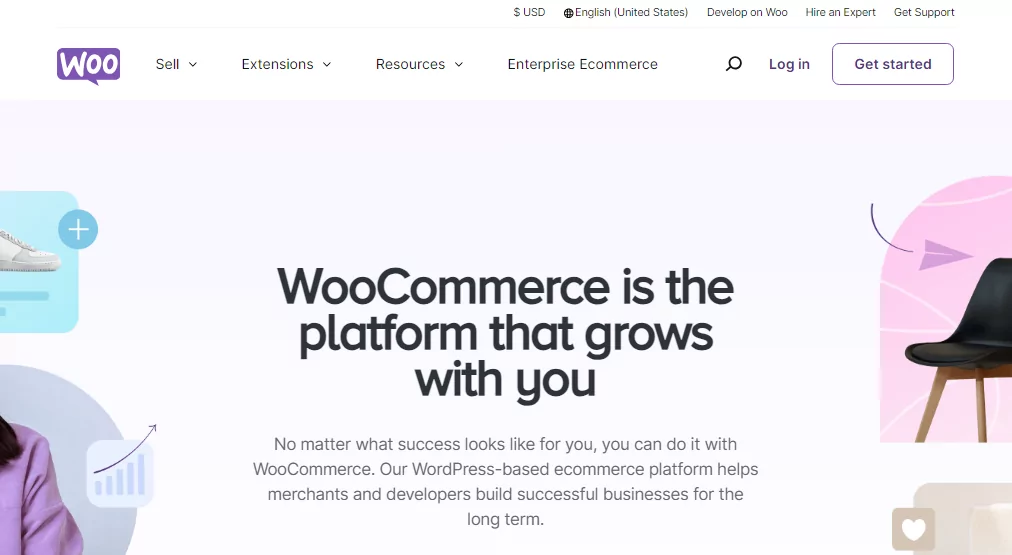
Puede que sea un poco parcial aquí porque soy un gran fan de WordPress, pero WooCommerce es sin duda una de las mejores plataformas de comercio electrónico que existen.
Es un potente complemento para crear un sitio web de comercio electrónico utilizando el CMS de WordPress.
Repleto de muchas funciones y opciones emocionantes, es fácil ver por qué WooCommerce tiene más de siete millones de instalaciones activas, según WordPress.org.
En primer lugar, WooCommerce es gratis, lo que te permite iniciar tu tienda en línea y escalar a medida que tu negocio crece. Esto también significa que tienes la propiedad absoluta del contenido y los datos de tu tienda para siempre.
Para ayudarte a crear una tienda en línea visualmente atractiva, WooCommerce ofrece más de 85 temas de primera calidad. También puedes usar tu tema de WordPress, lo que te otorga libertad creativa.
Y para añadir la funcionalidad requerida, tienes más de 844 extensiones.
WooCommerce te permite aceptar transferencias bancarias, efectivo, tarjetas de crédito y pagos móviles utilizando más de 100 pasarelas de pago, incluyendo PayPal y Stripe.
Esta plataforma de comercio electrónico admite envíos internacionales a través de transportistas populares, como FedEx, UPS, USPS y Royal Mail.
WooCommerce está traducido a varios idiomas. Además, puedes traducir y localizar la plataforma de comercio electrónico utilizando el TranslatePress complemento.
TranslatePress Multilingüe
Además, puedes integrar WooCommerce con Plugins de chatbots para WordPress ofrecer atención al cliente multilingüe.
Si eres desarrollador, puedes conectar WooCommerce con prácticamente cualquier servicio utilizando una potente API REST y webhooks.
Características clave:
- Gratis;
- Muchos temas y extensiones;
- Optimizado para SEO;
- Múltiples pasarelas de pago y opciones de envío;
- Soporte multiidioma;
- Gestión de inventarios;
- Aplicación móvil (Android e iOS);
- Excelente servicio al cliente.
WooCommerce es una sólida plataforma de comercio electrónico para vender productos físicos y digitales. Es ideal para pequeñas y medianas empresas y para cualquiera a quien le guste mirar bajo el capó.
Shopify

Cuando me encontré por primera vez Shopify hace unos años, era una plataforma de comercio electrónico común y corriente. El proceso de configuración era confuso y el creador de tiendas en línea era poco intuitivo.
Pero muchas cosas han cambiado para mejor desde entonces.
Hoy en día, Shopify es una potente plataforma de comercio electrónico que te ayuda a crear una tienda online o a vender en persona. Cuenta con la confianza de más de 4,5 millones propietarios de sitios web a nivel mundial.
Crear una tienda es increíblemente fácil, ya que puedes comenzar con una prueba gratuita para configurar todo antes de hacer el lanzamiento oficial.
Tienes un constructor de tiendas de arrastrar y soltar que te permite crear tu sitio web sin ningún conocimiento de programación. Sin embargo, en mi opinión, es bueno para diseños de sitios web simplistas.
Para personalizar tu diseño, tienes acceso a 196 temas. Para añadir funcionalidad, Shopify incluye más de aplicaciones 8k.
La plataforma de comercio procesa los pagos a través de Shopify Payments, su procesador de pagos integrado. Sin embargo, puedes aceptar pagos a través de más de 100 pasarelas de pago de terceros, pero con una comisión adicional.
Para ayudar con la logística de envíos, dispones de Shopify Fulfillment Network. Además, Shopify admite múltiples monedas e idiomas.
Shopify ofrece un alojamiento rápido y seguro con cumplimiento de PCI de nivel 1 y un certificado SSL de 256 bits.
Características clave:
- Herramientas de SEO integradas;
- Amplia tienda de temas;
- Integraciones a través de aplicaciones;
- Análisis detallados;
- Seguridad fuerte;
- Punto de venta;
- Herramientas de marketing integradas;
- Excelente atención al cliente 24/7.
Shopify es una plataforma de comercio electrónico excelente para poner en marcha una tienda online o empezar a aceptar pagos presenciales rápidamente. Ofrece cuatro planes de precios que van desde $24 al mes hasta $2.300 al mes.
Wix Comercio Electrónico
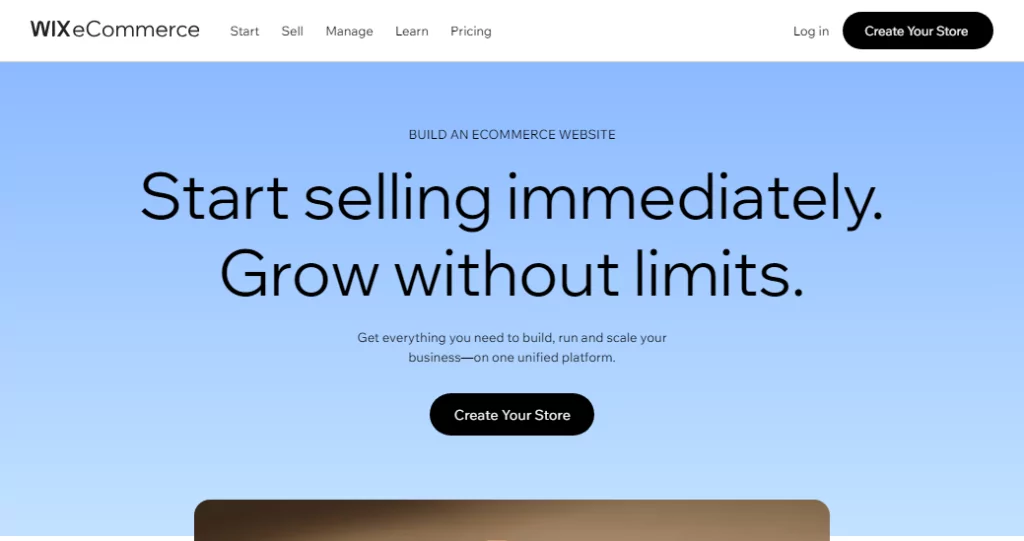
Otro fuerte contendiente en nuestra lista es Wix Comercio Electrónico, la solución de comercio electrónico de Wix.com en la que confían más de 3 millones empresas.
Wix eCommerce es una plataforma de comercio electrónico notablemente fácil de usar, perfecta para principiantes absolutos, sin importar sus conocimientos de programación. Hayas construido o no alguna vez una tienda en línea, esta plataforma te respalda.
Crear una tienda en línea es súper fácil y podrías estar vendiendo internacionalmente en una semana.
Puedes elegir entre más de 900 opciones gratuitas y totalmente personalizables plantillas de sitios web. Personaliza tu plantilla utilizando el intuitivo Editor de Wix que hace que crear el diseño perfecto sea muy fácil.
Si quieres acelerar el proceso, tienes un poderoso Creador de sitios web con IA eso hace todo el trabajo pesado.
Para potenciar tu sitio y agregar integraciones, Wix eCommerce ofrece una gran variedad mercado de aplicaciones con cientos de extensiones.
Puedes vender en tu sitio web, en persona (usando Wix Retail POS o Wix Mobile POS), en marketplaces populares (por ejemplo, Amazon), y gestionarlo todo desde el panel de control de Wix.
Hacer envíos con Wix es una maravilla. Puedes comprar e imprimir etiquetas de envío con descuento de numerosas empresas de transporte directamente desde tu panel de control.
Vender internacionalmente es fácil gracias a Wix Multilingual, el conversor de moneda y más de 80 proveedores de pagos.
Características clave:
- Extensa biblioteca de plantillas;
- Mercado de aplicaciones robusto;
- Herramientas de marketing integradas;
- Alojamiento ultrarrápido y seguro;
- Editor de Wix;
- Wix Retail POS y Wix Mobile POS;
- Creador de sitios web con IA;
- Excelente soporte 24/7;
Wix eCommerce es la solución perfecta para configurar una tienda en línea rápidamente. Puedes vender productos físicos, productos digitales, dropshipping (Plataforma de Dropshipping de Wix), impresión bajo demanda y suscripciones.
El precio oscila entre $29 al mes y $159 al mes para acceder a funciones de comercio electrónico, desde las básicas hasta las avanzadas.
BigCommerce
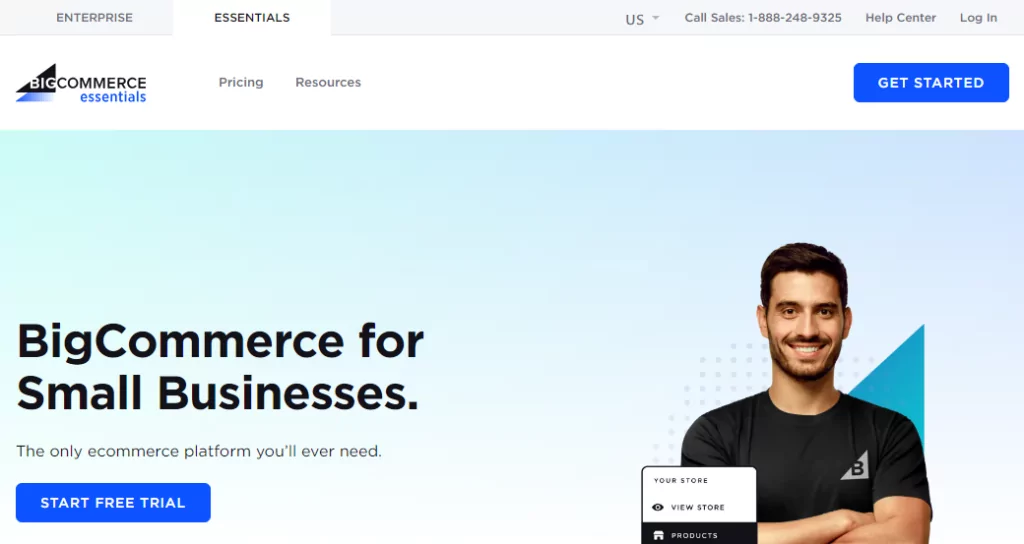
BigCommerce es una plataforma de comercio electrónico SaaS confiable en la que confían muchas empresas, incluidas marcas reconocidas como BMW, Johnnie Walker y General Electric.
Con una larga lista de características de nivel empresarial y una implementación perfecta, no hay suficientes palabras para hacer justicia a BigCommerce. Debido a la gran cantidad de funciones, hay una ligera curva de aprendizaje para los principiantes.
Una vez que tengas una cuenta, creas una tienda eligiendo y personalizando una de las muchas temas en un creador de páginas visual. La mejor parte es que puedes editar HTML y CSS directamente para crear exactamente el aspecto que deseas.
Además, puedes ampliar aún más tu tienda en línea gracias a la robusta Mercado de aplicaciones de BigCommerce con cientos de potentes integraciones empresariales. Incluso puedes integrar BigCommerce con WordPress.
BigCommerce te permite lanzar una experiencia verdaderamente multicanal. Puedes vender en múltiples escaparates, mercados, redes sociales y en la tienda, todo desde un único panel.
La plataforma de comercio electrónico le permite aceptar pagos en más de 100 monedas a través de múltiples pasarelas de pago como PayPal, Stripe y Apple Pay sin comisiones por transacción.
Los envíos se gestionan a través de ShipperHQ y una serie de otros socios con tarifas líderes en la industria.
BigCommerce es multilingüe, lo que le permite localizar y traducir su tienda en línea utilizando aplicaciones y API de traducción de terceros.
Características clave:
- CDN global para tiendas en línea de carga rápida;
- Temas e integraciones;
- Seguridad de grado militar;
- Informes y análisis;
- Funciones de SEO integradas;
- Ancho de banda y almacenamiento de productos ilimitados en todos los planes;
- Cuentas de personal ilimitadas;
- Punto de venta minorista;
- Aplicación móvil;
- Recuperador de carritos abandonados;
- ¡Y mucho más!
Entre tú y yo, BigCommerce es una potencia ideal para todos los negocios, grandes o pequeños. Es robusta y altamente escalable, pero relativamente fácil de usar.
Para las pequeñas empresas, los precios oscilan entre $29 al mes y $299 al mes, con facturación anual. Para conocer su plan Enterprise, debes ponerte en contacto con su equipo de ventas.
Webflow Comercio electrónico
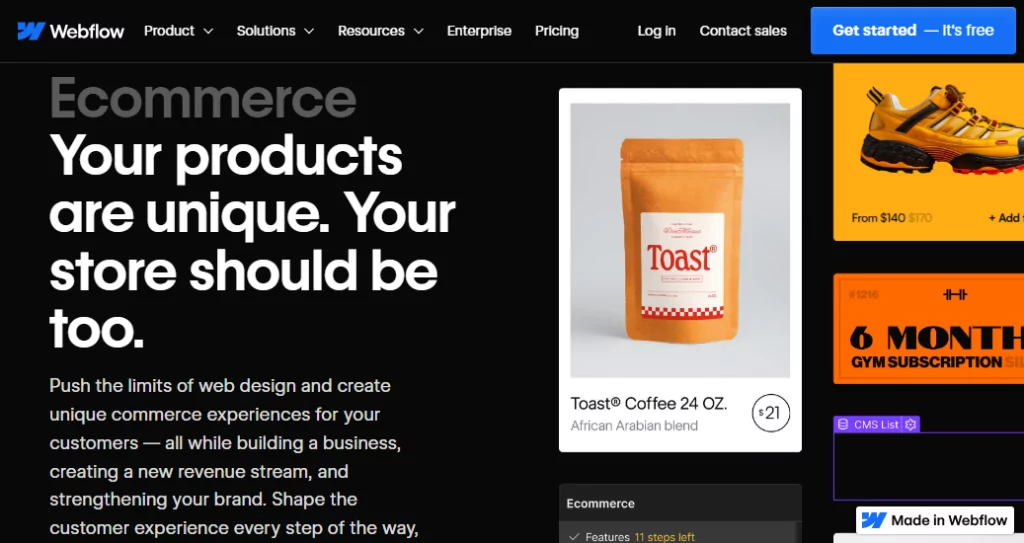
Cerrando la marcha es Webflow Comercio electrónico, una plataforma de comercio electrónico ágil que te ayuda a crear una tienda online atractiva sin necesidad de saber programar.
Y estos tipos también se creen su propio cuento. ¡Construyeron el sitio web Webflow.com usando, adivinaste, Webflow!
Empezar es fácil y gratis. Esto te lleva directamente al creador de páginas visuales con pasos de incorporación. Aquí eliges que quieres crear una tienda de comercio electrónico. A partir de ahí, puedes empezar a construir tu tienda en línea. Tan fácil como A, B, C.
Se nota que esta gente se ha esforzado en su creador de páginas de arrastrar y soltar (conocido como Designer). Comienzas con un sitio en blanco o eliges entre 2000 plantillas gratuitas y de pago.
Para añadir más funciones y potencia a tu sitio web, consulta la Mercado de aplicaciones de Webflow con una gran variedad de integraciones gratuitas y de pago. También puedes conectar tu tienda a Zapier para integrarla con aún más servicios.
Webflow te permite vender productos físicos y digitales y aceptar pagos en más de 200 países utilizando Stripe, PayPal, Google Pay y Apple Pay.
El cumplimiento de pedidos es muy sencillo con Webflow, ya que puedes configurar regiones y reglas de envío personalizadas. Además, puedes crear etiquetas de envío y automatizar el seguimiento de pedidos.
Puedes localizar y traducir fácilmente tu tienda online de Webflow en el Diseñador.
Características clave:
- Creador de sitios web de arrastrar y soltar con diseño intuitivo;
- Optimizado para SEO;
- Correos electrónicos transaccionales personalizables;
- 2000 plantillas personalizables;
- Un mercado de aplicaciones considerable;
- Analítica;
- Excelente atención al cliente 24/7.
Webflow es una solución brillante para crear una tienda en línea sin sudar la camiseta. La plataforma de comercio electrónico es perfecta para autónomos, agencias y empresas.
Los planes de comercio electrónico oscilan entre $29 al mes y $212 al mes, con facturación anual.
Y aquí estamos.
Hemos cubierto cinco de las mejores plataformas de comercio electrónico internacional. En una próxima publicación, es posible que cubramos cómo vender a internacionalmente con mercados en línea como Amazon, Alibaba, Walmart, Tmall, eBay, Wayfair y más.
Dicho esto, ¿qué sitio web o plataforma de comercio electrónico deberías elegir? Aquí tienes mi opinión rápida.
Resumen: Sitios web de comercio electrónico internacional
- WooCommerce – La mejor opción en general, en mi opinión, si quieres crear una plataforma de comercio electrónico completa. También es ideal para quienes disfrutan trasteando con el código y la configuración. Puede llevar tiempo lanzar una tienda en línea dependiendo de tu inventario, pero vale la pena. Tienes un montón de opciones de personalización con las que es divertido experimentar, pero recuerda que algunas extensiones pueden encarecerse.
- Shopify – Esta es una plataforma de comercio electrónico versátil para empezar a funcionar rápidamente. El conjunto de funciones es atractivo, pero el creador de la tienda online es un poco peculiar según mi experiencia. En general, es una buena opción, especialmente si estás considerando el dropshipping usando Oberlo y AliExpress.
- Wix comercio electrónico – Una plataforma de comercio electrónico fabulosa, especialmente para principiantes absolutos. Tienes un creador visual intuitivo y muchas opciones sin la tensión mental de las plataformas complejas.
- BigCommerce – Una potente plataforma de comercio electrónico perfecta para empresas y negocios en pleno crecimiento.
- Webflow Comercio electrónico – Lo mismo que Wix.
Entonces, ¿cuál es tu plataforma de comercio electrónico favorita? Por favor, comparte tus opiniones y cómo podemos mejorar el artículo en la sección de comentarios. Si te encantó esta publicación, no te vayas sin compartirla.
¡Feliz creación y por tu éxito!



Si la gente vende temas y complementos para WordPress a nivel internacional, Freemius también es una gran opción.
Así es, Nathan. Gracias por pasar y por la recomendación.
¡Gran publicación, Freddy! Has analizado muy bien las plataformas de comercio electrónico internacional. Una pregunta rápida, sin embargo: ¿cómo sugerirías equilibrar las características frente a los costos al elegir una plataforma? Es fácil abrumarse con tantas opciones disponibles.
¡Hola Rafael! Gracias por leer y comentar. Yo diría que elijas la plataforma de comercio electrónico que tenga las características que tu negocio necesita, pero manteniéndote dentro de tu presupuesto. ¿Te aclara eso las cosas? ¿O a qué te referías?