
In this post
In this post
Translation technology has had a massive shift in 2025. For instance, machine translation moved from a burgeoning and useful technology to a piece of foundational multilingual infrastructure. The question for you as a WordPress site owner is no longer whether to use automatic website translation, but how to implement it effectively. There’s also neural machine translation to contend with, which is simply how AI models translate between languages.
I’m going to walk you through the key developments in machine translation as we’re getting deep into 2026. However, to do this, we need to look back at the changes in 2025 and discover what this ‘butterfly effect’ has on 2026.
How 2025’s Multilingual Developments Have Set Up Progress in 2026
The language services market is valued in the billions and continues to grow. The reason isn’t so much market expansion, but more businesses integrating automatic translation into its workflows as the quality has improved. As such, you have the biggest players developing richer services.
For instance, Google announced two major Gemini-powered updates to Google Translate in August 2025: a live translate option for real-time conversations and language practice functionality for language learning.
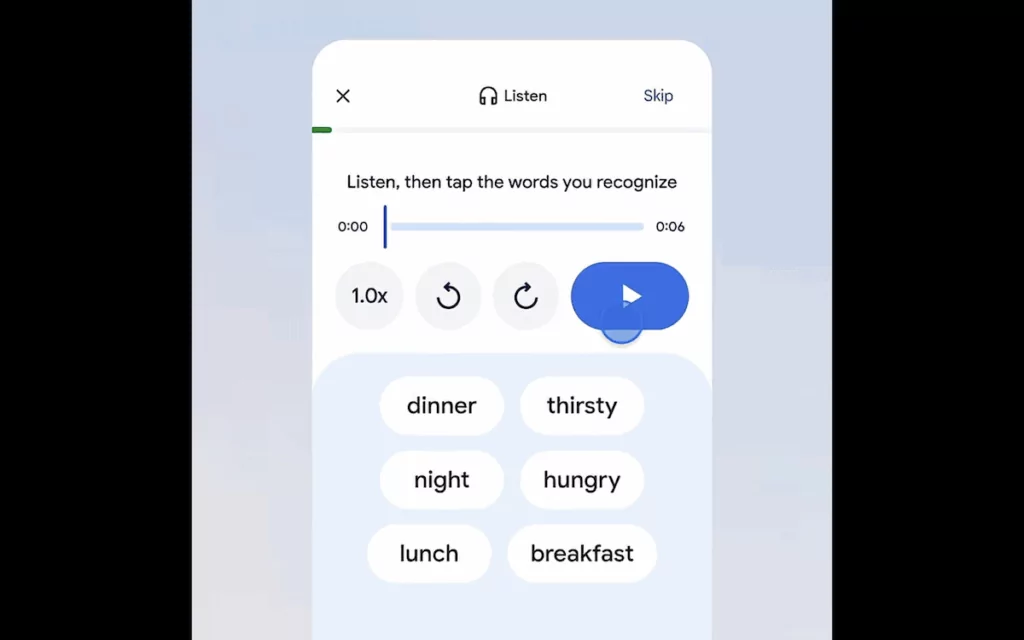
The live translation capabilities let you have back-and-forth conversations in real time with audio and on-screen translations in more than 70 languages. It’s designed to work in noisy real-world environments using advanced voice and speech recognition models trained to isolate sounds.
The system intelligently identifies conversational pauses, accents, and intonations to give you more natural-sounding conversations. Also, it switches between the two languages being spoken without your input.
DeepL also made several announcements throughout 2025. For example, the API was expanded with a next-generation language model and DeepL API for Write. The numbers from DeepL look impressive, although there have been other developments too.
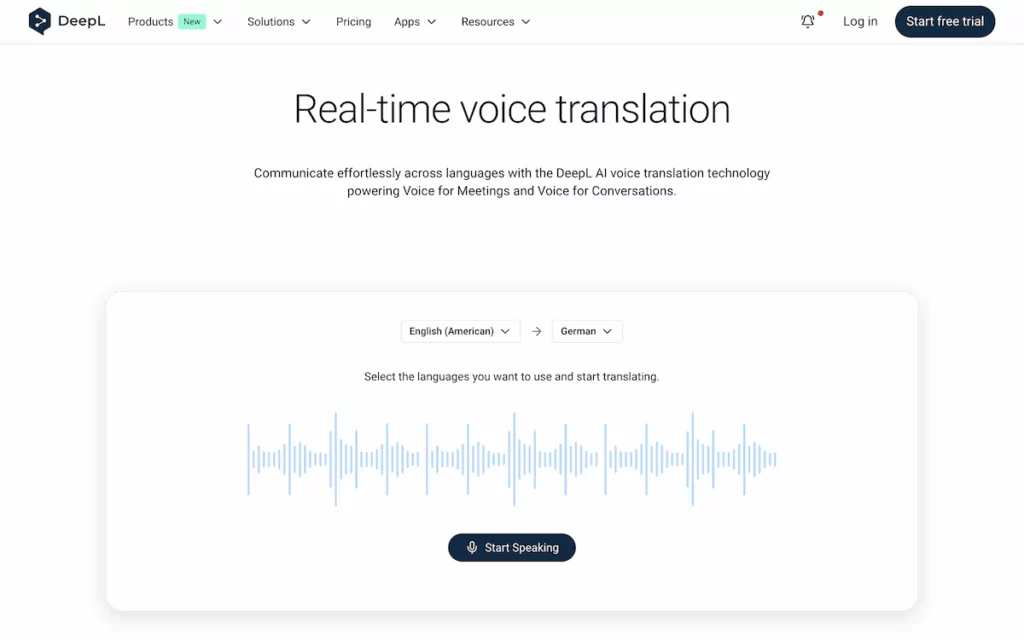
For instance, there are fresh updates to the live speech translation solution, DeepL Voice. This includes expanded language support for Mandarin Chinese, Ukrainian, and Romanian, along with enhanced meeting productivity functionality such as full transcripts and translations from meetings. There’s also now a Zoom integration to go alongside Microsoft Teams.
What Translation Providers Are Bringing For 2026
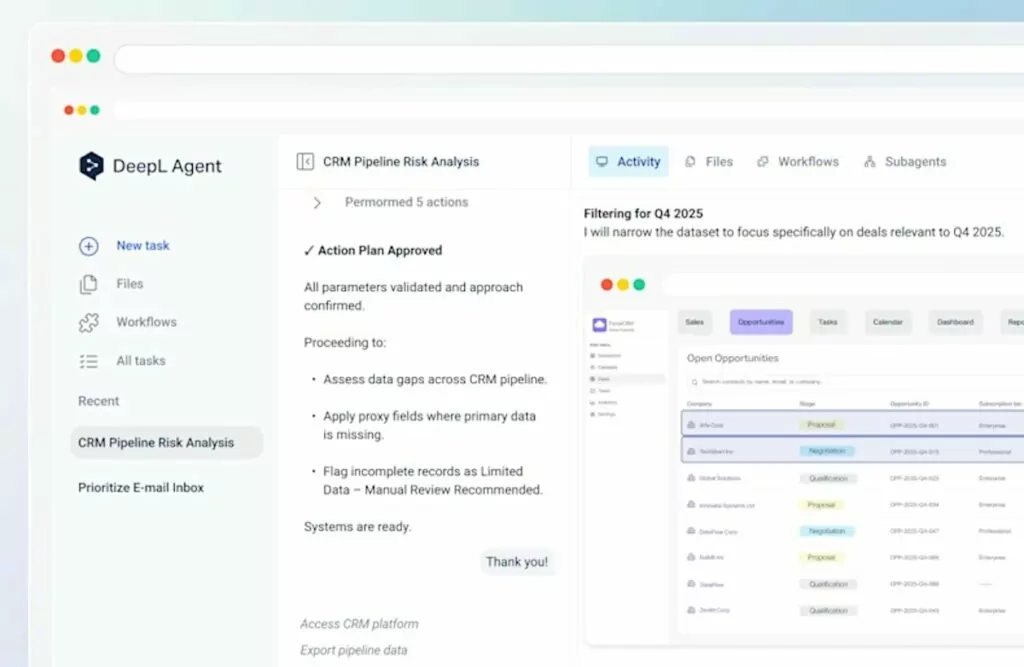
So, 2025 made some leaps, but these same providers are still forging ahead throughout 2026. First off, DeepL announced its DeepL Agent and Customization Hub:
- DeepL Agent. This is an autonomous AI coworker that streamlines and automates tasks. DeepL Agent can work as a sales agent that has autonomy to research prospects, draft personalized outreach messages, and schedule follow-ups. For customer service, it can resolve issues, process exchanges, and check inventory without requiring human intervention.
- Customization Hub. This is a platform that combines glossaries, style rules, and translation memories into one system. The Customization Hub builds on DeepL’s context-aware language quality by automatically enforcing language requirements during the translation process.
All of these updates come alongside an expansion to now over 100 supported languages.
In fact, DeepL launched its Voice API in February 2026. This lets developers integrate real-time voice transcription and neural machine translation capabilities into their apps. DeepL have said early adopters are businesses that need to understand customer issues even when they don’t speak the same language.
As for Google, it rolled out a major upgrade to Google Translate at the very end of 2025 that uses Gemini to bring together improved neural machine translation quality, live speech, and language expansion. In a nutshell, Gemini can help Google Translate provide more natural translations that detect nuances better rather than literal word-for-word conversions.

Also, building on its live translation announcement, Google also has a beta experience for live speech-to-speech translation through headphones (again using Gemini’s native capabilities). The idea is to preserve the tone, emphasis, and cadence of each speaker to create more natural translations in real-time.
What Microsoft is Working on and How Consensus Translation is 2026’s Most Exciting Development
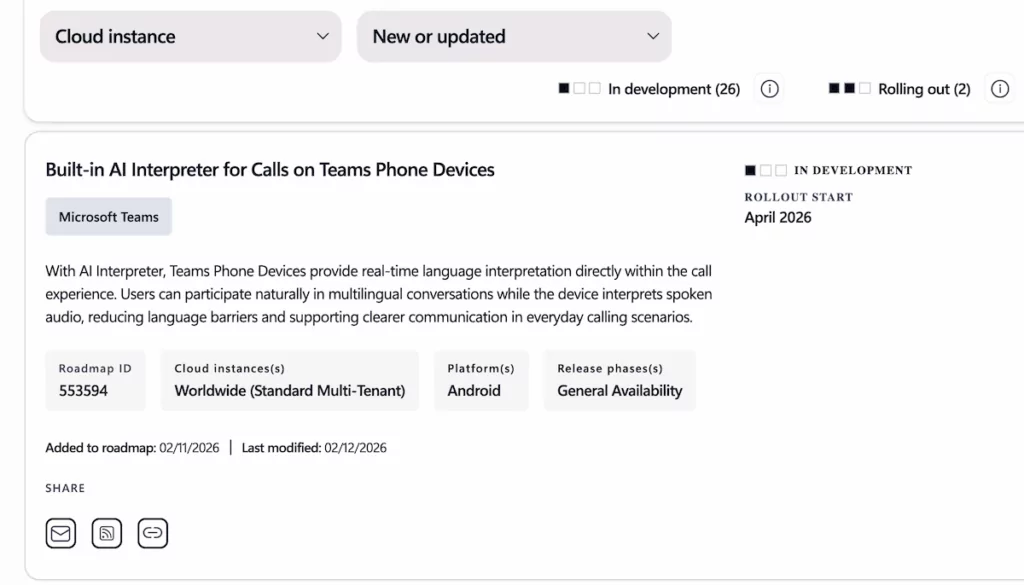
However, it’s not only DeepL and Google bringing innovations and progress. Microsoft continues to integrate translation capabilities throughout its ecosystem rather than marketing standalone products. For instance, the Microsoft 365 roadmap for 2026 includes multilingual capabilities for Teams that integrates neural machine translation.
Away from specific providers, consensus-based AI translation could be the key area to watch. This approach leverages multiple independent AI engines at once to reduce translation errors.
The big question of AI and LLMs is: how do you trust translations when a single engine might fabricate details, drop critical words, or flatten any crucial nuance? However, when three or four independent systems produce similar translations, confidence in that output should rise (in theory). Where they diverge, the system flags those sections for human review.
For a WordPress website, this means you can automate more content with confidence. With greater trust thanks to consensus translation and evolving products and tools, this should be the time your site goes international.
Why 2026 Is The Year To Invest In Multilingual Capabilities
Given the growth of language markets in general, and that WordPress translation plugins alone serve millions of active installations, it’s easy to see how going multilingual is going to be beneficial. E-commerce in particular has a solid conversion rate, and desktop purchases are converting better than mobile right now, despite the disparity in traffic.
This means sites going multilingual early (i.e. now) could net up to a year’s worth of translation memory refinement and search engine indexing before the major shopping periods in the last quarter of the year. It’s a head start that will be an advantage as translation quality improves, tools become more mature, and multilingual search rankings strengthen.
What’s more, DeepL is predicting that agentic AI will become more commonplace by the end of 2026: yet another aspect that means it could be easier than ever to go multilingual.
What Balancing Automation and Expertise Looks Like in 2026
The central question for 2026 is not whether to use neural machine translation but how to balance this automation with human expertise. As always with these situations, the answer depends on your content type, quality requirements, and available resources.
Hybrid workflows are still likely to deliver the best return on investment. The approach that will work for most WordPress sites combines automatic translation with selective human refinement:
- Use machine translation to create complete multilingual versions of your site quickly. This gives you immediate market presence and lets you validate interest before refining the content.
- Identify high-value pages such as primary product pages, checkout flow, and key landing pages for a human review. These pages need your highest quality standards due to the impact they have on conversions.
- Apply spot-checking to any remaining content by reviewing a sample of your pages to catch any issues.
This approach lets you go live quickly while keeping quality high where it matters most. As such, you avoid the paralysis of waiting until you can afford full human translation for everything, while also avoiding the risk of publishing automatic translations without any quality control.
For technical documentation, legal content, or product specifications, the stakes are higher. Machine translation can still create liabilities or issues through introducing critical errors. For you, this means you need a higher investment in human translation. At minimum, you could work with a thorough human review of the output.
WordPress’ Future In Translation for 2026
While WordPress core continues its gradual evolution toward longer-term native multilingual capabilities, the reality in 2026 is clear: multilingual WordPress websites are powered by plugins — and that’s not a temporary workaround, but the standard.
Multilingual plugins are doing far more than “filling a gap.” They are the infrastructure that enables businesses to translate entire websites, manage localized SEO, handle metadata, dynamically translate strings, and combine neural machine translation with human review workflows.
Crucially, plugin developers aren’t waiting for core updates. They are actively integrating neural machine translation engines, AI-powered quality estimation, translation memory systems, and automation features that allow site owners to launch and scale multilingual websites today.
Additionally, translation plugins already come with complex features like dedicated translator accounts, different domain per language setups, automatic user language detection, and so on. These types of advanced multilingual setups will never be a native part of WordPress.
So if you’re planning for 2026 and beyond, the path is already clear: WordPress multilingual plugins are not a temporary solution — they are the foundation for building, optimizing, and growing truly global WordPress websites.
TranslatePress Already Does Neural Machine Translation
TranslatePress already lets you translate from the front end and integrates with Google Translate, DeepL, and Microsoft Translator APIs. This means you can leverage the new Gemini-powered improvements, DeepL’s expanded language coverage and raft of new functionality, and take advantage of any new aspects of Microsoft’s translation services.
TranslatePress Multilingual
TranslatePress’ AI is a modern and accurate approach to instantaneous neural machine translations. It chooses your translation engine based on your internal requirements. For example:
- Google will provide broad language coverage for the majority of your content.
- For a higher quality across supported languages, DeepL will deliver superior accuracy thanks to its own neural machine translation engine trained specifically for business content.
Your translation memory will be crucial regardless of your strategy. It stores every string you translate and reuses it when the same phrase appears elsewhere on your site. This builds translation quality over time as you refine key phrases and technical terms.
As a result, your site becomes progressively better translated without an ongoing effort as the translation memory grows. Also, it’s a great companion to consensus translation as it helps you maintain consistency across all of your multilingual content.
What Else TranslatePress Provides for Your Site
Of course, there’s much more TranslatePress gives you in the box:
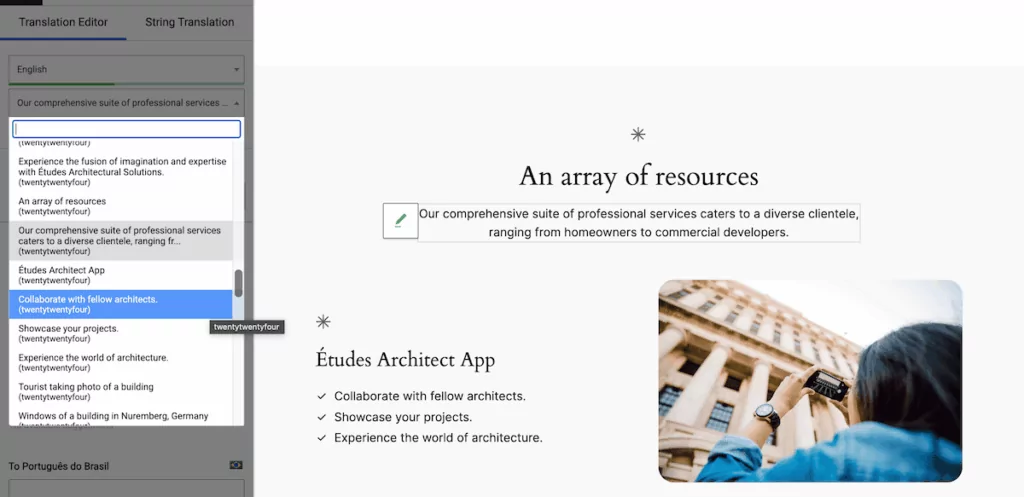
- The visual Translation Editor lets you edit content on your site’s front end, regardless of language, while seeing exactly how it appears to visitors. At the minimum, this workflow will eliminate the frustrating disconnect between editing translations within WordPress and checking the results on published pages. Along with this, the real-time preview will fit into your hybrid workflow.
- The SEO Pack add-on is TranslatePress’ way of handling multilingual technical requirements automatically. For example, hreflang tags get added correctly for every page and language combination. Also, multilingual sitemaps generate automatically and URL structures follow optimal practices for international SEO without requiring manual configuration.
Finally, for WooCommerce stores, TranslatePress translates product descriptions, attributes, categories, and all dynamic text that appears during the user’s shopping experience. The plugin translates all product variations including size, color, and configuration options.
Checkout translation covers every step in the purchasing process: cart messages, payment information, confirmation emails, and more. So, no matter where automatic website translation is heading in 2026 and beyond, TranslatePress can be at the center of your multilingual strategy.
Positioning Your Site for 2026 Multilingual Success with TranslatePress
The advances in automatic website translation and machine translation through 2025 and 2026 will make multilingual websites more accessible and effective than ever before. New approaches such as consensus-based translation provides a near guarantee in reliability that a single-engine system will struggle to offer. This could be a big improvement in how we trust machine translation output for business-critical content.
TranslatePress helps your WordPress site benefit from all of these advances through integration with leading translation APIs, providing visual editing tools, and handling technical SEO requirements automatically.
TranslatePress Multilingual
What aspects of automatic website translation in 2026 interest you most for your multilingual site? Share your thoughts with me in the comments section below!